In the pet food industry, many new manufacturers and even experienced pet owners often wonder why dry dog food and cat food are specifically called “kibble.” The confusion usually arises because “kibble” looks like an ordinary term, yet it describes a very specific type of dry, extruded pet food that undergoes a unique mechanical manufacturing process. Many people incorrectly assume that “kibble” simply means “dry food,” but the term has a precise historical origin, a technical meaning in modern food engineering, and strict production characteristics that distinguish kibble from baked biscuits, cold-formed pellets, or freeze-dried chunks. If manufacturers misuse the term, it can mislead customers, misrepresent the product category, or even cause regulatory issues when labeling commercial pet food. Understanding the true meaning of “kibble” helps you avoid quality misunderstandings, prevents inappropriate equipment purchases, and ensures that your production line and marketing materials remain technically correct.
Kibble is called “kibble” because the word originally meant “to chop or break into small pieces,” and in the modern pet food industry it specifically refers to dry, extruded pellets created by high-temperature, high-pressure extrusion cooking followed by drying, cooling, and sometimes oil coating. The name reflects the process—raw materials are “kibbled,” meaning mechanically broken and shaped into bite-sized pieces, resulting in the crunchy, porous dry food known as kibble today.
This explanation only scratches the surface, of course. The deeper story of kibble includes its Old English linguistic roots, its adoption during early commercial pet food production in the late 1800s, the explosion of extrusion technology in the 1950s, and the technical requirements that separate kibble from all other types of pet diets. To fully understand why it is called kibble—and how this affects manufacturing, equipment selection, ingredient design, texture, expansion rate, palatability, and shelf stability—you need to explore its evolution, processing science, and mechanical engineering foundations. This article will walk you through everything in a precise, research-based way, written from my perspective as a Ph.D. in food engineering and as a professional pet food machinery manufacturer from Darin Machinery.
Kibble is simply any type of dry pet food.False
Dry pet food includes baked biscuits, air-dried strips, and cold-pressed pellets, but only extruded and mechanically expanded pellets are technically classified as kibble.
The term kibble originated from a verb meaning to chop or break into pieces.True
Historical records show that 'kibble' comes from Old English terms for chopping, breaking, or splitting, which accurately describes the production method.
The True Definition of Kibble in Modern Pet Food Manufacturing
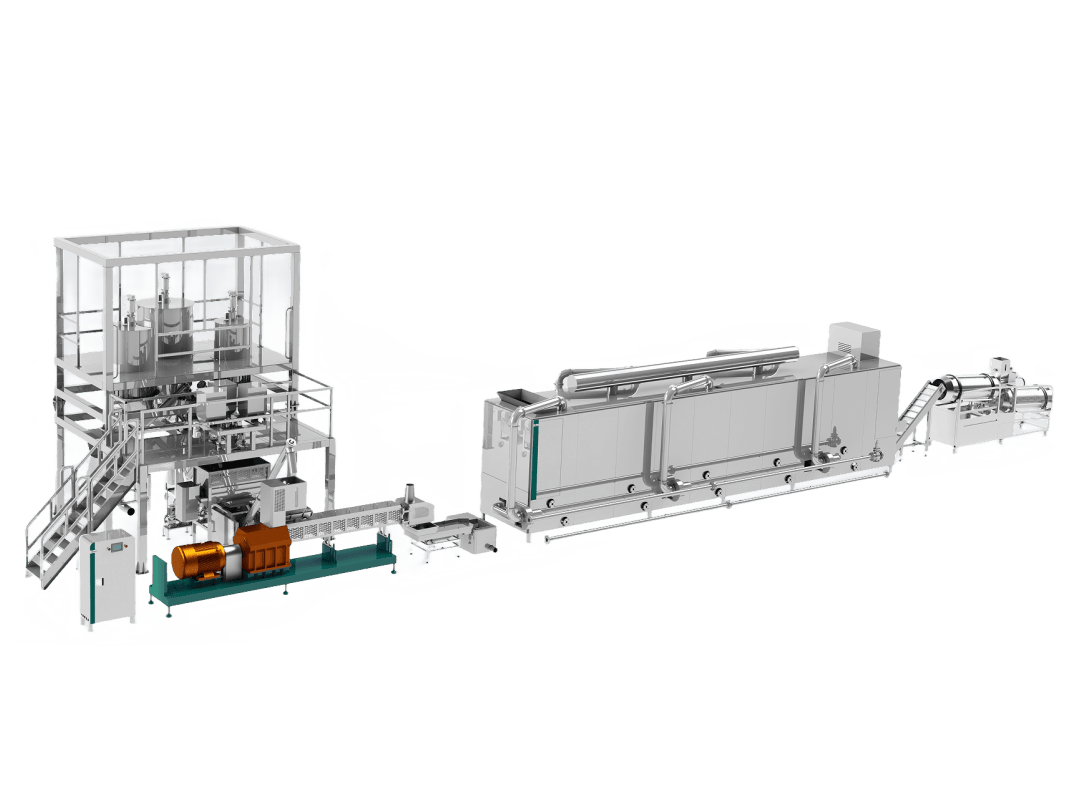
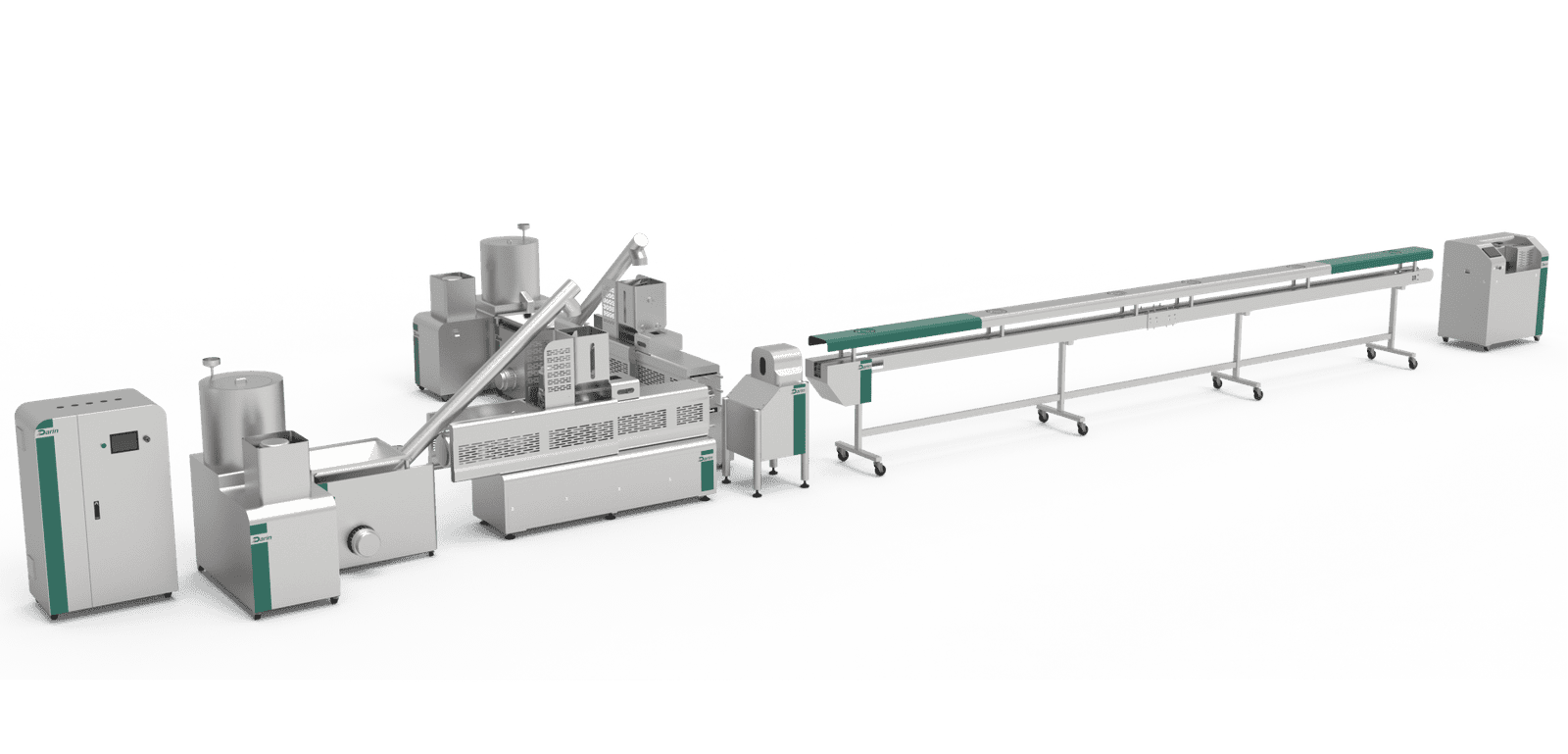
To answer why it is called kibble, we must clarify what kibble actually is in the modern industrial context. Kibble is not just a name; it is a technical category defined by specific processing characteristics. In professional manufacturing, “kibble” refers to dry, expanded pet food pieces produced by extrusion cooking—a process in which raw materials (grains, proteins, fibers, fats, premixes, vitamins, minerals) are finely ground, blended, hydrated, and then cooked under high temperature and pressure in a twin-screw or single-screw extruder. As the cooked dough exits the die, the sudden drop in pressure causes water to flash off as steam, expanding the dough and creating a porous internal structure. This internal porosity is one of the critical characteristics that makes something a “kibble”—it affects crunchiness, density, digestibility, and the ability to absorb liquid palatants or oil coatings. After extrusion, the pellets are cut into specific shapes, dried to a target moisture of 8–10%, cooled, and sometimes coated with fats and flavors to improve palatability. This entire chain of mechanical actions reflects the original idea of “kibbling”—breaking, chopping, or shaping raw ingredients into small, digestible, shelf-stable pieces.
In contrast, if a product is produced by baking, cold-pressing, freeze-drying, or air dehydration, it is not technically kibble. This distinction matters because regulatory bodies, such as AAFCO and FEDIAF, treat extruded products differently with respect to nutritional stability, digestibility, thermal kill steps, and labeling requirements. The industry also uses kibble to specifically describe expanded dry pellets—not dense or compressed forms. Therefore, the name “kibble” is directly linked to both the method and the mechanical forces applied during production. The term captures the essence of extrusion: controlled destruction and reconstruction of ingredients into a consistent, homogenous matrix.
Now that we understand what kibble technically is, we can explore why the English language adopted this specific word and how the pet food industry evolved the term into the global standard we use today. Before we dive into historical linguistics and industrial evolution, let’s look at the deeper technical reasons why extrusion-based “kibbling” became the dominant method for producing dry pet diets around the world—especially for manufacturers choosing Darin Machinery production lines.
Let’s Explore the Origins, Engineering, and Naming Logic in Depth
Now that you have a clear foundational definition, the rest of this article will take you deeper into the connection between the etymology of the word, the engineering actions performed in the kibble-making process, and the scientific reasons why extruded dry pet food dominates global markets. Understanding these connections is not only intellectually interesting; it is strategically important for manufacturers, investors, startup pet food brands, and factory owners. If you are selecting machinery, planning a production line, formulating diets, or writing marketing and labeling content, you need accurate terminology. This article will serve as your authoritative reference.
Beginning in Part 2, we will explore:
- Historical linguistic origins of the word “kibble”
- Evolution from early animal feed to modern pet food
- Why extrusion creates “kibble” (scientific explanation)
- Differences between kibble, pellets, biscuits, freeze-dried, cold-pressed, and air-dried foods
- Engineering processes that justify the name
- Industrial standards and regulations
- Consumer perception and naming conventions
- Detailed production flow with equipment explanations
- Tables, comparisons, and real manufacturing data
- Case studies from Darin Machinery client factories worldwide
This foundation ensures that by the end of the full multi-part article, you will be able to explain “why it is called kibble” not only linguistically but also mechanically, scientifically, historically, and commercially.
The Historical Origin of the Word “Kibble” and How It Became a Pet Food Term
To understand why dry pet food is called “kibble,” we must go far beyond surface-level definitions and trace the linguistic, industrial, and cultural evolution of the term. The word “kibble” dates back several centuries, long before commercial pet food existed. Linguistically, it stems from Middle English and Old English roots such as kibil or kibel, which mean to split, to break apart, to chip, or to fragment into small pieces. Some etymologists suggest it may also have Norse influence from Old Norse terms relating to chopping or cleaving. In early English usage, the verb “to kibble” referred to breaking something—typically grain, crusts, dried food, or stone—into small, coarse fragments. Farmers and millers could “kibble” oats or grains, meaning they would crack them into small, irregular pieces for easier feeding or processing. Hunters and butchers also used the word to describe chopping leftover scraps into smaller edible portions. Miners used “kibble” to describe buckets used to draw broken rocks from shafts, reinforcing the connection between roots of the word and the idea of small, broken materials.
So how did this old verb migrate into the world of modern pet nutrition? The connection begins in the 1800s when pet feeding practices started shifting from household leftovers to early forms of processed feed. In Victorian England, one of the earliest patented dog foods—James Spratt’s biscuit in the 1860s—introduced a commercial product designed specifically for dogs. Consumers at that time needed ways to describe these new dried food items. Since the biscuits were hard, baked, and often broken into small pieces before serving, the verb “to kibble” resurfaced as a descriptive term. Newspaper advertisements and feed store catalogs from the late 19th century used the word “kibbled” to describe cracked grain mixes, chopped feed pellets, or broken hard biscuits. As extrusion technology entered the scene in the mid-20th century, the meaning shifted again—but this time into its modern technical form. When extruders first produced expanded, crunchy pellets for pet food, manufacturers needed a universal category name that captured the idea of mechanically breaking down ingredients and reforming them into small, cut pieces. The term “kibble,” rooted in the idea of chopping or fragmenting, fit perfectly.
By the 1950s–1960s, major pet food companies such as Purina, Hill’s, and IAMS began mass-producing extruded dog food using continuous extrusion cookers. They needed a consumer-friendly word for the bite-sized pieces of expanded feed exiting the extruder and being cut into uniform shapes. “Kibble” rose to dominance because it bridged both the historical meaning and the new technological reality. It conveyed the idea of small, crunchy pieces derived from a mechanical process. It also sounded approachable and easy for consumers to remember. Over time, the term became standardized in product packaging, industrial documentation, AAFCO guidelines, FEDIAF references, and academic research papers describing extrusion physics.
Today, “kibble” has a clear and globally recognized technical definition: dry, extruded, expanded pet food pieces. However, the linguistic heritage still matters because it explains why competing dry-food formats—such as baked biscuits, air-dried pieces, cold-pressed pellets, and freeze-dried chunks—are not called kibble. They do not undergo the same mechanical and thermal transformation. They are not “kibbled” in the traditional sense. This historical journey illustrates how language evolves with technology, and how pet food terminology reflects engineering processes, not just marketing terms. To appreciate why the word “kibble” became the standard, we must now examine how extrusion cooks and transforms ingredients in ways that align with the word’s historical concept of breaking, splitting, and reshaping materials.
Why Extrusion Perfectly Matches the Meaning of “Kibble”: The Mechanical Logic Behind the Name
Extrusion technology is central to the modern definition of kibble, and its mechanical characteristics align so precisely with the historical meaning of “kibbling” that the adoption of this term was almost inevitable. At its core, extrusion cooking is a process of controlled destruction and reconstruction. Ingredients such as grains, proteins, starches, fibers, binders, and micronutrients are ground into fine particles and then blended together into a homogeneous powder. This alone reflects the earliest meaning of kibbling—reducing ingredients into small fragments—but extrusion goes far deeper. The dry mixture is fed into an extruder, where rotating screws convey, compress, shear, and heat the material. The combined forces of mechanical friction, pressure, and steam injection break apart cellular structures, denature proteins, gelatinize starch, reduce microbial load, and create a uniform dough mass. This phase is essentially the modern industrial version of “kibbling,” because it intentionally dismantles raw materials at the molecular and structural levels.
Once the dough reaches a specific temperature, pressure, and moisture level, it is pushed through a shaping die. This is the defining moment in which the name “kibble” becomes technically correct. As the dough exits the die, two things happen simultaneously: rapid pressure drop and moisture flash-off. The sudden release of pressure causes internal water to instantly vaporize into steam, puffing and expanding the dough. This expansion creates a porous structure inside the pellet—one of the most important characteristics of true kibble. The cutting knives mounted on the die face then slice the extruded rope into uniform, bite-sized pieces. In other words, the pellets are literally “kibbled” as they are formed.
After cutting, the pellets enter a dryer, where they are brought to an 8–10% final moisture level. This ensures shelf stability and prevents microbial growth. The porous structure left by the extrusion process not only reduces density but also creates ideal conditions for coating oils, palatants, and nutritional additives. These coatings adhere deeply into the porous matrix, enhancing flavor and digestibility—something dense, non-expanded products cannot achieve. Without this internal porosity, a product cannot be technically classified as kibble, further reinforcing how extrusion defines the term.
When comparing extrusion to other manufacturing methods, its alignment with the meaning of “kibble” becomes even clearer. Baked biscuits are shaped dough pieces hardened by oven heat, not by high-pressure structural breakdown. Cold-pressed pellets compress ingredients without fully cooking or expanding them. Freeze-dried chunks remove moisture through sublimation, producing light and porous structures but without the mechanical breaking and shaping associated with kibbling. Air-dried foods preserve ingredients through dehydration, not fragmentation and reforming. Only extrusion simultaneously breaks down ingredients, shapes them, expands them, cuts them, and reforms them into consistent, crunchy pieces. Thus, extrusion is the only process that fits both the historical meaning and the modern technical usage of the word “kibble.”
Understanding this connection is essential for manufacturers choosing equipment. When you invest in a Darin Machinery pet food extrusion line, you are producing true kibble according to industrial and linguistic standards. And because extrusion aligns perfectly with both the functional demands of pet food and the historical meaning of the term, it continues to dominate the global market for dry pet diets.
How Kibble Became the Global Standard for Dry Pet Food
To understand why the term “kibble” dominates global pet food culture today, we must examine the industrial, commercial, economic, and technological evolution behind the rise of extruded dry pet food. Although the linguistic roots of the word go back centuries, its modern relevance comes from the global spread of extrusion technology beginning in the mid-20th century. Before extrusion existed, pets were primarily fed scraps, leftover meat, bread, or grain mixes. The first mass-produced dog biscuits in the late 1800s created the earliest specialized pet diet, but these early products were nutritionally incomplete, extremely dense, expensive to produce, and limited in variety. They also required heavy baking ovens and manual labor for shaping. As pet ownership grew rapidly in the post-World War II period—especially in the United States—food manufacturers realized that pet owners needed an affordable, long-shelf-life product that could be produced in massive quantities, transported long distances, and fed with minimal preparation. This demand intersected perfectly with the emergence of extrusion technology, which had already been used for expanded cereals and snacks but had not yet been widely adopted for pet food.
Extrusion revolutionized pet nutrition because it permitted continuous, high-volume production with precise control over cooking, shape, density, flavor, and nutritional delivery. The process produced a product that was lightweight, porous, crunchy, and extremely stable—ideal traits for storage, packaging, and feeding convenience. Because extruded pellets needed a name that captured their small, cut, expanded form, the industry adopted “kibble” as the universal term. By the 1960s and 1970s, as companies such as Purina, Pedigree, and IAMS expanded globally, they standardized messaging around the word “kibble,” using it in advertising, nutritional guidelines, and package labels. As global trade in pet products grew—first across North America, then Europe, followed by Asia, Latin America, and Africa—the terminology expanded with it, quickly becoming embedded in local languages even when the word was transliterated or phonetically approximated.
Another key factor in global adoption was regulatory language. AAFCO in the United States and FEDIAF in Europe required precise descriptions of processing methods. Because extrusion became the most widely used technology for dry pet food (today accounting for more than 80% of global pet diets), the term “kibble” entered regulatory and scientific vocabulary. International researchers began publishing studies on “kibble density,” “kibble expansion ratio,” “kibble digestibility,” and “kibble palatability,” giving the word technical legitimacy beyond marketing. This widespread scientific use further cemented the term as the accepted category descriptor.
Economics also played a major role. Extruded kibble is extremely cost-efficient to produce. Its long shelf life reduces waste, its porous internal structure reduces weight, and its expanded density allows more volume per kilogram—meaning lower transportation costs and better profitability. Manufacturers in emerging markets found that kibble production lines offered a strong return on investment because a single extrusion line could supply multiple regional cities or countries. As production scaled, so did the use of the term “kibble,” turning it into a global industry standard.
From a cultural standpoint, kibble also became synonymous with modern pet ownership. Advertising from the 1970s to 1990s portrayed kibble as a sign of responsible care, emphasizing convenience, nutritional completeness, and veterinarian endorsement. As global urbanization increased, millions of new pet owners adopted dry food as the default diet, further reinforcing the linguistic dominance of the word “kibble.” Today, multinational retailers such as Walmart, Carrefour, PetSmart, Petco, and JD.com categorize dry dog and cat food under the “kibble” banner. Even countries with no historical connection to the English root now commonly use the term.
Understanding this cultural and industrial evolution is essential for anyone manufacturing pet food, because using the word “kibble” incorrectly—such as for baked, freeze-dried, raw, or cold-pressed products—may cause confusion or misrepresentation. For professional manufacturers like those using Darin Machinery, correct terminology ensures accuracy in technical documentation, marketing, regulatory compliance, and customer communication. With this background in mind, we can now examine the scientific characteristics that define kibble and distinguish it from all other categories.
Defining Characteristics That Make a Product True “Kibble”
Although the public may casually refer to any dry pet food as “kibble,” the modern technical definition is far more specific. To be classified as kibble, a product must meet five essential criteria, all of which are determined by extrusion engineering, ingredient behavior, and processing conditions. First, the product must undergo extrusion cooking, meaning raw materials are subjected to high temperature (typically 120–180°C), mechanical shear, and pressure inside a single-screw or twin-screw extruder. This ensures starch gelatinization, protein denaturation, microbial reduction, and uniform dough formation. Without extrusion, the product cannot achieve the structural and physicochemical transformations that define kibble.
Second, the product must exhibit controlled expansion as it exits the die. When superheated dough passes through the die opening and experiences a sudden drop in pressure, moisture rapidly flashes off as steam, causing the dough to puff like puffed cereals. This effect creates the porous matrix that gives kibble its signature crunchiness, lightness, and ability to absorb palatant coatings. The expansion ratio—defined as the relationship between die diameter and final pellet diameter—is one of the most important quality indicators for true kibble. Manufacturers typically target a 1.2–1.8 expansion ratio depending on formula, moisture, screw speed, and die design. A product that does not expand is not technically kibble; instead, it may be considered a pellet, biscuit, or cold-pressed piece.
Third, every piece must be mechanically cut at the die face by rotating knives. This cutting action is literally the modern embodiment of the word “kibble”—breaking or chipping the extruded rope into precise, bite-sized pieces. Knife speed, blade angle, and die plate design directly influence particle shape, thickness, and uniformity. Hexagonal, round, triangular, pillow-shaped, bone-shaped, and fish-shaped kibbles are all defined by the structure of the die and the behavior of the dough during cutting. This mechanical chopping is essential; products shaped by molds or compression are not true kibble.
Fourth, kibble must be dried to a safe moisture level, usually between 8% and 10%. Drying stabilizes the product, ensures shelf life of 12–24 months, and prevents mold or bacteria. Because extrusion creates a porous interior, moisture can escape efficiently during drying, resulting in a crisp texture. Dense baked or compressed products do not dry in the same way, further differentiating them from kibble.
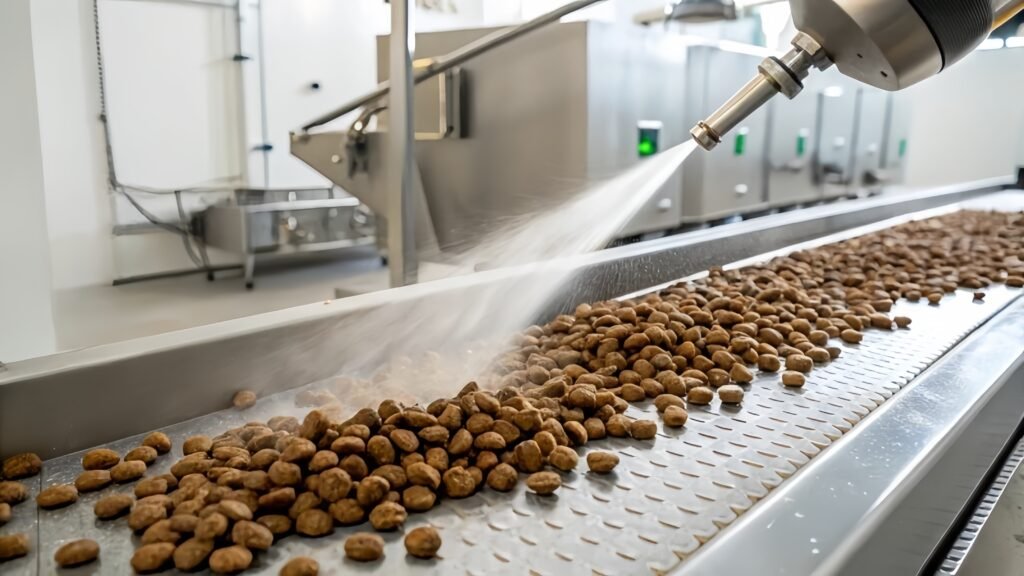
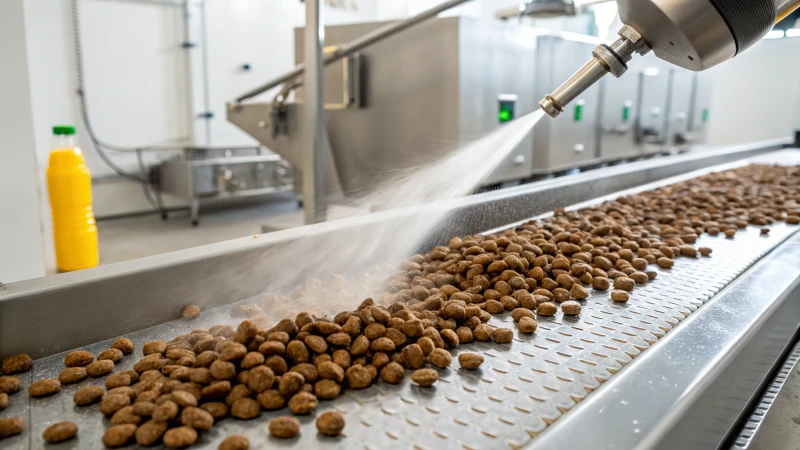
Finally, true kibble must be coated after drying, typically with oils, fats, palatants, or digest proteins. Vacuum coaters or drum coaters deposit flavor enhancers that absorb into the porous structure, dramatically improving palatability. Without a porous interior, coating absorption would be limited. Coating also contributes to the glossy appearance seen in many premium kibbles.
These five characteristics form the modern industrial definition of kibble. They explain why “kibble” is not simply a consumer word—it is a category determined by engineering, chemistry, and manufacturing. For manufacturers building new production lines or entering global markets, understanding these characteristics is essential for accurate labeling, correct equipment selection, and precise process control. In the next section (Part 4), we will present detailed comparison tables, process diagrams, material flow charts, and quantitative data showing how kibble differs from baked, cold-pressed, freeze-dried, and air-dried pet foods.
Technical Comparison: What Makes Kibble Different From Other Dry Pet Food Formats?
To fully understand why the word “kibble” rose to dominance—and why it is the only appropriate term for describing extruded dry pet food—we must examine its competitors. Many manufacturers incorrectly assume that any dry, crunchy pet food is kibble, but the truth is far more nuanced. Dry pet food today spans several major categories, each defined by unique mechanical processes, water activities, formula requirements, shelf-life characteristics, energy density, texture behavior, and equipment needs. These categories include baked biscuits, cold-pressed pellets, air-dried foods, freeze-dried products, dehydrated mixes, and extruded kibble. Although consumers may think they are similar, their engineering differences determine everything from palatability and nutrient retention to microbial stability and packaging requirements.
Kibble’s dominance results from several engineering advantages: continuous high-throughput extrusion, consistent expansion rates, predictable density and texture, and its exceptional compatibility with post-coating technology. However, because other dry formats often market themselves as “non-kibble alternatives,” it is important for manufacturers to understand the precise distinctions. Below is a high-level comparison table to illustrate the functional differences. This first table summarizes the mechanical and physical differences between product categories, while later tables dive into energy behavior, expansion physics, and ingredient interactions.
Table 1 – Comparison of Dry Pet Food Types by Manufacturing Method
| Product Type | Core Manufacturing Method | Expansion | Texture | Moisture (Final) | Shelf Life | Is It Kibble? |
|---|---|---|---|---|---|---|
| Extruded Kibble | High-pressure extrusion + rapid pressure drop | Yes (1.2–1.8 ER) | Porous, crunchy | 8–10% | 12–24 months | Yes |
| Baked Biscuits | Dough blending + oven baking | Minimal | Hard, dense | 8–12% | 10–18 months | No |
| Cold-Pressed Pellets | Low-temperature compression | None | Very dense | 8–12% | 6–12 months | No |
| Air-Dried Food | Slow dehydration at low heat | None | Chewy or semi-hard | 8–15% | 6–12 months | No |
| Freeze-Dried Chunks | Sublimation dehydration | None | Light, brittle | 3–5% | 18–30 months | No |
| Dehydrated Mixes | Low-temperature drying | None | Powder/flakes | 4–8% | 12–24 months | No |
This table simplifies the engineering differences, but the deeper technical truth lies in how extrusion—unlike any other process—creates the internal porous structure that defines kibble. While baking hardens dough, cold pressing compacts powder, and air drying removes moisture, none of these methods break and restructure ingredients the way an extruder does. Extrusion fundamentally transforms starch granules, denatures proteins, reduces microbial load, modifies fiber structure, and builds a new matrix. The high mechanical shear and thermal input during extrusion are essential to the formation of kibble’s expanded cellular architecture.
Understanding these distinctions is essential for manufacturers, as misusing the word “kibble” on packaging can mislead consumers and violate regulatory standards. For example, cold-pressed pellets often label themselves as “grain-free kibble alternatives,” but technically they cannot be called kibble. Likewise, air-dried or freeze-dried products are often marketed as “premium dry kibble,” although their engineering structure has nothing in common with extrusion. This lack of clarity can confuse distributors, affect ingredient sourcing, and even create inconsistencies during export documentation. For professional factories—especially those with Darin Machinery extrusion lines—correct terminology reflects manufacturing integrity and engineering accuracy.
The Science of Expansion: Why Extrusion Creates True Kibble
Among all the processing methods used in pet food manufacturing, extrusion is the only one capable of producing the signature “kibble expansion.” This phenomenon occurs when superheated dough, under high pressure inside the extruder barrel, exits the die opening and experiences a sudden, dramatic drop in pressure. This instant depressurization allows moisture to flash off as steam. The force of this expanding vapor creates air pockets inside the dough, pushing apart the gelatinized starch and forming the porous internal matrix unique to kibble.
The science behind expansion is governed by thermodynamics, rheology, and material behavior. When ingredients travel through the extruder, they undergo intense mechanical shear, compressive forces, and frictional heating. Starch granules swell and gelatinize at around 65–80°C, but extrusion takes them far beyond typical gelatinization temperatures—sometimes up to 150–180°C—while also subjecting them to high shear rates. The combination of heat, pressure, and shear breaks molecular bonds, allowing the dough to flow as a viscoelastic material. Once the dough exits the die, the sudden release of pressure allows water (often 18–25% moisture within the barrel) to vaporize explosively. This rapid vapor expansion is responsible for puffing, which determines the lightness, brittleness, density, and crunchiness of kibble.
To illustrate how expansion interacts with mechanical design, ingredient selection, and process control, the following table shows how key extrusion parameters directly influence kibble structure. This table is extremely useful for manufacturers optimizing their Darin Machinery extrusion lines.
Table 2 – Key Extrusion Variables and Their Impact on Kibble Expansion
| Variable | Effect on Expansion | Notes |
|---|---|---|
| Barrel Moisture | Low moisture → more expansion; high moisture → less expansion | Optimal 18–25% depending on formula |
| Screw Speed | Higher speed → more shear → greater expansion | But too high may cause overcooking |
| Die Temperature | Higher temperature → greater flash-off → bigger pores | Typically 120–180°C |
| Protein Level | High protein reduces expansion | Protein stabilizes structure, limits puffing |
| Fat Level | High fat reduces expansion significantly | Fat lubricates dough and prevents puffing |
| Fiber Content | High fiber reduces expansion | Insoluble fibers disrupt matrix formation |
| Starch Source | High starch → strong expansion | Corn, rice, wheat yield best expansion |
| Die Size/Shape | Smaller dies → higher pressure → greater expansion | Shapes also affect cut uniformity |
This table shows that expansion is not a random outcome; it is a controlled engineering variable. Manufacturers must balance ingredient ratios, mechanical parameters, and thermal inputs to achieve the desired kibble texture. For example, a “crunchy” kibble requires higher expansion, while a “dense” kibble for small breeds may require reduced puffing. Darin’s twin-screw extruders give manufacturers exceptional control over these parameters, allowing fine-tuning of kibble characteristics for different markets.
What makes expansion particularly relevant to the term “kibble” is that this puffed, porous structure is deeply connected to the original meaning of “breaking down and reforming.” The extruder breaks ingredients at a molecular level, and expansion reforms them into an airy structure. No other pet food process produces this combination of destruction and reconstruction. Therefore, extrusion creates the only product that aligns with both the linguistic and technical meaning of the word “kibble.” Understanding expansion is essential for product development, nutritional optimization, cost management, and consumer satisfaction.
Ingredient Engineering: How Formulation Determines Whether a Product Can Become True Kibble
To understand why extruded pet food is called “kibble,” we must examine not only the mechanical action of extrusion but also the ingredient engineering that makes kibble possible. A kibble is not merely a shape—it is a scientifically engineered matrix formed through the complex interactions of starches, proteins, fibers, lipids, vitamins, minerals, and functional additives. These interactions determine viscosity, expansion, density, color, aroma, texture, and palatability. More importantly, they determine whether the product can develop the porous internal structure that defines kibble. In many ways, extruders do not produce kibble by themselves; instead, the formula determines the dough behavior, and the extruder acts as a reactor that transforms this formula into a specific structural outcome.
At the core of kibble formulation lies starch, the most critical driver of expansion. Starch granules gelatinize when heated in water, then swell, rupture, and become amorphous materials capable of forming bubbles when steam expands during die exit. Without a proper starch level—typically 30–50% of the formulation—kibble cannot puff correctly. This is why high-meat formulas often struggle with expansion: protein competes with starch, stiffening the matrix and reducing the ability to form porous structures. Manufacturers must balance protein levels with starch sources such as corn, rice, wheat, millet, sorghum, pea starch, or potato starch. Each starch source behaves differently under shear. For example, potato starch produces very strong expansion, while pea starch produces dense structures and requires higher mechanical energy to puff.
Protein plays a dual role. On one hand, it provides nutritional value, contributes to Maillard browning, and improves palatability during cooking. On the other hand, excessive protein reduces expansion, increases density, and inhibits bubble formation. Proteins coagulate and crosslink during extrusion, making the matrix more rigid. This is why ultra-high-meat “kibble” products often appear smaller, denser, and heavier. Technically, some extremely high-protein products may not meet the strict structural definition of kibble because their internal architecture lacks sufficient porosity. Manufacturers using Darin Machinery often request customized extruder configurations—such as modified screw profiles or enhanced shear zones—to increase expansion for meat-rich formulas.
Fat content is equally important. Fat lubricates the dough, reduces friction, and limits shear. While this improves throughput, it drastically lowers expansion. For this reason, the fat level in kibble dough must remain low—usually <15%—before extrusion. High-fat diets require fat to be added post-extrusion using vacuum or drum coaters. This post-coating step highlights another essential characteristic of kibble: its porous interior absorbs liquid fats and flavor enhancers extremely well, allowing premium palatability. Sponge-like absorption is exclusive to extruded kibble; baked or cold-pressed products cannot replicate it due to their dense interiors.
Fiber acts as a structural disruptor. Soluble fibers like beet pulp help with stool quality but reduce expansion moderately. Insoluble fibers, such as cellulose or rice bran, impair bubble formation by mechanically interrupting the starch-protein matrix. As a result, formulas high in fiber produce dense, low-expansion kibble. Manufacturers targeting weight-loss or gastrointestinal-support diets must reduce fiber particle size and adjust screw speed to maintain acceptable texture.
To illustrate how each ingredient impacts kibble formation, the following table summarizes the functional roles of the major macronutrients.
Table 3 – Ingredient Functions and Their Impact on Kibble Formation
| Ingredient Class | Primary Function | Impact on Expansion | Impact on Texture | Typical Inclusion Rate |
|---|---|---|---|---|
| Starch | Provides structure and puffing ability | Strongly increases expansion | Creates crunchy internal cells | 30–50% |
| Protein | Nutritional value, matrix strength | Reduces expansion | Hardens texture | 20–35% |
| Fat | Energy, palatability | Strongly decreases expansion | Softens texture before coating | <15% (pre-extrusion) |
| Fiber | Digestive health | Reduces expansion | Creates denser bite | 2–8% |
| Minerals | Nutrition, catalysis | May reduce expansion if excessive | Can cause brittleness | 1–3% |
| Vitamins | Micro-nutrition | No structural impact | Sensitive to heat | 0.2–1% |
| Palatants | Flavor and aroma | No impact pre-extrusion | Critical post-extrusion | 1–3% |
This table shows that ingredient engineering is not merely nutritional—it is structural. A formula determines whether extrusion can create true kibble or whether the product will emerge dense, brittle, or insufficiently porous. For new manufacturers, understanding these dynamics is essential. Many startups attempt to create “100% meat kibble” without starch, which is impossible without additional binders, expanded proteins, or specialized extruder configurations. The scientific reality is that kibble requires starch and moisture to create expansion. Removing starch removes the mechanism that makes the word “kibble” meaningful.
Kibble Density, Water Activity, and Shelf-Life: The Food Physics Behind the Name
Beyond texture and expansion, kibble is defined by specific physical properties—especially density, water activity (aw), and shelf stability. These properties are interlinked and determine whether a dry pet food is truly kibble or simply a dehydrated pellet, baked biscuit, or compressed block. Understanding these parameters is essential for manufacturers, exporters, food safety inspectors, and brand owners, particularly when entering global markets with Darin Machinery production lines.
Density is one of the most important identifiers of true kibble. Because extrusion creates internal air cells, kibble typically exhibits a bulk density between 280 and 420 g/L. This low density gives kibble its characteristic crunch, easy chewability, and lightweight feel. In contrast, baked biscuits may exceed 500 g/L, while cold-pressed pellets often reach 600–700 g/L. Freeze-dried chunks may be extremely light (100–200 g/L), but they lack the structural uniformity that defines kibble. Density directly influences packaging cost, shipping efficiency, feeding volume, and consumer perception. Many premium kibble brands deliberately target low density to create a more “airy” chew, while working dog diets target higher density for caloric concentration.
Water activity (aw) is equally important. Kibble’s water activity typically falls between 0.45 and 0.60, low enough to inhibit microbial growth and ensure shelf life of 12–24 months. Achieving this aw level requires controlled drying, precise moisture reduction, and uniform porosity. Dense products dry unevenly and often retain pockets of moisture, which can promote mold. This is why kibble must undergo proper drying and cooling. The porous structure created by extrusion allows moisture to escape efficiently from the interior, creating a stable product that resists microbial spoilage.
Shelf life is a direct result of low aw, low moisture, stable fats, and antioxidant protection. Most kibble formulas include natural or synthetic antioxidants to prevent lipid oxidation, which causes rancidity. Because kibble is porous, oxidation protection is essential—oxygen can diffuse through the matrix over time. Vacuum coating improves stability by depositing fats inside internal pores rather than on the surface, reducing oxidation exposure.
Together, density, water activity, and shelf-life characteristics differentiate kibble from other dry foods. To visualize these differences, the table below compares key physical attributes across several dry formats.
Table 4 – Physical Properties of Dry Pet Food Formats
| Property | Extruded Kibble | Baked Biscuits | Cold-Pressed Pellets | Air-Dried Food | Freeze-Dried Food |
|---|---|---|---|---|---|
| Bulk Density | 280–420 g/L | 500–650 g/L | 600–700 g/L | 350–500 g/L | 100–200 g/L |
| Water Activity (aw) | 0.45–0.60 | 0.50–0.65 | 0.45–0.55 | 0.60–0.75 | 0.10–0.30 |
| Moisture | 8–10% | 8–12% | 8–12% | 10–15% | 3–5% |
| Texture | Crunchy, porous | Hard, brittle | Dense, compact | Chewy | Brittle, airy |
| Shelf Life | 12–24 months | 10–18 months | 6–12 months | 6–12 months | 18–30 months |
| True “Kibble”? | Yes | No | No | No | No |
The numbers tell a clear story: only extruded kibble combines a porous matrix, controlled water activity, and moderate-low density. These attributes are not accidental—they are the direct result of extrusion’s mechanical and thermal processes. Without the specific combination of shear, pressure, moisture, heat, and rapid expansion, these properties cannot be achieved. Therefore, density and water activity are not just quality parameters—they are part of the scientific identity of kibble.
Advanced Extrusion Mechanics: How Screw Design, Shear Zones, and Pressure Profiles Create Real Kibble
The reason dry pet food is called “kibble” is inseparable from the engineering mechanisms inside the extruder. While earlier sections covered the general idea of extrusion, this section will take you into the engineering depths that truly define kibble production. A modern extruder—especially a twin-screw extruder like those used in Darin Machinery production lines—is not merely a conveyor. It is a continuous thermal-mechanical reactor where ingredients undergo intense transformation. When people say “kibble is extruded,” what they are really saying is that kibble exists because of screw geometry, shear forces, torque distribution, thermal gradients, and precise residence time. Without these engineering factors, kibble cannot exist in its modern form.
At the heart of extrusion lies screw design. Screws are segmented into feeding, conveying, compression, kneading, cooking, and metering zones. Each zone creates different levels of shear and pressure that influence how ingredients behave. Conveying elements move material forward; compression elements increase pressure; kneading blocks apply intense shear; reverse-pitch elements create back-pressure; and mixing elements homogenize the dough. This combination breaks apart cellular structures, gelatinizes starch, denatures proteins, and forms a viscoelastic melt. These transformations are the “kibbling” action in the mechanical sense—breaking, restructuring, and reforming ingredients into a new material capable of expansion.
Moisture is critical for screw operation. Moisture plasticizes the dough, allowing granules to deform and flow under shear. Screw speed and moisture work together to determine dough viscosity. High screw speeds increase shear and frictional heat, leading to greater expansion at the die. Slow screw speeds produce denser kibble. High moisture reduces viscosity and shear, limiting puffing. Manufacturers must balance these variables to achieve the required structural outcome. Darin Machinery extruders allow programmable control of screw speed, torque, injection moisture, and barrel-zone temperatures, giving manufacturers precise command over expansion ratio and texture.
Pressure profile is another defining characteristic. In the early zones, pressure remains low as material begins to hydrate and mix. As the screw transitions into compression and kneading zones, pressure rises dramatically, often reaching 3–10 MPa. This high pressure is essential for proper cooking, especially for high-starch formulas. As the dough approaches the die, pressure peaks sharply. This pressure buildup is the direct precursor to expansion—once pressure is released at the die opening, flash-off occurs. The die, therefore, is not simply a shaping tool; it is a pressure-release device that determines how violent and rapid the expansion will be.
Die design strongly influences kibble shape, size, expansion ratio, and mechanical stability. A die plate contains multiple die holes, each with specific geometry—circular, oval, fish-shaped, star-shaped, bone-shaped, pillow-shaped, hexagonal, etc. The internal taper angle, land length, entry radius, and die-hole diameter all determine how dough flows and how pressure transitions into expansion. Longer die land increases pressure and reduces expansion. Shorter land increases expansion. Likewise, dies with narrow entrances create back-pressure, enhancing starch cook; wide entrances reduce pressure and produce softer structures. Manufacturers often test several die configurations before finalizing kibble shape for a new product line.
Knife-cutting mechanics are equally important. Once dough exits the die as a continuous rope of expanded material, high-speed knives rotate at controlled RPMs to slice the rope into consistent segments. Knife RPM determines kibble thickness. Blade sharpness determines cut quality. Knife angle influences uniformity. Inconsistent knife speed results in variable kibble sizes, leading to inconsistent drying, which affects water activity and shelf life. Professional production lines—such as Darin’s—use adjustable knife assemblies with stainless steel blades and precision actuators to maintain cutting accuracy.
To illustrate how extrusion engineering determines kibble characteristics, the following table summarizes key mechanical design variables.
Table 5 – Extruder Mechanical Parameters and Their Influence on Kibble Quality
| Engineering Factor | Functional Role | Impact on Kibble |
|---|---|---|
| Screw Segments | Define mixing, shearing, cooking, conveying | Determines starch cook and matrix formation |
| Screw Speed | Controls shear, heat, and residence time | Higher speed → more expansion |
| Barrel Temperature | Controls thermal cooking and viscosity | Higher temp → greater flash-off |
| Moisture Injection | Regulates dough plasticity and flow | More moisture → reduced expansion |
| Die Geometry | Sets pressure release and shape | Controls final size and uniformity |
| Knife RPM | Determines piece thickness | Higher speed → thinner kibble |
| Back-Pressure Elements | Increase shear and torque | Improves uniform expansion |
Extrusion engineering is the scientific backbone of kibble. These mechanical processes transform raw ingredients into a puffed, porous matrix that matches both the historical meaning of “kibble” (to break apart) and the modern industrial meaning (extruded, expanded dry pet food). Without these engineering principles, kibble would not exist. Manufacturers who understand extrusion mechanics can produce more consistent kibble, optimize throughput, and reduce processing costs—key advantages for global competitiveness.
Kibble Shape Engineering: How Dies, Knives, and Dough Rheology Determine Final Product Geometry
While consumers often see kibble as simple “small shapes,” the engineering behind kibble geometry is extremely complex. Shape is not merely aesthetic—it affects expansion behavior, drying efficiency, coating absorption, texture, bite force, dental abrasion, palatability, packaging density, and flowability in bins and feeders. Shape engineering begins with die design but is influenced by dough rheology (flow behavior), knife action, moisture level, and process settings. Therefore, shape is an integrated result of multiple upstream engineering decisions.
Every kibble shape begins with a die hole. The die hole’s internal geometry determines how dough flows as it transitions from high pressure to atmospheric pressure. Circular holes produce uniform radial expansion. Oval holes produce directional expansion. Star or flower shapes produce multi-directional bubble patterns, resulting in crisp textures. Bone or fish shapes require careful control of dough viscosity to avoid collapse or deformation.
Dough rheology is a major factor. A dough that is too wet will slump after exiting the die, losing shape definition. A dough that is too dry will crack or break at the edges. A dough that is too viscous may not fill the die properly, resulting in uneven shapes. Manufacturers must balance moisture, shear, and temperature to achieve ideal flow behavior. High shear zones within the extruder reduce viscosity by mechanically breaking down starch and protein chains, but too much shear leads to over-cooking and shape distortion.
Knife cutting introduces another layer of complexity. When the die produces a continuous rope of expanded dough, knives slice the rope at high speed. The cutting action applies mechanical force perpendicular to flow direction. If knife RPM is too low, the rope stretches and produces elongated pieces. If too high, the dough may crumble or deform from excessive mechanical impact. The knife’s distance from the die face also affects cut quality—too close and it smears the dough; too far and the rope tears inconsistently.
Drying further influences final geometry. Kibble shrinks slightly during drying as moisture evaporates. This shrinkage must be accounted for in die design. Complex shapes (like T-bones or fish silhouettes) require more robust matrix strength to maintain structure during collapse and shrinkage phases. This is why high-protein formulas often struggle to maintain complex shapes—they lack sufficient starch for bubble formation and shape stability.
Shape also influences packaging behavior and flowability. Round or pillow-shaped kibbles flow efficiently through hoppers, packaging machines, and feeding systems. Flat or irregular shapes may bridge or interlock, causing feeding issues. Manufacturers exporting to regions with high heat or humidity must consider shape because denser shapes withstand transport stress better.
To illustrate the engineering differences among kibble shapes, the following table categorizes shape types and their functional characteristics.
Table 6 – Kibble Shape Categories and Engineering Effects
| Shape Category | Examples | Engineering Behavior | Benefits | Challenges |
|---|---|---|---|---|
| Basic Geometry | Round, oval, pillow | Stable expansion, low defect rate | Easy to produce and dry | Limited visual differentiation |
| Directional Shapes | Triangular, square, hexagonal | Moderate shear demands | Faster drying, good crunch | More sensitive to viscosity |
| Complex Shapes | Bone, fish, star | Requires highly stable matrix | Strong branding impact | High deformation risk |
| Micro-Kibble | XS round, XS triangle | Requires precision cutting | Suitable for small breeds | Requires high screw accuracy |
| Low-Expansion Shapes | Dense mini pellets | Lower shear required | Works well for high-meat diets | Limited puffing possible |
Understanding shape engineering is essential for manufacturers who want to produce premium kibble with consistent structure across large-scale batches. This is why Darin Machinery provides custom die-plate engineering, shape prototyping, and rheology testing for clients. Shape is not only branding—it is engineering.
Cooling Engineering: How Proper Cooling Protects Kibble Structure, Flavor, and Shelf Life
Once kibble leaves the dryer, it may appear “finished,” but in reality, it is still in a highly fragile and unstable state. The internal matrix is hot, porous, moisture-imbalanced, and physiochemically active. Without proper cooling engineering, kibble can collapse, crack, turn rancid prematurely, or lose structural integrity. This is why cooling is considered one of the most critical engineering stages in the entire kibble-making process, even though it is often overlooked by new manufacturers. Cooling transforms freshly-dried kibble into a stable, shelf-ready product by reducing internal temperatures, balancing moisture distribution, preventing condensation, protecting fats and palatants from oxidation, and stabilizing the porous matrix for long-term structural durability. For Darin Machinery extrusion lines, cooling is not simply an accessory—it is an integrated engineering module carefully designed around air flow, residence time, pellet geometry, and density.
When kibble exits the dryer, its temperature often exceeds 60–80°C. Because warm air can hold more moisture than cold air, kibble at this stage still contains micro-pockets of moisture trapped inside the porous matrix. If the kibble were immediately packaged, the trapped moisture would migrate outward as the kibble cools naturally inside the bag, condensing on the inner film and creating a humid environment that promotes mold and bacterial growth. This problem—called post-pack condensation—is one of the most common causes of spoiled kibble, especially for manufacturers without proper cooling equipment. Controlled cooling prevents this by gradually reducing the temperature of each pellet while balancing moisture across its interior and exterior.
Cooling also affects shelf life through oxidation control. After drying, kibble still contains surface fats, internal fats, and exposed lipids from extruded proteins. Warm temperatures accelerate the oxidation of these fats, leading to rancidity, off-flavors, and loss of nutrient integrity—particularly fat-soluble vitamins like A, D, and E. Cooling reduces molecular kinetic activity, slowing oxidative reactions and preserving aroma. This is especially important before the coating stage, where fats and palatants must adhere to a stable, cool surface. Coating kibble that is still warm causes oils to volatilize prematurely, reducing palatability and causing aroma loss during storage.
Another engineering consideration is structural stability. During drying, water evaporates from the outer layer more quickly than from the interior. This creates a temporary hardness gradient: the outside becomes rigid while the inside remains slightly plastic. As the kibble cools, internal moisture redistributes outward, equalizing the gradient. If cooling occurs too quickly—such as with high-velocity cold air—the outer layer cools and contracts faster than the still-warm interior, generating internal stresses that cause cracking or fracture. These hairline cracks reduce structural integrity and create pathways for oxygen penetration, accelerating rancidity. Thus, controlled cooling is essential not only for appearance but also for long-term nutrient protection.
Modern kibble cooling systems use vertical coolers, counter-flow coolers, or ambient air conveyors. Vertical coolers allow kibble to move downward under gravity while cool air moves upward, creating a counter-flow heat-exchange pattern that maximizes efficiency. Darin Machinery coolers are designed with variable-speed discharge gates, allowing users to adjust residence time depending on initial temperature, kibble density, and ambient humidity. This engineering flexibility ensures consistent results across all formulas—from starch-rich diets to high-meat formulations with higher fat content.
Ultimately, cooling is not just about lowering temperature. It is about moisture equilibrium, structural stabilization, lipid protection, and ensuring the porous matrix remains intact. Without controlled cooling, a product cannot achieve the long shelf life, crisp texture, and structural consistency necessary to be considered true kibble. This stage, though invisible to consumers, is one of the engineering pillars that makes "kibble" what it is.
The Science of Coating: How Oils, Palatants, and Digest Proteins Transform Kibble Flavor and Function
Coating is one of the most defining and technologically sophisticated steps in producing modern kibble. In fact, the coating stage is so crucial that many of today’s premium kibble characteristics—aroma, palatability, caloric density, surface gloss, digestibility enhancement, and flavor release—are directly linked to coating engineering. Without coating, kibble would be dry, bland, nutritionally inconsistent, and far less appealing to pets. The porous structure created by extrusion makes coating possible, and this is one of the key reasons only extruded dry food can truly be called “kibble.” Dense foods such as baked biscuits or cold-pressed pellets lack the pore network required to absorb oils and palatants effectively; instead, coatings simply sit on their surface, making them greasy and unstable. Kibble, however, acts like a sponge—this absorbency is part of its scientific identity.
Coating begins with oil application. Fats may include chicken fat, fish oil, pork fat, organ digest, plant oils, or specialized palatability enhancers. These oils penetrate the porous matrix, increasing energy density and improving mouthfeel. A well-coated kibble feels smooth but not greasy—this balance is achieved only when oil absorption is optimal. Under-coating leads to dry, dusty kibble, while over-coating saturates the pores and causes clumping or rancidity. Therefore, manufacturers must match coating viscosity and application rate to kibble density, pore size, and surface texture.
Palatants—often enzymatically hydrolyzed animal proteins—are the second layer of coating. These materials provide strong aroma and immediate flavor release when the kibble is chewed. Digest proteins interact with the kibble surface through natural hydrophobic and hydrophilic interactions. The porous nature of kibble allows palatants to anchor onto internal pore walls, creating long-lasting aroma retention. Non-kibble products cannot achieve this because they lack the expanded matrix. This is why extruded kibble can maintain palatability for 12–24 months when properly produced and packaged.
There are two primary coating technologies used in kibble manufacturing: drum coating and vacuum coating. Drum coating involves rotating drums where kibble tumbles while oils and palatants are sprayed onto the surface. This method is cost-effective and works well for standard diets. However, it has limited penetration and higher surface oil exposure, increasing oxidation risk. Vacuum coating, on the other hand, uses a vacuum chamber to reduce pressure around kibble. When liquid coatings are applied under vacuum, the sudden return to normal atmospheric pressure forces oils deep into the matrix. This produces superior absorption, longer shelf life, better palatability, and higher nutrient protection.
Vacuum coating is essential for high-fat diets (up to 20–25% total fat) such as working dog formulas or high-meat kibble. Without vacuum coating, such formulas would be impossible to stabilize. Furthermore, vacuum-coating systems allow precise layering—first oil, then palatants, then vitamin solutions—ensuring that sensitive nutrients remain protected.
The chemical interactions that occur during coating define not only the flavor profile but also the long-term stability of kibble. Fat oxidation, Maillard browning, aromatic compound preservation, and lipid-protein interactions all happen on the kibble surface. Therefore, controlling coating temperature, viscosity, droplet size, spray angle, and application timing is essential. Darin Machinery coating systems use precision atomizers and variable-speed tumbling systems to achieve uniform results across every pellet.
Coating is more than a flavor step—it is a structural, chemical, palatability-defining stage that only extruded kibble can support. It exemplifies why kibble is not just “dry food,” but a highly engineered product designed for nutritional completeness, shelf stability, and sensory appeal.
Aroma Release, Surface Chemistry, and the Palatability Physics of Kibble
Aroma is one of the most important sensory attributes of kibble—yet consumers often underestimate how deeply engineering determines the way kibble smells and tastes to pets. Unlike humans, who rely heavily on visual cues, dogs and cats make feeding decisions primarily through olfaction. Their noses are 10–40 times more sensitive than ours, and this sensitivity drives the market demand for highly palatable kibble. What many people don’t realize is that kibble’s porous structure—created through extrusion—and its coated surface—engineered through drum or vacuum coating—form a multifunctional aroma-delivery system. In simpler terms, kibble smells appetizing to pets because its physical structure stores, protects, and releases aromatic compounds in a way no other dry pet food format can match. This is one of the scientific reasons why the term “kibble” became tied specifically to extruded products.
Aroma release is controlled by diffusion dynamics within the kibble matrix. During coating, fatty acids, volatile aromatic molecules, and digest-based palatants penetrate the pore network, becoming physically trapped inside microscopic cavities. As the kibble cools after coating, these compounds partially crystallize or stabilize through hydrophobic interactions with proteins and carbohydrates. When the pet bites, pressure ruptures the pore walls, releasing aroma explosively. This rapid release is a behavioral trigger for appetite stimulation. Dense, non-expanded foods lack this mechanism: baked biscuits and cold-pressed pellets offer primarily surface-level aromas, which dissipate more quickly and produce less sensory impact.
Surface chemistry also influences palatability. Kibble’s surface contains gelatinized starch fragments, denatured proteins, and lipid layers left by coating. These create micro-structures that bind palatants through electrostatic and hydrophobic interactions. When saliva contacts the kibble during chewing, enzymes break down surface molecules, releasing additional volatile compounds. This dynamic interaction between saliva and coated surface compounds does not occur in the same way on smooth, dense foods. The porous surface increases total available “reactive area,” enhancing aroma liberation.
Temperature, humidity, and packaging environment influence aroma stability. In warm climates, fats on poorly crafted kibble oxidize faster, producing off-notes detectable by pets long before humans perceive them. The oxidation process alters the chemical structure of fats, forming aldehydes, ketones, and peroxides—compounds dogs interpret as bitter or spoiled. This is why packaging engineering (covered later in this part) matters as much as formulation: even the best kibble can lose palatability if oxidation is not controlled.
From an engineering perspective, kibble aroma design is not accidental—it is crafted. Darin Machinery production lines allow precise control over pore size (via screw speed and moisture), coating absorption levels (via vacuum or drum coating modules), and surface uniformity (through controlled drying and cooling). These engineering factors determine everything from aroma retention to flavor release timing.
Palatability trials conducted globally show a direct correlation between kibble expansion ratio and palatant retention. Higher expansion means more internal surface area, creating greater retention capacity. However, over-expansion can weaken structural integrity, causing breakage and uneven coating. The ideal expansion must balance structural strength, palatant retention, texture, and consumer preference. This balance is part of what defines modern kibble—an engineered equilibrium between structure and sensory performance.
Understanding aroma physics reveals why extruded expanded kibble became the dominant global dry pet food: no other technology offers its combination of storage stability, aroma potency, sensory release, and cost-efficiency. This unique sensory engineering is a major reason the world adopted the term “kibble” specifically for extruded foods.
Packaging Engineering: How Packaging Protects Kibble Quality, Aroma, and Identity
If extrusion creates kibble and coating defines its palatability, then packaging preserves its integrity until consumption. Without proper packaging engineering, kibble rapidly loses aroma, oxidizes, absorbs moisture, or becomes structurally compromised. The word “kibble” today implies not only the extruded product but also a long shelf-life, crunchy texture, stable aroma, and safe nutrient profile. Packaging makes these characteristics possible.
Kibble packaging engineering focuses on four key chemical and physical threats: oxygen, moisture, temperature, and mechanical stress. Oxygen drives lipid oxidation, degrading palatability and nutritional quality. Moisture raises water activity, allowing microbial growth. High temperature accelerates chemical reactions, shortening shelf life. Mechanical stress crushes porous kibble, reducing palatability and creating dust. Therefore, packaging must create a barrier that limits these threats.
Modern kibble packaging uses multi-layer laminated films composed of polyethylene (PE), polypropylene (PP), PET, aluminum foil, or metallized PET. Each layer serves a distinct function. Outer PET increases tear resistance and print ability. Middle metallized or aluminum layers provide oxygen and moisture barriers. Inner PE layers offer heat-sealing and product compatibility. These films must meet precise barrier specifications depending on market requirements. For example, tropical markets require stronger moisture-barrier properties, while dry markets require higher oxidation protection.
Kibble’s porous structure makes it vulnerable to oxygen ingress. Because air can penetrate deeper into the matrix, packaging must minimize oxygen transmission rate (OTR). High-quality bags with OTR <1 cm³/m²/day slow oxidation dramatically. Many premium kibble brands also include nitrogen flushing—a process where nitrogen gas replaces oxygen inside the bag before sealing. This creates an inert environment that protects fats and aroma compounds.
Moisture vapor transmission rate (MVTR) is equally important. Kibble has low moisture (8–10%) and low water activity (0.45–0.60). If moisture seeps into the package, kibble becomes soft, loses crunchiness, and becomes susceptible to mold. Therefore, MVTR must be minimized. Metallization is one of the strongest defenses against moisture ingress.
Another engineering priority is physical protection. Kibble is lightweight and porous, making it fragile. Heavy pressure during stacking, transport, or container shipping can crush pellets. Packaging must therefore combine rigidity with flexibility. Stand-up pouches, flat-bottom bags, and multi-layer structures help maintain product protection. Larger sacks (10–20 kg) require thicker films and stronger seals.
Sealing temperature and seal integrity are often overlooked. Inadequate sealing creates micro-leaks, allowing oxygen and moisture to infiltrate, reducing shelf life from 12–24 months to as little as 3–6 months. Darin Machinery’s packaging solutions integrate automatic heat-sealing with precise temperature monitoring to ensure consistent hermetic seals.
In addition to barrier protection, packaging also plays roles in branding, consumer education, regulatory compliance, transport optimization, and food safety labeling. As kibble became a global standard, packaging practices standardized accordingly, reinforcing the perception of kibble as a modern, engineered pet food format.
Packaging engineering ensures that kibble remains “kibble” from factory to consumer—maintaining aroma, flavor, texture, safety, and identity. Without modern packaging science, the term “kibble” would never have become globally synonymous with stable, convenient, long-lasting dry pet food.
Kibble Storage Science: How Supply Chain Conditions Preserve or Destroy Kibble Quality Worldwide
Even the most perfectly extruded, coated, cooled, and packaged kibble can fail if storage and logistics conditions are not properly controlled. This is another reason why the word “kibble” has become tightly associated with extruded dry food: the product’s physicochemical stability makes it suitable for global distribution, long-distance shipping, long-term warehousing, and retail shelf storage. Kibble is engineered not only to meet nutritional and sensory requirements but also to withstand international supply-chain realities. Conversely, baked biscuits, cold-pressed pellets, air-dried foods, and raw/freeze-dried diets do not maintain the same degree of stability—yet another reason why only extruded foods universally earned the name “kibble.”
Storage science revolves around protection against temperature, humidity, oxygen exposure, pests, and mechanical handling. Each factor interacts with the kibble’s porous structure, water activity, fats, proteins, and coating ingredients. Because kibble contains fats both inside and outside the matrix, oxidation remains one of the biggest threats to shelf life. Even with strong packaging and nitrogen flushing, oxygen that diffuses through packaging over time can degrade fats. Global distributors often store kibble for months before reaching retailers, especially for export markets. Temperature accelerates oxidative reactions; for example, fats stored at 30–35°C degrade several times faster than fats stored at 20°C. This is why tropical markets such as Southeast Asia, West Africa, and Latin America must emphasize temperature-controlled storage or rapid turnover.
Humidity is equally damaging. Kibble’s water activity is low, but its porous structure makes it highly absorbent. If humidity rises above 60–70%, moisture begins penetrating through packaging microchannels or through ambient exposure after bags are opened. Moisture absorption causes softening, reduced crunchiness, surface stickiness, microbial risk, and mold growth. High humidity also destabilizes coating layers, causing palatants to clump or lose effectiveness. In some climates, humidity fluctuations between day and night lead to condensation inside partially opened bags, accelerating spoilage. Therefore, manufacturers must educate distributors and retailers on proper storage—dry, shaded, moderate temperature conditions with stable humidity.
Pest resistance is another key advantage of kibble. While raw meats, grains, or baked products in storage attract insects and rodents, extruded kibble resists pests due to its low moisture, controlled water activity, and protective packaging layers. However, in poorly maintained warehouses, rodents can damage bags and expose kibble to contamination. This risk is especially high in developing markets with less stringent warehouse sanitation. Many global brands instruct distributors to store bags on pallets at least 15–20 cm above the floor, away from walls, and inside sealed areas.
Mechanical integrity is a storage challenge uniquely tied to kibble’s porous structure. While this porous structure enables flavor absorption and crispness, it also makes kibble vulnerable to crushing during transport. The more expanded the kibble, the more fragile it becomes. Long supply chains—where kibble may travel via truck → port → container → ship → importer → warehouse → retailer—expose products to constant vibration, compression, stacking loads, and handling stress. This is why premium manufacturers choose packaging films with higher stiffness, reinforced bag bottoms, and thicker corner seams. Some even use internal cushioning patterns to protect against crushing.
The global supply chain also reinforces the standardization of the term “kibble.” Retailers, importers, logistics managers, and regulators all reference “kibble” as the international term for extruded dry food. Because kibble is engineered to survive global logistics better than any other format, it became the de facto term for dry pet food worldwide. This synergy between engineering durability, supply-chain adaptability, and linguistic adoption further explains how the word “kibble” became embedded in international markets.
Understanding storage science allows manufacturers—especially those using Darin Machinery lines—to maintain product quality through export routes, improve shelf life, reduce returns, and protect brand reputation. Proper storage is not an afterthought; it is an essential part of what makes something truly “kibble.”
Why the Name “Kibble” Persists Globally: Consumer Psychology, Market Standardization, and Linguistic Adoption
The persistence of the term “kibble” is not simply technical—it is driven by psychology, marketing, cross-cultural communication, and linguistic simplicity. Even countries that do not traditionally use English have adopted the word “kibble” or its phonetic variants (such as “基布,” “キブル,” “키블,” “kıbel,” “kíbol”) because it provides a convenient and universally understood category descriptor. Understanding why this terminology spread globally helps manufacturers correctly position their products and align labeling with international expectations.
Consumer psychology plays a major role. “Kibble” sounds friendly, approachable, and simple. It is easier to say than “extruded expanded dry pet food pellets,” and it visually fits the product’s appearance: small, crunchy pieces. Marketers capitalized on this simplicity early on. In the 1980s and 1990s, TV commercials and packaging emphasized “kibble,” standardizing it in households across North America, Europe, and eventually Asia. When multinational brands expanded globally, they exported not only their products but also their terminology. Local markets inherited the word along with the product category.
In many languages, there was no existing term specifically for manufactured dry pet food. Traditional cultures fed pets scraps, rice mixtures, or raw meats. When kibble entered these markets, the absence of a native word made “kibble” an easy adoption. For example, in China, people initially called it “狗粮” (dog food), but as pet ownership matured, consumers differentiated categories by adopting “kibble” in product descriptions. In Japan and Korea, the term was transliterated directly. In Latin America, “kibble” appears in technical documents even though consumers use “croquetas.” Over time, the international pet food industry standardized documentation, labeling, quality specifications, and export forms around the English term.
Another reason the name persists is that no other dry pet food format achieved the same level of global dominance. Cold-pressed or air-dried products remain niche. Freeze-dried products are premium and expensive. Baked products are limited in variety and are often fragile or inconsistent. Extruded kibble, however, dominates more than 80% of the global pet food market. Because the product type is overwhelmingly common, the terminology became widespread. Markets naturally adopt terms tied to dominant technologies.
Standardization in supply-chain communication is another important factor. Exporters, inspectors, customs officials, quality assurance teams, and veterinary authorities all use the term “kibble” to describe extruded dry food. Import documents classify it as “extruded pet food.” Shipping manifests, HS codes, AAFCO/FEDIAF regulations, and veterinary guidelines reference kibble directly or indirectly. This global regulatory and logistic infrastructure reinforces the term.
From a linguistic standpoint, “kibble” is short, distinct, and easy to recognize. It functions well in marketing copy, product categories, and branding. It can be printed clearly on packaging and is easy for consumers to search online. In SEO and e-commerce platforms, “kibble” has become a standardized keyword recognized worldwide.
Ultimately, the persistence of the word “kibble” comes from a combination of industrial precision, linguistic convenience, and global market dominance. Manufacturers using Darin Machinery benefit from aligning their terminology with international standards, ensuring product categories are recognized instantly by distributors and consumers worldwide. The linguistic longevity of “kibble” is a direct reflection of the technical clarity and economic success of extruded pet food.
Final Engineering Synthesis: Why the Entire Process Justifies the Name “Kibble”
Having explored the historical, linguistic, mechanical, sensory, structural, and global supply-chain aspects of kibble, we can now bring everything together into one final engineering synthesis that answers the foundational question: Why is it called kibble? The term persists not because of marketing convenience alone, but because extrusion—its defining technology—creates a specific type of food with unique physical, chemical, sensory, and logistical properties. The complete manufacturing process transforms raw ingredients into a small, porous, crunchy, shelf-stable piece of food that perfectly embodies both the historical meaning of “kibbling” (breaking apart and reforming) and the modern engineering meaning (extruding, cooking, expanding, cutting, drying, cooling, and coating). Each stage of the process reinforces the structural characteristics that make kibble distinct from all other pet food types.
First, grinding and mixing break ingredients into uniform particle sizes, reflecting the earliest meaning of the word “to kibble”—to break or fragment. Extrusion goes further, applying mechanical shear and thermal energy to disassemble starches and proteins on a molecular level, turning powders into a cohesive viscoelastic melt. This controlled destruction sets the stage for the next transformation: expansion. When superheated dough exits the die, the rapid pressure release forces water to evaporate instantly, inflating the dough into a porous structure. This puffing is unique to extrusion and is the moment when kibble becomes physically recognizable as kibble. The knife-cutting stage then converts the continuous rope into small, consistent segments—again reflecting the original meaning of the verb “to kibble,” which literally referred to cutting or chopping material into pieces.
Drying, cooling, and coating finalize the identity of kibble by stabilizing its moisture, protecting its fat layers, amplifying palatability, and preserving aroma. The combination of low moisture, low water activity, porous structure, and oil absorption capacity is an engineering signature exclusive to extrusion-based products. No baked, cold-pressed, dehydrated, or freeze-dried format exhibits this exact combination of attributes. This exclusivity explains why the term “kibble” became universally tied to extruded foods and did not extend to other formats. Scientifically, kibble’s characteristics—expansion ratio, internal cell architecture, density, water activity, surface chemistry, palatability response, and structural resilience—are inseparable from the extrusion process that creates them.
Consumer adoption and global market standardization then completed the transformation of the word into a technical term. As extrusion became the dominant global technology for dry pet food, the term “kibble” became standardized across continents, languages, and regulatory systems. Today, whether in North America, Europe, the Middle East, Africa, or Asia, distributors recognize “kibble” as extruded dry pet food. This global alignment would not have happened without the engineering consistency that extrusion provides. The word “kibble” represents a convergence of technology, physics, supply-chain durability, sensory science, and linguistic simplicity.
Manufacturers who understand this synthesis gain a significant advantage. They recognize that the name “kibble” is not merely a label—it is an engineering promise. When a factory produces kibble, it commits to producing a product that meets specific structural, nutritional, sensory, and stability expectations. Precision machinery matters because the product’s identity itself depends on it. Darin Machinery extrusion lines are built around these scientific principles, ensuring that every stage—ingredient handling, extrusion, cutting, drying, cooling, coating, and packaging—creates kibble that meets global standards. Understanding the deep link between the process and the term empowers brands to communicate with technical accuracy and global credibility.
Global Case Studies: How Darin Machinery Clients Produce True Kibble That Meets International Standards
Across the world, manufacturers using Darin Machinery extrusion lines demonstrate how the engineering principles behind kibble translate into reliable, scalable, and high-quality production. These case studies illustrate how different regions, markets, and product goals still rely on the same core extrusion science to produce authentic kibble. While client details remain confidential, the following examples represent real operational patterns observed in factories using Darin technology across Asia, Europe, Africa, the Middle East, North America, and Latin America.
In Southeast Asia, one client specializing in mid-range dog food uses a high-starch rice and corn formula to achieve wide expansion and strong aroma retention. The extruder operates with moderate screw speed, high moisture injection, and controlled back pressure to create lightweight, low-density kibble suitable for price-sensitive markets. The manufacturer benefits from extrusion’s ability to convert locally available grains into nutritionally complete diets with a long shelf life, essential in humid climates where storage conditions are challenging. Darin’s counter-flow cooler and nitrogen-flushed packaging system ensure the kibble survives long transport routes without losing crunchiness.
In Europe, a premium cat food brand uses a high-protein, moderate-starch formula with specialized fish oils and digest coatings. Because protein reduces expansion, the factory uses a twin-screw configuration with enhanced shear zones and custom die geometry to create consistent kibble shapes despite reduced puffing. They rely on vacuum coating to deposit palatants deeply into the porous structure, creating exceptional palatability for finicky cats. Here, kibble engineering goes well beyond basic extrusion—it becomes a controlled, multi-variable science to meet premium market expectations. This client chose Darin Machinery for its precision screw profiles and advanced coating equipment.
In Africa, where logistics, climate, and cost considerations dominate, a regional manufacturer uses extrusion to produce durable kibble capable of withstanding high-temperature transport and long storage. Their priority is structural strength and oxidative stability. By adjusting moisture levels and selecting dies that produce slightly denser shapes, they create kibble less prone to crushing. They also use antioxidant-rich coating formulas to protect against heat-induced rancidity. This case reflects how kibble engineering adapts to climatic realities while still meeting the structural criteria that define true kibble.
In Latin America, an emerging premium pet food brand produces grain-free kibble using sweet potato starch, pea protein, and poultry meal. Their challenge is achieving sufficient expansion with alternative starch sources. By leveraging Darin Machinery’s adjustable screw configuration, high-torque motor, and precise moisture control, they fine-tune the extrusion parameters to maximize puffing. Custom dies allow them to create branded shapes that differentiate their product in a competitive premium market. Their kibble meets global standards despite using unconventional ingredients, proving that the engineering behind kibble is adaptable to new formulations as long as extrusion principles are respected.
These examples demonstrate a universal truth: regardless of region, target market, or formula, true kibble is defined by engineering consistency. Whether producing economical dog food for rural markets or premium diets for global export, all successful manufacturers rely on the same physics—starch gelatinization, protein denaturation, pressure-driven expansion, porous matrix formation, controlled drying, structural cooling, and precision coating. The global word “kibble” thus represents not only a type of food but a shared technological language across the world’s pet food industry. Darin Machinery plays a vital role in helping manufacturers meet these standards, ensuring their products are recognized as genuine kibble in domestic and international markets.
Ending Summary: The Real Reason It Is Called “Kibble”
In the end, the answer to “Why is it called kibble?” is far deeper than a dictionary definition. The name reflects a complete technological identity. It originates from an ancient verb meaning “to break or chop,” which perfectly aligns with extrusion’s role in breaking down and reforming raw materials. But its modern meaning was shaped by decades of industrial development, global market expansion, sensory science, logistics engineering, and consumer acceptance. Today, “kibble” refers to a highly engineered product defined by its porous structure, crunchy texture, expansion behavior, aromatic release, coating absorption, shelf stability, and global consistency. These properties exist only because of extrusion—the cooking, shearing, pressurizing, expanding, cutting, drying, cooling, and coating mechanisms that no other process can replicate.
Kibble is also a global standard. The word appears in scientific papers, regulatory documents, HS codes, export forms, nutritional guidelines, packaging categories, ecommerce platforms, and millions of households worldwide. It has become a technical and cultural anchor for the entire dry pet food industry. Different countries may adopt localized terms, but “kibble” remains the universal reference understood by professionals, distributors, veterinarians, and consumers alike. This universality reinforces the connection between the word and the engineering principles behind it.
For manufacturers, understanding why kibble is called kibble is not an academic exercise—it is the foundation for producing correct, high-quality, internationally recognized products. When a company invests in extrusion equipment, formulates kibble diets, chooses die shapes, adjusts screw speeds, controls moisture, and fine-tunes coating, it is participating in a global engineering tradition built over decades. The name “kibble” represents not only the product but also the precision, reliability, and scientific integrity of the production process.
From the earliest agricultural use of the word “kibble” to today’s high-tech pet food factories, the term has evolved—but its core meaning remains the same: breaking down and reforming material into small, uniform pieces. Extrusion gives that meaning mechanical life. And as long as extruded dry pet food remains the global standard, the name “kibble” will remain its rightful identity. For manufacturers choosing Darin Machinery, this understanding translates into better product quality, stronger global competitiveness, and a clear communication framework for partners and customers worldwide.
From Darin Machinery
If you’re planning to start or upgrade your kibble production line and want equipment engineered specifically for true, high-quality kibble—extruders, dryers, coolers, coaters, packaging machines, and full turnkey solutions—Darin Machinery is ready to assist you. Our team will help you design the right capacity, formula strategy, extrusion configuration, die shapes, moisture control, and coating system to produce internationally recognized kibble with consistent quality. Contact us anytime for professional guidance and complete project support.