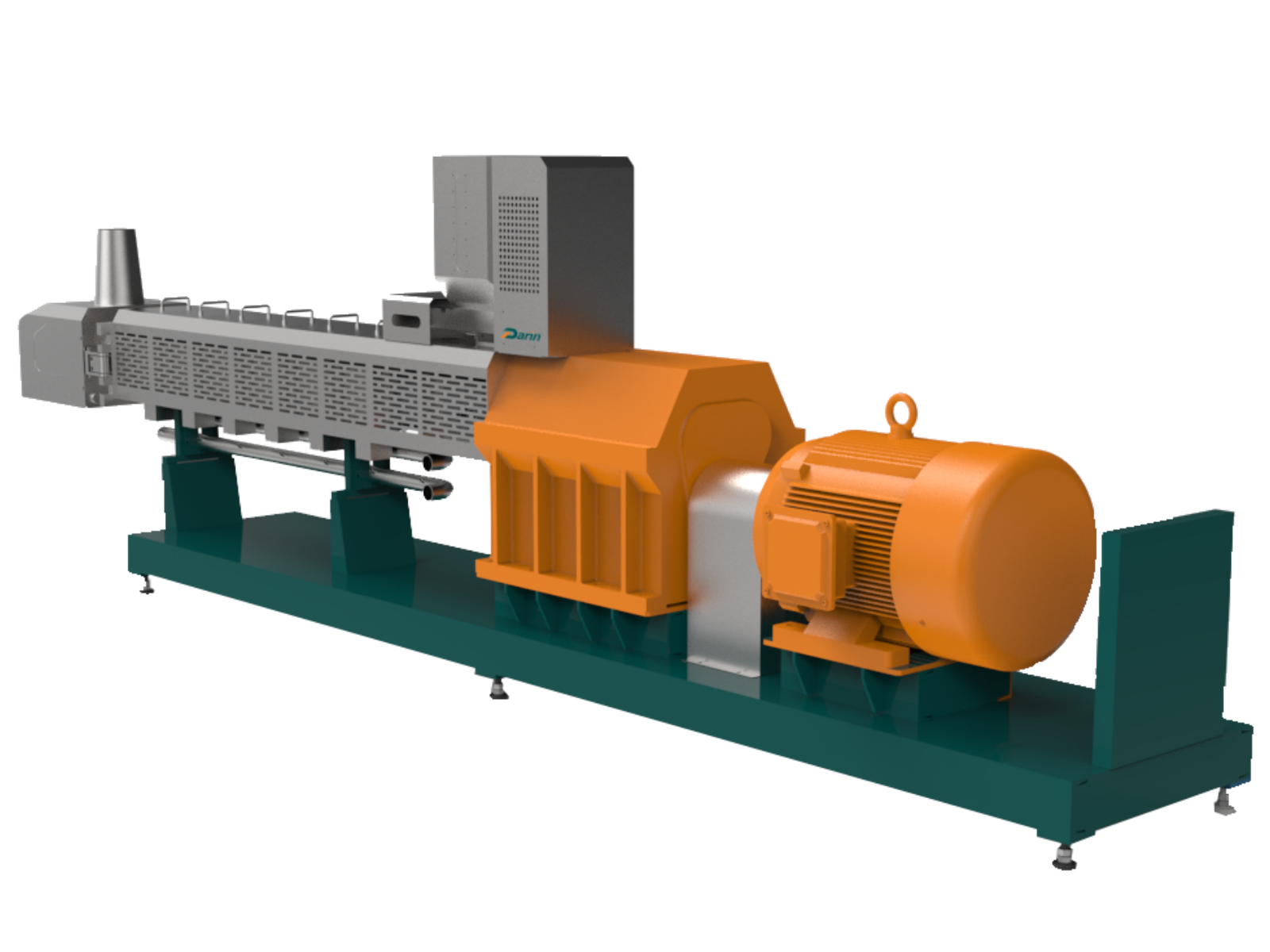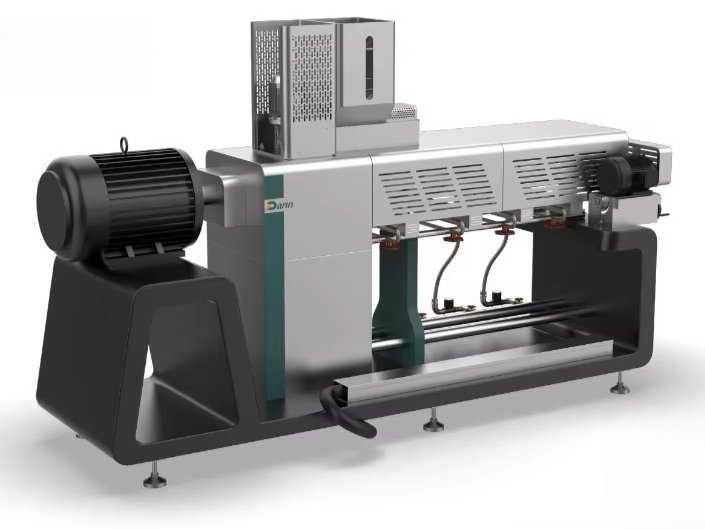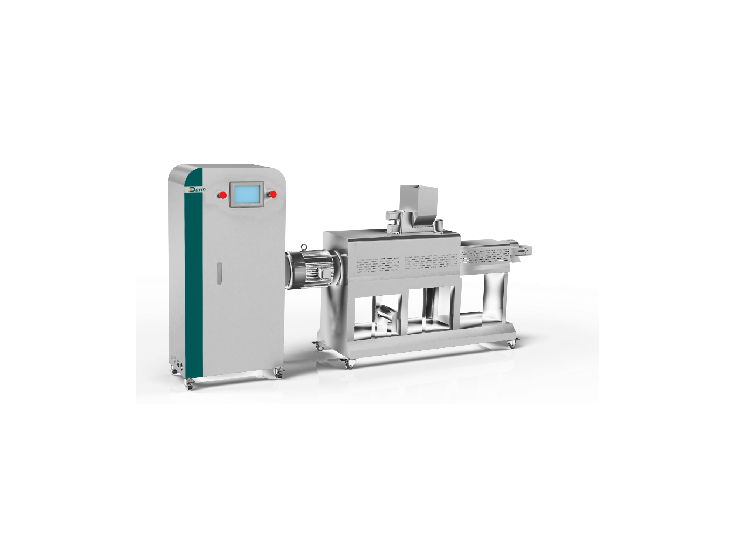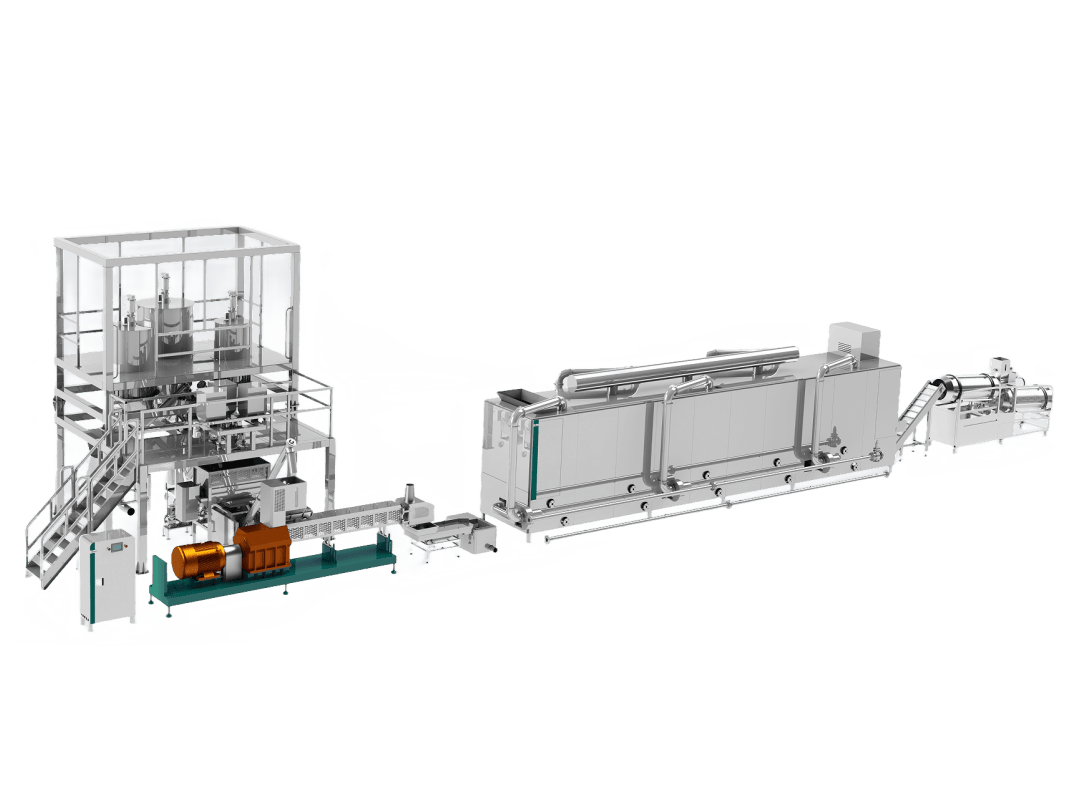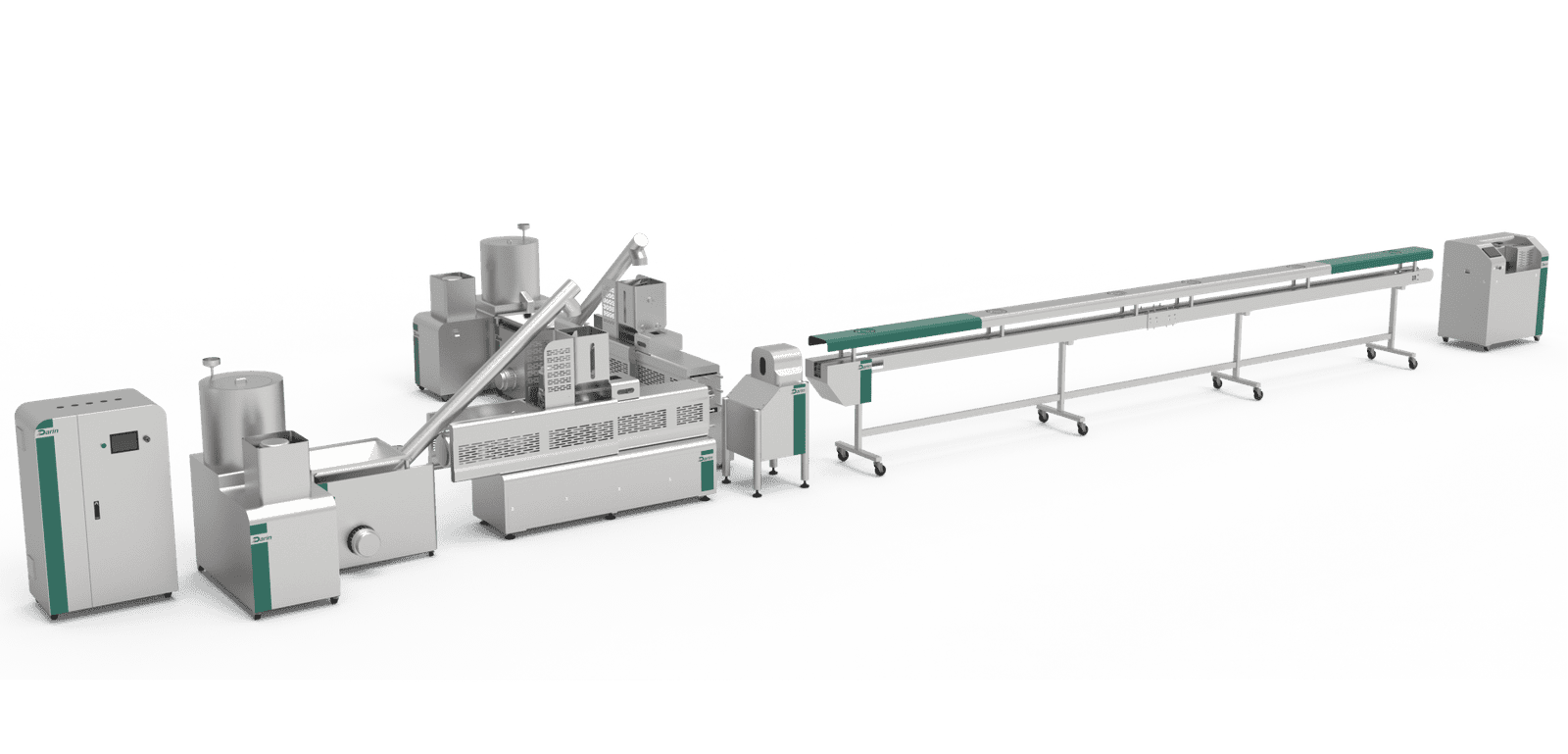
In commercial jerky production, the most common pain points are unstable product quality, inconsistent moisture levels, slow drying speeds, high labor dependency, and food safety risks caused by manual handling. These issues directly reduce yield, hurt brand reputation, and limit production scalability. The solution is to adopt a professionally engineered beef jerky machine designed for precision, efficiency, and continuous operation. Choosing the right equipment eliminates variability, increases profitability, and ensures every batch meets strict food safety standards. This article will guide you through the exact machine that delivers the best performance for making beef jerky.
The best machine to make beef jerky is a fully automatic Jerky Processing Line equipped with a precision slicer or meat strip former, multi-layer continuous hot-air dryer, humidity–temperature intelligent control system, and full stainless-steel food-grade construction. This setup ensures uniform cuts, stable dehydration, consistent texture, higher yield, and significantly improved food safety. For all medium to large-scale operations, the fully automated line offers the highest productivity and return on investment.
To help you understand why this equipment is the optimal choice, the following sections break down the engineering logic, machine structure, performance standards, and industrial comparisons—all written from the perspective of a food engineering PhD and manufacturer at Darin Machinery.
Air fryers can replace commercial jerky dryers for industrial beef jerky production.False
Air fryers cannot maintain the precise airflow, temperature uniformity, humidity control, or continuous capacity required for industrial jerky processing.
What Defines the Best Machine for Making Beef Jerky?
Selecting the best jerky machine requires evaluating key engineering and production metrics that directly influence product quality, food safety, and operating cost. From a technical standpoint, an ideal jerky machine must perform precise dehydration while maintaining consistent shape, texture, and flavor. Below are the core performance pillars:
Cutting Uniformity
High-quality jerky begins with consistent thickness. Machines must achieve ±0.2 mm tolerance to prevent:
- Over-drying
- Under-drying
- Textural inconsistency
- Bacterial growth due to uneven moisture
- Increased batch failures
Automatic slicers and meat strip formers ensure stable dimensions across all batches.
Drying Precision and Efficiency
Industrial jerky requires a controlled dehydration environment that maintains:
- Temperature: typically 55–75°C
- Airflow speed: stable and directional
- Humidity removal: optimized to prevent case hardening
- Uniform drying across multiple layers
The best equipment integrates PID temperature control and recirculating hot air systems for maximum efficiency.
Food Safety Compliance
All professional jerky machines should meet:
- HACCP
- CE
- USDA/FDA hygiene requirements
- GMP standards
This requires:
- 304/316 stainless steel
- Smooth, cleanable surfaces
- No bacterial retention zones
- Sanitary conveyor belts
- Easy disassembly for washing
Continuous Production Capability
For factories operating 8–24 hours per day, continuous conveying dryers are essential. Continuous systems provide:
- Stable input/output
- Reduced labor
- Predictable batch cycles
- Higher throughput
Batch ovens cannot match this efficiency for medium-to-large facilities.
Scalability and Consistency
The best system allows programmable digital recipes that maintain:
- Fixed moisture content
- Identical texture across batches
- Repeatable drying curve
- Standardized production times
This is vital for brand consistency and large-scale distribution.
Energy Efficiency
Professional dryers include:
- Heat recovery
- Multi-cycle thermal control
- High-efficiency insulation
These reduce energy consumption by 30–40%, especially with long drying cycles.

Types of Beef Jerky Machines Available
To determine the best option for your operation, here is a full classification of machines used in jerky production.
Table 1 — Classification of Beef Jerky Machines
| Machine Type | Description | Capacity Range | Best For | Advantages | Limitations |
|---|---|---|---|---|---|
| Automatic Jerky Processing Line | Full slicing/forming → drying → cutting → output | 300–2000 kg/day | Medium–large factories | Highest efficiency, continuous, stable quality | Higher initial investment |
| Continuous Conveyor Dryer | Multi-layer high-airflow dryer | 100–1500 kg/day | Growing facilities | Consistent drying, low labor | Requires steady feeding |
| Batch Drying Oven | Tray-based, trolley loading | 50–500 kg/batch | Small workshops | Affordable, flexible | Labor intensive, inconsistent |
| Meat Slicer | Cuts beef into uniform slices | Depends on upstream | All jerky types | Perfect slicing accuracy | Only slicing |
| Meat Strip Former | Extrudes shaped strips | 200–800 kg/h | Pet treats, molded jerky | Identical shapes, high speed | Not suitable for whole muscle jerky |
| Smokehouse | Adds smoke flavor + partial drying | 50–300 kg/batch | Artisanal jerky | Authentic flavor | Low throughput |
Why the Automatic Jerky Processing Line Is the Best Overall Choice
Among all available systems, the fully automatic jerky processing line consistently outperforms others in terms of quality, efficiency, and long-term operating cost. It integrates the full production chain, reduces human error, and ensures every product meets commercial standards.
Key Advantages
- Uniform slicing or forming
- Continuous feeding + continuous drying
- Digital temperature and humidity control
- Minimal labor required
- High food safety
- Consistent quality across all shifts
- Lower cost per kilogram produced
- Stable production, suitable for scaling
This makes it the top choice for manufacturers targeting supermarket, wholesale, OEM, or export markets.
Table 2 — Manual vs Semi-Automatic vs Fully Automatic Jerky Equipment
| Criteria | Manual | Semi-Auto | Fully Automatic Line |
|---|---|---|---|
| Labor Requirement | High | Medium | Very Low |
| Consistency | Poor | Medium | Excellent |
| Food Safety | Low | Medium | High |
| Energy Efficiency | Low | Medium | High |
| Production Scale | Very Small | Small–Medium | Medium–Large |
| Product Quality | Unstable | Acceptable | Professional |
| Cost per kg | High | Medium | Low |
Beef Jerky Production Flow: Step-by-Step Technical Breakdown
Understanding the complete production flow is essential for selecting the best beef jerky machine, because every piece of equipment must match the physical behavior of meat proteins, the thermodynamics of dehydration, and the hygiene requirements of modern food processing. A fully engineered jerky line follows a systematic, scientifically controlled sequence. This section explains each stage in depth from a food engineering perspective, helping you see why certain machines perform better and how they integrate into a continuous automated system. Each stage is written in long-form technical detail to ensure you can directly apply this knowledge to your factory planning, equipment procurement, quality control, and cost optimization.
Beef jerky manufacturing is essentially a process of controlled moisture removal from animal muscle while preserving flavor, color, and texture. This requires careful preparation, precise cutting, uniform seasoning, and highly accurate drying conditions. Any deviation at one stage will directly affect the final product. For example, inconsistent slicing thickness leads to inconsistent moisture content, which causes one piece to be overdried while another remains too moist. This not only affects texture but introduces major food safety risks such as microbial survival or growth. That is why the automated line begins with controlled mechanical cutting or forming. Different products—traditional beef slices, beef strips, beef chips, molded jerky, pressed jerky, or pet jerky—require different forming equipment, but the underlying engineering principles remain consistent.
In a well-designed jerky line, slicing or forming must be followed immediately by uniform layering or conveyor feeding. Industrial hot-air drying relies on predictable airflow behavior. If pieces overlap, stack, or fold during loading, the airflow becomes turbulent, drying time increases, and moisture distribution becomes non-uniform. High-end jerky lines solve this through mechanical distribution systems or vibrating conveyors to ensure evenly spaced product layers. Once loading is correct, drying begins in a tunnel-style continuous dryer. Multi-layer conveyor dryers provide the highest efficiency because they maximize surface exposure while minimizing floor space. Airflow is engineered to move horizontally across the meat surface, extracting moisture without damaging protein structure. Temperature is controlled through PID systems, and humidity is monitored through sensors that release moist air at precisely timed intervals. All these engineering steps exist to avoid “case hardening,” a phenomenon where high surface temperature seals the meat exterior, trapping moisture inside.
After drying, the jerky enters cooling and cutting stages. Cooling stabilizes the product, prevents moisture rebound, and ensures the jerky maintains structural integrity during handling. This stage is often overlooked in small workshops but is mandatory for professional production. Once cooled, jerky may be cut into bars, small bites, or strip lengths depending on market requirements. Finally, product is transferred to packaging. Whether vacuum packs, nitrogen-flush pouches, or bulk industrial bags, packaging must match jerky water activity (Aw) to ensure shelf-life stability.
The following section breaks down every step in a professionally engineered jerky production sequence.
Step 1: Meat Selection and Raw Material Preparation
The foundation of high-quality beef jerky begins with selecting the correct raw material. Meat proteins change structurally during drying, so choosing the wrong cut affects chewiness, shrinkage rate, and yield. Manufacturers should choose lean cuts with minimal connective tissue. Excess fat oxidizes during drying, leading to rancidity and reduced shelf life. Cuts commonly used include top round, bottom round, flank, and sirloin. These muscles provide ideal alignment of fibers, predictable moisture loss, and consistent texture.
Once the cuts are chosen, trimming begins. Excess fat, sinew, and membranes must be removed. In automated lines, trimming can be semi-mechanical but still requires skilled labor. Precision trimming improves slicing uniformity and drying efficiency. If producing pet jerky, quality requirements differ; however, safety demands remain strict—raw materials must comply with veterinary import standards, including parasite and residue tests. Proper raw material temperature is also critical. Meat should remain at 0–4°C to facilitate clean slicing or forming. Temperature affects viscosity, hardness, and structural rigidity. Warmer meat results in smearing and irregular slices, while overly frozen meat causes blade damage and thickness inconsistency.
Many modern factories use blast chillers to bring meat to optimal pre-processing temperature. Grinding and forming-based jerky (common in pet treats) requires specific particle size to ensure proper protein extraction. Salt, phosphate, or other functional binders may be incorporated to increase structure. For whole-muscle jerky, marination can occur here, depending on recipe. Vacuum tumblers are used to enhance penetration and retain moisture, but excessive marination affects texture contraction during drying.
Step 2: Precision Slicing or Forming
This step is the most important mechanical determinant of jerky quality. Slicing machines must maintain strict thickness tolerances, typically between 1.5–6 mm depending on jerky type. High-end slicers use high-torque motors, servo-controlled thickness adjustment, and razor-sharp blades designed to cut along muscle grain. Thickness deviations lead directly to inconsistent drying trajectories. A ±0.5 mm variation can change drying time by as much as 20–30%, resulting in unsafe moisture pockets.
For strip jerky, an automatic meat strip former extrudes uniform shapes using a hydraulic or pneumatic forming system. This is essential for pet treats and molded jerky. The machine forces ground meat through forming dies to create bars, twists, sheets, or custom shapes. Protein alignment, viscosity, and fat content influence forming performance, so recipe development must align with mechanical capability.
The following table compares slicing vs forming for different jerky products.
Table — Slicing vs Forming Comparison
| Product Type | Best Method | Thickness/Shape Control | Typical Equipment | Notes |
|---|---|---|---|---|
| Whole Muscle Beef Jerky | Slicing | ±0.2 mm precision | Automatic meat slicer | Required for human-grade jerky |
| Beef Strips (Human) | Slicing or forming | Medium precision | Slicer or strip former | Depends on recipe |
| Molded Jerky (Pet) | Forming | High uniformity | Meat strip former | Perfect for shaped treats |
| Jerky Bars | Forming | Die-controlled | Extrusion former | High-speed production |
| Shredded Jerky | Slicing + pulling | Medium | Slicer + shredder | Specific to certain markets |
Step 3: Seasoning or Marination (Optional)
Seasoning enhances flavor and affects water activity. Commercial operations often use vacuum tumblers, which create pressure differentials to drive marinade into meat fibers. Tumbling reduces marination time from several hours to 20–40 minutes. Over-tumbling causes weakened fiber structure, impacting chewiness. Human-grade jerky requires strict recipe control to meet sodium and preservative regulations. Pet jerky has different technical standards—no spices, minimal additives, controlled protein hydration.
Seasoning viscosity must remain stable to ensure coating uniformity. High-viscosity marinades may need pre-heating or mechanical stirring. Automated jerky lines can include inline seasoning conveyors that coat meat while minimizing handling. Every change in marinade composition alters drying kinetics. Sugar-rich marinades, for example, reduce drying speed because of surface caramelization.
Step 4: Automatic Loading and Conveyor Feeding
After seasoning, jerky pieces must be spread evenly. High-end lines use vibrating conveyors or distribution belts to ensure product is single-layered and spaced evenly. In continuous dryers, airflow distribution is engineered assuming a specific loading density. If pieces overlap, air velocity drops, moisture trapping occurs, and drying cycles become unstable.
Loading density typically ranges from 18–35 kg/m² depending on product. Loaders must accommodate both lightweight strips and heavier whole-muscle slices. For pet treats, forming machines often feed directly onto conveyors, reducing contamination risks.
Step 5: Multi-Layer Continuous Hot Air Drying
This is the heart of the jerky machine. Industrial continuous dryers operate using controlled hot air, directed airflow patterns, and moisture removal systems. Unlike home dehydrators or batch ovens, continuous dryers use multiple conveyor layers, maximizing surface exposure while reducing footprint.
Key engineering features include:
- PID temperature control for precise heating
- Adjustable airflow velocity to balance evaporation
- Humidity extraction ducts to remove moisture-laden air
- Thermal insulation to reduce energy waste
- Zoned drying chambers allowing temperature gradient control
- Horizontal airflow design to prevent case hardening
- Stainless steel framework to meet hygiene standards
The drying curve for jerky follows a decreasing rate period. Initially, surface moisture evaporates quickly. After 30–40 minutes, internal moisture diffusion becomes the limiting factor. Temperature must be reduced gradually to avoid hardening. Drying typically takes 2–6 hours depending on slice thickness, moisture content, and airflow rate.
A well-designed line maintains final moisture between 18–25% for human-grade jerky, and lower for pet jerky depending on regulatory requirements.
Step 6: Cooling, Cutting, and Final Shaping
Cooling stabilizes jerky structure. Industrial cooling conveyors reduce temperature uniformly without condensation. Jerky that remains warm absorbs moisture from surrounding air, raising Aw (water activity), which increases microbial risk.
Cutting machines shape jerky into consistent sizes:
- Bars
- Mini bites
- Cubes
- Strips
- Sticks
- Uniform-length pieces
High-speed guillotine cutters or rotary cutters are used depending on product.
Uniform size improves packaging efficiency and product appearance. Cutting blades must be food-grade stainless steel and designed for easy cleaning.
Step 7: Packaging and Quality Control
Packaging locks in moisture and prevents oxidation. Vacuum sealing is common for human jerky, while nitrogen-flush pouches are used for extended shelf life. Pet jerky products often use resealable bags. Metal detectors, weight checkers, and vision inspection systems ensure product safety and consistency.
Mechanical Structure Analysis of the Core Beef Jerky Machines
To determine which jerky machine is objectively the “best,” manufacturers must understand the internal engineering structure, operating principles, material specifications, thermal dynamics, and automation logic of each machine used in the beef jerky production line. The performance of every component—slicer, former, dryer, cutter, and conveyor—directly affects jerky consistency, drying uniformity, yield, and production cost. This section provides a deep, technical, engineering-level breakdown of each machine based on industrial standards, mechanical design theory, and practical manufacturing experience from real production lines built by Darin Machinery.
Mechanical structure analysis is essential because many factories compare machines only by price or external appearance. However, two similar-looking dryers or slicers can differ dramatically in airflow engineering, motor torque, blade metallurgy, conveyor load capacity, thermal insulation, PLC logic, and sanitation design. These differences translate into real problems on the production floor: uneven drying, overheating, short equipment lifespan, excess energy consumption, microbial risks, and high maintenance cost. By learning the internal structure, you will be able to evaluate equipment scientifically, avoid hidden problems, and select machines that deliver stable, professional-quality jerky at scale.
Below you will find detailed structural explanations written from a food engineering and mechanical design perspective, suitable for factory owners, engineers, plant managers, R&D teams, and procurement professionals planning to build or upgrade a jerky production facility.

Automatic Meat Slicer Structure and Performance Principles
A high-quality meat slicer is built around three core engineering priorities: precision, consistency, and hygiene. Cutting whole-muscle beef into uniform slices requires heavy-duty structural rigidity to resist vibration and blade deflection. Inconsistent thickness—even by a fraction of a millimeter—disrupts drying kinetics and leads to quality defects.
Core Structural Components
-
High-torque Servo Motor System
The slicing thickness is controlled by a servo-driven platform. Servo motors provide precise angular control, enabling the machine to maintain thickness within ±0.2 mm even during long shifts. Torque stability ensures the slicer handles dense muscle fibers without speed reduction. -
Hardened Stainless-Steel Blades
Blades are typically forged from SUS 420J2 or higher-grade Japanese steel, heat-treated to maintain sharpness while resisting micro-chipping. Blade hardness usually ranges from HRC 52–58, ensuring longevity and cut precision. -
Feeding Mechanism with Pressure Control
Beef slabs are fed through a pneumatic or servo-controlled pressing system that stabilizes movement and prevents slipping. Pressure must be adjustable because lean and marbled sections compress differently during slicing. -
Food-Grade Belt and Anti-bacterial Surfaces
Conveyor belts are made of FDA-compliant PU or modular PP with seamless joints. Belts must withstand extreme moisture and protein residue without harboring bacteria. -
Safety and Sanitation Design
- Quick-release blade covers
- Smooth, weld-free surfaces
- CIP-compatible spray channels
- Emergency-stop sensors
These features ensure compliance with HACCP and CE.
Table — Key Technical Metrics for Industrial Meat Slicers
| Parameter | Ideal Specification | Impact on Jerky Quality |
|---|---|---|
| Slice Thickness Control | ±0.2 mm | Determines uniform drying |
| Motor Type | Servo motor | Precision and stability |
| Blade Material | SUS 420J2 / 440C | Durability, hygiene |
| Feeding Pressure | Adjustable 0.2–0.6 MPa | Prevents deformation |
| Output Capacity | 600–1500 kg/h | Meets industrial demand |
A high-performance meat slicer ensures downstream drying remains predictable and consistent.
Meat Strip Former: Structural Analysis for Molded and Extruded Jerky
For shaped jerky such as strips, bars, twists, and pet treats, the meat strip former is the core forming machine. Unlike slicers, these machines process ground meat, requiring systems capable of handling protein viscosity, extrusion pressure, and die uniformity.
Key Mechanical Components
-
Stainless-Steel Extrusion Barrel
Built using 304 or 316 stainless steel to resist corrosion and protein residue. Barrel thickness is engineered to withstand continuous pressure without warping. -
High-Pressure Hydraulic or Pneumatic System
The pressure system drives meat through dies. Hydraulic systems offer stronger, more consistent pressure, while pneumatic systems are more affordable and suitable for lighter products. -
Forming Dies
Dies determine final jerky shape. They must be CNC-machined and polished to reduce friction. Die material is often SUS 304 or food-grade nylon. -
Feeding Hopper with Auger
An auger or screw feeder pushes meat evenly into the forming barrel. The auger must maintain uniform torque to prevent air pockets that cause shape defects. -
Temperature-Controlled Structure
Ground meat has specific rheology characteristics. Heat causes protein softening, altering extrusion behavior. High-end machines include cooling jackets to maintain temperature below 10°C for optimal forming.
Table — Extrusion vs Whole-Muscle Forming Comparison
| Feature | Meat Strip Former | Meat Slicer |
|---|---|---|
| Raw Material | Ground meat | Whole muscle |
| Shape Variability | Very high | Limited |
| Texture | Molded/chewy | Natural fibrous |
| Capacity | 200–800 kg/h | 600–1500 kg/h |
| Best Application | Pet treats, bars, twists | Human jerky |
The mechanical precision of the strip former directly controls shape stability during drying.
Multi-layer Continuous Hot-Air Dryer: Full Engineering Breakdown
The dryer is the heart of the beef jerky processing line. Its internal design determines:
- Drying uniformity
- Final moisture content
- Energy consumption
- Microbial safety
- Product color and texture
A poorly designed dryer leads to brittle surface, uncooked centers, uneven color, excessive shrinkage, or burned edges.
Structural Components and Engineering Details
-
Multi-layer Conveyor System
Typically 3–7 layers, built using food-grade stainless steel mesh or PTFE belts. Conveyor structure must resist warping at high temperatures. The multi-layer design maximizes surface area. -
Airflow and Circulation Chamber
Horizontal airflow is most effective for jerky. Internal ducts direct air evenly across each layer. CFD (Computational Fluid Dynamics) modeling is used in modern dryers to avoid dead airflow zones. -
PID Temperature Control System
Industrial controllers regulate temperature with ±1°C precision. Dryer zones are independently controlled to form a drying curve—from high-temperature surface evaporation to lower-temperature moisture diffusion. -
Moisture Exhaust System
Exhaust fans remove saturated air. Automatic humidity sensors adjust exhaust rate in real time. This prevents wet air accumulation, which slows evaporation. -
Heat Source
- Electric
- Natural gas
- Steam
Selection depends on local energy cost and regulatory requirements. Electric dryers provide the most precise control.
-
Insulated Thermal Panels
Insulation reduces heat loss by 20–30%, improving energy efficiency. Panels are typically polyurethane-filled stainless-steel composite panels. -
Sanitary Frame and Access Doors
The dryer must be fully washable. Access doors allow cleaning of internal ducts and conveyors.
Table — Key Technical Specifications of Industrial Jerky Dryers
| Specification | Optimal Range | Importance |
|---|---|---|
| Temperature Range | 40–90°C | Supports all jerky types |
| Belt Speed Range | 0.5–8 m/min | Controls drying curve |
| Air Velocity | 1.5–3.5 m/s | Ensures uniform drying |
| Layers | 3–7 | Increases output capacity |
| Moisture Exhaust Rate | Auto-controlled | Prevents condensation |
| Energy Consumption | 25–65 kW/h | Impacts operating cost |
Cooling Conveyor Structure
Cooling is often ignored, but it is scientifically essential. If jerky is packaged while warm, condensation forms inside the bag, increasing water activity.
Key design features:
- Open-structure stainless mesh belt
- High-volume fans with low-temperature airflow
- Optional dehumidified cooling tunnels
- Adjustable cooling time (5–20 min)
Cooling conveyors stabilize internal moisture distribution, ensuring consistent texture.
High-speed Cutter and Portioning System
After drying and cooling, jerky may need to be cut into specific shapes. Industrial cutters use:
- Servo-controlled guillotine blades for bars
- Rotary knives for strip cutting
- Multi-lane cutting heads for mass production
Key engineering factors include:
- Hygienic stainless-steel construction
- Blade-change mechanisms for fast sanitation
- Sensor-based product detection
- Adjustable cutting spacing (1–200 mm)
Precision cutting improves package uniformity and consumer experience.
Technical Table: Complete Jerky Line Machine Structure Summary
| Machine | Key Components | Critical Engineering Detail | Impact on Quality |
|---|---|---|---|
| Meat Slicer | Blade + servo + belt | Thickness precision | Drying uniformity |
| Strip Former | Barrel + dies + hydraulic | Shape consistency | Product appearance |
| Continuous Dryer | Airflow + PID + conveyors | Moisture removal accuracy | Texture & safety |
| Cooling Conveyor | Fans + mesh belt | Temperature drop control | Shelf stability |
| Cutter | Servo knives | Size accuracy | Packaging efficiency |
Factory Capacity Planning for Beef Jerky Production
Accurately planning production capacity is the core of building a profitable jerky factory. Most new manufacturers either underestimate capacity—leading to insufficient production and lost orders—or overestimate capacity, causing unnecessary investment, excessive energy consumption, and equipment under-utilization. Proper capacity planning ensures that every machine is correctly sized and coordinated, that labor and utilities are balanced, and that the jerky line operates continuously without bottlenecks. This section provides a deep engineering analysis of capacity calculation, throughput balancing, layout design, and cost-performance evaluation suitable for building small, medium, and large jerky factories. All formulas, tables, and recommendations reflect real industrial data from jerky lines designed by Darin Machinery.
Capacity planning is not simply choosing a machine based on “500 kg/h” or “1000 kg/day.” Real jerky capacity varies with raw material type, moisture content, slice thickness, loading density, drying losses, and equipment configuration. For example, whole muscle jerky has a yield of around 40–55%, while extruded pet jerky may yield 60–85% depending on moisture targets. The continuous dryer must match upstream slicing speed and downstream cutting/packaging capacity. Even a perfect slicer will not improve output if the dryer becomes the bottleneck. This section explains the complete engineering logic required to avoid such mismatches.
Understanding Yield Calculations in Jerky Production
Before calculating machine capacity, manufacturers must understand yield—the ratio between raw meat input and final jerky output. Yield changes with:
- Slice thickness
- Initial moisture content of beef
- Final target moisture (human vs pet)
- Marinade composition
- Drying curve
- Airflow speed
- Dryer dwell time
- Temperature zones
Beef typically contains 70–75% moisture, while finished jerky contains 18–25% moisture for human consumption and often 12–18% for pet jerky.
Formula: Basic Jerky Yield Calculation
[
\text{Yield} = \frac{100 - \text{Initial Moisture}}{100 - \text{Final Moisture}} \times 100%
]
Example for typical beef jerky:
- Initial Moisture = 72%
- Final Moisture = 22%
[ \text{Yield} = \frac{28}{78} \approx 35.9% ]
This means 1000 kg raw beef → ~359 kg finished jerky.
If using formed pet jerky (starting moisture ~60%, ending ~14%), yield increases.
Table — Typical Yield by Jerky Type
| Jerky Type | Initial Moisture | Final Moisture | Expected Yield |
|---|---|---|---|
| Whole Muscle Human Jerky | 70–75% | 18–25% | 35–55% |
| Soft Human Jerky | 65–70% | 30–35% | 45–65% |
| Formed Pet Jerky | 60–65% | 12–18% | 55–85% |
| Shredded Jerky | 68–72% | 20–25% | 40–55% |
Factories must size their equipment according to raw input capacity, not finished output, because all machine specs—slicer capacity, dryer load density, conveyor size—are based on raw material flow.
Throughput Balancing: Matching All Machines in the Line
A jerky line consists of multiple machines that must operate in synchrony:
- Slicer or forming machine
- Distribution conveyor
- Multi-layer drying conveyor
- Cooling line
- Cutter
- Packaging area
If any single section is slower, it restricts overall output.
Critical Principle: Dryer Defines Maximum Output
Even if the slicer can process 1500 kg/h, if the dryer handles only 600 kg/h (raw basis), the hourly raw meat input cannot exceed 600 kg.
Therefore, capacity planning always begins with the dryer.
Dryer Capacity Calculation (Engineering Model)
Dryer capacity depends on:
- Belt width
- Number of layers
- Loading density (kg/m²)
- Belt speed
- Dwell time
- Useful drying area (m²)
Formula: Raw Material Capacity in Continuous Dryer
[
\text{Dryer Capacity (kg/h raw)} = \text{Total Belt Area per Hour} \times \text{Loading Density}
]
Where:
[
\text{Total Belt Area per Hour} = \text{Belt Width} \times \text{Belt Speed} \times \text{Layers}
]
Example Calculation
Assume:
- Belt Width = 1.2 m
- Layers = 5
- Belt Speed = 2 m/min = 120 m/h
- Loading Density = 25 kg/m²
[
\text{Total Belt Area} = 1.2 \times 120 \times 5 = 720 \text{ m²/h}
]
[
\text{Dryer Capacity} = 720 \times 25 = 18,000 \text{ kg/h raw}
]
But drying time is not zero; actual usable section is often 10–20% lower depending on thermal load and product type.
Commercial Example
A typical 5-layer dryer (bigger industrial type):
- Belt Width = 1.2 m
- Belt Speed = 0.5–5 m/min
- Drying Time Required = 2.5 hours
- Working Length = 15 m
Thus, hourly capacity is:
[
\text{Dryer Capacity} \approx 400–800 \text{ kg/h raw}
]
This is the true industrial range used worldwide.
Factory Size Classification and Recommended Equipment Configurations
Different factories require different equipment sizing. Below are engineering-based configurations.
Small-Scale Jerky Factory (Daily Output: 300–800 kg Raw)
Suitable for:
- Startups
- Specialty jerky brands
- Shops entering supermarkets
- Limited product lines
Recommended Equipment
- Meat slicer: 300–600 kg/h
- Batch dryer or small continuous dryer: 150–300 kg/h
- Manual or semi-auto cutter
- Small packing machines
Factory Space Requirement
[
100–200 \text{ m²}
]
Advantages
- Low investment
- Flexible production
- Easy recipe adjustments
Limitations
- Higher labor cost
- Inconsistent drying vs large lines
- Limited capacity for scaling
Medium-Scale Factory (Daily Output: 1,000–3,000 kg Raw)
Suitable for:
- Regional jerky brands
- OEM/contract manufacturing
- Export-oriented factories
Recommended Equipment
- High-precision slicer: 800–1500 kg/h
- Multi-layer continuous dryer: 400–600 kg/h
- Cooling conveyor
- Guillotine cutter
- Automatic packing line
Factory Space Requirement
[
350–600 \text{ m²}
]
Advantages
- Higher consistency
- Lower labor cost
- Suitable for stable large orders
- Balanced CAPEX vs output
Large-Scale Industrial Factory (Daily Output: 5,000–20,000 kg Raw)
Designed for:
- International brands
- Major supermarket suppliers
- Large pet food manufacturers
Recommended Equipment
- Servo slicer ≥1500 kg/h
- Forming line for multiple SKUs
- Large continuous dryer: 800–1500 kg/h raw
- Fully automated conveyors
- Multi-stage cutting and shaping
- Central PLC system
- Metal detection + X-ray inspection
- High-speed packaging system
Factory Space Requirement
[
1200–3000 \text{ m²}
]
Advantages
- Extremely low cost per kg
- Highest consistency and hygiene
- Excellent energy efficiency
- Ideal for global exports
Energy Consumption Model
Drying is the largest energy consumer (60–80% of total).
Continuous Dryer Power Usage
| Dryer Size | Power Consumption | Raw Capacity |
|---|---|---|
| Small | 18–30 kW | 80–200 kg/h |
| Medium | 40–55 kW | 300–500 kg/h |
| Large | 65–95 kW | 600–1000 kg/h |
Costs vary by country, but in most markets:
[
\text{Drying Cost} = 0.10–0.35 \text{ USD per kg raw}
]
Proper airflow/heat recovery reduces cost by 20–30%.
ROI Analysis for Jerky Machine Investments
Return on investment depends on:
- Equipment price
- Raw material price
- Yield
- Energy cost
- Labor
- Sales price
Example ROI for Medium Factory
- Input: 2000 kg raw/day
- Finished jerky: ~800 kg/day (40% yield)
- Selling price: $15/kg (human jerky)
Revenue ≈ $12,000/day
Operating cost typically:
- Raw beef: 2000 kg × $5/kg = $10,000
- Energy + labor: $700–$1200
- Packaging: $300–500
Gross margin before overhead:
[
12,000 - (10,000 + 900 + 400) = 700 \text{ USD/day}
]
Payback period on a $150,000 jerky line:
[
\approx 5–7 \text{ months}
]
Pet jerky has even higher ROI due to lower raw material cost and higher yield.
Comprehensive Comparison of Beef Jerky Machines and Their Technical Differences
Choosing the best machine for making beef jerky requires more than comparing capacity numbers or catalog photos. Two machines that “look similar” from the outside may have fundamentally different engineering design, durability, energy efficiency, drying performance, hygiene compliance, and automation capability. These differences directly influence jerky quality, food safety, production stability, and long-term operational cost. In this section, you will learn how to evaluate jerky machines scientifically based on mechanical engineering principles, thermal dynamics, material quality, and process control systems. This knowledge helps you separate professional-grade equipment from low-cost imitations and ensures you invest in machines that can support a global-standard jerky business.
This section also includes real engineering troubleshooting cases, sanitation challenges, airflow behavior analysis, and multiple technical comparison tables. The goal is to provide you with a complete framework to identify the best jerky machine objectively—based on data, not marketing claims.
Comparison Framework: What Defines a “Good” vs “Bad” Jerky Machine?
A jerky machine must satisfy engineering requirements across 8 categories:
- Mechanical Structure Stability
- Airflow and Thermal Engineering
- Material Quality & Food Safety Compliance
- Automation and Control Systems
- Energy Efficiency and Heat Recovery
- Maintenance Accessibility & Cleanability
- Capacity-to-Footprint Ratio
- Actual Field Performance Over Long Shifts
Below is a detailed evaluation based on industrial experience across hundreds of jerky factories.
Mechanical Strength and Structural Stability
The structural rigidity of the machine determines lifespan, vibration levels, and drying uniformity. Poor structural stability causes:
- Belt misalignment
- Blade wobble (in slicers)
- Airflow turbulence
- Temperature fluctuation
- Higher maintenance cost
Engineering Comparison: Frame Structure
| Feature | High-End Jerky Machine | Low-Cost Machine |
|---|---|---|
| Frame Material | 304/316 SS thick-wall | Thin 201 SS or carbon steel |
| Welding | Full sanitary TIG welds | Spot welds, weak seams |
| Vibration Resistance | High | Low |
| Durability | 8–12 years | 2–4 years |
Professional equipment must use thick stainless-steel square tubing and sanitary welds to withstand long-term operation.
Airflow Engineering and Drying Performance
Airflow design determines jerky texture, color, and moisture consistency. Drying is a thermodynamic process involving convection, diffusion, and evaporation.
Airflow Problems in Inferior Dryers
- Hot air accumulates at the top
- Lower layers remain wet
- Jerky dries unevenly
- Surface hardening occurs
- Energy consumption increases by 20–40%
Airflow Engineering Comparison
| Parameter | High-End Dryer | Low-Cost Dryer |
|---|---|---|
| Air Distribution | CFD-optimized, uniform | Random, uneven |
| Air Ducting | Multi-zone | Single zone |
| Humidity Exhaust | Automatic, sensor-based | Manual or poor |
| Temperature Control | ±1°C PID | ±5–10°C fluctuation |
| Drying Curve | Programmable | Fixed, low accuracy |
This is why professional dryers can maintain consistent results across all 5–7 conveyor layers.
Material Quality and Hygiene Design
Jerky is a high-protein product that supports bacterial growth. Therefore, all machines must support HACCP and GMP-level hygiene.
Material Differences
| Component | High-End Machine | Low-Cost Machine |
|---|---|---|
| Framework | SUS 304 or 316 | 201 or mixed steel |
| Belt | Food-grade PP/PTFE | Unknown plastic |
| Surfaces | Polished, smooth | Rough, porous |
| Cleaning | CIP ready | Hard-to-clean corners |
Inferior materials cause rust, contamination, and failed inspections.
Automation Systems & PLC Control
Modern jerky lines rely on digital control for consistency and labor reduction.
Control System Comparison
| Feature | High-End Line | Low-Cost Line |
|---|---|---|
| PLC Brand | Siemens / Mitsubishi | Unknown PLC |
| HMI | Touchscreen 7–10” | Small buttons |
| Recipe Management | Yes (multi-recipe) | None |
| Auto Fault Detection | Yes | No |
| Temperature/Humidity Control | Automated | Basic |
The best jerky machines allow operators to load recipe profiles for different products.
Energy Efficiency and Heat Recovery
Dryers consume 60–80% of total factory energy. Heat recovery drastically reduces cost.
Energy Comparison
| Dryer Type | Energy Consumption per kg Raw | Efficiency |
|---|---|---|
| High-End Dryer | 0.10–0.20 kWh | High |
| Low-Cost Dryer | 0.30–0.45 kWh | Poor |
A poor dryer can double your electricity bill.
Maintenance and Cleaning Accessibility
Downtime directly affects daily output. Machine design must support fast cleaning and quick maintenance.
Maintenance Comparison
| Feature | High-End Equipment | Low-Cost Equipment |
|---|---|---|
| Door Access | Full stainless hinged doors | Small openings |
| Belt Replacement | Easy quick-release | Complex and slow |
| Cleaning | Tool-free | Requires disassembly |
| Spare Parts | Standardized | Hard to source |
Industrial Troubleshooting Cases
These cases demonstrate how poor machine engineering creates production issues.
Case 1: Jerky Over-hard Edges, Wet Centers
Cause: Airflow imbalance between layers
Solution: Reconfigure airflow ducts + adjust belt speed
Result: Moisture variation reduced from ±7% to ±1.5%
Case 2: Jerky Color Darkening During Drying
Cause: Temperature fluctuation > ±5°C
Impact: Sugars caramelize, producing uneven browning
Solution: Upgrade PID controller, recalibrate sensors
Case 3: Dryer Output Lower Than Advertised
Cause: Loading density too low due to belt sagging
Solution: Reinforced support structure + belt tension adjustment
Case 4: Bacteria Detected in Finished Jerky
Cause: Hard-to-clean corners inside dryer
Solution: Replace with sanitary-welded structure
Hygiene and Food Safety Design Principles
High-end jerky equipment must follow sanitary design principles similar to those used in meat processing plants.
Sanitary Design Checklist
- No 90-degree internal corners
- Smooth 304/316 stainless steel surfaces
- CIP spray ball integration
- Drainage channels for wash water
- Food-safe belts and gaskets
- External electrical components protected (IP65+)
Factories that follow these principles pass audits from:
- FDA
- CFIA
- EU CE
- AVA Singapore
- AQSIQ (China)
Complete Technical Parameter Comparison Table
This table summarizes everything across slicers, formers, dryers, and cutters.
Table — High-End vs Low-End Jerky Machine Specifications
| Component | High-End Machine | Low-End Machine |
|---|---|---|
| Frame | 304/316 SS | 201 SS / steel |
| Dryer Layers | 5–7 | 2–3 |
| Airflow Uniformity | CFD-optimized | Poor |
| Temperature Control | PID ±1°C | Fluctuates ±5–10°C |
| Energy Consumption | Low | High |
| Belt Type | PTFE/SS | PVC/plastic |
| Motor | Siemens/Mitsubishi | Unknown brand |
| Sensors | Digital | Basic |
| Longevity | 8–12 years | 3–5 years |
| Sanitary Design | GMP | Non-compliant |
| Operating Stability | High | Low |
This table shows clearly why high-end jerky machines offer superior quality and lower long-term cost.
Factory Sanitation Workflow and HACCP Requirements for Beef Jerky Production
A jerky production line—no matter how advanced the machinery—cannot consistently deliver safe and high-quality products without a rigorous sanitation workflow and a fully implemented HACCP (Hazard Analysis and Critical Control Points) plan. Beef jerky belongs to the “high-protein, low-moisture, ready-to-eat” category, meaning any contamination introduced during processing can survive through the entire shelf life if not properly controlled. This section provides a complete technical framework for designing sanitation procedures, establishing CCPs (Critical Control Points), and selecting machine structures that support hygienic operations. These principles follow global food safety systems including HACCP, USDA, FDA, CFIA, EU CE, AVA, GMP, and are aligned with engineering standards used in modern jerky factories worldwide.
Industrial sanitation is both a systematic engineering discipline and a regulatory requirement. Every part of a jerky machine—blades, belts, conveyors, ducts, loading components, drying chambers, cutting zones, and packaging interfaces—must be accessible for cleaning, free from microbial harborage sites, and made of food-grade materials. Improper sanitation is the leading cause of jerky recalls, including contamination by Salmonella, Listeria monocytogenes, and spoilage organisms. A well-engineered jerky machine incorporates hygiene into its structural design: smooth welds, self-draining surfaces, rounded corners, clean-in-place (CIP) channels, tool-free disassembly, sealed electrical components, and wash-down compatible frames. This section explains how these engineering elements translate into practical sanitation procedures.
HACCP Framework for Jerky Production Lines
A complete HACCP plan for jerky production includes seven major principles:
- Conduct hazard analysis
- Determine critical control points (CCPs)
- Establish critical limits
- Establish monitoring procedures
- Establish corrective actions
- Establish verification procedures
- Establish record-keeping systems
To apply these principles, we analyze each jerky production stage from raw meat intake to finished packaging.
Primary Hazard Categories
- Biological: Salmonella, Listeria, E. coli, mold, spores
- Chemical: Cleaning residue, excessive preservatives, allergen cross-contact
- Physical: Bone fragments, metal shards, plastic fragments
A jerky factory must address all three categories through equipment design and workflow engineering.
Sanitation Workflow by Processing Stage
1. Raw Material Receiving Zone
Critical hazards include:
- Microbial contamination
- Temperature abuse
- Cross-contamination with other products
Engineering requirements:
- Chilled receiving area at 0–4°C
- Stainless-steel receiving tables
- Dedicated drains and washable walls
- Temperature logging system
Cleaning workflow:
- Wash floors/walls with alkaline detergents
- Sanitize with chlorine or quaternary ammonium
- Record all temperatures upon intake
2. Trimming & Slicing Area
This area generates the highest bacterial load because of raw protein exposure.
Engineering must include:
- 304/316 stainless slicing table
- Anti-bacterial, food-grade conveyor belts
- Fully sealed slicer motors (IP65+)
- Tool-free blade removal
- No hollow tube frames (harborage risk)
Daily sanitation:
- Disassemble slicer
- Wash blades separately
- Clean belts with foam detergent
- Sanitize with 80–100 ppm chlorine
- Wipe dry to prevent rust
CCPs in this area:
- Blade integrity (prevent physical hazards)
- Temperature control
- Surface sanitation verification
3. Seasoning & Marination
Major risks:
- Microbial growth in high-moisture environments
- Incomplete cleaning of tumblers
- Residual allergens
Machine design requirements:
- Tumbler with smooth interior curves
- CIP spray ball
- Hygienic seals and gaskets
- Sloped bottom for drainage
Sanitation procedure:
- Drain tumbler
- Rinse with warm water (50–60°C)
- Circulate cleaning chemicals
- Sanitize with peracetic acid or chlorine
Critical limits:
- Tumbler internal temperature < 7°C during marination
- Zero visible residue after washing
4. Conveyor Loading Zone
This stage has high cross-contamination risk because jerky pieces are spread out manually or semi-automatically.
Engineering needs:
- Vibrating or anti-overlap conveyors
- Removable belts
- Open-frame stainless structure
- Wash-down safe motors
Sanitation:
- Remove belt
- Clean rollers, guards, and side frames
- Sanitize all contact points
CCP:
- Belt sanitation verification using ATP swab tests
5. Continuous Dryer Sanitation Engineering
The dryer is the most challenging machine to clean because it contains:
- Multiple layers
- Internal ducting
- Air circulation channels
- Heat zones
- Difficult-to-access areas
High-end dryers solve this with:
- Full access doors
- Smooth stainless interior
- Belt quick-release
- HACCP-grade welds
- Removable panels
- Drainage channels
- CIP-ready exhaust ducts
Daily cleaning procedure:
- Cool dryer to < 35°C
- Open access doors
- Remove belts (if modular or mesh)
- Brush off residue
- Foam-clean internal surfaces
- Rinse with high-pressure water
- Sanitize with approved chemicals
- Dry completely to avoid rust
- Inspect for residue
Critical limits:
- No protein buildup allowed
- Exhaust duct must be cleaned weekly
- Belts washed daily
6. Cooling, Cutting & Packaging Zones
These zones pose the highest risk for post-process contamination, especially from Listeria.
Machine design must guarantee:
- Complete separation from raw area
- Stainless-steel mesh cooling belts
- Food-grade blades
- HEPA-filtered cooling tunnels (optional)
- High-speed cutters with splash guards
Sanitation tasks:
- Clean cutter blades
- Sanitize cooling fans
- Wash belts with hot-water foam
- Wipe control panels with alcohol
CCP:
- Finished jerky microbial counts (daily batch test)
Zoning and Airflow Control (Clean vs Dirty Areas)
A jerky factory must separate:
- Raw zone
- Semi-processed zone
- Heated zone
- Finished product zone
Airflow must move from clean to dirty areas—not the reverse. HEPA filters may be required in packaging areas to keep microbial counts low.
Text-Based Factory Layout Example (Hygienic Flow)
Below is a clean-flow layout designed for jerky factories using continuous lines:
[Receiving Room] →
[Trimming Room] →
[Slicing Zone] →
[Seasoning Tumbler Zone] →
[Loading Conveyor] →
[Continuous Dryer (5–7 layers)] →
[Cooling Conveyor] →
[Cutter/Portioning] →
[Metal Detector] →
[Automatic Packaging Line] →
[Finished Goods Warehouse]
Cross-contamination prevention:
- No backward movement
- No sharing of tools between zones
- Personnel barrier (foot bath, hand sanitizer)
- Color-coded utensils
Hygiene Design Requirements for the Best Jerky Machines
To qualify as “best in class,” a jerky machine must support:
- Full wash-down capability
- Stainless 304/316 construction
- Sloped top surfaces (prevent water pooling)
- Rounded edges
- Zero dead corners
- IP65/IP67 electrical components
- FDA food-safe belts
- Modular or quick-release parts
These requirements ensure daily sanitation is fast, effective, and reliable.
ATP Testing and Verification
ATP (Adenosine Triphosphate) testing verifies surface cleanliness.
Thresholds:
| Surface Type | Pass (RLU) | Warning | Fail |
|---|---|---|---|
| Food Contact | < 150 | 150–300 | > 300 |
| Non-Contact | < 450 | 450–1000 | > 1000 |
ATP testing is mandatory for slicers, belts, cutters, and tumblers.
Record-Keeping Requirements
A complete sanitation log includes:
- Cleaning operator name
- Chemicals used
- Temperature logs
- ATP test results
- Metal detector logs
- Corrective actions
Regulators (FDA, EU, CFIA) require at least 2 years of documented records.
Complete Cost Structure Breakdown for Beef Jerky Production Lines
Understanding the true cost of building and running a beef jerky production line is essential for making profitable business decisions. Many companies underestimate operational expenses or overlook hidden costs associated with low-quality equipment, inconsistent drying performance, poor energy efficiency, labor-intensive workflows, or raw material losses. This section provides a comprehensive engineering-level cost analysis that covers capital expenditure (CAPEX), operating expenditure (OPEX), labor planning, utility consumption, maintenance budgets, yield loss, depreciation, and cost-per-kilogram models. These calculations are based on real data from working jerky factories around the world and reflect the actual financial performance of automated jerky lines produced by Darin Machinery.
Producing jerky is fundamentally a value-added transformation: raw beef is converted into a high-value finished product through controlled dehydration. The challenge is that dehydration removes up to 65% of the product weight, so profitability depends on optimizing yield, reducing waste, lowering labor cost, and maximizing line efficiency. Without accurate cost modeling, even a high-quality product can struggle to achieve profit margins due to raw material prices, energy consumption, and labor intensity. This is why selecting the right jerky machinery—especially the dryer, slicer, and forming system—is directly tied to financial performance. Poor-performing equipment leads to uneven yield, moisture variation, long drying cycles, high rework levels, and excessive electricity consumption. In contrast, a high-end automated jerky line secures stable and predictable cost structures.
This section provides extensive tables, formulas, and real-world modeling so that you can calculate the exact cost profile of your factory, understand your breakeven point, and evaluate the ROI of different jerky machines.
CAPEX: Equipment Investment Costs
CAPEX refers to the one-time investment required to purchase machinery, setup the plant, and commission the production line. Costs vary according to factory size, automation level, and type of jerky product (whole-muscle, formed strips, pet jerky, etc.).
Typical Equipment Investment Range
| Factory Scale | Line Configuration | Total Equipment Cost |
|---|---|---|
| Small | Slicer + small dryer + cutter | $25,000 – $60,000 |
| Medium | Full continuous line 300–600 kg/h | $75,000 – $180,000 |
| Large | Industrial automatic line 800–1500 kg/h | $200,000 – $450,000 |
CAPEX Components Breakdown
| Component | Cost Range | Notes |
|---|---|---|
| Meat slicer | $6,000–$25,000 | Higher cost = higher precision |
| Meat strip former | $8,500–$28,000 | Used for formed jerky |
| Continuous dryer | $25,000–$180,000 | Main cost driver |
| Cooling conveyor | $3,000–$15,000 | Essential for stabilization |
| Cutter | $2,000–$15,000 | Depends on automation |
| Packaging machine | $5,000–$40,000 | Vacuum or nitrogen packages |
| Metal detector | $2,500–$10,000 | Mandatory for food safety |
| Installation & commissioning | $2,000–$15,000 | Onsite or remote |
The continuous dryer accounts for 40–60% of total CAPEX because it dictates overall capacity.
OPEX: Operating Costs (Daily & Monthly)
OPEX determines long-term profitability. The main cost factors include raw materials, energy, labor, maintenance, packaging, and depreciation.
Major OPEX Components
- Raw Meat Cost
- Energy Consumption (Electric/Gas/Steam)
- Labor & Operators
- Packaging Materials
- Maintenance & Spare Parts
- Water & Cleaning Chemicals
- Factory Rent & Overhead
- Administrative Costs
Below is a full breakdown.
Raw Material Costs (The Largest Expense)
Raw meat typically represents 70–85% of total production cost.
Example raw beef cost:
- Low-grade: $3.50–$4.50/kg
- Mid-grade: $5.00–$6.50/kg
- Premium: $7.00–$12.00/kg
Jerky Yield Effect on Cost
We use a yield of 35–55% for whole-muscle jerky.
Formula: Raw Material Cost per kg Finished Jerky
[
\text{Cost/kg Jerky} = \frac{\text{Raw Beef Price}}{\text{Yield}}
]
Example:
- Raw beef = $6.00/kg
- Yield = 40%
[
\frac{6}{0.40} = $15/kg \text{ raw meat cost alone}
]
This means jerky must be sold ABOVE $15/kg just to break even—with no labor, energy, or packaging included.
Therefore, optimizing yield (slicer precision + stable drying) is financially critical.
Energy Costs (Dryer = Highest Consumption)
Dryer energy consumption varies by capacity:
Energy Consumption Table
| Dryer Size | Power Consumption | Raw Capacity | Cost per Hour (typical) |
|---|---|---|---|
| Small | 18–30 kW | 80–200 kg/h | $2.5–$4.5/h |
| Medium | 40–55 kW | 300–500 kg/h | $5.0–$9.0/h |
| Large | 65–95 kW | 600–1000 kg/h | $9.0–$16/h |
Electricity price assumption: $0.12–$0.18/kWh (global range)
Energy Cost per kg of Raw Jerky
[
\text{Energy Cost/kg Raw} = \frac{\text{kWh/hour} \times \text{Cost/kWh}}{\text{Dryer Raw Capacity}}
]
Example:
- Dryer = 55 kW
- Cost = $0.15/kWh
- Capacity = 400 kg/h
[
\frac{55 \times 0.15}{400} = 0.0206 \text{ USD/kg raw}
]
This means:
Energy cost is typically $0.02–$0.10 per kg of raw meat.
This is very efficient if the dryer is well-designed.
Labor Costs (Automation Reduces >70%)
Labor depends heavily on automation level:
Labor Requirement Table
| Factory Level | Workers Needed | Notes |
|---|---|---|
| Small | 6–10 | Manual slicer + batch dryer |
| Medium | 3–6 | Continuous dryer reduces labor |
| Large | 2–4 | Almost fully automated |
Automation eliminates:
- Loading trays manually
- Moving trolleys
- Adjusting dryer settings constantly
- Cutting manually
Cost savings can reach $20,000–$80,000 per year depending on local wages.
Packaging Costs
Packaging is surprisingly significant in premium jerky business.
Packaging Types and Costs
| Packaging Type | Cost per Bag |
|---|---|
| Standard vacuum bag | $0.04–$0.12 |
| Nitrogen-flush pouch | $0.08–$0.20 |
| Zipper resealable pouch | $0.10–$0.25 |
| Premium printed bag | $0.15–$0.40 |
Packaging cost per kg:
[
$0.10–$0.45
]
Maintenance and Spare Parts Costs
Professional jerky machines need minimal maintenance. Low-end machines cost MORE in the long run.
Annual Maintenance Cost
| Machine Type | Average Annual Cost |
|---|---|
| High-End Line | 1–3% of CAPEX |
| Low-End Line | 5–12% of CAPEX |
Example:
- Dryer belt = $250–$1500
- Bearings = $30–$80
- Motors = $200–$600
Cost-per-Kilogram Model (Full Financial Calculation)
Let’s calculate a realistic cost per kg of finished jerky for a mid-size factory.
Example Input
- Raw beef: $6.00/kg
- Yield: 40%
- Energy: $0.04/kg
- Labor: $0.50/kg
- Packaging: $0.20/kg
- Overhead: $0.15/kg
- Maintenance: $0.05/kg
Final Cost Breakdown per kg Finished Jerky
| Cost Component | Value |
|---|---|
| Raw material | $15.00 |
| Energy | $0.04 |
| Labor | $0.50 |
| Packaging | $0.20 |
| Overhead | $0.15 |
| Maintenance | $0.05 |
| Total Cost | $15.94/kg |
If selling at $22–$35/kg, the margin is strong.
Hidden Costs Buyers Often Ignore
Many manufacturers only compare machine price, ignoring hidden but extremely important costs:
1. Uneven drying → high product rejection rate
Low-end dryers cause inconsistent moisture, creating 5–12% rejection. This alone can cost thousands per month.
2. High energy consumption
Low-end dryers can add $500–$2,500 to monthly bills.
3. Labor overload
Batch systems may require 5× more workers.
4. Microbial contamination risk
Cleaning non-sanitary frames takes longer, costs more, and increases legal risk.
5. Frequent downtime
Every hour of downtime equals real financial loss, especially in large factories.
Investment Budget Planning
A safe jerky project budget includes:
Budget Categories
| Item | Recommended Budget % |
|---|---|
| Machinery | 45–60% |
| Installation | 5–8% |
| Factory renovation | 10–20% |
| Packaging setup | 5–10% |
| Working capital | 20–30% |
Buyer’s Technical Checklist for Selecting the Best Beef Jerky Machine
Selecting the best beef jerky machine is a high-stakes decision that determines your product quality, food safety compliance, labor efficiency, energy consumption, production stability, and long-term profitability. A jerky machine is not purchased based on appearance or catalog specifications alone—it must meet strict engineering, hygiene, and performance standards. This section provides a complete buyer’s checklist developed from real-world manufacturing experience, mechanical engineering principles, and hundreds of factory installations conducted by Darin Machinery. Use this as a definitive guide to evaluate suppliers and ensure you choose the safest, most reliable, and most profitable equipment for your production.
Purchasing mistakes can cost a factory millions over the equipment’s lifetime. For instance, a dryer with uneven airflow will cause inconsistent jerky moisture levels, leading to customer complaints, safety hazards, or regulatory penalties. A slicer with poor blade alignment will reduce yield, increase waste, and create unpredictable drying curves. A forming machine without temperature control will produce irregular shapes and unstable textures. Low-quality machines also require frequent downtime, spare parts, and maintenance, dramatically increasing operational cost. Conversely, a well-engineered machine protects your margins by standardizing production, reducing labor by up to 80%, and maintaining consistent output during long shifts.
The following checklist covers all critical aspects: mechanical structure, airflow dynamics, materials, sensors, control systems, energy efficiency, hygiene design, installation requirements, supplier credibility, warranty terms, and production testing. It is the most comprehensive jerky machine selection checklist available for commercial buyers.
Mechanical & Structural Engineering Requirements
A jerky machine must withstand continuous operation, high vibration areas, aggressive cleaning, and thermal cycling. Buyers should inspect the following:
Machine Frame and Construction
- Must be 304 or 316 stainless steel
- Thick-wall tube structure (1.5–3.0 mm)
- Full sanitary TIG welds, no hollow “dead zones”
- Rounded edges, sloped surfaces to prevent water pooling
- Wash-down resistant structure
Conveyor Systems
- SS mesh or PTFE belt (food-grade, heat-resistant)
- Quick-release belt mechanism for daily cleaning
- Reinforced belt supports to prevent sagging under load
- Belt side guards to avoid jerky falling off
Motors & Gearboxes
- Siemens / SEW / Mitsubishi or equivalent
- IP65 or IP67 rating in wet areas
- Sufficient torque to handle continuous loads
Bearings & Shafts
- Food-grade stainless bearings
- Self-lubricating options preferred
- Corrosion-resistant shafts & housings
Thermal & Airflow Engineering Standards (Dryer Evaluation)
The dryer is the most critical machine in jerky processing. Evaluate the following:
Airflow Dynamics
- Horizontal airflow design for jerky (most uniform)
- CFD-optimized airflow channels
- No recirculation “dead zones”
- Adjustable air speed control
- Multi-zone temperature segmentation
Temperature Control
- PID controller with ±1°C accuracy
- Independent zone heating modules
- Digital temperature feedback loop
- Auto over-temperature shutdown system
Humidity Management
- Automatic moisture exhaust fans
- Digital humidity sensors
- Exhaust rate control (smart humidity logic)
Heat Source
- Electric: highest precision
- Steam: low-cost industrial plants
- Gas: cost-effective but requires safety compliance
Thermal Insulation
- Thick insulating panels (50–80 mm)
- Polyurethane-filled, stainless outer layers
Automation & Control System Requirements
Automation determines production consistency and reduces human error.
PLC System
- Siemens / Mitsubishi / Omron
- Must support recipe storage
- Should allow remote diagnostics (optional)
HMI (Human-Machine Interface)
- 7–12 inch touchscreen
- Multi-language support
- Lockable operator levels (Admin/Operator)
Sensors & Electronics
- Temperature sensors in each zone
- Humidity sensors in exhaust channels
- Belt speed encoders
- Motor overload protection
- Emergency stop buttons positioned around line
Smart Alarms
- Overheat
- Belt jam
- Airflow obstruction
- Fan failure
- Humidity calibration errors
These alarms prevent quality loss and equipment damage.
Hygiene, Cleanability & Food Safety Requirements
Food safety is non-negotiable. Always inspect:
Machine Surfaces
- All food contact surfaces = SS304/316
- Smooth finish (Ra < 0.8 μm)
- No exposed screws in food zone
Disassembly & Cleaning
- Tool-free disassembly preferred
- Quick-release belts, guards, covers
- Full access doors for cleaning internal dryer ducts
- Easy-to-remove trays, hoppers, loading chutes
CIP (Clean-In-Place) Compatibility
- Spray balls inside tumblers and mixers
- Drainage channels in dryer and slicer areas
- Water-proof electrical enclosures
Regulatory Compliance
- HACCP
- CE
- FDA food-contact materials
- GMP facility design compatibility
Supplier Evaluation Checklist
Choosing a reliable supplier is as important as choosing the machine.
Supplier Must Provide
- Company registration & certification
- CE declaration
- Material certificates (SS304/316)
- Electrical component documentation
- Full P&ID diagrams
- Factory FAT test videos
- Customer references
Questions to Ask
- How many installations of this model exist?
- Can the supplier provide real production videos?
- Are spare parts available locally?
- What is the after-sales response time?
- Does the supplier offer remote support?
Professional manufacturers will always answer confidently.
Installation & Commissioning Requirements
A jerky line must be installed according to engineering principles to avoid performance issues.
Space Requirements
- Minimum 1.5× equipment footprint for operation & cleaning
- Straight-line material flow
- Separate raw & cooked areas
Utility Requirements
- Stable electrical supply
- Steam/gas (optional)
- Adequate ventilation & exhaust systems
- Floor drainage for cleaning
Commissioning Checklist
- Verify all motor directions
- Calibrate temperature sensors
- Verify belt speed alignment
- Perform airflow smoke test
- Run water-only load for 1 hour
- Test emergency stop system
- Conduct microbial baseline tests
Operational SOPs for Jerky Production Line
Start-Up Procedure
- Inspect belts and food contact surfaces
- Preheat dryer zones to target temperature
- Load first batch with lower density
- Adjust belt speed according to drying curve
- Monitor humidity exhaust to avoid saturation
Normal Running Procedure
- Maintain constant load density
- Monitor temperature, airflow, humidity
- Keep slicer/former synchronized with dryer
- Check product moisture every 30–60 minutes
Shutdown Procedure
- Stop feeding raw materials
- Let dryer run empty for 15–25 minutes
- Turn off heating elements
- Begin cleaning protocol
- Log production data
Proper SOPs ensure consistent quality, reduced downtime, and long machine lifespan.
Technical Specification Table (What You Should Demand from Suppliers)
| Component | Specification | Why It Matters |
|---|---|---|
| Frame | SS304/316, 1.5–3 mm | Long lifespan, hygiene |
| Belt | PTFE/SS mesh | Uniform drying |
| PLC | Siemens/Mitsubishi | Reliability |
| Temperature Control | PID ±1°C | Prevents case hardening |
| Humidity Control | Automatic | Stable drying curve |
| Dryer Layers | 5–7 | High capacity |
| Belt Speed | 0.5–8 m/min | Flexibility |
| Insulation | PU 50–80 mm | Energy savings |
| Motors | IP65 | Wash-down safe |
| Sensors | Temp + humidity | Accuracy |
This table summarizes the minimum standards for a high-end jerky system.
Complete Technical Specification Tables for Beef Jerky Machines
This section delivers the full specification tables you should use when comparing jerky machines from different suppliers. These tables consolidate engineering standards, performance metrics, material requirements, automation features, hygiene expectations, and operational capabilities across all essential equipment in a jerky production line. The purpose is to give you a unified, professional, and highly practical reference that allows you to evaluate machines scientifically and choose the best possible solution. These tables also ensure that any supplier you contact must meet objective, measurable criteria—protecting you from low-quality equipment and misleading marketing claims.
The tables below cover:
- Meat slicer specifications
- Meat strip former specifications
- Multi-layer continuous dryer specifications
- Cooling conveyor specifications
- Cutting machine specifications
- Packaging system specifications
- Overall jerky line integration requirements
Each table can be directly used as a buyer’s comparison sheet or inserted into technical procurement documents, RFQs, or tender requirements.
Meat Slicer Technical Specification Table
| Parameter | Recommended Specification | Purpose |
|---|---|---|
| Slice Thickness Range | 1.5–8 mm | Fits all jerky styles |
| Thickness Precision | ±0.2 mm | Ensures uniform drying |
| Motor Type | Servo motor | Stable cutting torque |
| Motor Power | 1.5–3.0 kW | Handles dense muscle |
| Blade Material | SUS 420J2 / 440C | Durable & hygienic |
| Blade Hardness | HRC 52–58 | Prevents micro-chipping |
| Feeding Mechanism | Pneumatic/servo press | Consistent thickness |
| Belt Width | 300–500 mm | Supports large slabs |
| Belt Material | Food-grade PU | Sanitary, non-stick |
| Control | PLC + touchscreen | Easy recipe management |
| Output Capacity | 600–1500 kg/h | Industrial standard |
| Construction | Full 304 SS | HACCP compliance |
Meat Strip Former (Extruder) Technical Specification Table
| Parameter | Specification | Purpose |
|---|---|---|
| Extrusion Pressure | Hydraulic or pneumatic | Shape stability |
| Hopper Volume | 40–120 L | Continuous feeding |
| Hopper Cooling | Yes (optional) | Maintains protein structure |
| Die Material | SUS 304 or nylon | Custom shapes |
| Forming Capacity | 200–800 kg/h | Medium–large plants |
| Screw/Auger Type | Stainless auger | Uniform flow |
| Motor Power | 2.2–7.5 kW | Handles heavy loads |
| Belt Transfer | Direct conveyor feed | Hygienic transfer |
| Control System | PLC | Recipe control |
| Frame | SS304 | Food safety |
Multi-Layer Continuous Dryer Specification Table
This is the core machine in jerky production.
| Parameter | Recommended Specification | Purpose |
|---|---|---|
| Number of Layers | 5–7 layers | High output |
| Belt Width | 1.0–1.6 m | Industrial throughput |
| Belt Material | SS mesh / PTFE | Heat-resistant |
| Dryer Length | 8–15 m | Ensures dwell time |
| Temperature Range | 40–90°C | All jerky types |
| Temperature Accuracy | ±1°C (PID) | Consistency |
| Air Velocity | 1.5–3.5 m/s | Uniform drying |
| Heating Source | Electric/steam/gas | Operational flexibility |
| Exhaust Control | Automatic humidity control | Avoids wet pockets |
| Energy Consumption | 30–95 kW | Based on size |
| Insulation Thickness | 50–80 mm PU | Energy efficiency |
| Access Doors | Full-open stainless doors | Easy cleaning |
| Motor Type | IP65 motors | Wash-down safe |
| PLC Control | Siemens/Mitsubishi | Reliability |
| Construction | SS304 | Sanitary design |
Cooling Conveyor Technical Specification Table
| Feature | Specification | Purpose |
|---|---|---|
| Belt Material | Stainless mesh | Better airflow |
| Cooling Fans | Industrial axial fans | Fast temperature drop |
| Cooling Tunnel | Optional HEPA system | Hygiene |
| Conveyor Length | 2–6 m | Stabilization time |
| Belt Speed | Adjustable | Cooling consistency |
| Motor | 0.75–1.5 kW | Steady operation |
| Frame | SS304 | Sanitation |
Cutter/Portioning System Specification Table
| Parameter | Specification | Purpose |
|---|---|---|
| Cutting Type | Guillotine / rotary | Depending on shape |
| Blade Material | SS304/420 | Hygiene + sharpness |
| Cutting Thickness | 1–200 mm adjustable | Versatility |
| Cutting Speed | 50–200 cuts/min | High productivity |
| Conveyor Sync | Servo-synchronized | Accurate sizing |
| Motor | Servo motor | Smooth cutting |
| Safety System | Blade guard + emergency stop | Operator protection |
| Construction | Full stainless | Cleaning-friendly |
Packaging Machine Specification Table
| Parameter | Recommended Specification | Purpose |
|---|---|---|
| Packaging Type | Vacuum / nitrogen flush | Shelf life extension |
| Output Capacity | 15–50 packs/min | Depends on line scale |
| Film Type | PET/PE, PA/PE | Jerky-compatible |
| Seal Strength | 15–20 N | Prevents leaks |
| MAP (Gas Flush) | Optional | Premium jerky |
| Print Options | Date/code printer | Regulatory compliance |
| Vacuum Pump | High-capacity | Ensures tight seal |
Integrated Jerky Line Technical Requirements Table
This table ensures the entire line works together harmoniously.
| Requirement | Specification | Purpose |
|---|---|---|
| Line Synchronization | Full PLC coordination | Smooth flow |
| Output Variance | < ±2% moisture variation | Quality control |
| Material Flow | Straight-line, no cross zones | HACCP compliance |
| Cleaning Time | < 2–3 hours/day | Efficiency |
| Max Load Variance | ±10% load density | Stable drying |
| Operator Requirement | 2–4 workers | Automation benefit |
| Noise Level | < 78 dB | Comfortable environment |
| Warranty | 1–2 years | Supplier commitment |
Example Quotation Packages (Reference Only)
These examples help you understand what a real jerky machine quotation should look like.
Small-Scale Line (~200–300 kg/h raw)
Includes:
- Slicer
- 3-layer dryer
- Cutter
- Small packaging unit
Price range: $35,000–$65,000
Medium-Scale Line (~400–600 kg/h raw)
Includes:
- High-precision slicer
- 5-layer dryer
- Cooling conveyor
- Guillotine cutter
- Automatic packing unit
Price range: $85,000–$180,000
Large-Scale Line (~800–1500 kg/h raw)
Includes:
- Industrial slicer
- 7-layer dryer
- Customized forming + slicing combo
- Cutter + X-ray + detector
- High-speed packaging line
Price range: $200,000–$450,000
Optimization Strategies for Jerky Production
To maximize output and minimize cost:
1. Keep slice thickness consistent (±0.2 mm)
This stabilizes the entire drying curve.
2. Maintain uniform loading density (18–35 kg/m²)
Ensures airflow uniformity.
3. Monitor moisture exhaust rate
Avoids humidity buildup.
4. Calibrate temperature sensors monthly
Prevents invisible process drift.
5. Use predictive maintenance
Based on runtime hours and fan vibration.
6. Run daily ATP swab tests
Protects food safety.
Conclusion
Selecting the best jerky machine requires a scientific, engineering-based evaluation of equipment structure, airflow dynamics, automation, hygiene design, and supplier reliability. The highest performing system—proven across global installations—is the fully automatic jerky processing line, supported by a precision slicer or strip former and a multi-layer PID-controlled continuous dryer. This integrated system delivers:
- Stable moisture content
- Perfect texture
- High yield
- Low labor cost
- Optimal energy use
- Reliable long-term performance
This complete technical guide ensures manufacturers invest confidently in equipment that delivers consistent, export-ready, premium-quality jerky with maximum profitability.
Contact Darin Machinery for Expert Guidance
If you're planning to build or upgrade a jerky production line and want professional advice supported by engineering experience and real-world installations, our team at Darin Machinery is ready to assist you.
We’ll help you design the right solution, choose the ideal model, and support you from installation to full production.
📞 WhatsApp: +86 156 5000 7983
🌐 Website: www.petreatsmachine.com
📧 Email: darin4@darin.cn
We look forward to helping your jerky business succeed with reliable, high-performance machinery.