
Rawhide Treat Manufacturing: The Era of Fully Automated Smart Processing Lines
How Darin’s Turnkey Twisting & Rolling Solution Solves Quality Bottlenecks, Labor Shortages, and Scalability for Global


Darin® Jerky Processing Line is engineered for high-capacity, consistent, and hygienic production of pet jerky treats, chicken jerky, beef jerky, fish jerky, and restructured meat snacks.
Built for industrial clients requiring stable operation, strict food-safety compliance, and versatile formula adaptation, this line offers a complete automated solution from raw meat preparation to final packaging.
Used for Pet jerky treats, chicken jerky, beef jerky, fish jerky, and restructured meat snacks Production.
| Model | Capacity | Installed Capacity | Automation Level | Production Line Type |
|---|---|---|---|---|
| DR-MS3 | 500kg/h | 18kw | Fully automatic | Automatic Jerky Processing Line |
| DR-TP126 | 350kg/h | 15.9kw | Semi-automatic | Semi-auto Jerky Processing Line |

Looking to create a unique pet food product? We provide full customization services, from concept to finished machine. Our engineering team uses CAD and 3D modeling to bring your ideas to life—fast and accurately. Let’s work together to build your next best-seller.
The Jerky Processing Line is composed of a fully automated control cabinet, precise batching and continuous mixing systems, and a dedicated meat strip or munchy treat former for shaping various jerky products. Raw materials are lifted by an elevator and transferred through coordinated conveyors—including trays conveyors, fork conveyors, and conveying cutters—for stable, continuous flow. The line integrates an auto traying system for hygienic product arrangement and an auto dryer for uniform moisture reduction, followed by a final auto cutting section to achieve consistent product size. Together, these core components ensure high-capacity, standardized, and labor-saving jerky production. The system includes:
① control cabinet
② meat strip former
③ auto traying system
④ trays conveyor
⑤ conveying cutter

① control cabinet
② batching system
③ continuous mixer
④ elevator
⑤ munchy treats former
⑥ conveying cutter
⑦ fork conveyor
⑧ auto dryer
⑨ auto cutter

The Jerky Processing Line operates as a fully automated and continuous production system that integrates batching, mixing, forming, conveying, drying, and final cutting. It ensures stable product quality, high output, and minimal labor involvement.
Through coordinated forming, conveying, drying, and cutting systems controlled by a central cabinet, the Jerky Processing Line delivers a fully automated, clean, and efficient workflow. The result is consistent jerky quality, higher production capacity, and reduced labor cost—ideal for modern pet food and snack factories.
Darin’s fully automated production line delivers high efficiency, consistent product quality, and significant labor savings — all in one integrated system. Designed with food-grade stainless steel and intelligent PLC controls, it ensures precise meat wrapping, stable operation, and easy maintenance. With robotic automation and customizable output, it’s the perfect solution for pet treat manufacturers seeking to scale production while maintaining strict hygiene and quality standards.
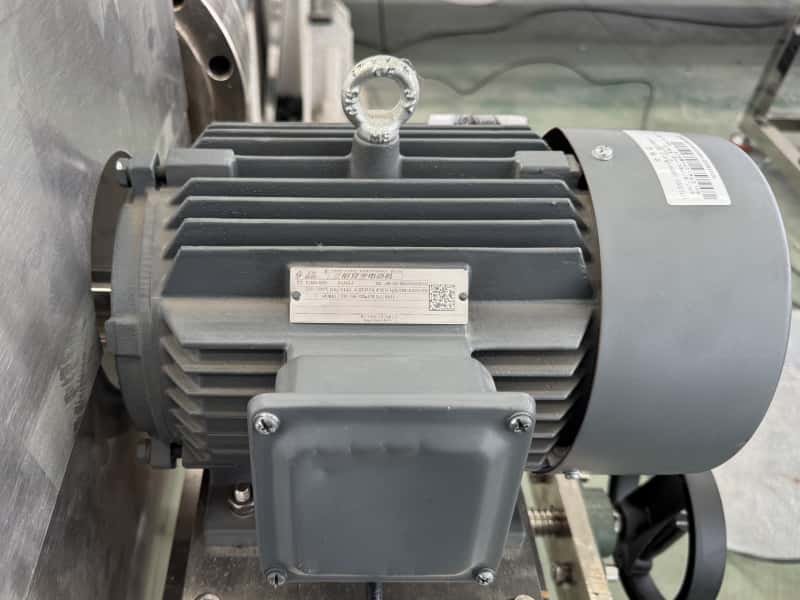
Motors from Darin Machinery are sourced from WEG with a 3-year worldwide guarantee or Siemens.Enjoy a reliable global after-sales service system.
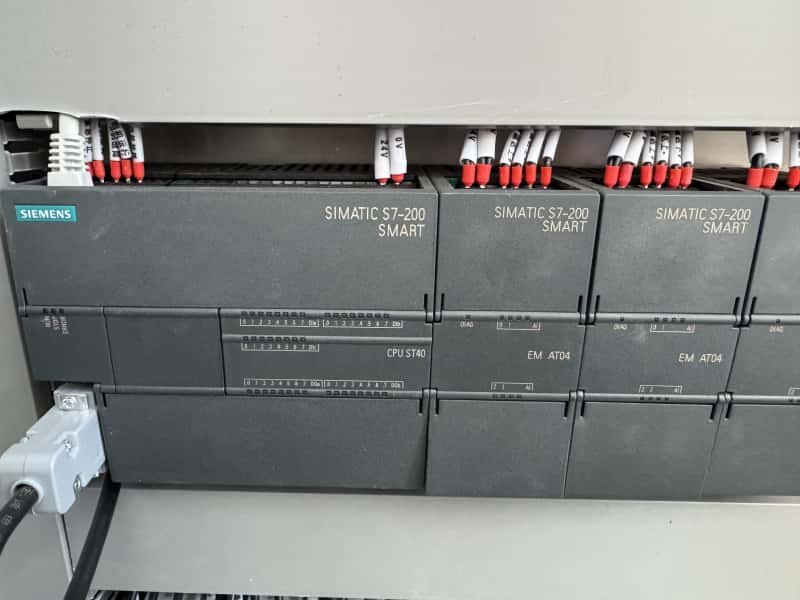
Electric parts are from ABB or Schneider, easy to find replacments at local market.
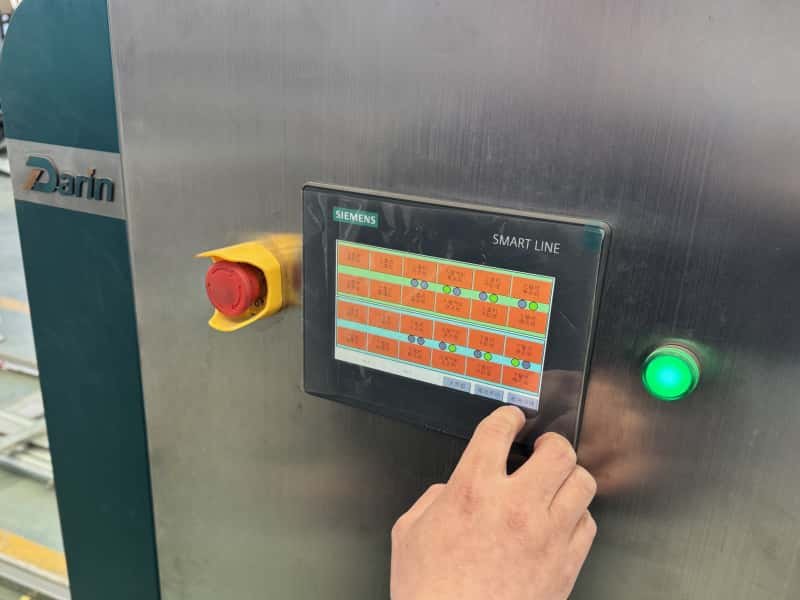
PLC and touch screens from Siemens, Germany, are used by Darin Machinery to ensure easier operation and reduced labor requirements.
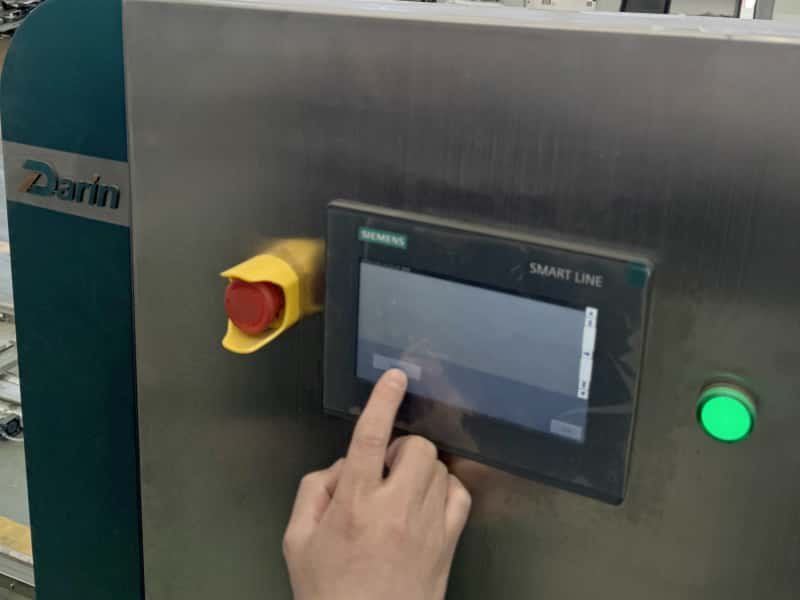
When faults occur, Darin Machinery’s touch screens display relevant information, making it easy to diagnose and resolve issues quickly.

Darin Machinery control cabinets are equipped with 24V safe voltage, ensuring operator safety even electrical leakage occurred.
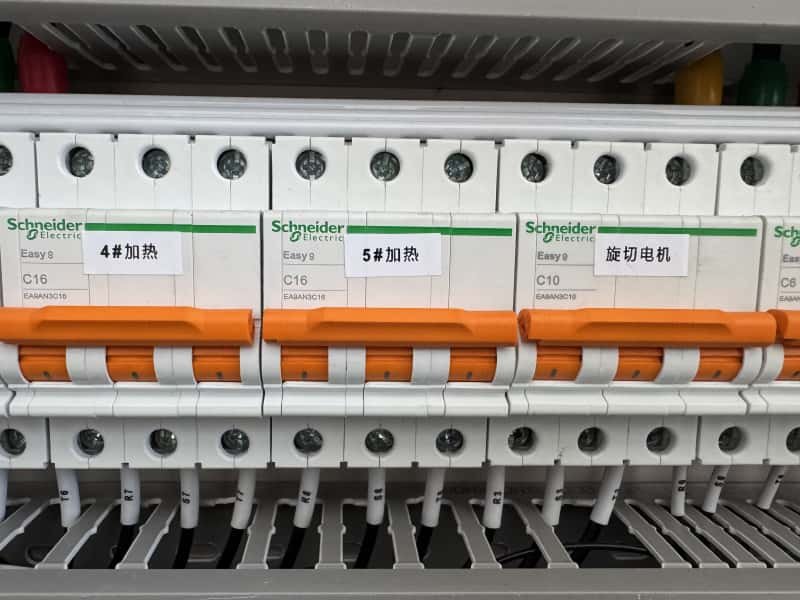
Darin Machinery includes three types of protectors over-current, over-voltage, over-heat to ensure machine and operator safety.
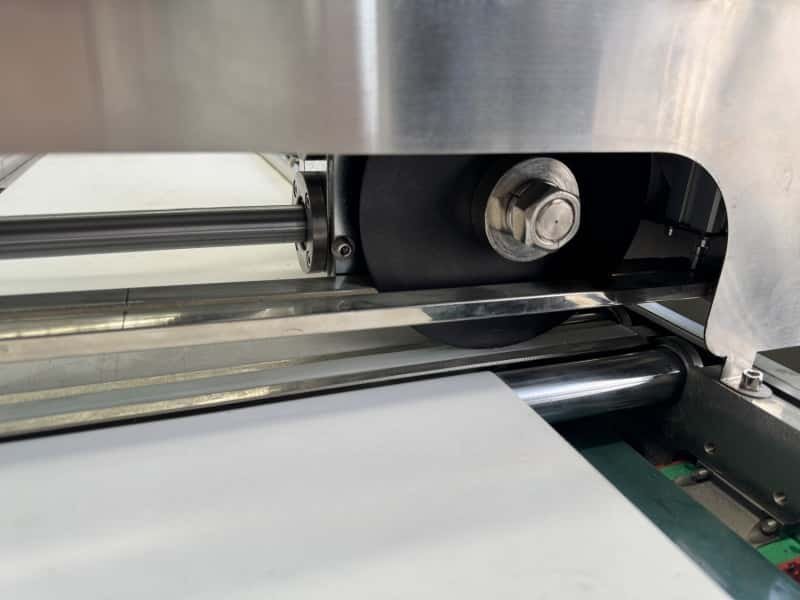
Servo follows the cutting size more accurately, rolling cutting can cut products with strong toughness, such as cowhide products, and the cutter does not cut the conveyor belt.
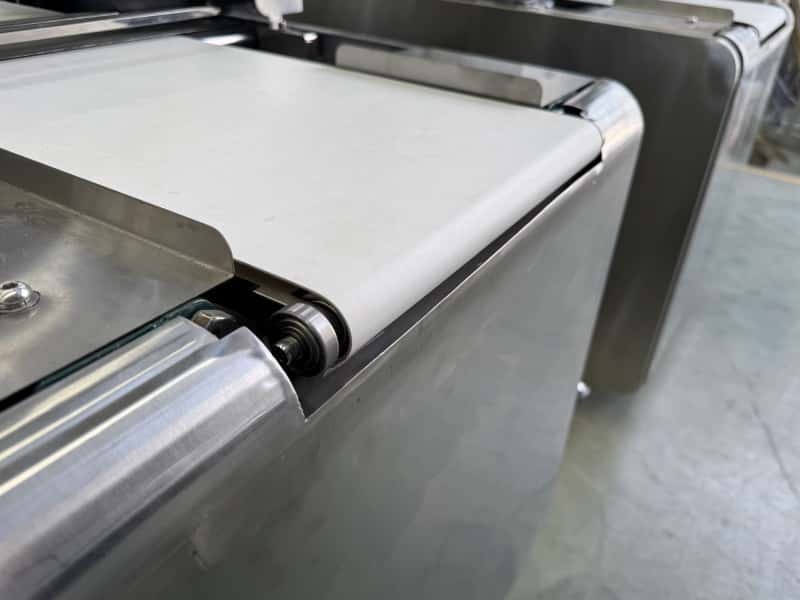
The end of the conveyor belt has a small turning radius, which makes material transportation smoother.
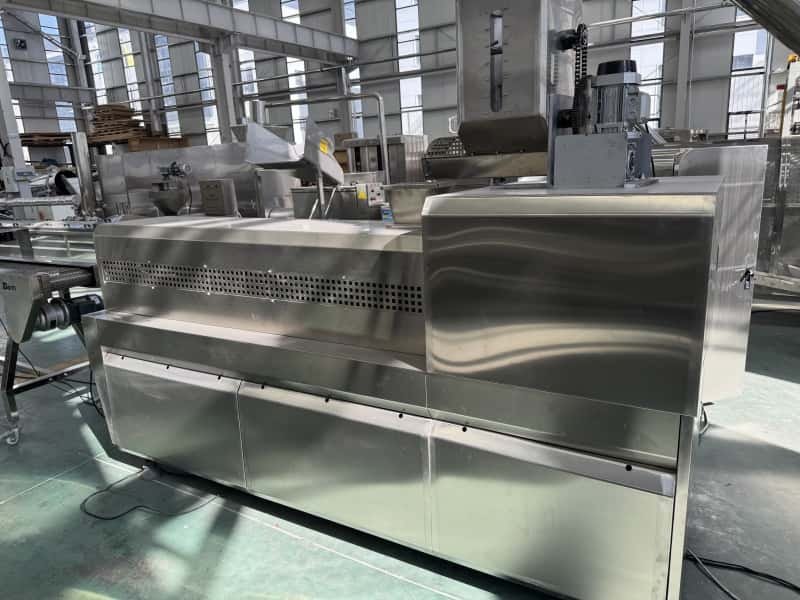
Its components are arranged for quick disassembly, ensuring efficient upkeep and hygienic operation.
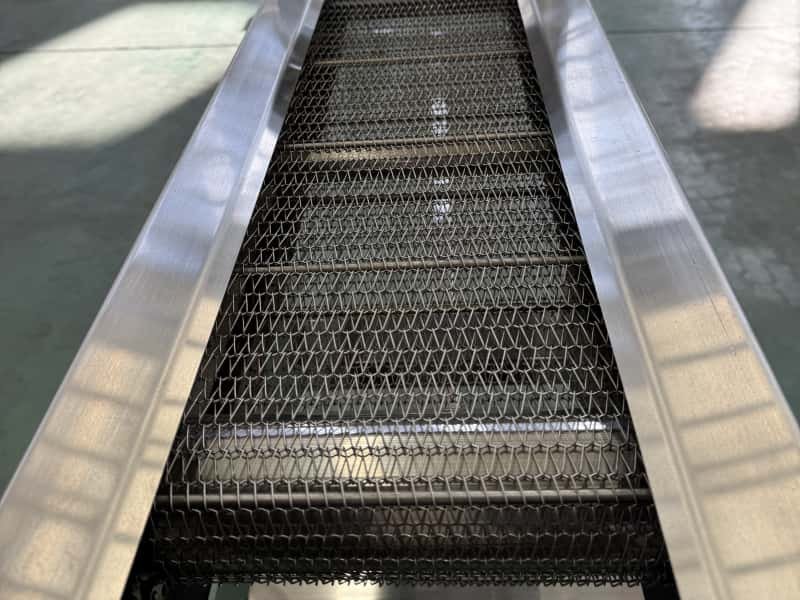
All cover bodies, mesh belts, and parts in contact with materials at Darin Machinery are made of food-grade stainless steel 304, providing superior durability and safety.
Darin® Machinery is global leading manufacturer of pet food production lines, Darin® provide full-cycle, one-stop production equipment solutions for all types of pet food, pet treats & pet health products.
■ All machinery is certified with European CE Approval & ISO 9001 Certification.
■ Run in 99+ countries including USA, Germany, Japan, Italy, UAE, Australia etc.
■ Machinery Supplier of General Mills, Kelloggs, Melinda, Bill Gates foundation & Wanpi.
■ 290+ Invention patents & utility model patents.
■ Government-certified high-tech enterprise.
■ Member of APPA (USA) & Deputy President Unit of SDPIA.
■ Professional food machinery manufacturer with 18 years of experience.

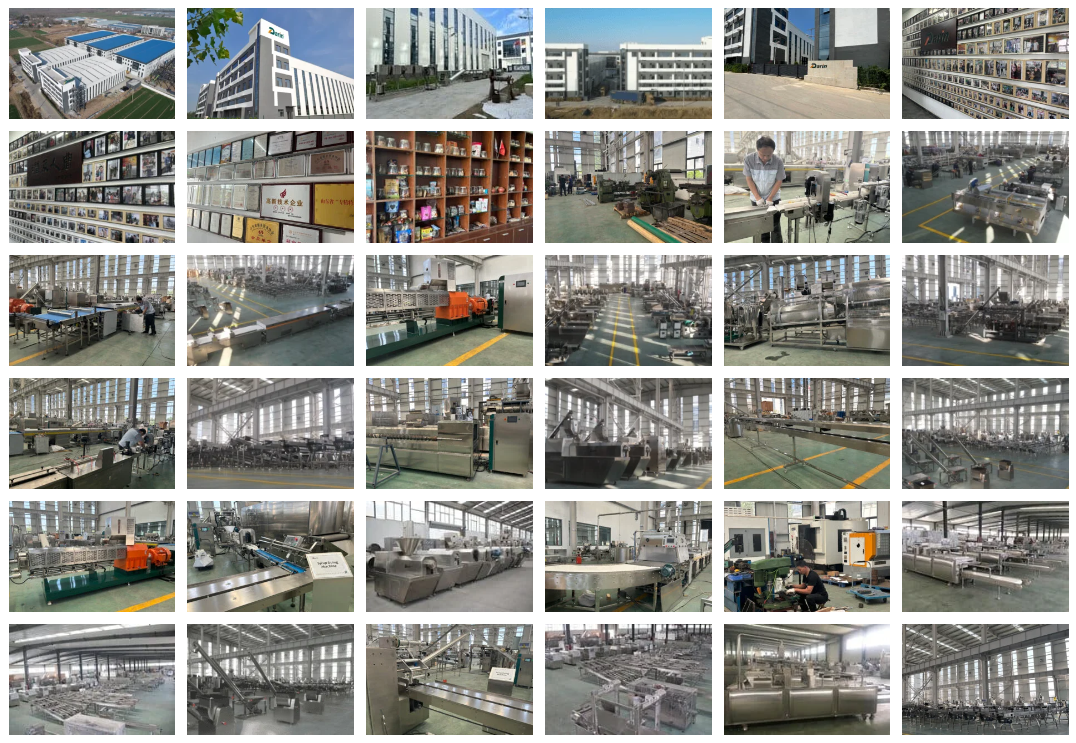
Our extensive product range includes production lines for pet dry food, wet food, semi-moist food, and raw food, as well as common pet treats such as biscuits, jerky, dental chews, rawhide chews, and training treats. Additionally, we offer various food machinery production lines, puff snack machines, energy granola bar machines, and support equipment.
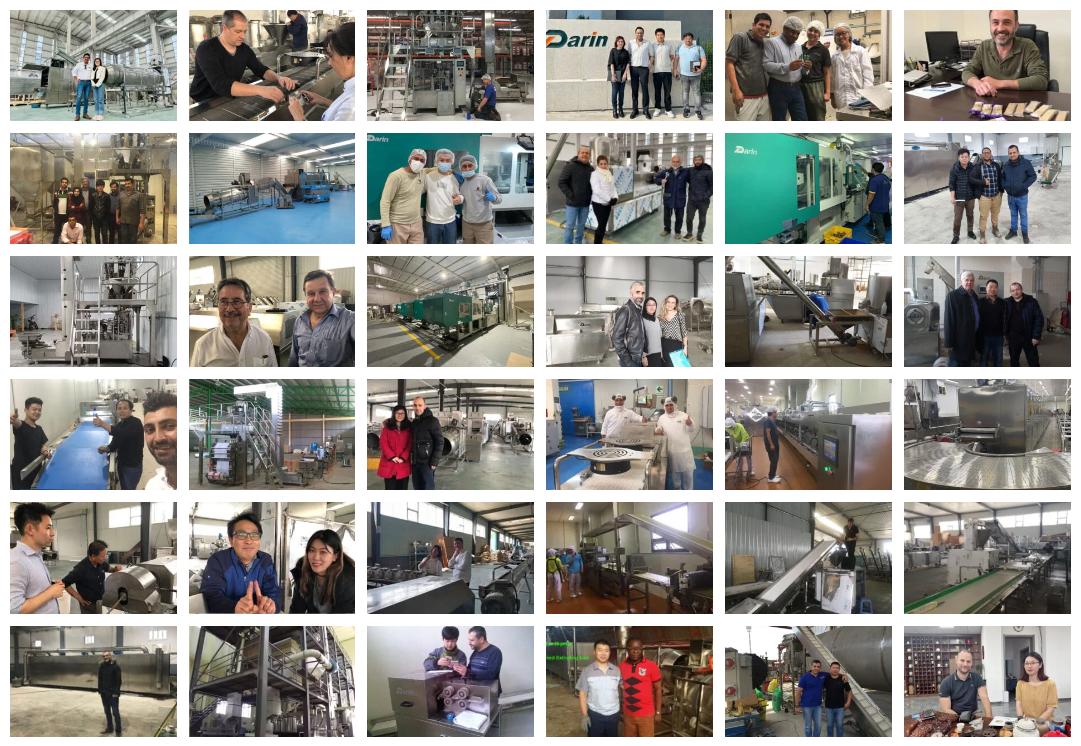
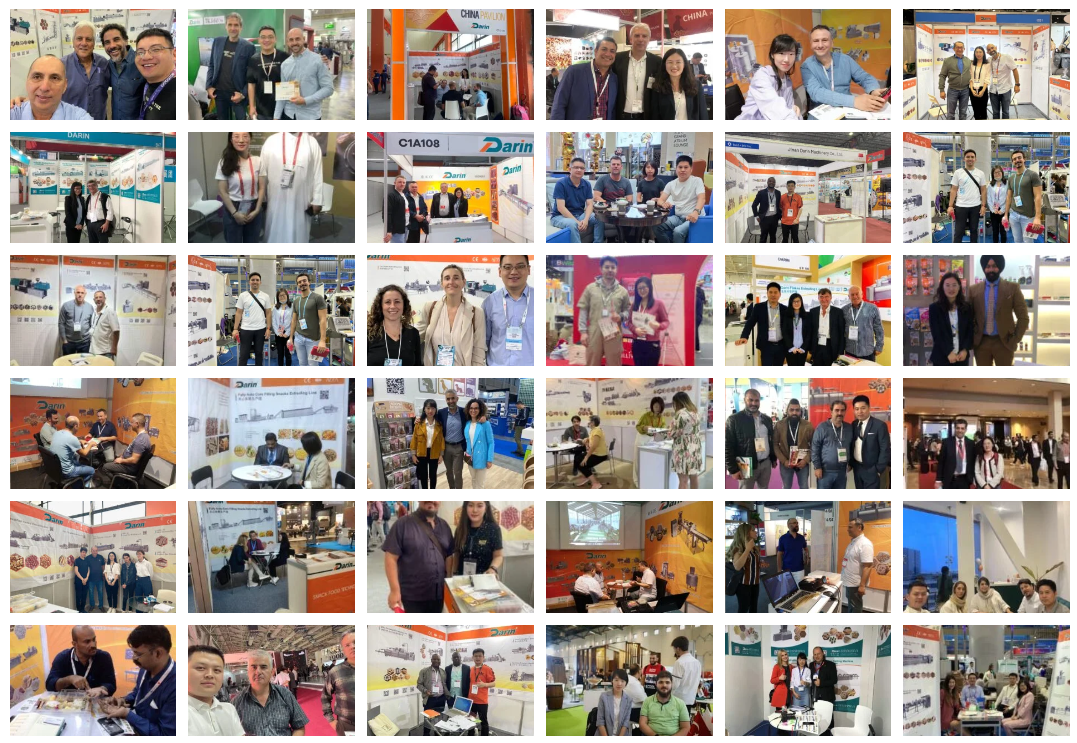
Darin Machinery’s equipment is operational in over 99 countries and regions, including the USA, Germany, Japan, Italy, Spain, the Netherlands, Australia, Canada, Holland, Saudi Arabia, Brazil, Mexico, Indonesia, Thailand, and more. Darin Machinery serves renowned clients worldwide, including General Mills, Kellogg’s, and the Bill & Melinda Gates Foundation, among top-tier pet food suppliers.
When purchasing the Jerky Processing Line, you might be interested in the following questions.
The Jerky Processing Line can cover a very wide production range. In practical use, the full capacity spans from 100 kg/h for small-scale setups up to about 800 kg/h for fully automated industrial configurations. This flexibility comes from how the line is built—number of formers, whether traying is manual or automatic, the type of dryer used, and the level of automation in batching, mixing, conveying, and cutting.
For a smaller workshop, the typical output is around 100–200 kg/h, usually with a single meat strip former and a batch dryer. Medium-sized factories most often choose 300–500 kg/h, where automatic traying and continuous conveying greatly reduce labor. For large OEM or brand factories, the line can be configured to reach 600–800 kg/h, equipped with continuous mixers, auto traying, multi-layer continuous dryers, and automatic cutting systems. Final production also varies depending on jerky thickness, moisture content, drying temperature, and formula composition.
Overall, the Jerky Processing Line is designed to be adaptable. Whether you need a compact solution for limited-premise production or a high-capacity industrial line, we can match the configuration to your output goals and ensure stable, efficient performance.
The Jerky Processing Line is designed to handle a wide range of raw materials, not only traditional meat but also modern plant-based and blended formulas. In real production, it can work with single-protein meats, mixed proteins, vegetable proteins, and starch-based functional binders, giving you great flexibility for different market segments and product cost levels.
The most common compatible raw materials include:
• Fresh meats: chicken, beef, duck, turkey, lamb, fish
• Mechanically deboned meat (MDM): chicken MDM, fish MDM
• Meat pastes & trims: high-moisture meat emulsions, minced meat
• Plant-based proteins: soy protein, pea protein, wheat gluten (vital wheat gluten), textured vegetable protein (TVP)
• Mixed meat + plant blends: 70/30, 50/50, or any ratio depending on target cost and bite texture
• Starch systems: modified starch, potato starch, corn starch, tapioca starch—used for elasticity, binding, and shaping
• Functional additives: glycerin, collagen powder, gelatin, fiber, oil/fat, colorants, natural flavors
• Pet-grade nutrition enhancers: vitamins, minerals, palatants, yeast extract
• Water or broth: used for adjusting dough consistency
Different formulas behave differently during forming and drying. High-protein meat mixes produce chewy, high-elasticity strips, while plant-protein or starch-heavy blends give a softer bite and lower production cost. The former works best with slightly higher moisture; the latter generally requires stronger binding and more precise temperature control in drying.
In short, the Jerky Processing Line is flexible enough to run pure meat, pure plant, or any hybrid formula, making it suitable for premium jerky, economical treats, semi-moist strips, high-protein snacks, and even customized private-label formulations. If you want, I can also prepare sample formulas for different product positions (low-cost, standard, premium, grain-free, plant-based).
The Jerky Processing Line has a clear distinction between standard core components (needed for every factory) and optional modules that you can add depending on your capacity target, labor plan, and product style. Below is a supplier-level, natural, professional explanation without rigid titles.
The standard configuration typically includes all the essential equipment required to complete batching, forming, conveying, cutting, and drying. In most factories, the core setup consists of a control cabinet, a batching system for mixing meat or plant formulas, a continuous mixer to form a uniform dough, a jerky former to extrude the strips or shapes, a conveying system to transfer products smoothly, and a cutting unit that trims the jerky into required lengths. These components form the backbone of every production line, providing stable throughput and consistent product shape.
On top of the core structure, the system can be expanded with a series of optional modules depending on automation level and production goals. The most common optional equipment includes an auto traying system that places strips neatly onto trays, multi-layer continuous dryers for larger capacities, or a batch dryer for smaller-scale operations. Some factories add automatic elevators, fork conveyors, or turn-over systems to reduce manual handling. For higher-grade products, optional features like multi-color formers, fine-cut systems, weighing & metal detection, vision sorting, or final packaging lines can be integrated as well. You can also select additional cooling conveyors, humidification control, or automatic tray washing units depending on hygiene requirements.
In summary, the standard Jerky Processing Line covers everything needed for stable core production, while the optional components allow you to tailor the line to your labor cost, product diversity, and capacity expansion plans. This flexible structure ensures both small workshops and large industrial facilities can build the right configuration without over-investing.
For a typical Jerky Processing Line, you should plan roughly 80–350 m² of workshop space, arranged in a straight, L-shaped, or U-shaped layout, with three-phase industrial power (usually 380–415 V), stable steam supply for the dryer, and compressed air for the former, traying and cutting systems. Small semi-auto lines fall at the lower end of this range, while fully automatic, high-capacity lines with continuous dryers and automatic traying occupy the upper end.
In terms of factory space and layout, a small 100–200 kg/h line normally needs about 80–120 m² for mixing, forming, drying and simple packing. A mid-size 300–500 kg/h line is more comfortable in 150–220 m², with clearly divided areas for raw material preparation, dough mixing, forming/traying, drying, cooling, and packing. High-capacity 600–800 kg/h lines, especially those using multi-layer continuous dryers and auto traying systems, typically require 250–350 m², plus separate areas for raw material cold storage and finished-goods warehouse. We usually recommend keeping the process flow in a single direction—raw material in → mixing → forming/traying → drying → cooling → packing—to avoid cross-contamination and to keep logistics simple. A clear separation between “raw/meat side” and “finished/packaging side” is strongly suggested, with floor drains, non-slip epoxy or tile flooring, and a ceiling height of about 3.5–4.5 m in the dryer area to allow for installation and maintenance.
For utilities, the line is generally designed for three-phase, 50/60 Hz, 380/400/415 V (customizable to your country standard). Depending on capacity and configuration, the total installed electric load is usually around 40–70 kW for small lines, 70–110 kW for mid-size, and 110–150 kW or more for large fully automatic systems, covering the former, conveyors, cutter, control system, and continuous dryer fans. If you use a steam-heated dryer, you will need industrial steam at 0.3–0.6 MPa, with a consumption roughly in the range of 300–800 kg/h depending on line size and product moisture removal; if you select an all-electric dryer, steam demand is lower or zero but electric load is higher. Compressed air is required for the jerky former, auto traying, cutting and some actuators, typically 0.4–0.6 MPa working pressure with a flow of around 0.3–0.5 m³/min for small to medium lines and 0.6–0.8 m³/min for larger high-automation setups. A stable water supply (around 0.5–1 m³/h) is needed for cleaning and some auxiliary systems, plus proper drainage and grease-trap design for hygienic wash-down. Ventilation and exhaust ducts from the dryer should be planned in advance, with fresh-air intake and dehumidification for climate-sensitive regions.
Overall, as long as you can provide a clean food-grade workshop of 80–350 m², with three-phase power, steam or electric heating for the dryer, compressed air, water, and drainage, we can match a Jerky Processing Line configuration to your building and draw a layout for you. Once you tell me your target capacity and existing workshop size, I can help you “map” the line into your factory and give a more precise utility consumption list.
Yes, the Jerky Processing Line supports full customization, and most factories choose a tailored configuration instead of a fixed standard model. You can adjust capacity, product molds, equipment size, automation level, drying method, and even layout based on your factory conditions and the type of jerky you want to produce.
Capacity can be customized anywhere from 100 kg/h for small workshops up to 800 kg/h or more for industrial plants. The forming molds are also fully flexible—strip widths, thickness, shapes, patterns, and even multi-color combinations can all be designed according to your brand requirements. Machine dimensions, conveyor lengths, hopper size, mixing volume, and dryer layer quantity can be enlarged or reduced depending on your available space, ceiling height, and expected batching size. Even the automation level is adjustable: you can start with a semi-automatic version (manual traying, batch dryer) and later upgrade to fully automatic systems with auto traying, multi-layer continuous dryers, and automatic cutting.
In short, the entire line is modular, and we build it around your product, budget, and factory layout. Whether you need high precision for premium jerky or low-cost mass production for private-label clients, the system can be engineered to match your exact requirements. If you want, I can help you design a customized configuration based on your target output and workshop size.
The Jerky Processing Line is designed to meet the requirements of major global food-safety and machinery-safety certifications. The exact certification set depends on your target market, but the equipment structure, materials, and electrical components fully support compliance with CE, FDA, ISO, and other internationally recognized standards.
In terms of food-contact and hygiene, all parts touching raw materials can be made from food-grade stainless steel (SS304 or SS316), compliant with FDA food-contact requirements and EU food hygiene regulations. Welds, surfaces, and corners are designed for easy cleaning to match HACCP and GMP standards used in food factories. For the equipment itself, electrical components, sensors, relays, and safety systems can meet the requirements of CE Machinery Directive (2006/42/EC), EMC Directive, and Low Voltage Directive, ensuring safe operation in European markets. For clients needing third-party audits, the machines can also be produced under ISO 9001 quality-management procedures, and we can provide material traceability, inspection reports, and factory test documents.
If your destination country has specific requirements—such as UL/CSA for North America, EAC for Russia, SASO for Saudi Arabia, or KC for Korea—the machinery can be configured to meet those as well. Many customers producing export-grade pet treats also integrate the line into factories certified for BRC, ISO 22000, or FSSC 22000, and our equipment design supports those hygiene and documentation standards.
Overall, the Jerky Processing Line can be delivered in full compliance with CE, FDA food-contact materials, ISO-based quality control, HACCP/GMP hygiene principles, and other region-specific certifications required by your market. If you tell me your target export countries, I can suggest the exact certification package suitable for your business.
For a normal pet jerky factory, the Jerky Processing Line is quite economical: typical total energy consumption is about 35–120 kWh of electricity per hour plus 150–700 kg/h of steam or an equivalent amount of gas heat, depending on whether you choose a small, medium, or large fully automatic line. If you convert that into product cost, most customers see energy + basic operating cost (not including raw materials and packaging) in the range of about USD 0.03–0.10 per kg of finished jerky, with small lines on the higher end and large industrial lines on the lower end due to better efficiency.
In practical terms, a small 100–200 kg/h line (semi-auto, batch dryer) usually has around 35–50 kW installed power, with actual running load at about 60–70% of that. Steam consumption is roughly 150–300 kg/h if you use steam heating, or a comparable electric heating load if you use a fully electric dryer. A standard 300–500 kg/h commercial line with continuous dryer and partial automation may have 60–90 kW installed, running at 70–80% load in real production, and steam consumption is often 300–500 kg/h. For a large 600–800 kg/h industrial line with automatic traying and multi-layer continuous dryer, installed power may reach 100–140 kW, with 500–700 kg/h steam consumption, but the energy cost per kilogram drops because you spread the same infrastructure over more output.
Besides electricity and heat, compressed air and water are relatively small cost items. Compressed air is usually 0.3–0.8 m³/min at 0.4–0.6 MPa, mainly for the former, cutting and actuators, and the electricity for the air compressor is already counted in your total power estimate. Water is used for cleaning and occasionally in the line, normally 0.5–1 m³/h during production and wash-down. Operating cost also includes labor (2–6 operators depending on automation level), maintenance and spare parts, lubricants, cleaning chemicals, and periodic replacement of nozzles, belts, and seals. Highly automated lines save on labor but have slightly higher depreciation and maintenance budgets; semi-auto lines are cheaper to buy but use more manual work per kg of product.
Overall, if your electricity and steam (or gas) prices are within normal industrial levels, you can expect the Jerky Processing Line to contribute only a small fraction of your total product cost, with energy and basic operation usually in the range of a few cents per kilogram. Once you tell me your local energy prices and target capacity, I can help you calculate a more precise “cost per kg” scenario for your project.
For the Jerky Processing Line, we don’t just sell machines – we normally supply a complete set of reference formulas and processing parameters so you can go into production quickly. This includes standard meat-based jerky recipes, economical blended formulas (meat + plant protein + starch), and softer semi-moist snack formulas, together with recommended mixing times, forming conditions, and multi-stage drying curves.
In terms of formulas, we can provide several base recipes for chicken, beef, duck or fish jerky (typical ranges for meat content, plant protein, starch, oil/fat, glycerin, fiber, vitamins/minerals, palatants, etc.), plus cost-optimized formulas where a portion of meat is replaced by soy/pea protein and starch blends. For customers targeting “softer” or “high-moisture” products, we can share higher-glycerin, higher-moisture semi-moist formulas, as well as low-grain or grain-free options. Each formula set is accompanied by basic guidelines: target dough moisture before forming, recommended protein levels, binding systems, and how to adjust the recipe if you want softer or tougher texture, darker color, or a shinier surface.
On the process side, we supply parameter sheets covering typical settings for each section of the line: mixing time and speed to get a uniform dough; forming pressure and strip thickness; conveyor speed and cutting length; and, most importantly, multi-zone drying curves. For example, we normally give you starting values for dryer temperature in each zone, total drying time (often 1.5–3.5 hours depending on thickness and target moisture), air velocity, and suggested adjustments for different product sizes. We also provide recommended core moisture and water activity targets, cooling time before packing, and basic troubleshooting rules (what to change if the jerky is too hard, too soft, over-colored, or not drying uniformly).
Overall, when you purchase the Jerky Processing Line, you receive not only mechanical drawings and manuals, but also practical formulas + full processing parameter recommendations as a package. You can start with our standard recipes and curves, then fine-tune them with your local raw materials and flavor preferences; if needed, we can also help you adjust the formulation and parameters remotely based on your trial results.
Yes, the Jerky Processing Line is designed to handle a wide variety of product shapes, sizes, and thickness levels, and most of these adjustments are done directly through the forming molds and machine settings. You’re not locked into one product type—factories commonly run multiple shapes on the same line.
In practical operation, the former can be equipped with interchangeable molds, allowing you to produce straight strips, flat sheets, mini sticks, chicken-jerky style pieces, textured patterns, and even special designs like star-shaped or wave-pattern strips. If you want a thicker, chewy jerky or a thin, crispier style, the thickness can be adjusted through the die plate and, when needed, by fine-tuning the forming pressure and conveyor speed. Length is controlled by the cutter, so you can make anything from short training-treat pieces to long strips for retail packs. For premium products, we can also provide molds that create dual-color or multi-texture effects, which are popular for “meat + veggie” or “meat + cheese” styled snacks.
These adjustments are quick: changing the mold typically takes just a few minutes, and thickness or length changes are done through settings on the control panel. Most customers operate with 3–10 different shapes depending on their brand requirements. So whether you want classic jerky strips, mini bites, shaped treats, or customized OEM patterns, the line is flexible enough to handle all of them within the same production system.
The price of the Jerky Processing Line depends mainly on capacity and automation level, and we can size it anywhere from a small semi-automatic setup to a fully automatic industrial system. Below is a realistic supplier-level price range that most customers receive.
For a small 100–200 kg/h line, the investment is usually in the range of USD 18,000–35,000, depending on whether you choose a simple batch dryer, manual traying, and a basic former. These are ideal for start-ups or small workshops.
A medium 300–500 kg/h line—which is the most popular capacity for commercial production—normally falls between USD 45,000–90,000, because it often includes a continuous dryer, upgraded forming system, automatic conveyors, and a more complete control cabinet. Adding auto-traying or multi-layer drying pushes the price toward the upper end of this range.
For large 600–800 kg/h fully automatic lines, typical pricing is about USD 110,000–180,000+, depending on dryer size, number of layers, auto traying, upgraded cutting systems, and optional modules such as cooling conveyors, fine-cut systems, or metal detection. High automation reduces labor but comes with a higher equipment value.
Overall, the investment grows with automation, dryer size, and customization. Small lines stay budget-friendly for new factories, while large OEM manufacturers usually choose the fully automatic versions to achieve high capacity, consistent quality, and lower operating cost per kilogram. If you tell me your target capacity and preferred level of automation, I can give you a more precise quotation structure.
The manufacturing lead time for the Jerky Processing Line is generally 30–55 days, depending on the capacity, automation level, and optional modules you select. Smaller or semi-automatic configurations are faster to build, while large fully automatic systems with continuous dryers and auto-traying require more fabrication and testing time.
For a small 100–200 kg/h semi-automatic line, the normal lead time is about 30–35 days. Most components—former, mixer, conveyors, and batch dryer—are relatively quick to assemble and test.
For a 300–500 kg/h commercial line, the lead time is roughly 35–45 days, because the continuous dryer, upgraded conveyors, and control system require longer assembly and more detailed testing.
For a large 600–800 kg/h fully automatic line, you should plan 45–55 days. Multi-layer continuous dryers, automatic traying, longer conveyors, and customized molds all require extra engineering and a full continuous test run before shipment.
If your project needs special customization—multi-color forming, special shapes, extended conveyors, non-standard dryer dimensions, or a unique factory layout—this adds a few days, but we confirm the exact timeline before production starts.
Overall, the standard manufacturing window is 30–55 days, with the precise schedule depending on the configuration you select. If you tell me your target capacity and automation level, I can give you the exact lead time for your specific line.
For the Jerky Processing Line, we don’t just send a simple sketch – you will receive a complete installation drawing package that your engineer and contractor can work with directly. Before production, we base the layout on your workshop size and flow direction, then provide a 2D installation layout (plan view) showing the position of each machine (mixer, former, conveyors, dryer, cutter, etc.), material flow direction, operator aisles, and loading/unloading areas. Where needed, we also add elevation views to show heights of the line, infeed and outfeed levels, and the relative height of the dryer, platforms, and hoppers, so you know exactly how to arrange platforms or steps on site.
Along with the general layout, we provide a utility layout drawing indicating the connection points for electricity, steam or electric heating, compressed air, water, and drainage. This helps your local electrician and plumber plan cable trays, steam pipelines, air lines, and floor drains. If foundations or chemical anchors are required for heavier equipment, we can also provide a basic foundation/anchor-bolt plan with approximate loads and bolt locations. For your automation and process team, we supply a P&ID (Piping & Instrumentation Diagram) covering the main process flow: raw material → mixing → forming → conveying → drying → cooling → cutting, together with the main pipelines (steam, condensate, air, sometimes water), valves, filters, and key instruments (pressure gauges, temperature sensors, flow/level signals, safety devices). This P&ID corresponds to the PLC/HMI control zones, so your team can easily understand which instruments link to which control functions.
In short, you will receive a full set of installation layout drawings + utility connection plan + P&ID, sufficient for your civil, mechanical, electrical, and automation teams to carry out installation, routing, and inspection. Once you share your workshop dimensions and door positions, we adapt all drawings to your actual building so that the jerky line can be dropped in with minimal modification on site.
Yes, factory FAT (Factory Acceptance Test) is always included before we ship the Jerky Processing Line. This is a standard part of our quality-control process, and it ensures the entire line runs smoothly, all functions work correctly, and your operators can see real performance before the equipment leaves our factory.
During FAT, we fully assemble the line—mixer, former, traying or conveyor system, dryer, cooling section, and cutter—and run it under real operating conditions. We check forming quality, extrusion stability, conveyor synchronization, dryer temperature uniformity, cutting accuracy, motor loads, PLC/HMI functions, alarms, and safety devices. If you request it, we can also run the line with your preferred formula (meat, blends, or plant base) to simulate your production environment. All performance data—temperatures, motor loads, speed settings, and moisture targets—are recorded and provided to you.
We also produce a FAT video showing the complete workflow from feeding to final product discharge, so you can review the machine’s operation even if you cannot visit in person. Any adjustments discovered during FAT are corrected before packaging. Only after the line passes all performance checks do we release it for shipment.
In short, yes—FAT is included, complete with full assembly, functionality testing, video documentation, parameter recording, and final quality verification. This ensures the Jerky Processing Line arrives at your factory ready for installation and smooth commissioning.
Yes, we can provide real production videos of the Jerky Processing Line before delivery. This is part of our standard pre-shipment procedure so you can clearly see how your exact machine performs under real operating conditions.
Before shipping, we fully assemble your line in our workshop and run it with actual raw materials or a substitute formula. During this test run, we record complete, uncut operation videos, including:
Dough mixing and feeding
Forming and extrusion quality
Conveyor transfer and auto-traying (if included)
Dryer operation, temperature stability, and product movement
Cutting accuracy and product uniformity
Motor loads, speeds, and key parameters on the HMI
Final product discharge and appearance
If you want to verify specific details—strip thickness, multi-shape molds, drying curve, line speed—we can shoot close-up videos upon request. We can also provide short operator-angle videos showing how to clean, adjust, or switch molds.
In short, yes — you will receive clear production videos of your exact Jerky Processing Line before shipment, allowing you to check performance, stability, and product quality with full confidence before the equipment is packed and delivered.
We use full export-grade packaging, anti-rust protection, and reinforced container-loading methods for the Jerky Processing Line to ensure the equipment arrives safely and ready for installation. The whole process follows the same standards we use for large food-machinery shipments to Europe, the U.S., and Southeast Asia.
The equipment surfaces are first cleaned, then coated with a light food-grade anti-rust oil or VCl rust-inhibitor film on all stainless-steel and carbon-steel parts. Electrical cabinets, motors, sensors, and pneumatic units are protected with moisture-proof wrapping, while all open ports and nozzles are sealed with plugs or caps to prevent dust and humidity from entering during transit.
Each machine is placed on a custom wooden pallet or wooden crate that meets international fumigation standards. Heavy machines—such as continuous dryers and large conveyors—are fixed with steel brackets, expansion screws, and heavy-duty straps to prevent movement. Smaller components, molds, and spare parts are packed separately in labeled cartons and shrink-wrapped to avoid loss or mix-up.
When loading into the container, we use a planned loading map so every unit fits securely. Major machines are belt-strapped to the container floor, and wooden blocks or steel braces are added to prevent shifting during sea transport. For long-distance shipments or humid climates, we also place desiccant packs and humidity indicators inside the container. Machines with sensitive electronics are loaded away from the doors to reduce direct exposure to salt air and temperature swings.
Overall, the packaging process includes anti-rust treatment → moisture protection → palletizing/crating → reinforced strapping → secure container loading, ensuring the Jerky Processing Line arrives in perfect condition and is ready for fast installation at your site. If you want, we can also provide container-loading photos and videos for your records.
Please Contact us for Details.
For the Jerky Processing Line, we supply a complete set of export and customs-clearance documents so your freight forwarder or broker can handle import procedures smoothly. All documents are issued by our company and checked before shipping to ensure there are no delays on your side.
You will receive:
• Commercial Invoice – includes product description, HS code, quantity, unit price, and total value, fully matching your country’s requirements.
• Packing List – detailed list of every machine, crate size, weight, and container-loading information.
• Sales Contract / Proforma Invoice – for your bank, LC, or customs reference.
• Certificate of Origin (CO / Form A / Form E / Form F / Form RCEP, etc.) – issued through the Chamber of Commerce or CCPIT, depending on your country’s tariff benefits.
• Bill of Lading (Original or Telex Release) – provided through the shipping line for cargo release.
• CE Certificate (if required) – for European or CE-regulated markets.
• Material & Quality Certificate – stainless-steel grade, electrical components, and QC records.
• FAT Test Report & Photos/Videos – confirming pre-shipment inspection.
• Insurance Certificate (if CIF) – if we handle marine insurance.
• HS Code & Technical Specification Sheet – helps your broker classify the machine correctly.
• Optional embassy legalization – for countries requiring consular authentication (e.g., Egypt, UAE, Saudi Arabia, Algeria).
If your country has special requirements—such as SASO (Saudi), EAC (Russia), KC (Korea), or FDA food-contact documentation—we can prepare those as well.
In short, you receive a complete customs-clearance document package, ensuring your Jerky Processing Line passes import inspection without issues. If you tell me your destination country, I can list the exact documents needed for your case.
Yes, both onsite installation and remote installation guidance are available for the Jerky Processing Line. You can choose whichever method fits your budget, schedule, and local labor availability. Here’s how each option works in real factory conditions:
If you prefer engineer support at your factory, we can send a technician for full installation and startup.
This includes:
Positioning and leveling each machine according to the layout
Connecting power, steam/gas, air, and utilities (your local team handles pipelines/wiring; we guide)
Full mechanical assembly and alignment
PLC/HMI setup, parameter configuration, and speed matching
Test production with your raw materials
Operator training on forming, drying, cutting, and daily maintenance
Final acceptance after stable production
Onsite service is ideal if your team is new to food-processing machinery or if the line is fully automatic with a continuous dryer and auto-traying system.
Most customers use our remote installation service because it’s fast, efficient, and saves cost.
We support you through:
Detailed installation drawings + utility connection diagrams
Step-by-step video tutorials for each machine section
Real-time video calls during key installation steps
Remote PLC and parameter configuration
Guidance during the first test-run with your formula
Troubleshooting and adjustments until production is stable
With your local electrician and mechanic handling the basic labor, remote installation usually completes smoothly in a few days.
Small/medium lines (100–500 kg/h): Remote installation is usually enough.
Large lines (600–800 kg/h, continuous dryer, auto-traying): Onsite installation is strongly recommended.
New factories or first-time users: Onsite is more convenient but remote is still possible if your team is skilled.
Both onsite and remote installation options are available. Remote guidance is free and very efficient; onsite installation can be arranged whenever you need hands-on support. Either way, we stay with you until the Jerky Processing Line is fully running and your operators are comfortable with daily production.
If you’d like, I can also estimate the installation time and manpower requirements based on your selected capacity.
The Jerky Processing Line is designed to run with a very small team, and the exact number of operators depends on whether your line is semi-automatic or fully automatic. In general, most factories operate the line efficiently with 2 to 6 people.
For a small or semi-automatic line (100–200 kg/h), you typically need 3–4 operators:
One person for raw-material preparation and mixing
One for feeding the former and managing forming/traying
One for loading/unloading the batch dryer
One person who also handles packing (can be shared with other roles)
For a standard commercial line (300–500 kg/h), the line usually runs well with 3–5 operators because conveyors, traying, and cutting are mostly automated:
One operator monitors the former and product shaping
One manages dryer loading/unloading
One handles packing
One flexible helper for cleaning and materials during peak times
For large fully automatic lines (600–800 kg/h), the system is highly integrated, so 2–3 operators are enough:
One operator oversees forming, auto-traying, and conveyor flow
One oversees dryer discharge, cooling, and packing
Optional third operator for material prep or peak production
Overall, the Jerky Processing Line is labor-efficient. A small workshop may need a few people to manage manual steps, while an automated industrial line can be run by just two trained operators. If you tell me your preferred capacity and automation level, I can give you an exact operator requirement for your configuration.
We always ship the Jerky Processing Line with a complete starter set of spare parts so your factory can run smoothly from the first day. The kit covers all common wear items, plus backup components for quick replacement. The service life varies depending on usage, cleaning habits, and production speed, but the ranges below reflect real customer experience.
You will typically receive:
Forming nozzles and die plates (1 set extra): These contact the dough directly. Service life is usually 6–12 months, depending on formula abrasiveness and cleaning frequency.
Conveyor belts (1–2 spare pieces): Belts for forming, transfer, and cutting stations last 12–24 months under normal use.
Cutter blades (2–4 pieces): Simple replacement; normally 3–6 months depending on product hardness and operating hours.
Seals, O-rings, and gaskets (multiple sizes): Pneumatic and food-contact seals typically last 6–12 months.
Bearings and small rollers: Light-duty idlers usually last 1–2 years. High-load rollers in the dryer may last even longer.
Pneumatic valves and air fittings (1–2 pieces): These are long-life components, typically 1–3 years, but we include spares for emergencies.
Sensors (photoelectric, limit, proximity): These rarely fail; typical service life is 2–5 years. One spare sensor is usually included.
Drive belts / timing belts: These last 1–2 years depending on tension and lubrication.
Heating elements or steam traps (for dryer systems): Service life is normally 1–3 years, depending on heating type and workload.
In addition to these items, we include a tool kit, basic lubricants, and all fasteners needed for routine adjustments.
Overall, the spare-parts package is designed so that you can replace all common wear items for at least 6–12 months without needing extra orders. If you want, I can prepare a recommended on-site spare-parts list for your specific capacity (100–200 kg/h, 300–500 kg/h, or 600–800 kg/h) to ensure zero production downtime.
The Jerky Processing Line comes with a standard 12-month warranty, counted from the date of arrival at your factory. During this period, all non-consumable parts are fully covered, including motors, gearboxes, electrical components, PLC/control systems, forming units, cutting mechanisms, conveyors, and dryer mechanical parts. If any of these components fail due to manufacturing or quality issues, we provide replacement parts free of charge.
Consumable parts—items that naturally wear during normal operation—are not included in the free-replacement scope, but we always supply an initial spare-parts kit with the line. Typical consumables include belts, seals, nozzles, bearings, cutter blades, silicone gaskets, and small pneumatic components. These are inexpensive and can be replaced quickly by your operators.
Beyond the warranty, we continue providing long-term technical support, remote troubleshooting, spare-parts supply, and process guidance at reasonable cost. In practice, most customers run the line for many years with only routine maintenance and replacement of normal wear parts. Overall, you receive a full one-year guarantee on all major mechanical and electrical components, backed by lifetime technical service whenever you need assistance.
After you receive the Jerky Processing Line, we provide full after-sales technical support to ensure your production runs smoothly from day one. This includes remote guidance, on-site service options, spare-parts support, process optimization, and lifetime technical assistance whenever you need help.
You can expect complete online support through video calls, messaging, and real-time troubleshooting. We guide you step by step during installation, wiring, machine settings, forming adjustments, and dryer parameter tuning. If your project requires it, on-site engineers can also be arranged for installation, commissioning, and operator training. For any technical issues—whether mechanical, electrical, or formula-related—you can contact us directly, and our technicians will respond quickly with diagnostic steps, photos, videos, or remote screen-sharing to help you resolve the problem.
We also maintain long-term spare-parts support. All critical components are kept in stock, and consumables like belts, seals, and nozzles can be shipped out quickly. If you need to upgrade molds, change product shapes, adjust capacity, or add new sections such as a continuous dryer or auto-traying system, we provide engineering suggestions and configuration plans. We also help optimize your formulas, drying curves, and production parameters as your market requirements evolve.
In short, you are not left alone after the purchase—the line comes with lifetime technical support, fast spare-parts supply, remote troubleshooting, and optional on-site service whenever needed, ensuring your jerky production stays stable and efficient.
Ordering replacement spare parts for the Jerky Processing Line is simple, and we keep most items in stock to keep your production running without interruption. You can contact us directly with the part name, photo, or machine serial number, and we will match the correct component immediately. Common items—such as belts, nozzles, seals, bearings, blades, and pneumatic parts—are ready for dispatch, while larger mechanical components require short production time.
For standard consumable parts, the usual lead time is 1–3 days, and we can ship by DHL, FedEx, UPS or any forwarder you prefer. For mid-size components like motors, gearboxes, or customized forming molds, the typical lead time is 5–12 days depending on the model. Larger machine sections—such as conveyors or dryer parts—usually take 10–20 days because they need fabrication or assembly. If you are running a high-capacity line, we also recommend keeping a small on-site stock of essential consumables to avoid downtime.
Overall, the process is straightforward: you send us the part details, we confirm the specification, we prepare the item, and we ship it out quickly. Whether you need routine wear parts or a customized component, we can supply them efficiently with clear timelines so your production stays stable and uninterrupted.
The Jerky Processing Line is generally stable, but like any food-machinery system, certain issues may appear during daily operation. Most problems are easy to diagnose and fix on-site. Below is a practical, supplier-level summary of the most common failures and how to troubleshoot them, explained in a natural, useful way.
The most frequent issues come from the forming system, dryer parameters, and conveyor alignment. For example, if the jerky strips come out uneven or inconsistent in thickness, it usually means the dough moisture is not uniform or the mixer hasn’t fully blended the ingredients. Running the mixer longer or checking the moisture content normally solves it. When the former extrudes broken or rough strips, the problem is often low moisture, excessive fiber, or a worn forming nozzle; adding 1–3% water or replacing the nozzle typically restores smooth extrusion. If the strips stick to the forming outlet, it often relates to high fat content or insufficient lubrication—adjusting the formula slightly or cleaning the forming head helps immediately.
Drying-related problems are equally common. If the jerky is too hard outside but still wet inside, the dryer temperature is likely too high in the first zone. Lowering the initial temperature or slowing the conveyor will allow moisture to migrate out evenly. When the product becomes brittle or over-colored, the drying curve is too aggressive; reducing temperature by 5–10°C or shortening the total drying time usually fixes it. If the final moisture varies from batch to batch, check the airflow balance, clean the filters, or verify that steam pressure or electric heaters are stable.
Mechanical issues are generally minor. Conveyor belts may wander if the tension isn’t even; adjusting the tensioning screws or cleaning debris under the belt will correct alignment. If the cutter produces uneven lengths, the photoelectric sensor may be dirty or misaligned—wiping the lens or adjusting the sensor position solves this quickly. Pneumatic components occasionally respond slowly due to low air pressure or water in the airline; draining the air tank and maintaining 0.4–0.6 MPa pressure keeps the action smooth. For electrical faults such as “motor overload” or “frequency inverter alarm,” checking for blockages, verifying lubrication, or resetting the inverter after clearing the load generally resolves the issue.
Overall, the most common failures are simple to prevent with regular cleaning, proper lubrication, correct dough moisture, and stable dryer parameters. If anything unusual happens, most problems can be solved within minutes by checking moisture, temperature, air pressure, belts, and sensors. And whenever you need help, we can diagnose issues remotely through videos, photos, or live calls to get your line back to stable production quickly.
Yes, we provide complete operator training and maintenance tutorials for the Jerky Processing Line, and this support is included with every purchase. You receive both practical training and clear documentation/videos, so your team can run the line confidently from day one.
During installation or initial startup, we guide your operators through the full workflow—how to prepare the dough, adjust the former, set conveyor speeds, manage the drying curve, and check the final moisture level. We also show them how to switch molds, calibrate the cutter, clean the forming head, and adjust basic parameters for different shapes or formulas. Your staff learns not only how to operate the machine, but also how to troubleshoot common issues and make quick adjustments during production.
For maintenance, we provide a complete set of tutorials including daily cleaning, lubrication points, belt tension checks, pneumatic system inspection, and weekly/monthly maintenance routines. Clear videos and manuals explain how to replace wear parts like nozzles, seals, and blades, how to check motor loads, and how to keep the dryer airflow consistent. These resources are practical, easy to follow, and tailored to your specific configuration.
In short, you receive full operator training + complete maintenance tutorials + ongoing technical guidance, ensuring your team can run the Jerky Processing Line safely, efficiently, and with minimal downtime. If needed, we can also provide refresher training or advanced training for new staff later on.
Yes, the Jerky Processing Line is fully upgradeable and can be expanded as your production grows. The entire system is built in modular sections, so you can start with a small or mid-range setup and gradually move toward higher capacity or full automation without replacing the whole line.
Most factories begin with a simple configuration—manual traying, batch dryer, basic former—and later upgrade to an automatic traying system, a multi-layer continuous dryer, or a higher-capacity mixer and former. You can also add extra conveyors, cooling sections, a fine-cut system, or integrate metal detection and automatic packing. If you need to expand capacity, the line can be extended by increasing dryer length, adding additional forming nozzles, installing a second former, or upgrading motors and drive systems.
Upgrades are not limited to hardware. You can also enhance product flexibility later by adding new forming molds, switching to multi-color extrusion, or integrating improved control software. All these upgrades can be installed without redesigning your entire workshop layout, because the line’s modules are designed to connect easily with each other.
In short, the Jerky Processing Line grows with your business. You can start small, expand step by step, and eventually build a fully automatic, high-capacity system—all while keeping your existing equipment and avoiding unnecessary reinvestment. If you tell me your current capacity and long-term plan, I can recommend an upgrade path tailored to your factory.
We provide remote diagnostic support in a very direct, practical way so you can solve problems quickly without waiting for an on-site engineer. Most issues on the Jerky Processing Line can be identified and fixed within minutes through video, photos, and live technical guidance.
When you contact us, our technicians will first ask for a short video or a quick call showing the part of the line where the issue appears—former, cutter, conveyor, dryer, or control system. Once we see the symptoms (noise, vibration, uneven forming, sensor alarms, airflow imbalance, etc.), we guide you step by step: which cover to open, which sensor to check, how to confirm air pressure, how to reset the inverter, or how to adjust tension or alignment. For electrical or PLC-related issues, we can have you show the control panel on video so we can read the fault code and give exact instructions for clearing it.
When needed, we send annotated photos, short troubleshooting videos, wiring diagrams, or parameter screenshots to help you follow the process clearly. If the problem involves formula or drying curve behavior, we analyze your product photo and advise moisture adjustments, forming pressure changes, or dryer temperature modifications. For more complex situations, we can schedule real-time remote support (video call with multiple angles), walking your operator through mechanical inspection or part replacement.
Overall, our remote diagnostic support is fast, flexible, and effective—most customers resolve issues within the same hour. You always have access to technicians who understand your specific machine model and can guide you through any mechanical, electrical, or process-related problem immediately.
Yes, we provide clear preventive-maintenance schedules for the Jerky Processing Line, and they are designed to be easy for your operators to follow. These schedules cover daily, weekly, monthly, and quarterly tasks so the line runs smoothly, avoids unexpected breakdowns, and maintains stable product quality.
In daily maintenance, operators check basic points such as belt cleanliness, former nozzles, cutter blades, air pressure, and any abnormal noise or vibration. At the end of each shift, they clean the forming head, conveyors, and tray surfaces to prevent buildup that might affect extrusion or drying. Weekly routines include lubricating key bearings, checking belt tension, inspecting pneumatic valves, cleaning air filters, and making sure sensors are aligned. Monthly tasks go deeper—checking gearbox oil levels, tightening bolts, checking dryer fans and heaters, cleaning steam traps or electric-heater housings, and reviewing motor load readings from the control cabinet. Once every quarter, a more thorough inspection is recommended, including conveyor roller alignment, checking electrical terminals, calibrating temperature sensors, and reviewing the entire forming and cutting system for wear.
These schedules come with the machine in the form of a maintenance checklist, and we also provide tutorial videos so your team knows exactly how each step is performed. Following this routine dramatically reduces downtime and increases the lifespan of key components. If your factory has specific hygiene or audit requirements (HACCP, ISO, BRC), we can adjust the maintenance plan to fit those standards as well.
In short, yes—we supply complete preventive-maintenance schedules along with the equipment, and they are practical, easy to implement, and designed to keep your production line running reliably for many years.
We treat downtime very seriously, so the response time for after-sales support on the Jerky Processing Line is fast and practical. In normal situations, you can expect initial technical support within 1–3 hours, and most issues are diagnosed and resolved remotely on the same day.
If you send a message, photo, or short video during your production shift, our technicians usually reply almost immediately—typically within 30 minutes to 1 hour. For more complex faults that require detailed checking of parameters, sensors, or wiring, we arrange a real-time video call the same day. In fact, more than 90% of problems (sensor misalignment, belt tracking, dryer settings, air-pressure issues, forming irregularities, etc.) are fixed remotely within 1–2 hours.
In rare cases where a part needs to be replaced and the machine cannot run before replacement, we give a confirmed spare-parts dispatch time within 12–24 hours, and ship by express courier if needed. If on-site service is required, we coordinate your local schedule and arrange an engineer visit as quickly as possible.
Overall, the downtime response system is designed to be fast, direct, and business-friendly. You get quick initial response, same-day troubleshooting, and rapid spare-parts handling, ensuring your production is protected with minimal interruption.
Software and PLC programs for the Jerky Processing Line are always backed up in multiple ways so you can restore the system quickly if anything happens. We treat the control program as a critical asset, so backups are created during factory testing and given to you together with the machine.
Before shipment, we save the full PLC program, HMI interface, parameter tables, and wiring diagrams. A copy is stored in our internal service database, and another copy is sent to you in the form of a USB file pack or cloud link. If the PLC or HMI ever needs to be reset or replaced, you simply provide us with the machine serial number and we send the matching program immediately. Restoring the program is straightforward: connect a laptop or USB device to the PLC/HMI, load the provided program file, and follow a short step-by-step guide. Our technician stays online during the process to ensure the system boots correctly and all I/O points match.
If you accidentally change parameters or lose a configuration, we can restore the correct settings through remote guidance. You show us the screen, we check the version, and we help you load the correct parameter set. Even if the hardware is damaged—such as a burned PLC or corrupted HMI panel—we ship a pre-programmed replacement so you can plug it in and continue production without needing to rewrite anything on-site.
In short, all PLC/HMI programs are backed up before delivery, stored both with you and with us, and can be restored quickly through USB, laptop upload, or pre-programmed replacement modules. This ensures your control system remains safe, recoverable, and easy to maintain throughout the lifetime of the line.
Explore trends, tips, and innovations in Jerky Processing Line. Enhance efficiency and quality with expert insights.
How Darin’s Turnkey Twisting & Rolling Solution Solves Quality Bottlenecks, Labor Shortages, and Scalability for Global

In the global pet treat manufacturing sector, rawhide products—such as rawhide rolls, rawhide twists, rawhide sticks,
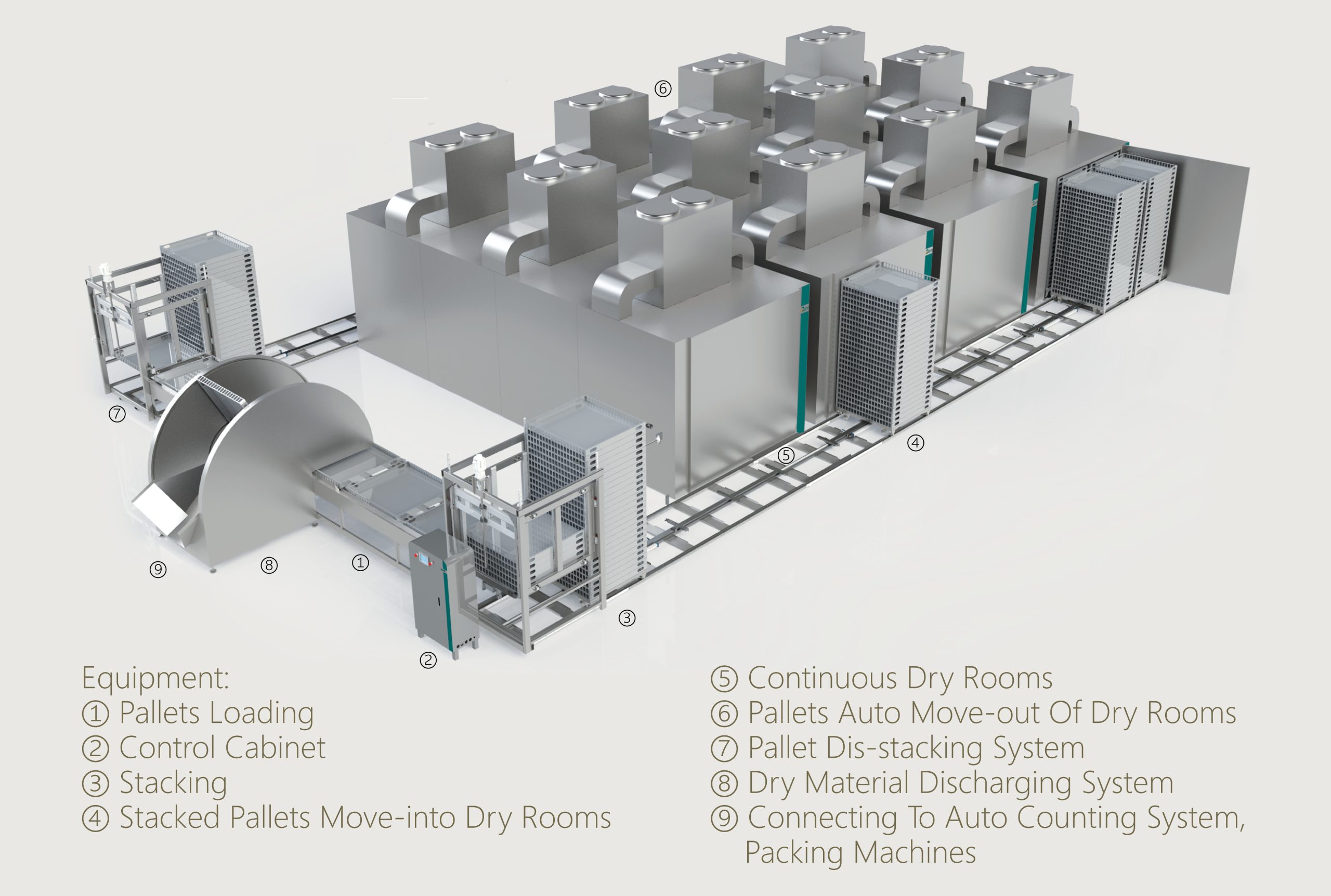
When choosing a supplier, the most important factors are not the manufacturer’s reputation or the lowest
Darin Machinery will participate in SuperZoo 2026, the premier pet retail and industry event in North

Making homemade dry dog food is a rewarding way to ensure your pet receives balanced nutrition

Making homemade dry dog food is a rewarding way to ensure your pet receives balanced nutrition
let’s talk about how we can help you achieve your goals and take your business to increase !
Tell us as specific as possible of your needs.
We will work on the best solution & quote according to your requirements.
We will start production after getting your approval and deposit, and we will handle the shipment.
· Don’t worry, we hate spam too !
· Call only when multiple emails unanswered !
We use cookies to improve your experience on our site. By using our site, you consent to cookies.
Manage your cookie preferences below:
Essential cookies enable basic functions and are necessary for the proper function of the website.
Google Tag Manager simplifies the management of marketing tags on your website without code changes.
Statistics cookies collect information anonymously. This information helps us understand how visitors use our website.
Clarity is a web analytics service that tracks and reports website traffic.
Service URL: clarity.microsoft.com (opens in a new window)
Google Analytics is a powerful tool that tracks and analyzes website traffic for informed marketing decisions.
Service URL: policies.google.com (opens in a new window)
Marketing cookies are used to follow visitors to websites. The intention is to show ads that are relevant and engaging to the individual user.
Facebook Pixel is a web analytics service that tracks and reports website traffic.
Service URL: www.facebook.com (opens in a new window)
You can find more information in our Cookie Policy and .
Quick Contact