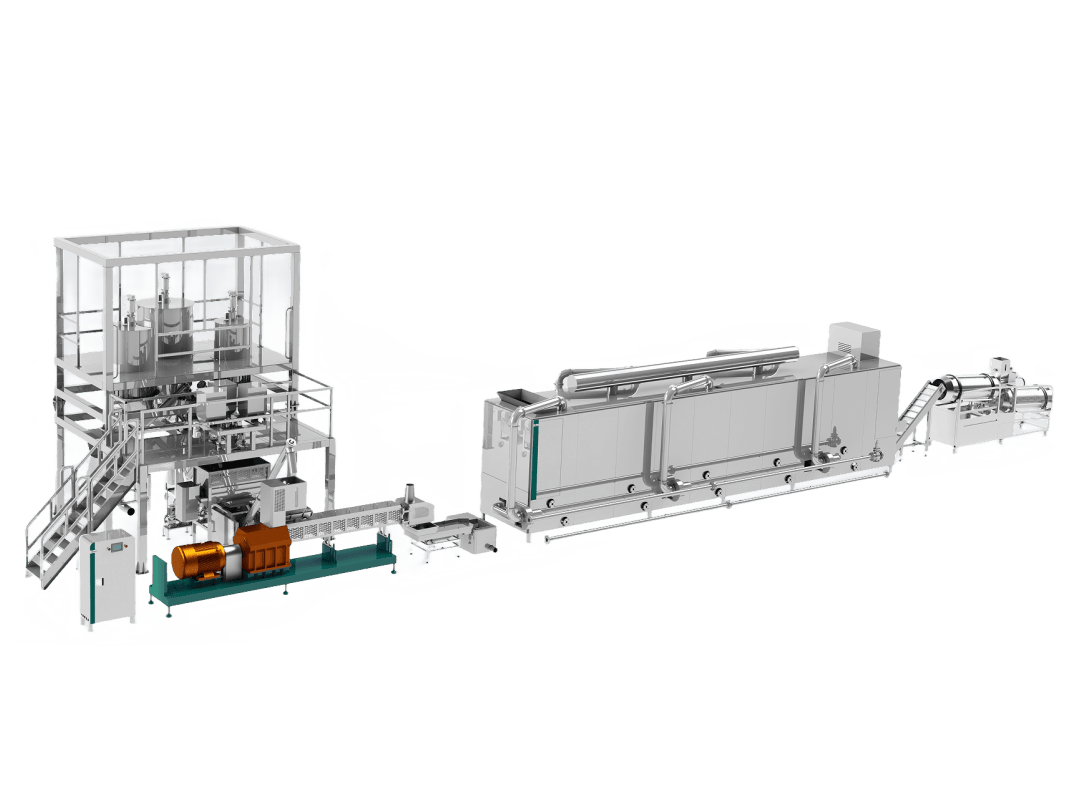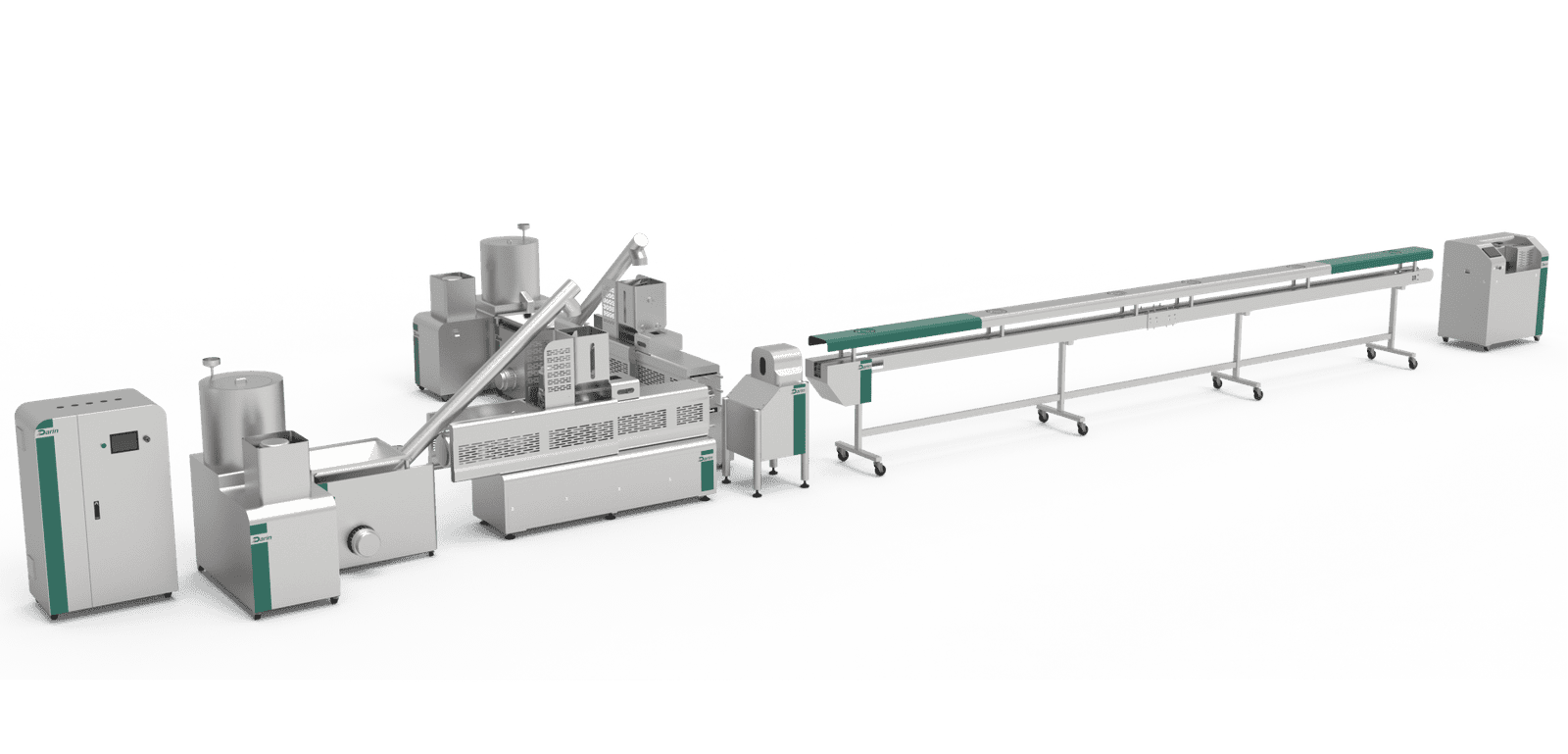

In today’s global snack market, meat jerky has become a leading high-protein food, loved for its convenience, flavor, and long shelf life. Yet behind every neatly packaged strip of jerky lies a complex set of processes. Many traditional producers face challenges such as inconsistent texture, flavor variation, microbial risks, and high labor costs, which hinder their competitiveness in modern markets. Without automation, companies risk falling behind in quality standards, international compliance, and profitability. The solution is the automated meat jerky production line—an integrated system that ensures consistency, food safety, efficiency, and scalability for global demand.
A meat jerky production line is a fully automated industrial system that processes raw meat into ready-to-eat jerky through stages including slicing, marinating, forming, drying, cooling, and packaging. By combining specialized equipment such as slicers, vacuum tumblers, extruders, dryers, and packaging machines, it delivers uniform, safe, and high-capacity jerky output for both small and large-scale manufacturers.
This guide will provide you with everything you need to know about meat jerky production—from market demand and technical processes to equipment choices, cost structures, and future trends. Whether you’re a food entrepreneur, investor, or established manufacturer, you will discover practical insights into scaling jerky production with confidence.
Jerky is simply dried meat and does not require strict hygiene control in production.False
Strict hygiene and safety standards are essential to prevent contamination, extend shelf life, and meet global regulatory requirements.
An automated jerky line can cut production labor costs by more than 50% compared to manual methods.True
Automation reduces manual handling, improves process consistency, and lowers dependency on a large workforce, resulting in significant cost savings.
Part 1 – Introduction & Market Overview of Meat Jerky Production
The Origins and Growth of Jerky
Jerky traces its origins to ancient food preservation practices. Indigenous peoples in North and South America pioneered the technique of drying strips of meat under the sun or over low fires to prevent spoilage. Over centuries, this method evolved into today’s industrial processes. The modern jerky industry has gone far beyond survival food: it now serves as a premium, high-protein snack with global appeal.
Market data highlights the rapid growth of jerky consumption. According to Fortune Business Insights, the global jerky market exceeded USD 4.5 billion in 2024 and is projected to grow at a CAGR of 6–7% through 2030. North America remains the largest market, but demand is expanding rapidly in Europe, Asia-Pacific, and the Middle East due to changing lifestyles, fitness trends, and increased demand for convenient snacks.
This growth is fueled by multiple consumer drivers:
- High-Protein Diets: Keto, paleo, and low-carb lifestyles push jerky as a go-to snack.
- Convenience: Packaged jerky is portable, with no refrigeration needed.
- Variety & Innovation: Flavors range from teriyaki and peppered beef to plant-based alternatives.
- Globalization of Diets: Asian consumers increasingly adopt Western-style snack foods.
The implication is clear: the jerky industry is no longer a niche—it’s a mainstream, fast-growing snack sector with opportunities for manufacturers worldwide.
Pain Points in Traditional Jerky Production
While jerky’s popularity soars, many producers still rely on manual or semi-automatic methods. These traditional processes face critical challenges:
- Inconsistent Quality – Manual slicing and uneven drying create variable texture and taste.
- High Labor Costs – Jerky production requires intensive handling if not automated.
- Food Safety Risks – Without controlled drying and sanitation, microbial contamination is a major risk.
- Limited Scalability – Batch drying and manual packaging slow expansion.
- Energy Inefficiency – Old dryers consume large amounts of energy with low yield.
These pain points not only restrict profitability but also limit access to global export markets, where strict regulations (FDA, USDA, EU food laws) demand consistency and compliance.
Why Invest in a Meat Jerky Production Line?
For investors and manufacturers, upgrading to a fully automated production line is the best solution to overcome inefficiencies. Key benefits include:
- Consistency: Automated slicing, marination, and drying ensure uniform flavor and texture.
- Scalability: Continuous production supports outputs from 100 kg/day up to 3,000+ kg/day.
- Cost Reduction: Up to 60% lower labor costs, plus reduced waste and energy consumption.
- Food Safety Compliance: HACCP, CE, and FDA-approved machinery ensures safe processing.
- Market Expansion: Meet international export requirements for North America, Europe, and Asia.
Investing in automation is not only a cost decision but also a strategic move to compete in the global jerky market.
The Workflow of an Automated Jerky Production Line
To understand the impact of automation, let’s look at a simplified flow of how raw meat becomes packaged jerky:
| Stage | Description | Equipment Used |
|---|---|---|
| 1. Meat Preparation | Meat is trimmed, deboned, and cut into strips or sheets. | Meat slicer, dicer |
| 2. Marination | Flavors are infused with spices and sauces under vacuum. | Vacuum tumbler, mixer |
| 3. Forming (Optional) | Meat is extruded or molded into uniform shapes. | Meat extruder, jerky former |
| 4. Drying | Controlled dehydration reduces water activity to preserve meat. | Hot air dryer, microwave dryer |
| 5. Cooling | Stabilizes product structure before packaging. | Cooling conveyors |
| 6. Packaging | Jerky is vacuum-sealed or MAP packed for shelf life. | Vacuum packer, MAP sealer |
This workflow is highly adaptable. Beef, pork, chicken, turkey, fish, and even plant-based proteins can all be processed through variations of this line.
Market Segmentation of Jerky Products
Not all jerky is the same. Production lines must often adapt to different product categories:
| Type | Description | Market Demand |
|---|---|---|
| Beef Jerky | Classic strips, most popular in North America | High & stable |
| Poultry Jerky | Chicken/turkey, leaner, preferred in Asia | Rising |
| Fish Jerky | Salmon, tuna, cod jerky for premium markets | Niche, growing |
| Pork Jerky | Sweet-spiced styles popular in Asia | Regional strength |
| Plant-Based Jerky | Soy, pea protein, mushroom alternatives | Emerging, strong CAGR |
Manufacturers often diversify their product lines to tap into different regional demands.
Global Demand and Export Opportunities
One of the most lucrative aspects of jerky production is its suitability for export markets. Properly dried and packaged jerky has a long shelf life, making it ideal for international trade. Countries like the United States, Canada, Germany, Japan, and Australia are top importers of jerky and related meat snacks.
Export success, however, depends on meeting standards such as:
- FDA (U.S.) – Process control, labeling, pathogen reduction.
- USDA (U.S.) – For beef jerky, meat source approval.
- EU Regulations – HACCP, traceability, clean labeling.
- Halal/Kosher Certifications – For Middle Eastern and Jewish markets.
By adopting compliant production lines, manufacturers position themselves for global scalability.
Transition to Technical Deep Dive
The introduction and market overview show why jerky is an attractive industry and how automated production lines are transforming it. Now that we’ve established the “why,” the next step is to explore the technical “how.” In Part 2, we will go deeper into each processing stage of jerky production—from meat selection and slicing to advanced drying technologies—so you can see how modern factories achieve consistent, safe, and profitable results.
Part 2 – Core Processing Stages in Jerky Production Lines
In Part 1, we discussed the market background and why automated production lines are becoming essential in modern jerky manufacturing. Now, let’s take a deep dive into the core processing stages of jerky production, step by step, and explore the equipment, technology, and critical parameters that guarantee safe, high-quality, and consistent jerky output.
A jerky production line transforms raw meat into a shelf-stable snack by passing it through sequential processes: trimming and slicing, marination, forming, drying/dehydration, cooling, and packaging. Each stage requires specialized machinery and precise control of variables such as temperature, time, humidity, and hygiene to ensure both safety and product quality.
Understanding these steps is crucial because even a minor error—like uneven slicing or improper drying—can lead to quality issues, microbial risks, or regulatory non-compliance.
Step 1: Meat Selection and Preparation
The journey of jerky begins with raw material choice.
Key Considerations
-
Meat Source:
- Beef is the most common, typically lean cuts like round or flank.
- Poultry (chicken/turkey) is popular in Asia.
- Fish (salmon, tuna, cod) targets niche premium markets.
- Pork jerky is widely consumed in Southeast Asia.
- Plant-based options use soy, pea protein, or mushrooms.
-
Lean Content:
- Fat must be minimized because it reduces shelf life and risks rancidity.
- Jerky requires meat with <10% fat for stability.
-
Food Safety:
- Meat should be fresh, traceable, and stored under cold chain conditions.
- Strict inspection avoids contamination risks.
Equipment Involved
- Meat Trimmer/Deboner – Removes fat, tendons, bones.
- Meat Slicer – Cuts into uniform strips (usually 3–6 mm thick).
- Dicer/Grinder – For ground jerky or formed products.
| Meat Type | Optimal Moisture Before Processing | Typical Cut Used | Shelf-Life Challenge |
|---|---|---|---|
| Beef | 75% | Round, flank, sirloin | Oxidation of fat |
| Chicken | 72% | Breast, thigh | Microbial load |
| Fish | 68% | Salmon, tuna | Rapid spoilage |
| Pork | 74% | Loin, ham | Fat rancidity |
| Plant-Based | 55–65% (hydrated protein) | Soy/pea isolates | Texture integrity |
Fact: Modern slicers with laser thickness control can achieve precision cuts at ±0.2 mm variance, ensuring even drying.
Step 2: Marination and Flavor Infusion
Flavor is the heart of jerky. This step determines whether the final product is savory, sweet, spicy, or smoky.
Marination Methods
- Static Soaking – Traditional but inconsistent. Meat sits in marinade, often uneven absorption.
- Vacuum Tumbling – Industrial standard. A vacuum environment allows marinade to penetrate muscle fibers uniformly, reducing marination time by up to 80%.
- Injection (Brine Injectors) – High-volume solution for poultry or fish jerky. Injects salt/spices into tissue.
Ingredients in Marinades
- Salt – For preservation & flavor.
- Sugar/Honey – Balances flavor and aids caramelization.
- Spices – Pepper, garlic, chili, etc.
- Functional Additives – Nitrites (optional, for cured jerky), natural preservatives (rosemary extract).
Equipment Involved
- Vacuum Tumbler – 500–2,000 liters, programmable rotation cycles.
- Industrial Mixer – For dry rub or semi-liquid marinades.
- Injection System – For rapid flavor infusion in bulk meat.
| Marination Method | Time Required | Penetration Depth | Typical Use |
|---|---|---|---|
| Soaking | 6–24 hrs | Surface only | Small batch/home use |
| Vacuum Tumbling | 20–90 mins | Deep, uniform | Industrial standard |
| Injection | 5–15 mins | Direct internal | Poultry/fish jerky |
Fact: Vacuum tumblers increase yield by 3–5% since marinade absorption improves water retention.
Step 3: Forming and Shaping
Not all jerky comes as natural strips. Some markets demand uniform shapes like sticks, sheets, nuggets, or even dog treats.
Methods of Forming
- Natural Cut Jerky – Traditional style, simply sliced meat strips.
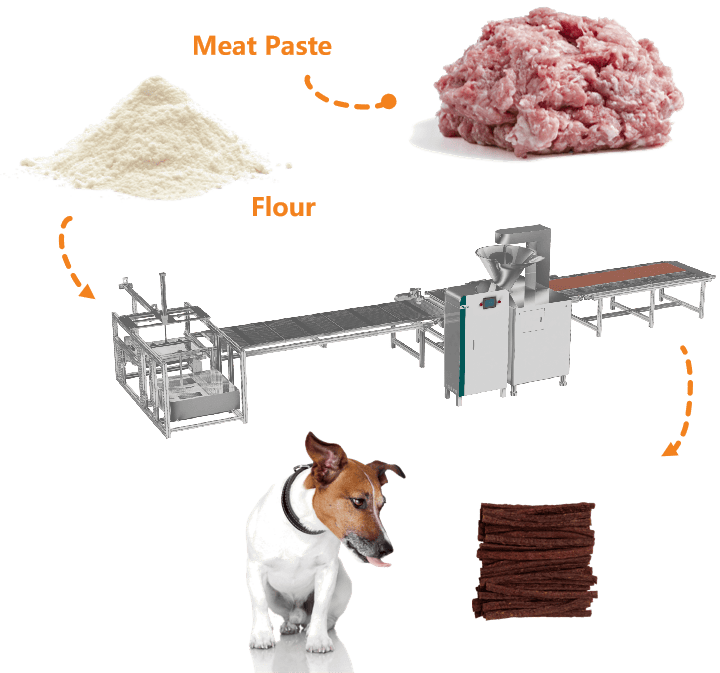
- Ground & Extruded Jerky – Meat paste extruded into shapes, then dried.
- Molded Jerky – Pressed into sheets or cubes.
Equipment Involved
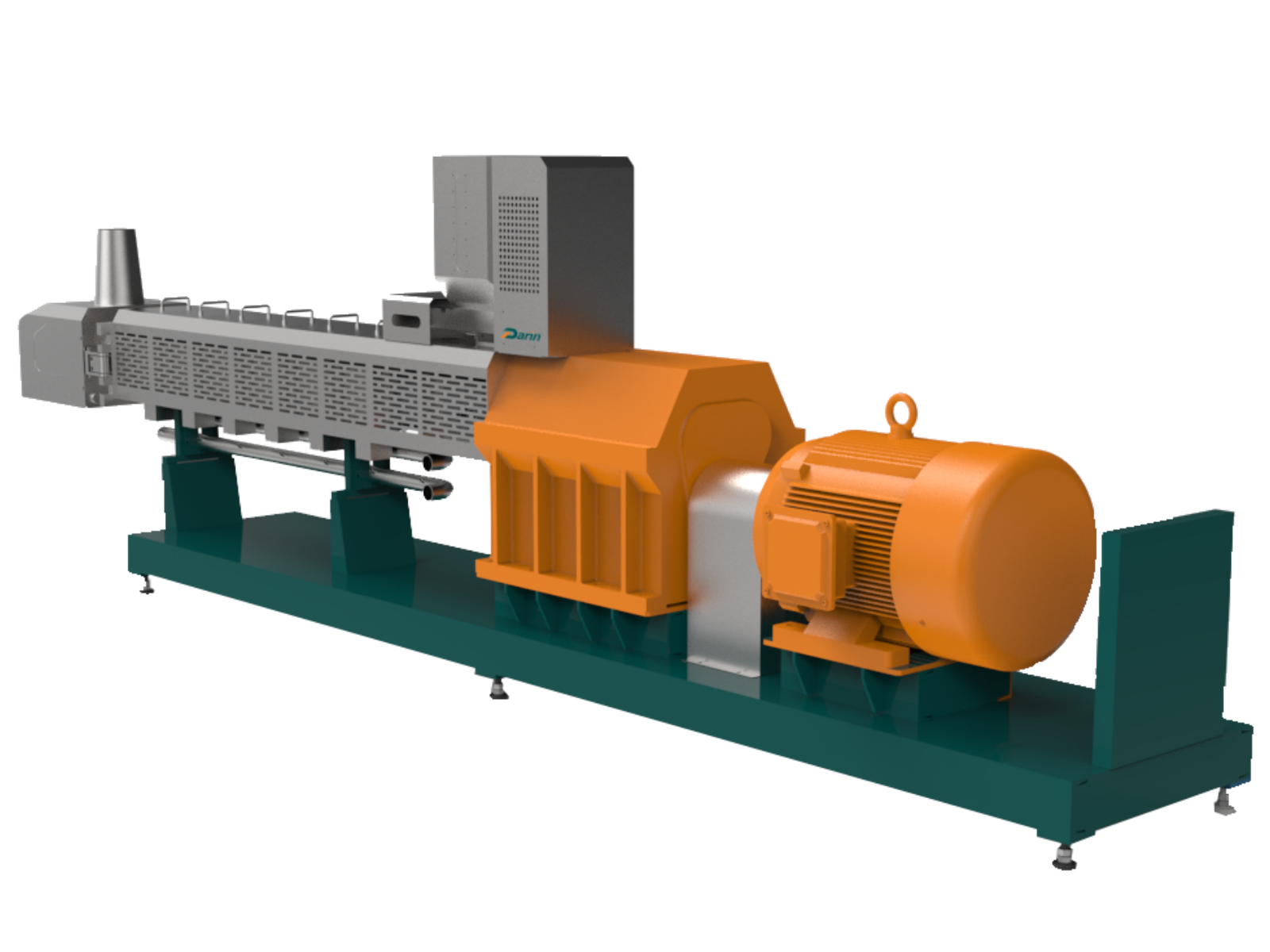
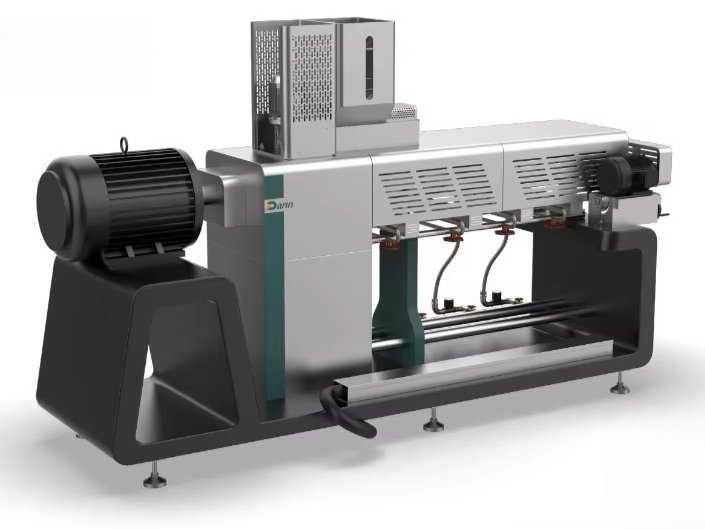
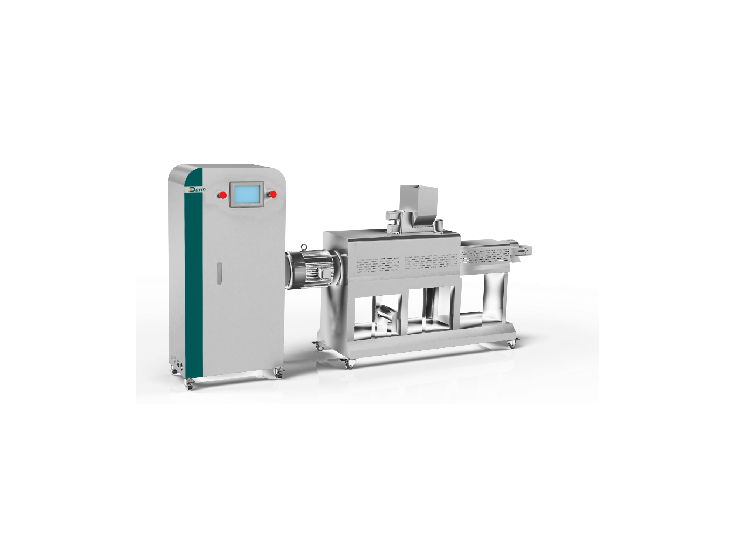
- Jerky Extruder – Twin-screw systems press meat through dies.
- Jerky Former/Press – Shapes ground meat into sheets or sticks.
| Jerky Type | Advantages | Challenges |
|---|---|---|
| Natural Cut | Authentic, premium perception | Size variation |
| Extruded | Uniform, scalable, low waste | Texture can be softer |
| Molded | Creative shapes, for snacks/pets | Requires stabilizers |
Fact: Formed jerky lines allow the use of trimmings and lower-cost cuts, reducing raw material cost by up to 15–20%.
Step 4: Drying & Dehydration
This is the critical step—it determines food safety, shelf life, and texture. Drying reduces water activity (aw) to below 0.85, preventing microbial growth.
Drying Technologies
-
Hot Air Drying (Most Common)
- Uses controlled hot airflow.
- Cost-effective, suitable for most jerky.
-
Microwave Drying
- Rapid internal heating.
- Shortens drying time by 30–50%.
-
Freeze-Drying (Premium Products)
- Maintains nutrients, light texture.
- High cost, niche markets.
-
Infrared Drying
- Surface heating with less energy use.
- Often combined with hot air.
Key Parameters
- Temperature: 55–75°C for hot air; avoid >80°C (tough texture).
- Humidity: Controlled release to avoid case hardening.
- Time: 4–12 hours depending on thickness and dryer type.
Equipment Involved
- Multi-Layer Conveyor Dryer – Continuous hot air drying, adjustable zones.
- Microwave Dryer – For rapid throughput.
- Hybrid Systems – Combining hot air + microwave for efficiency.
| Drying Method | Drying Time | Energy Efficiency | Product Quality | Typical Use |
|---|---|---|---|---|
| Hot Air | 6–12 hrs | Medium | Good, chewy texture | Mainstream jerky |
| Microwave | 2–4 hrs | High | Uniform but less “traditional” | Industrial scale |
| Freeze-Drying | 12–24 hrs | Low | Premium, light texture | High-end markets |
| Infrared | 3–6 hrs | Medium-high | Balanced | Specialty jerky |
Fact: Drying is the most energy-intensive step, accounting for up to 40% of total production cost. Investing in efficient dryers pays back quickly.
Step 5: Cooling and Stabilization
Once drying is complete, jerky must cool gradually to avoid condensation inside packaging.
- Cooling Conveyors: Stainless steel belt conveyors with fans.
- Air Chilling Rooms: Larger batches cooled with controlled airflow.
Improper cooling leads to condensation, which can spoil jerky even if drying was perfect.
Step 6: Packaging
Final packaging ensures shelf life, safety, and branding appeal.
Common Packaging Types
- Vacuum Sealing – Removes oxygen, extends shelf life.
- Modified Atmosphere Packaging (MAP) – Nitrogen flush to prevent oxidation.
- Resealable Pouches – For premium consumer convenience.
Equipment Involved
- Vacuum Packer – Single/double chamber for bulk jerky.
- MAP Sealer – Injects nitrogen/CO₂.
- Flow Wrapper – For stick jerky packs.
| Packaging Type | Shelf Life | Typical Application |
|---|---|---|
| Vacuum | 6–12 months | Bulk packs, exports |
| MAP | 9–18 months | Premium export jerky |
| Resealable Pouch | 3–9 months | Retail snack packs |
Fact: Premium jerky packaging with oxygen absorbers can extend shelf life to 18 months, opening up international shipping opportunities.
Transition to Next Part
Now that we’ve explored the step-by-step processing stages of jerky production, the next focus will be on Part 3 – Equipment & Configurations of Meat Jerky Production Lines. There, we will compare small, medium, and industrial-scale setups, analyze their machinery requirements, and discuss automation and compliance standards in detail.
Part 3 – Equipment & Configurations of Meat Jerky Production Lines
In Part 2, we examined the core processing stages of jerky manufacturing—from meat preparation to drying and packaging. Now, we’ll focus on the machines that make these processes possible, how they are configured for different production scales, and what considerations manufacturers must keep in mind when investing in or upgrading a meat jerky production line.
A meat jerky production line is a modular system of equipment that can be configured for small, medium, or industrial-scale production. Each machine has a specific function—from slicing and marination to drying and packaging—and the level of automation directly affects efficiency, consistency, and cost control.
This section provides an in-depth breakdown of the key machinery, typical line configurations, compliance requirements, and real-world case studies from Darin Machinery installations worldwide.
Core Equipment in a Meat Jerky Production Line
1. Meat Preparation Machines
- Meat Trimmer/Deboner – Removes bones, fat, and connective tissue to ensure lean meat.
- Meat Slicer – Precision slicing for uniform thickness, crucial for consistent drying.
- Meat Grinder/Dicer – Prepares meat for extruded or molded jerky.
👉 Key Feature: Modern slicers come with laser-controlled thickness adjustment (0.1–0.2 mm accuracy), reducing drying time variations.
2. Marination and Flavoring Systems
- Vacuum Tumblers – Create a vacuum environment to pull marinades deep into fibers.
- Mixers – Ensure even distribution of spices and additives.
- Injection Machines – For poultry/fish jerky, where fast flavor penetration is needed.
👉 Key Feature: Automated tumblers reduce marination time from 12 hours (traditional soaking) to under 1 hour.
3. Forming and Shaping Equipment
- Jerky Extruders – Twin-screw or hydraulic presses for extruding ground meat into sticks, sheets, or custom shapes.
- Jerky Formers/Presses – Compress meat paste into uniform sheets before drying.
👉 Key Feature: Forming equipment maximizes use of meat trimmings, lowering raw material costs by up to 15–20%.
4. Drying & Dehydration Systems
- Multi-Layer Hot Air Dryers – Conveyor-based, continuous drying with zoned temperature and humidity control.
- Microwave Dryers – Rapid dehydration, shorter cycle times.
- Freeze-Dryers – For premium jerky products with high nutrient retention.
- Hybrid Systems – Combine hot air + microwave for energy efficiency.
👉 Key Feature: Dryers can be integrated with IoT monitoring, tracking temperature, humidity, and product moisture in real-time.
5. Cooling Conveyors
- Stainless steel conveyors equipped with fans.
- Prevent condensation before packaging.
- Critical to avoid post-drying microbial growth.
6. Packaging Systems
- Vacuum Packers – Extend shelf life by removing oxygen.
- MAP Packaging (Modified Atmosphere Packaging) – Flushes packs with nitrogen/CO₂ for long-term preservation.
- Resealable Flow-Wrappers – For retail snack packs.
👉 Key Feature: With oxygen absorbers, jerky shelf life can extend up to 18 months, ideal for exports.
Typical Configurations for Different Production Scales
Jerky production lines are not “one size fits all.” Manufacturers must select configurations depending on budget, output demand, and market strategy.
| Scale | Configuration | Output Capacity | Labor Needs | Investment Range (USD) |
|---|---|---|---|---|
| Small-Scale / Startup | Slicer + Small Vacuum Tumbler + Batch Dryer + Tabletop Packer | 100–300 kg/day | 5–8 workers | \$30,000–80,000 |
| Medium-Scale | Continuous Slicer + Auto Tumbler + Extruder/Forming Machine + Tunnel Dryer + MAP Packaging | 500–1,500 kg/day | 10–15 workers | \$100,000–250,000 |
| Industrial-Scale | Fully automated slicer, conveyorized tumbler, robotic transfer, multi-layer continuous dryers, automated MAP packaging | 3,000+ kg/day | 15–25 workers | \$400,000+ |
Compliance & Food Safety Considerations
International Standards to Meet
- HACCP – Hazard Analysis & Critical Control Points
- FDA (U.S.) – Jerky imported to the U.S. must meet FDA safety standards.
- USDA (U.S.) – For beef jerky, USDA inspection is mandatory.
- EU Food Safety Regulations – Traceability and hygiene compliance.
- Halal/Kosher Certification – Essential for Islamic and Jewish markets.
👉 Automated equipment is designed with stainless steel 304/316, rounded edges, and easy-to-clean surfaces to comply with hygiene standards.
Energy Efficiency & Automation
Drying is the most energy-intensive stage, so efficiency upgrades matter:
- Heat Recovery Systems – Reuse waste heat from dryers.
- Smart Control Systems – Auto-adjust drying conditions.
- IoT Monitoring – Track energy consumption per batch.
Automation also reduces labor:
- Robotic arms for loading/unloading trays.
- Automatic conveyors to link machines.
- Recipe-based PLC controls for consistency.
Case Study 1 – Medium-Scale Beef Jerky Plant in Southeast Asia
- Initial Setup: 300 kg/day manual line.
- Upgrade with Darin Machinery: 1,200 kg/day automated line.
- Key Additions: Twin-screw extruder, multi-layer conveyor dryer, MAP packaging line.
-
Results:
- Labor reduced from 25 to 12 workers.
- Production cost reduced by 40%.
- Export approval to EU gained within 8 months.
Case Study 2 – Industrial Poultry Jerky Plant in the Middle East
- Setup: 3,500 kg/day poultry jerky plant.
-
Special Features:
- Injection marination for faster absorption.
- Continuous tunnel drying with hybrid hot air + microwave.
- Automated robotic packers for MAP packaging.
-
Results:
- Energy costs cut by 25%.
- Shelf life extended to 15 months.
- Secured contracts with 5 supermarket chains.
Visualization: Production Line Layout
| Section | Equipment Placement | Notes |
|---|---|---|
| Raw Material Zone | Slicer + Trimmer + Grinder | Stainless steel, cold storage nearby |
| Processing Zone | Vacuum Tumbler + Mixer + Extruder/Former | Requires HACCP zoning |
| Drying Zone | Multi-layer Dryer + Hybrid System | Controlled humidity zones |
| Cooling Zone | Conveyor cooling tunnel | Must prevent condensation |
| Packaging Zone | Vacuum/MAP Packaging | Strict hygiene environment |
This layout ensures one-way product flow (raw → processing → packaging), avoiding cross-contamination.
Transition to Next Part
At this stage, we’ve mapped out the equipment and configurations of meat jerky production lines, along with compliance and case studies. In Part 4, we’ll analyze the cost structure, ROI, and operational considerations—helping investors and manufacturers understand not just the technical side, but also the business decision-making framework for jerky production.
Part 4 – Cost Analysis, ROI & Operational Considerations
In the previous sections, we explored the market potential of jerky, the processing stages, and the equipment configurations needed to produce jerky efficiently. But for investors and manufacturers, the most critical question remains:
👉 What does it cost to run a jerky production line, and what is the expected return on investment (ROI)?
A meat jerky production line typically requires an investment ranging from \$30,000 for a small-scale setup to \$400,000+ for an industrial automated plant. Operating costs include raw materials, labor, energy, maintenance, and packaging. With global jerky demand rising, most production lines achieve ROI within 6–18 months depending on scale, efficiency, and market pricing.
This section provides a detailed financial and operational breakdown to guide decision-making.
Capital Investment Costs
The initial investment varies by production scale and automation level.
| Scale | Equipment Included | Investment Range (USD) | Daily Output |
|---|---|---|---|
| Small-Scale | Slicer, vacuum tumbler, batch dryer, tabletop vacuum packer | \$30,000 – \$80,000 | 100–300 kg |
| Medium-Scale | Continuous slicer, tumbler, extruder/former, tunnel dryer, MAP packaging line | \$100,000 – \$250,000 | 500–1,500 kg |
| Industrial-Scale | Fully automated conveyorized line with robotic handling, hybrid dryers, MAP packaging | \$400,000+ | 3,000+ kg |
👉 Observation: Drying and packaging systems are the largest cost contributors, often making up 50–60% of total CAPEX.
Operating Costs Breakdown
Operational costs determine the real profitability.
| Cost Category | Small-Scale (per kg jerky) | Medium-Scale | Industrial-Scale |
|---|---|---|---|
| Raw Meat | \$5.00 | \$4.50 | \$4.20 |
| Spices/Marinade | \$0.50 | \$0.45 | \$0.40 |
| Labor | \$1.50 | \$0.80 | \$0.40 |
| Energy (drying, packaging) | \$1.20 | \$0.90 | \$0.70 |
| Packaging Materials | \$0.50 | \$0.40 | \$0.35 |
| Maintenance | \$0.30 | \$0.25 | \$0.20 |
| Total Cost per kg | \$9.00 | \$7.30 | \$6.25 |
👉 Observation: Scaling up production significantly reduces labor and energy cost per kilogram, improving margins.
Selling Prices & Profit Margins
Jerky is considered a premium snack, commanding high retail prices.
| Market | Retail Price (per kg) | Manufacturer Selling Price (B2B) |
|---|---|---|
| North America | \$35–50 | \$20–28 |
| Europe | \$30–45 | \$18–25 |
| Asia-Pacific | \$25–35 | \$15–20 |
| Middle East | \$28–40 | \$17–23 |
👉 Manufacturers typically sell to distributors/wholesalers at B2B prices, retaining 30–50% gross margins depending on scale.
ROI Timeline
Let’s calculate ROI based on a medium-scale factory example:
- Investment: \$200,000
- Daily Output: 1,000 kg jerky
- Cost per kg: \$7.30
- Selling Price (B2B): \$20/kg
- Gross Profit per kg: \$12.70
- Daily Profit: \$12,700
- Monthly Profit (22 working days): \$279,400
👉 Payback Period = \$200,000 ÷ \$279,400 ≈ 0.7 months
Of course, real-world ROI is slower due to distribution, marketing, and logistics—but even with conservative estimates, ROI is achieved within 6–12 months.
Yield and Efficiency Considerations
Jerky production is unique because it involves moisture loss during drying.
- 100 kg raw meat (75% moisture) → \~35–40 kg jerky (20–25% moisture).
- Yield ratio: \~35–40%.
This means raw meat cost is the largest expense. Efficiency improvements in drying (less shrinkage, better water retention) directly improve profitability.
| Factor | Effect on Yield | Notes |
|---|---|---|
| Marination | ↑ Yield by 3–5% | Salt/sugar improves water retention |
| Drying Speed | Faster = less efficient | Risk of case hardening |
| Meat Selection | Leaner = better yield | Fat renders away |
Quality Control & Compliance Costs
Compliance is not optional—especially for export markets.
- HACCP Certification – \$5,000–15,000 (initial setup).
- ISO 22000 / FSSC 22000 – \$10,000–30,000.
- Halal/Kosher – \$3,000–10,000 per audit.
- FDA/USDA Approval – Required for U.S. exports.
Though certification costs add overhead, they unlock access to premium export markets with higher margins.
Maintenance & Lifespan of Equipment
- Dryers & Extruders – 10–15 years with proper maintenance.
- Vacuum Tumblers – 8–12 years.
- Packaging Machines – 8–10 years.
Annual maintenance costs typically run 3–5% of equipment value.
Labor vs. Automation Analysis
| Setup | Workers Needed | Output Capacity | Cost Impact |
|---|---|---|---|
| Manual Line | 25–30 | 300 kg/day | High labor, inconsistent |
| Semi-Automatic Line | 12–15 | 1,000 kg/day | Balanced |
| Fully Automated Line | 15–20 | 3,500+ kg/day | Low labor per kg |
Automation not only reduces labor cost but also ensures consistent compliance, which is vital for exports.
Case Study – ROI for a Medium Jerky Producer
A Vietnamese jerky company upgraded from semi-automatic (500 kg/day) to fully automated (1,500 kg/day).
- Investment: \$220,000
- Labor reduced from 20 to 12 workers.
- Cost per kg dropped from \$8.20 → \$7.10
- Export sales increased by 70% due to HACCP certification.
- ROI achieved in 9 months.
Risk Factors in Jerky Production
Investors must also consider risks:
- Raw Meat Price Volatility – Beef and chicken prices fluctuate with global supply chains.
- Energy Costs – Drying consumes large amounts of energy; energy-efficient dryers mitigate this.
- Regulatory Barriers – Export approvals can delay ROI.
- Market Competition – New brands may compete on price.
Mitigation strategies include diversifying protein sources (beef, chicken, fish, plant-based) and adopting hybrid drying technologies for energy savings.
Transition to Next Part
Now that we’ve analyzed costs, ROI, and operational considerations, we can conclude that meat jerky production is highly profitable when scaled efficiently. In Part 5 – Future Trends, Innovations & Conclusion, we’ll explore the next generation of jerky production: plant-based jerky, IoT-enabled dryers, global health trends, and how manufacturers can future-proof their business.
Part 5 – Future Trends, Innovations & Conclusion
In the previous section, we analyzed the costs, ROI, and operational considerations of running a jerky production line. With profitability established, the next question is forward-looking:
👉 How will the jerky industry evolve, and what innovations should manufacturers prepare for?
The future of jerky production is shaped by plant-based alternatives, smart drying technologies, consumer health trends, and stricter global compliance. Manufacturers who invest in innovation and automation today will secure a competitive edge in tomorrow’s market.
Trend 1: Plant-Based & Alternative Protein Jerky
Plant-based jerky is one of the fastest-growing segments. Consumers seeking sustainable, vegan, or allergen-friendly snacks are pushing demand for soy, pea protein, and mushroom-based jerky.
Key Points
- Market Growth: Plant-based jerky is growing at CAGR 12–15%, faster than traditional meat jerky.
- Production: Similar processes (extrusion, drying, packaging), but raw material is plant protein isolate or textured vegetable protein (TVP).
- Consumer Appeal: Lower carbon footprint, “clean label,” high fiber content.
| Product Type | Raw Material | Challenges | Market Potential |
|---|---|---|---|
| Soy Jerky | Soy protein isolate | Allergen sensitivity | High in Asia & US |
| Pea Protein Jerky | Pea protein concentrate | Texture difficulty | High in EU |
| Mushroom Jerky | Shiitake, oyster | Limited scalability | Niche gourmet |
| Hybrid Jerky | Meat + plant protein | Formulation balance | Mainstream potential |
👉 Manufacturers with twin-screw extruders can adapt easily to both meat and plant-based jerky production.
Trend 2: Smart Drying & IoT-Enabled Systems
Drying remains the most energy-intensive stage. Future innovation focuses on efficiency and precision.
- IoT Sensors: Real-time monitoring of temperature, humidity, and moisture.
- AI Algorithms: Predict drying times and optimize airflow.
- Hybrid Systems: Hot air + microwave + infrared for speed and quality.
- Energy Recovery: Reusing waste heat from dryers.
👉 Case Study: A Darin Machinery client using IoT-enabled dryers reduced energy costs by 22% and improved batch uniformity.
Trend 3: Health & Nutrition-Oriented Jerky
Today’s consumers are health-conscious. Jerky manufacturers must adapt recipes to meet demand for:
- Low-Sodium Options – Reduced salt for cardiovascular health.
- Clean Label – No artificial preservatives, “all natural.”
- Functional Jerky – Enriched with vitamins, probiotics, or omega-3.
- Special Diets – Keto, paleo, gluten-free jerky products.
👉 Reformulating marinades with natural preservatives (e.g., rosemary extract) is becoming an industry standard.
Trend 4: Stricter Global Food Compliance
Export opportunities are growing, but regulatory compliance is tightening.
- U.S. FDA & USDA: Mandatory process controls, pathogen testing.
- EU Regulations: Traceability, HACCP certification, allergen labeling.
- China & ASEAN: Increasingly adopting international standards.
- Halal/Kosher: Expanding market access in the Middle East & Jewish communities.
👉 Automated jerky lines designed with stainless steel 304/316, CIP (Clean-in-Place) systems, and hygienic design are best positioned to meet global standards.
Trend 5: Market Expansion & Globalization
Jerky is moving from a regional snack to a global premium product.
- North America – Still the largest market, focused on innovation.
- Europe – Growth in gourmet & plant-based jerky.
- Asia-Pacific – Strong growth in chicken and pork jerky.
- Middle East – Halal-certified beef and poultry jerky demand rising.
| Region | Market Size (2024, USD) | CAGR (2024–2030) | Key Trend |
|---|---|---|---|
| North America | \$2.1B | 5.5% | Premium beef jerky |
| Europe | \$1.0B | 6.2% | Plant-based jerky |
| Asia-Pacific | \$0.9B | 8.0% | Poultry jerky |
| Middle East & Africa | \$0.5B | 7.5% | Halal jerky |
👉 Export-focused manufacturers can diversify across regions to reduce dependency on one market.
Trend 6: Jerky Beyond Human Consumption – Pet Treats
The pet food industry is booming, and jerky-shaped treats for dogs and cats are rapidly growing.
- Uses similar processing lines (extrusion, drying, packaging).
- Raw materials include chicken, fish, or plant-based proteins.
- Regulations focus on AFCO (US) and EU Pet Food Standards.
👉 Many Darin Machinery customers operate dual-purpose lines—producing both human jerky and pet treats.
The Future of Jerky Production
The jerky industry is no longer limited to beef strips—it is evolving into a multi-protein, multi-market, and technology-driven sector. Manufacturers who embrace automation, compliance, and innovation will thrive in this expanding market.
Key Takeaways:
- Automated lines deliver consistency, efficiency, and compliance.
- ROI is rapid—6–12 months for medium/large plants.
- Plant-based jerky and pet treats open new revenue streams.
- Smart dryers and IoT systems improve energy efficiency.
- Compliance with HACCP, FDA, EU standards is non-negotiable for exports.
Final Call-to-Action
If you are planning to invest in or upgrade a jerky production facility, Darin Machinery provides customized meat jerky production lines tailored to your capacity, product type, and compliance needs.
📩 Contact us today at darin4@darin.cn or visit our website: https://petreatsmachine.com/ for professional consultation.