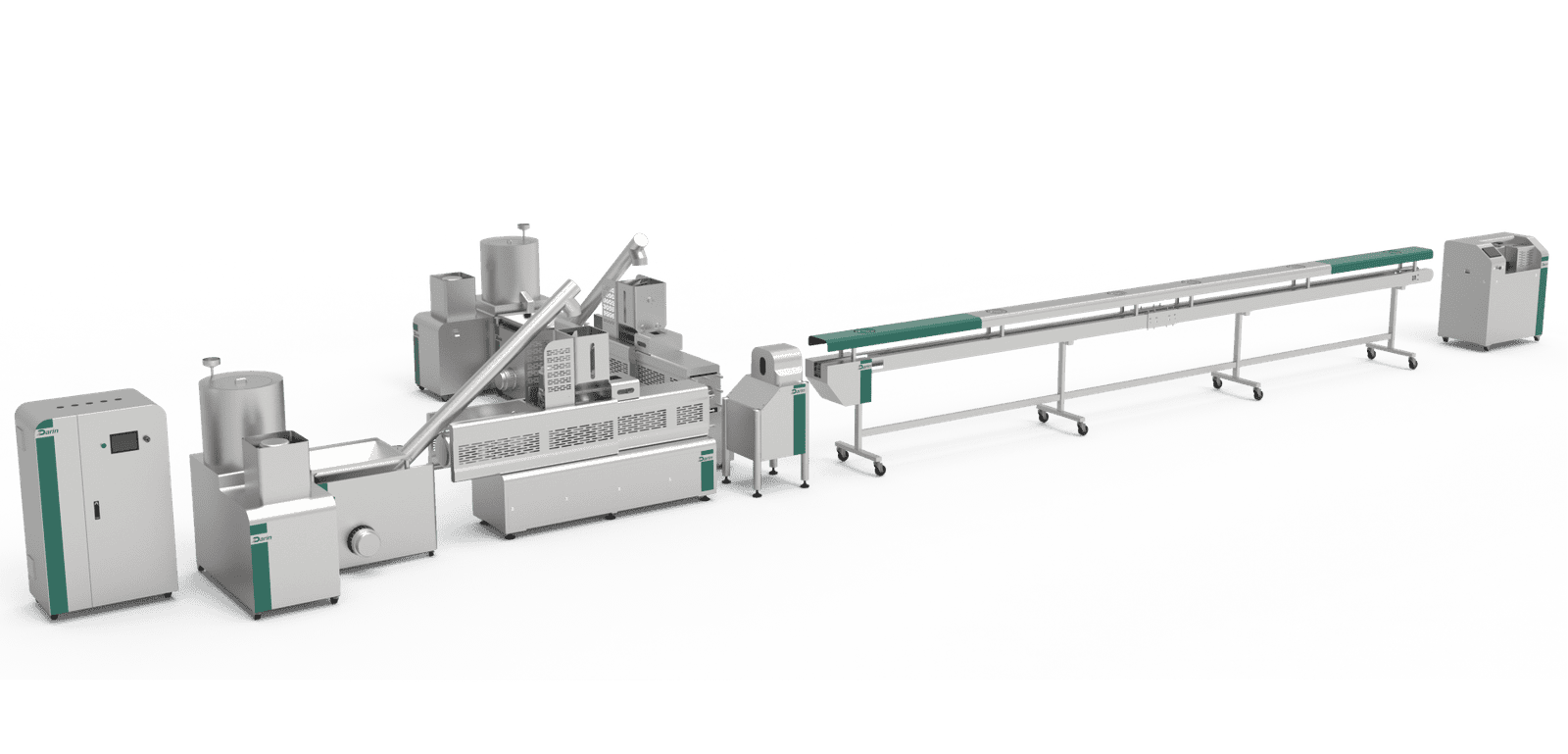

Creating high-quality kibble dog food is not as simple as mixing ingredients and drying them. Many new manufacturers and pet entrepreneurs underestimate how complex the process can be — resulting in poor texture, uneven nutrition, or contamination issues. These problems lead to customer complaints, recalls, and brand damage. The good news is that with the right equipment, formulation, and process control, you can produce consistent, safe, and nutritious kibble dog food efficiently. This guide, prepared by Darin Machinery, walks you through the full industrial process — from raw ingredients to packaging — so you can confidently set up or optimize your production line.
Kibble dog food is made by blending balanced ingredients (meat meal, cereals, fats, vitamins, minerals), cooking them through extrusion at high temperature and pressure, drying to the right moisture level, coating with fats and flavors, and finally cooling and packaging. Each step ensures nutrition, digestibility, texture, and shelf life suitable for dogs of different breeds and ages.
Let’s dive deeper into how kibble dog food is made step by step — and how modern extrusion technology ensures quality and efficiency in every batch.
Dog kibble is made entirely of raw meat without any starch.False
Dog kibble typically contains a mix of meat meal, cereals, starch, fats, and micronutrients. Starch is essential for shaping and binding kibble during extrusion.
Step-by-Step Process of Making Kibble Dog Food
Step 1: Ingredient Selection and Grinding
The foundation of any high-quality kibble is ingredient quality and uniform particle size. Common raw materials include:
- Meat meal or fish meal (protein source)
- Corn, rice, wheat, or potato starch (energy and binding)
- Fats and oils (palatability and energy)
- Vitamins and minerals (micronutrients)
- Fiber additives (digestive support)
All dry ingredients are finely ground using a feed crusher or hammer mill to ensure uniform particle size (typically < 0.5 mm). Fine grinding improves mixing, cooking uniformity, and extrusion consistency.
| Ingredient | Function | Typical Inclusion (%) |
|---|---|---|
| Meat meal | Protein source | 25–35 |
| Corn/Rice | Carbohydrate & binder | 30–40 |
| Animal fat | Energy & palatability | 8–12 |
| Vitamins & minerals | Nutritional balance | 1–3 |
| Fiber (beet pulp, cellulose) | Digestion aid | 3–5 |
Step 2: Mixing and Batching
In this stage, ingredients are dosed and blended uniformly using an automatic batching and ribbon mixer system.
- Dry materials are mixed first for 2–3 minutes.
- Liquid ingredients (oil, molasses, etc.) are then added to ensure even coating.
Proper mixing ensures every kibble has the same nutritional composition, preventing deficiency or over-supplementation.
| Equipment | Purpose | Automation Level |
|---|---|---|
| Ribbon Mixer | Homogenize all dry and liquid ingredients | Semi/Full |
| Batching System | Weigh and dose ingredients accurately | Full |
| Liquid Dosing Pump | Add oil, vitamins, or flavor | Semi/Full |
Step 3: Preconditioning
Before extrusion, the mixed material enters a preconditioner, where steam and moisture are added. This step:
- Softens the mix and pre-cooks starch
- Improves extrusion efficiency and kibble texture
- Reduces energy consumption in the extruder
Steam conditioning brings the mix temperature to around 90–100°C and moisture to 20–25%, depending on the formulation.
Step 4: Extrusion Cooking and Shaping
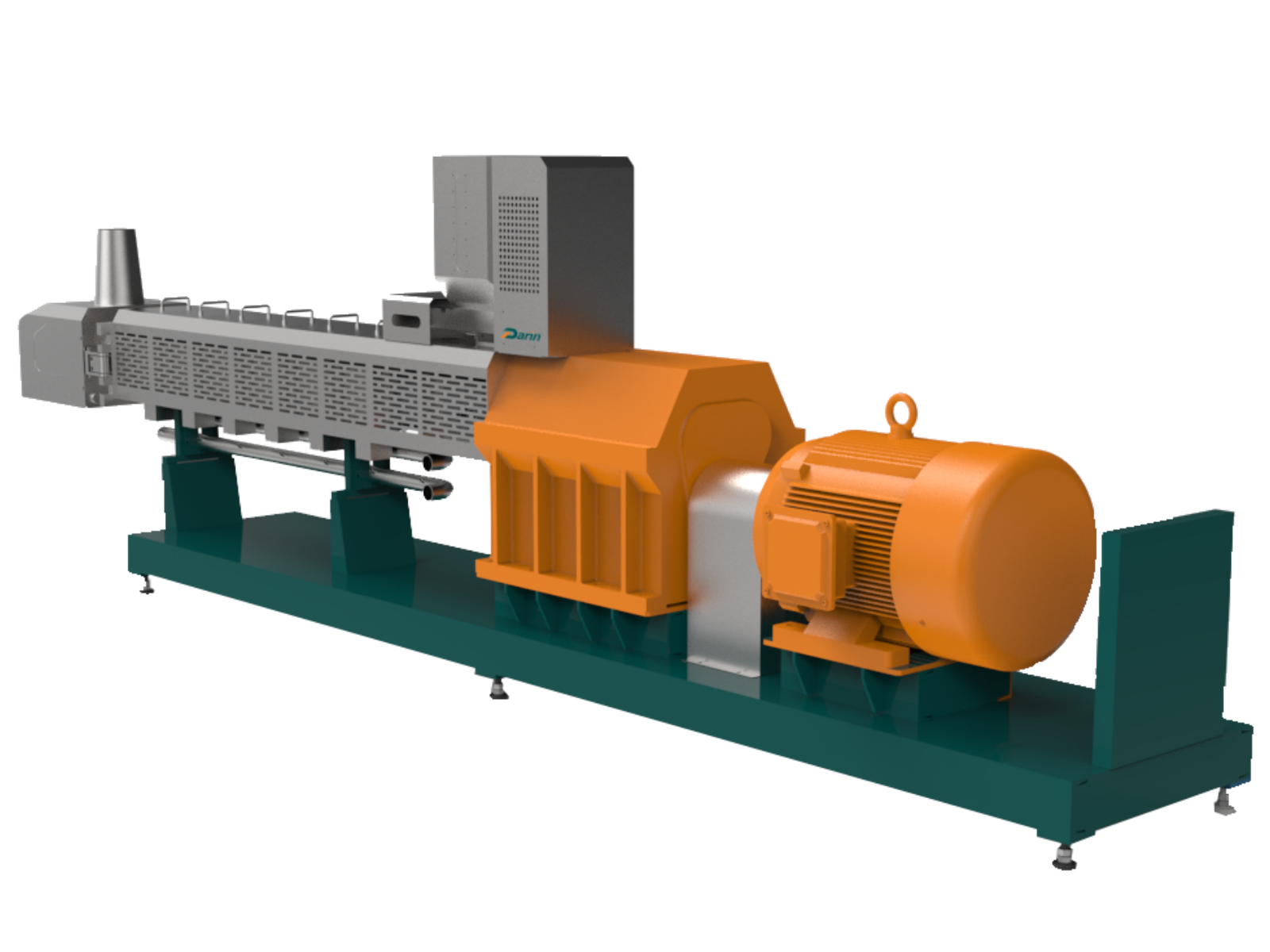
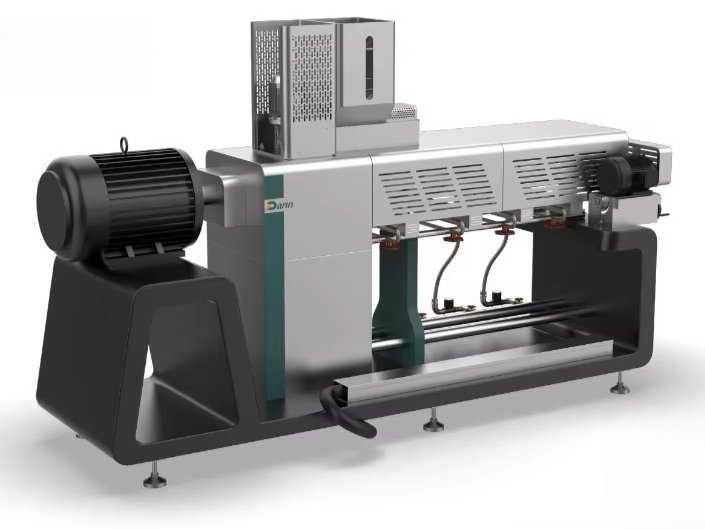
The preconditioned material enters the twin-screw extruder, the heart of kibble production.
Inside the extruder:
- High pressure (30–40 bar) and temperature (120–160°C) cook and gelatinize the starch.
- The screws knead, shear, and compress the mix.
- When the cooked dough exits through the die, it expands instantly due to pressure drop — forming puffed kibble shapes.
Adjusting die design and screw configuration allows you to create various kibble shapes (round, square, bone, heart, etc.).
| Extrusion Parameter | Typical Range | Effect |
|---|---|---|
| Temperature | 120–160°C | Cooking and expansion |
| Pressure | 30–40 bar | Density and texture |
| Screw speed | 300–600 rpm | Throughput and shear |
| Moisture | 20–25% | Binding and expansion |
Step 5: Drying
After extrusion, the kibble still contains 20–25% moisture. It must be reduced to 8–10% to ensure shelf stability.
Drying is performed in a multi-layer belt dryer where hot air circulates evenly at 90–120°C.
The drying time typically lasts 15–25 minutes, depending on kibble size and formulation.
Proper drying prevents microbial growth, ensures crunchiness, and maintains uniform color.
Step 6: Coating (Fat, Flavor & Nutrients)
Once cooled slightly, the kibble enters a rotary drum coater or vacuum coater where:
- Animal fat or palatability enhancers are sprayed for flavor and aroma.
- Vitamins, probiotics, or fish oil may be added as post-extrusion nutrients.
Vacuum coating helps absorb fat deeply into kibble pores, preventing surface greasiness and ensuring longer shelf life.
| Coating Type | Purpose | Equipment |
|---|---|---|
| Fat Coating | Flavor & energy | Rotary/Vacuum Coater |
| Nutrient Spray | Add sensitive vitamins & enzymes | Liquid Dosing System |
| Powder Coating | Visual and texture enhancement | Powder Feeder |
Step 7: Cooling and Sieving
The coated kibble is cooled to ambient temperature (25–30°C) in a counter-flow cooler, which removes residual heat and moisture.
Then, a vibration sieve separates broken or uneven particles to maintain consistent quality before packaging.
Step 8: Packaging
Finally, the finished kibble is weighed and packed into bags (1–20 kg) using an automatic weighing and sealing machine.
Nitrogen flushing or vacuum sealing can be applied for longer shelf life.
Packages are then coded with production date and batch number for traceability.
| Packaging Option | Capacity | Feature |
|---|---|---|
| Pillow Bag | 1–5 kg | Retail distribution |
| Woven Bag | 10–20 kg | Bulk supply |
| Vacuum Pack | Optional | Extended shelf life |
Quality Control & Nutritional Consistency
Every batch should undergo rigorous testing:
- Moisture content: 8–10%
- Protein content: 22–32%
- Fat content: 8–14%
- Ash & fiber: within formulation limits
- Microbial testing: Salmonella, E. coli negative
Automated monitoring systems (moisture sensors, NIR analyzers) ensure precise control across the line.
Common Problems and Solutions
| Problem | Cause | Solution |
|---|---|---|
| Kibble too hard | Low moisture or low fat | Increase conditioning steam or post-coating oil |
| Poor expansion | Low starch or over-moisture | Adjust formula or extrusion temperature |
| Uneven color | Uneven drying | Balance air distribution in dryer |
| Rancidity | Excess surface oil | Use vacuum coating and antioxidant addition |
Energy and Efficiency Optimization
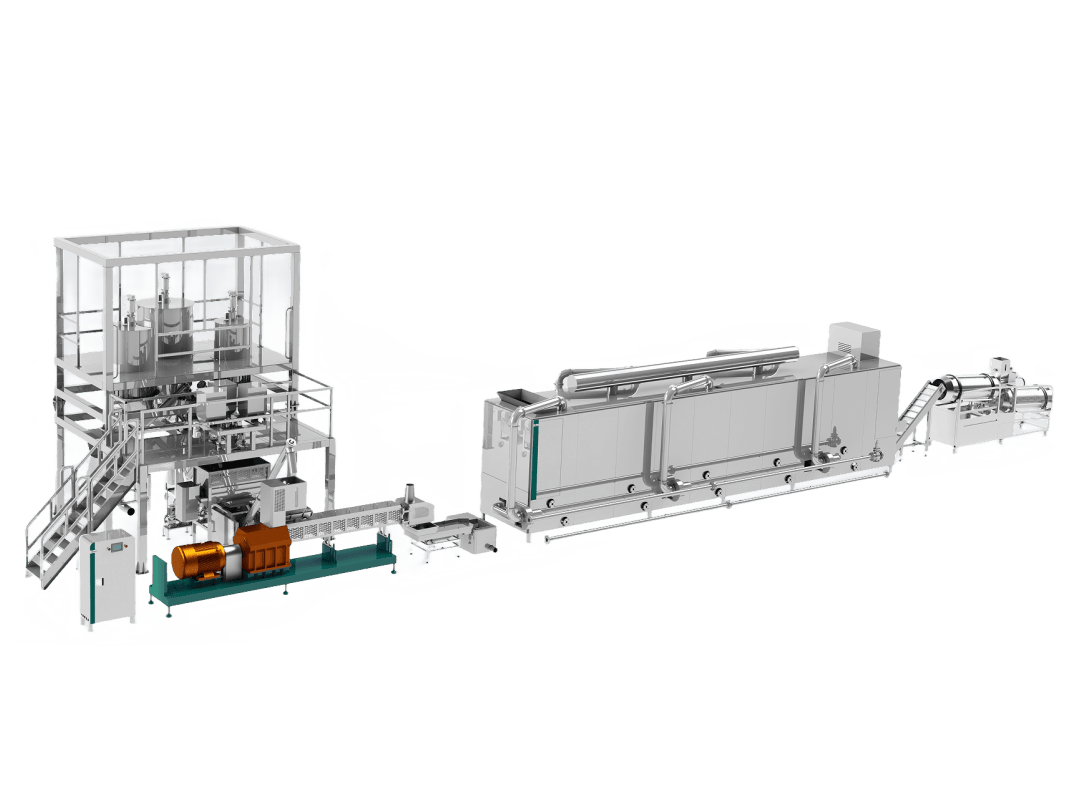
Modern pet food factories use PLC-controlled systems to synchronize all line operations — mixing, extrusion, drying, and packaging — reducing manual errors and improving efficiency.
Darin’s kibble dog food production lines are designed for:
- Automatic control of recipe & throughput
- Energy-efficient dryers with heat recovery
- Stainless steel sanitary design
- Remote monitoring for maintenance
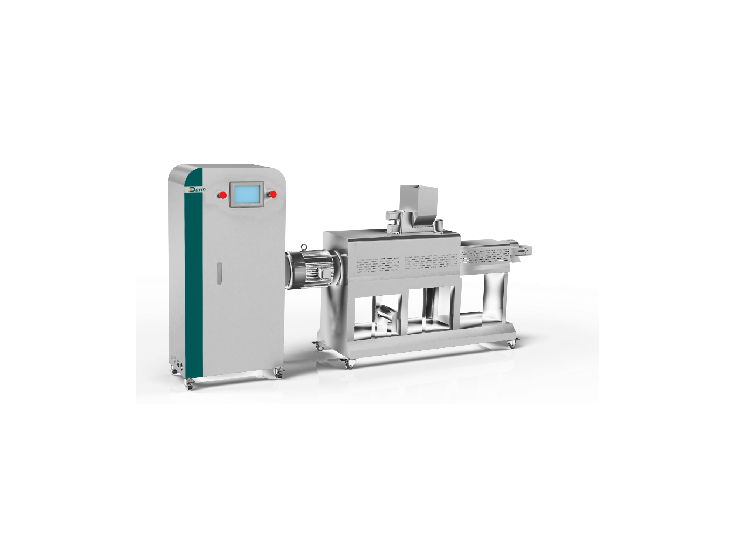
Example: Darin DR-65/70/85 Kibble Dog Food Production Line
| Model | Capacity (kg/h) | Power (kW) | Extruder Type | Suitable for |
|---|---|---|---|---|
| DR-65 | 120–150 | 75 | Twin-Screw | Small to medium producers |
| DR-70 | 200–300 | 100 | Twin-Screw | Standard factory setup |
| DR-85 | 400–500 | 150 | Twin-Screw | Large-scale mass production |
Each model integrates with mixers, preconditioners, dryers, coolers, and packaging systems for a complete turnkey solution.
Conclusion
Making high-quality kibble dog food requires precise formulation, consistent extrusion parameters, and integrated quality control. Whether you’re a new pet food entrepreneur or upgrading an existing factory, automation and process stability are key to success.
With Darin Machinery’s advanced extrusion and drying technologies, you can produce nutritionally balanced, attractive, and durable kibble that meets both pet owner expectations and international standards.
👩🔧 Talk to Darin Machinery
Ready to build your own kibble dog food production line or improve your existing setup?
📞 WhatsApp: +86 156 5000 7983
📧 Email: darin4@darin.cn
🌐 Website: www.petreatsmachine.com
Let’s make pet food production smarter, safer, and more profitable — together.