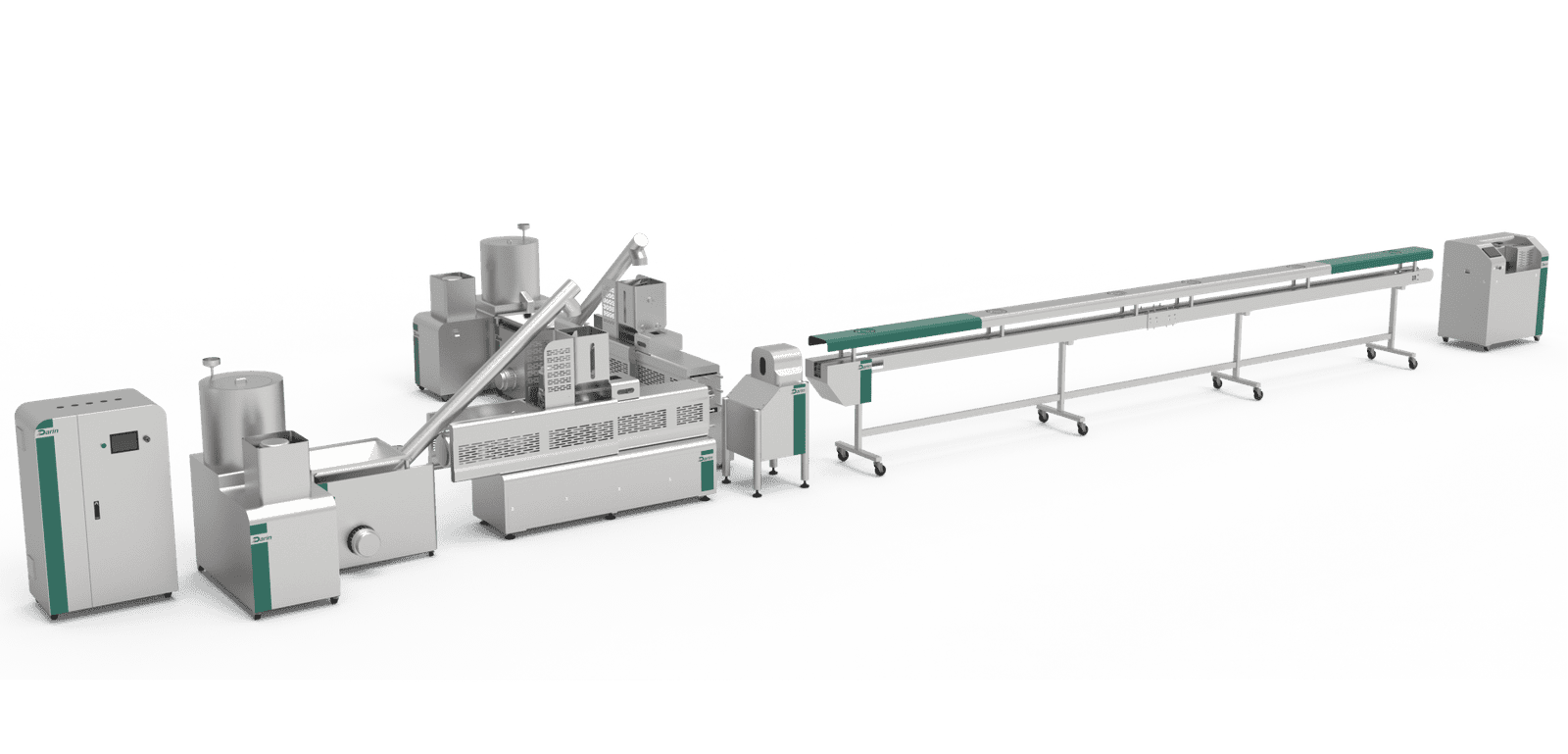

Fish farmers often face the challenge of high feed costs and inconsistent feed quality, both of which can seriously affect fish growth rates, survival, and profitability. Poorly made feed can sink too fast, disintegrate in water, or lack essential nutrients. However, with a proper understanding of fish feed formulation and the right production process, you can produce high-quality floating or sinking fish feed efficiently — either for your own farm or for commercial sale. This guide will walk you through the complete process.
Fish feed is made by mixing balanced raw materials (such as fish meal, soybean meal, and corn), grinding and blending them, conditioning with steam, extruding into pellets using a fish feed extruder, drying, coating with oil or vitamins, and finally cooling and packaging the pellets for storage or sale.
To help you fully understand the production, let’s explore the detailed step-by-step process below.
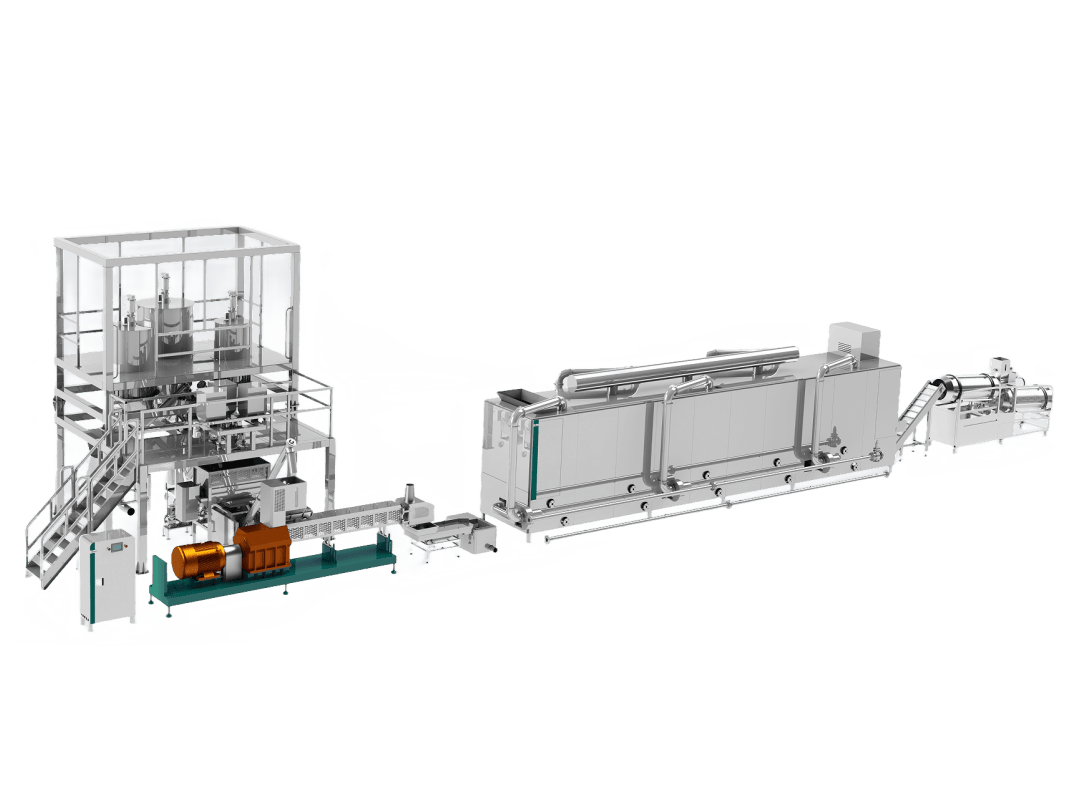
Quality fish feed production requires precision, consistency, and reliable machinery. Below, we break down the complete industrial and small-scale process used by professional manufacturers like Darin Machinery, a leading supplier of fish feed pellet production lines in China.
Fish feed can be made by simply mixing ground grains and feeding directly to fish.False
Raw grains alone lack sufficient protein, amino acids, and digestibility for fish. A balanced extruded feed is essential for optimal nutrition and water stability.
Step-by-Step Guide to Making Fish Feed
Step 1: Raw Material Selection and Preparation
The nutritional composition of fish feed depends on the target species (carnivorous, omnivorous, or herbivorous) and growth stage. Common ingredients include:
| Ingredient | Function | Typical Inclusion (%) |
|---|---|---|
| Fish Meal | High-quality protein | 10–20 |
| Soybean Meal | Plant protein & amino acids | 20–30 |
| Corn / Wheat Flour | Energy & binder | 10–25 |
| Rice Bran / Wheat Bran | Fiber source | 5–15 |
| Fish Oil / Vegetable Oil | Fat & energy | 2–6 |
| Vitamins & Minerals | Health & immunity | 1–3 |
Raw materials should be clean, dry, and ground to uniform fineness (0.5–0.8 mm) using a hammer mill or grinder.
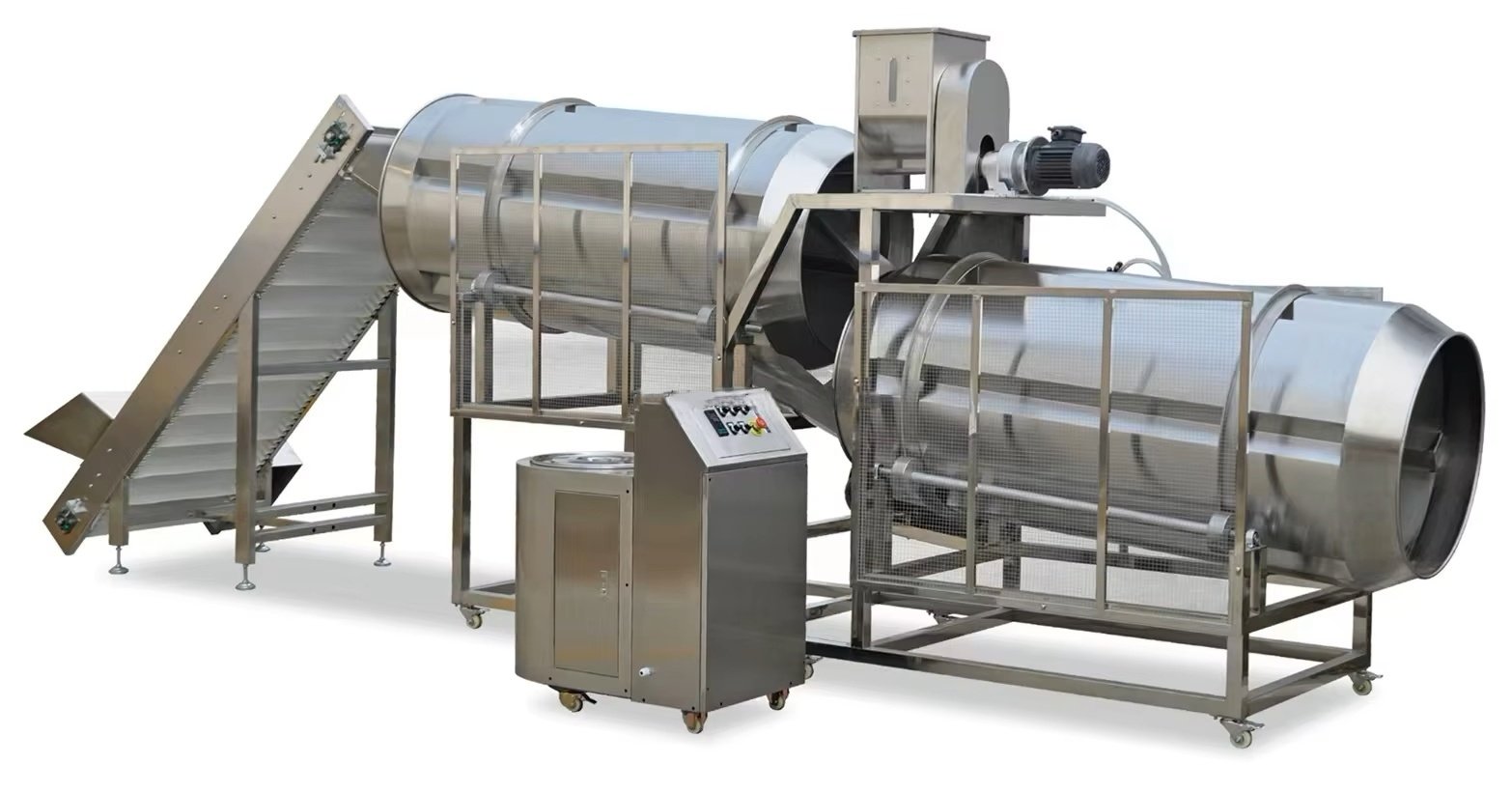
Step 2: Mixing and Homogenization
Uniform mixing ensures consistent nutrient distribution in every pellet. A ribbon blender or paddle mixer is used to blend the powdered ingredients evenly. Moisture content after mixing should be around 12–14%.
Additives like amino acids, probiotics, and binders can also be added at this stage.
Step 3: Preconditioning
The mixed powder is fed into a steam preconditioner, where steam and moisture soften the ingredients, initiate starch gelatinization, and prepare them for extrusion. This step enhances digestibility and pellet binding quality.
| Parameter | Typical Value |
|---|---|
| Steam Temperature | 95–100 °C |
| Retention Time | 20–40 seconds |
| Moisture after Conditioning | 18–20% |
Step 4: Extrusion (Pellet Formation)
This is the core stage of fish feed production.
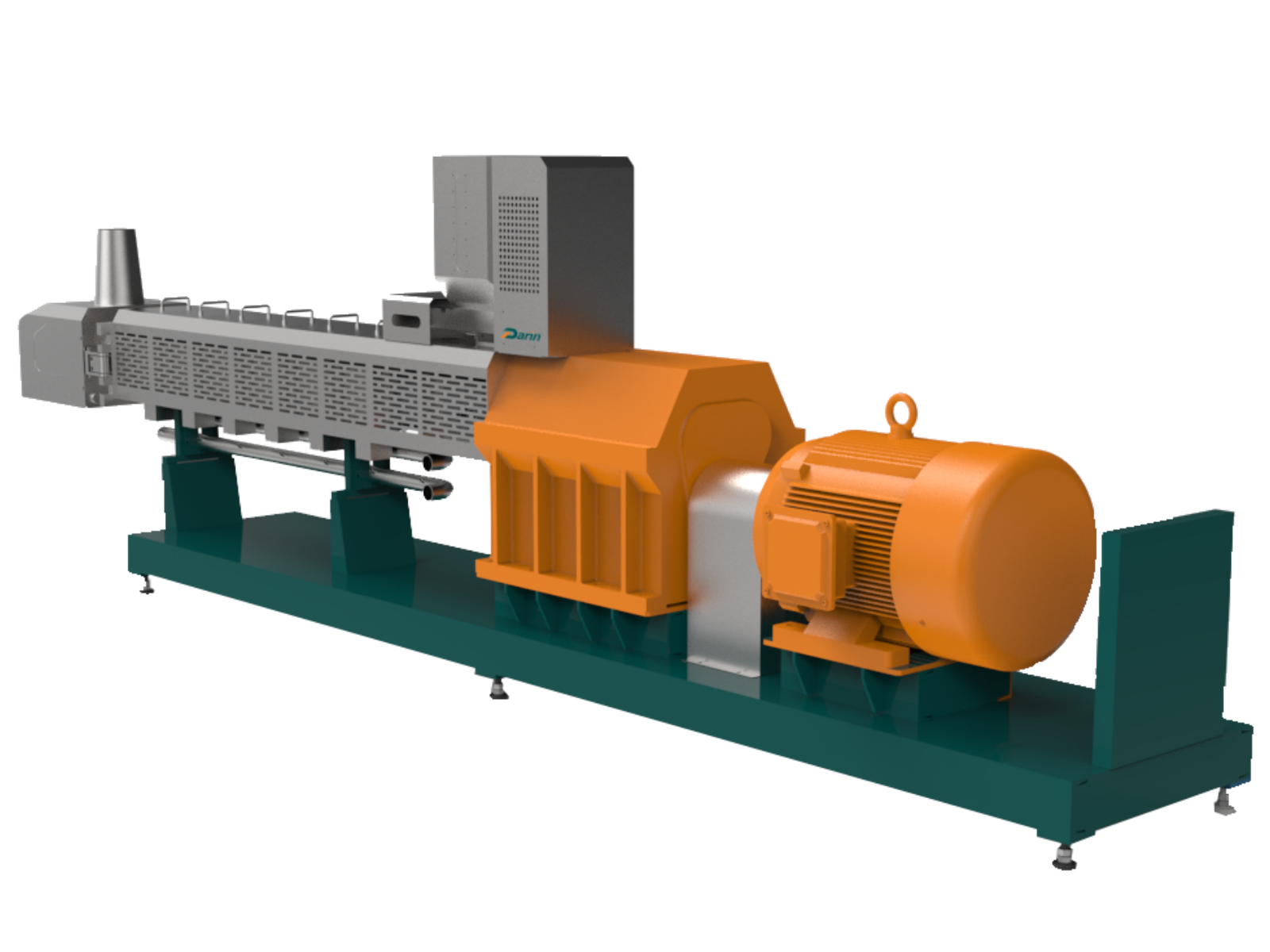
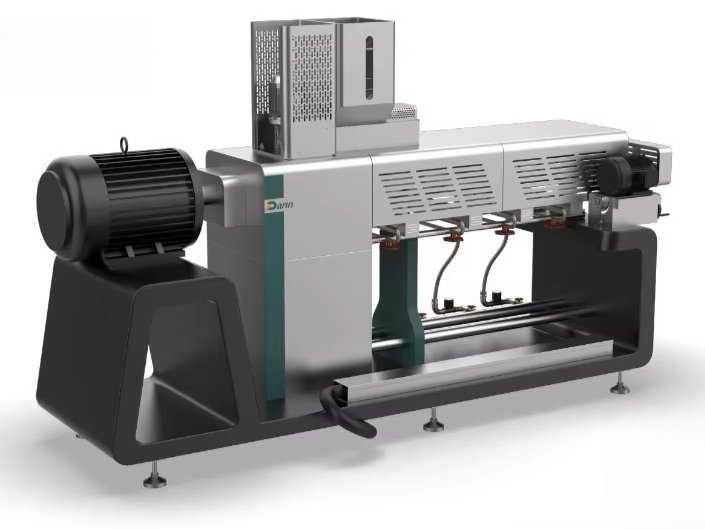
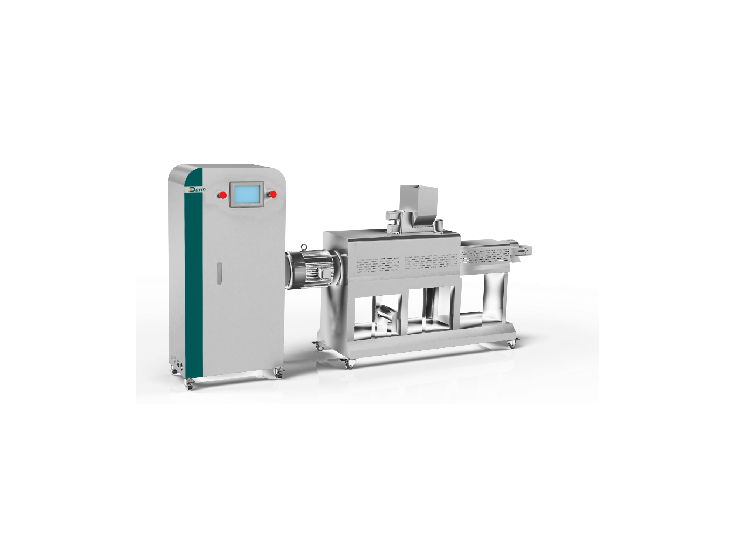
Using a single-screw or twin-screw fish feed extruder, the conditioned mixture is cooked under high pressure and temperature (120–150 °C). The extruder determines:
- Pellet size (0.9–12 mm)
- Floating or sinking type
- Cooking degree (for digestibility)
- Shape and density
Floating feed is ideal for most aquaculture operations because it reduces waste and allows visual feeding control.
| Extruder Type | Key Features | Suitable For |
|---|---|---|
| Single-Screw Extruder | Simple, cost-effective | Sinking & semi-floating feed |
| Twin-Screw Extruder | Precise control, high uniformity | Floating feed, high-end production |
Step 5: Drying
Freshly extruded pellets contain high moisture (≈ 22–28%) and must be dried to ≤ 10% to ensure shelf life and prevent mold.
Use a continuous belt dryer with controlled airflow and temperature.
| Dryer Section | Temperature (°C) | Duration |
|---|---|---|
| First Zone | 120 | 15 min |
| Second Zone | 90 | 15 min |
| Final Zone | 60 | 10 min |
Step 6: Coating and Flavoring
After drying, pellets can be coated with fish oil, vitamins, attractants, or enzymes using a vacuum oil coating machine. This step improves palatability, adds energy, and enhances feed conversion ratio (FCR).
Step 7: Cooling and Sieving
Cool the hot pellets using a counterflow cooler to room temperature (~ 30 °C). This step prevents moisture condensation inside packaging. Then sieve to remove fines or broken pellets.
Step 8: Packaging and Storage
Pellets are packed in moisture-proof bags (e.g., 20 kg or 50 kg bags). Automatic weighing, sealing, and labeling systems improve efficiency.
| Packaging Type | Material | Storage Duration |
|---|---|---|
| Polywoven Bags | PP/PE Laminated | 3–6 months |
| Vacuum Pouches | Multi-layer barrier | 6–12 months |
Store feed in a dry, ventilated warehouse at < 30 °C and < 70% humidity.
Nutritional Optimization: Key Parameters for Different Fish Species
| Fish Species | Feed Type | Crude Protein (%) | Crude Fat (%) | Moisture (%) |
|---|---|---|---|---|
| Tilapia | Floating | 28–32 | 4–6 | < 10 |
| Catfish | Floating | 30–36 | 4–8 | < 10 |
| Carp | Sinking | 25–30 | 3–5 | < 10 |
| Trout | Floating | 40–45 | 10–15 | < 10 |
| Shrimp | Sinking | 35–42 | 6–10 | < 10 |
Equipment Needed for a Complete Fish Feed Production Line
| Equipment | Function | Typical Capacity |
|---|---|---|
| Grinder / Hammer Mill | Raw material size reduction | 100–1000 kg/h |
| Mixer / Blender | Uniform mixing | 200–1000 kg/batch |
| Preconditioner | Steam conditioning | 0.5–2 t/h |
| Fish Feed Extruder | Pellet formation | 100–5000 kg/h |
| Dryer | Moisture removal | 100–5000 kg/h |
| Oil Coater | Nutrient coating | 100–2000 kg/h |
| Cooler | Temperature reduction | 100–2000 kg/h |
| Packing Machine | Automatic bagging | 200–1000 bags/h |
Practical Tips for Quality Control
- Check pellet buoyancy: Good floating pellets stay afloat > 12 hours.
- Monitor expansion ratio: Adjust extruder temperature, moisture, and screw speed.
- Test durability: Pellets should not break easily (< 5% fines).
- Regularly calibrate feeder and mixer.
- Analyze nutritional profile using proximate analysis for protein, fat, fiber, and ash.
- Maintain hygienic production to prevent bacterial contamination.
Common Problems and Solutions
| Problem | Likely Cause | Solution |
|---|---|---|
| Feed sinks too quickly | Insufficient starch gelatinization | Increase conditioning temperature/time |
| Pellets break easily | Poor mixing or low moisture | Increase moisture and mixing time |
| Mold in storage | Inadequate drying or poor ventilation | Dry to < 10% moisture and improve storage |
| Uneven pellet size | Worn die or inconsistent feeding | Replace die and regulate feeding rate |
Summary
Producing high-quality fish feed requires careful formulation, controlled extrusion, and reliable equipment. Whether you are running a small farm or a commercial factory, the core principles remain the same — balanced nutrition, proper processing, and consistent quality.
Let’s Build Your Fish Feed Production Line Together
At Darin Machinery, we provide complete turnkey fish feed production lines — from raw material grinding to automatic packaging — with custom capacities (100 kg/h to 5 t/h). Our twin-screw extruders are exported to over 70 countries and ensure consistent floating pellet quality.
📞 Contact us today to start your fish feed project!
- Jinan Darin Machinery Co., Ltd.
🌐 www.petreatsmachine.com
📱 WhatsApp: +86 156 5000 7983
📧 Email: darin4@darin.cn
"Let’s turn your fish feed idea into a profitable production line — from formulation to final packaging, Darin Machinery has you covered."