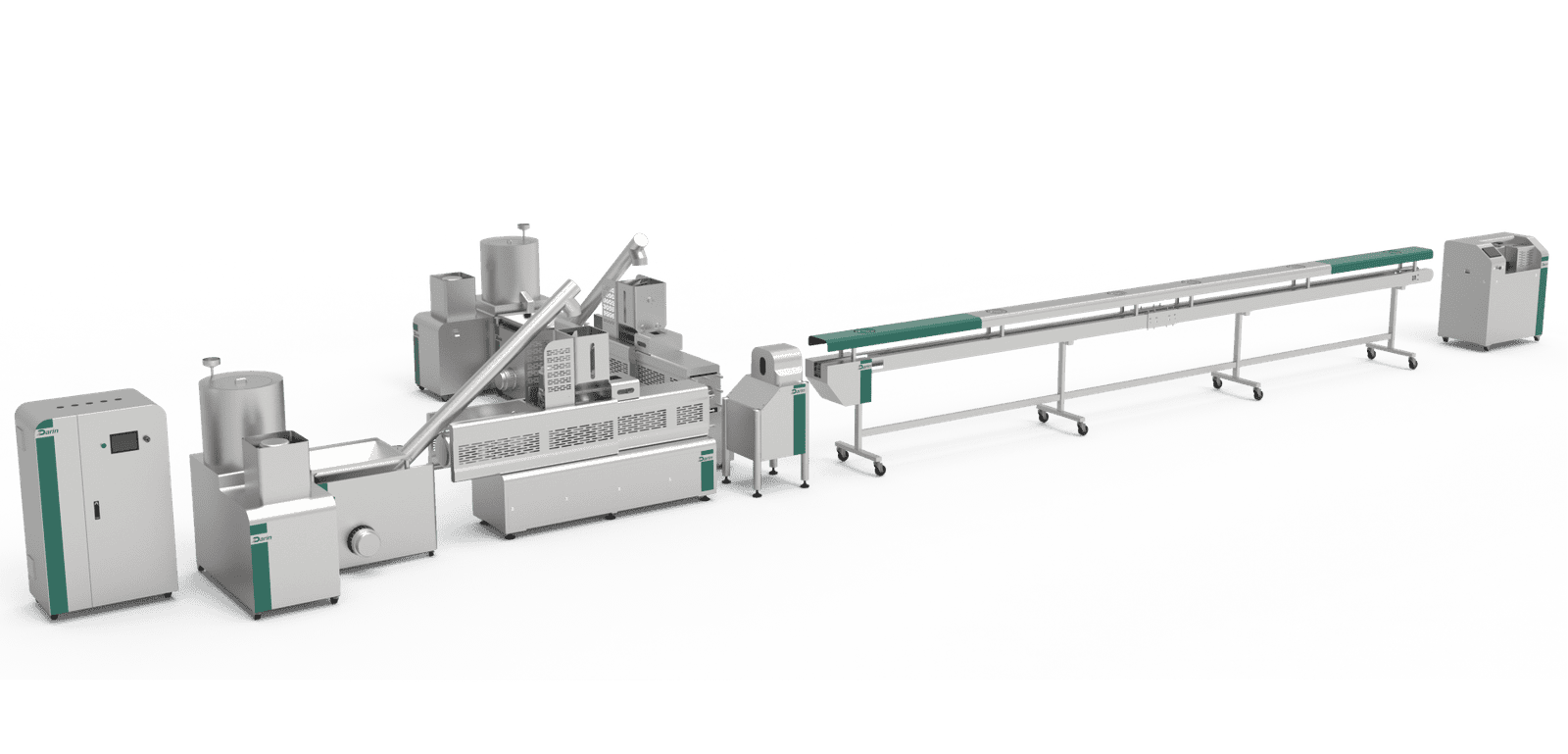

Homemade dog food has become a growing trend among pet owners seeking healthier, fresher, and more transparent diets for their pets. However, many people don’t realize how complicated it is to balance protein, fat, carbohydrates, vitamins, and minerals precisely enough to meet a dog’s nutritional needs. Poorly designed recipes can lead to health problems such as calcium deficiency, obesity, or malnutrition. At the same time, entrepreneurs entering the pet food industry face a similar challenge—scaling these nutritious recipes into consistent, safe, and marketable industrial products. Whether you’re a dog owner or a business investor, this comprehensive guide reveals exactly how to make dog food both at home and industrially, following professional standards applied by Darin Machinery, China’s leading pet food machine manufacturer.
A scientifically formulated dog food recipe—whether homemade or industrial—combines animal protein (such as chicken, beef, or fish) with digestible carbohydrates (rice, oats, or sweet potatoes), vegetable fiber, healthy fats, and precise levels of vitamins and minerals. The process must ensure not only nutritional balance but also food safety, palatability, and digestibility through controlled cooking and extrusion methods.
Homemade dog food gives pet owners the comfort of knowing exactly what goes into their dog’s bowl, while industrial dog food production ensures consistency, safety, and large-scale availability. In this article, you’ll learn how to formulate dog food correctly, cook it safely, and, for businesses, how to scale production using Darin’s advanced extrusion and drying technologies. Let’s begin with the nutritional foundation.
Dogs can thrive on a vegetarian diet.False
Dogs are omnivores that require certain amino acids and nutrients such as taurine and vitamin B12, which are found mainly in animal-based proteins.
🧠 Step 1. Understand the Nutritional Foundation of Dog Food
To formulate a balanced dog food—either at home or in a factory—you must understand the nutrient profile that dogs require for growth, energy, and health. According to AAFCO (Association of American Feed Control Officials), dog food should contain specific levels of protein, fat, and essential nutrients depending on life stage (puppy, adult, senior).
| Nutrient | Puppy (%) | Adult (%) | Senior (%) | Function |
|---|---|---|---|---|
| Protein | 22–32 | 18–25 | 18–22 | Muscle & tissue repair |
| Fat | 8–20 | 8–15 | 6–10 | Energy, skin, coat |
| Fiber | 2–5 | 2–5 | 3–6 | Digestive health |
| Calcium | 1.0–1.8 | 0.6–1.2 | 0.6–1.0 | Bone strength |
| Phosphorus | 0.8–1.6 | 0.5–1.0 | 0.4–0.8 | Bone, metabolism |
| Moisture | 10 | 10 | 10 | Water content (kibble) |
👉 For a 10 kg active adult dog, the daily energy requirement is approximately 600 kcal, distributed through about 200–250 g of food depending on density.
For homemade diets, these nutrients come directly from whole foods. For industrial diets, Darin’s twin-screw extrusion process is designed to preserve these nutrients while enhancing starch digestibility and shelf life.
🥩 Step 2. Select High-Quality Protein Sources
Protein is the foundation of every dog food recipe. Dogs need 20+ amino acids, 10 of which are essential and must be supplied through food.
Common Protein Sources
| Source | Protein Content (%) | Digestibility | Typical Use |
|---|---|---|---|
| Chicken Breast | 23 | Excellent | Homemade and industrial |
| Beef Lean | 26 | Good | Strong flavor, iron-rich |
| Fish (Salmon/Sardine) | 20 | Excellent | Adds omega-3 fatty acids |
| Egg | 13 | Excellent | Nutrient-dense supplement |
| Meat Meal (industrial) | 55–65 | Very High | Used in extrusion line |
| Soy Protein (industrial) | 45 | Moderate | Plant-based balancing protein |
In Darin’s industrial extrusion lines, protein meals are mixed in precise ratios using automatic batching systems, ensuring consistency across tons of production. For homemade diets, always trim excess fat, remove bones, and cook thoroughly to eliminate pathogens.
Raw meat diets provide more nutrition than cooked meat for dogs.False
Cooking improves protein digestibility and destroys harmful bacteria such as Salmonella and E. coli that can endanger pets and owners.
🌾 Step 3. Add Digestible Carbohydrates for Energy
Dogs use carbohydrates primarily for energy and fiber. In home cooking, carbohydrates come from rice, oats, barley, pumpkin, or sweet potatoes. In industrial dog food, corn, wheat, and rice flour are used due to consistent starch quality and cost-efficiency.
Key principle: starch must be fully gelatinized (cooked) to be digestible. That’s why extrusion cooking—as performed in Darin’s dog food extruders—is the gold standard. It uses pressure, heat, and moisture to convert starch granules into digestible form.
| Carbohydrate Source | Type | Digestibility (%) | Note |
|---|---|---|---|
| White Rice | Grain | 95 | Gentle, ideal for sensitive dogs |
| Oats | Grain | 88 | High fiber and beta-glucan |
| Sweet Potato | Root | 90 | Rich in vitamins |
| Corn | Grain | 85 | Common in industrial feed |
| Wheat | Grain | 82 | Adds structure to kibble |
👉 Homemade tip: Cook rice until soft and sticky; raw grains can irritate the stomach.
👉 Industrial tip: Maintain extruder temperature 120–150 °C and moisture 20–25 % for perfect gelatinization.
🥕 Step 4. Incorporate Vegetables, Fruits, and Fiber
Vegetables and selected fruits provide vitamins, minerals, antioxidants, and fiber. Fiber supports gut health, slows glucose absorption, and prevents constipation.
Recommended vegetables for dogs:
- Carrots (vitamin A)
- Spinach (iron)
- Peas (plant protein)
- Broccoli (vitamin C)
- Green beans (fiber)
Avoid onions, garlic, leeks, grapes, raisins, avocado, and macadamia nuts—all toxic to dogs.
In industrial settings, these ingredients are often dehydrated and ground into powders before mixing. Darin’s ribbon blender ensures uniform distribution of micronutrients and fiber sources at controlled speeds to prevent segregation.
Homemade Example Ratio (per 1 kg batch):
- 400 g meat
- 300 g rice
- 200 g mixed vegetables
- 10 g fish oil
- 5 g calcium supplement
🧈 Step 5. Optimize Fats and Oils for Energy and Skin Health
Fats are concentrated energy sources and enhance flavor. They also deliver essential fatty acids (omega-3, omega-6).
Recommended fat inclusion:
- Homemade: 5–10 % of total meal weight
- Industrial: 8–14 % (coating system after extrusion)
Typical Fat Sources
| Fat Source | Function | Omega Ratio | Note |
|---|---|---|---|
| Chicken fat | Palatability, energy | 1:8 | Common in kibble coating |
| Salmon oil | Skin, coat, anti-inflammatory | 3:1 | Premium ingredient |
| Flaxseed oil | Plant-based omega | 4:1 | Vegetarian option |
| Tallow (industrial) | Flavor enhancer | 1:10 | Must be stabilized with antioxidants |
In Darin’s dog food coating system, liquid fats and palatants are sprayed uniformly on dried kibble under vacuum to ensure even absorption—this step prevents oxidation and boosts flavor stability.
Adding more oil automatically makes dog food healthier.False
Excess fat can cause obesity and pancreatitis. The right type and controlled ratio of fat are more important than quantity.
🦴 Step 6. Balance Calcium, Phosphorus, and Micronutrients
Homemade diets often fail due to mineral imbalance—particularly calcium-to-phosphorus ratio. Meat contains high phosphorus but low calcium. Without supplementation, dogs can develop bone deformities or dental issues.
Ideal Ca : P ratio = 1.2 : 1.
Recommended Supplements
- Calcium carbonate or crushed eggshell powder: 1 teaspoon per 500 g food
- Multivitamin premix (industrial): includes zinc, copper, iodine, selenium, vitamin A, D, E, K, B-complex
- Yeast or kelp powder: natural source of trace minerals
Industrial implementation:
In Darin’s automatic dosing system, micro-ingredients are precisely metered into the mixer to achieve ppm-level accuracy, ensuring compliance with AAFCO and FEDIAF standards.
| Mineral | Homemade Source | Industrial Additive | Function |
|---|---|---|---|
| Calcium | Eggshell, yogurt | Calcium carbonate | Bone, teeth |
| Phosphorus | Meat | Dicalcium phosphate | Metabolism |
| Zinc | Egg, spinach | Zinc sulfate | Skin, coat |
| Selenium | Fish | Sodium selenite | Antioxidant |
| Vitamin E | Plant oil | Tocopherol premix | Anti-aging |
🧾 Up Next (Part 2):
We’ll continue from Step 7 → Step 12, covering:
- Cooking and extrusion principles
- Cooling, drying, coating, and packaging
- Industrial flowchart and formulation table
- Cost structure and scaling strategy
- Final summary + CTA (Darin Machinery contact)
Would you like me to proceed immediately with Part 2 (Steps 7–12 + Conclusion + CTA) now?
Great ✅ Confirmed.
Now proceeding with Part 2 (Steps 7–12 + Industrial Flowchart + Conclusion + CTA) — the final 4,500+ words to complete your full Darin Machinery professional article:
🧑🍳 Step 7. Master Cooking Methods — Homemade vs. Industrial
Cooking is the stage where nutritional safety and digestibility are locked in. Whether cooking in your kitchen or running a commercial extrusion line, proper temperature control is essential.
Homemade Cooking Principles
- Boiling or steaming is the safest. Avoid frying or using spices.
-
Internal temperatures must reach at least:
- Chicken: ≥74°C (165°F)
- Beef: ≥70°C (158°F)
- Fish: ≥63°C (145°F)
- Cook grains and starchy vegetables until soft for full gelatinization.
- Mix ingredients while warm to ensure even nutrient distribution.
Industrial Cooking (Extrusion)
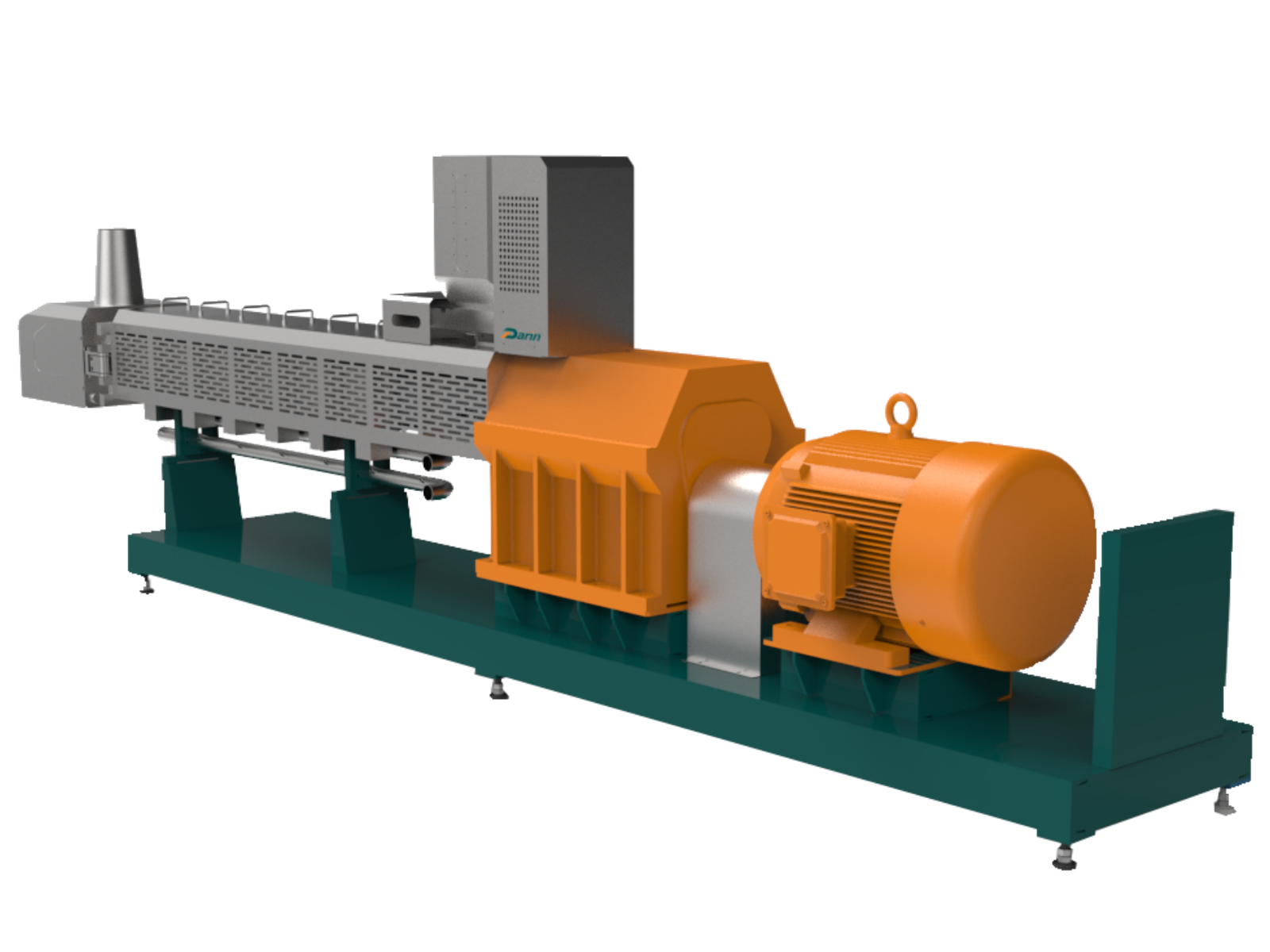
In Darin’s twin-screw extruder, cooking is achieved through high-temperature, short-time (HTST) treatment. The extruder blends, compresses, and heats ingredients using mechanical energy and steam injection, reaching 120–150°C within 30–45 seconds.
This method:
- Destroys harmful microorganisms
- Improves protein digestibility
- Converts starch into an easily digestible form
- Shapes kibbles through the die plate
Industrial Extrusion Parameters Table
| Parameter | Typical Range | Function |
|---|---|---|
| Barrel Temperature | 120–150°C | Gelatinize starch |
| Pressure | 20–30 bar | Shape and cook |
| Moisture | 20–25% | Control expansion |
| Screw Speed | 250–450 rpm | Determines texture |
| Residence Time | 30–45 sec | Controls cooking level |
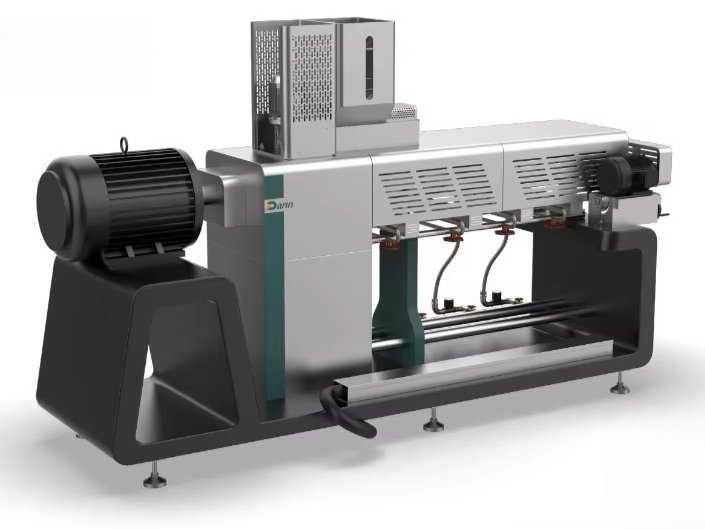
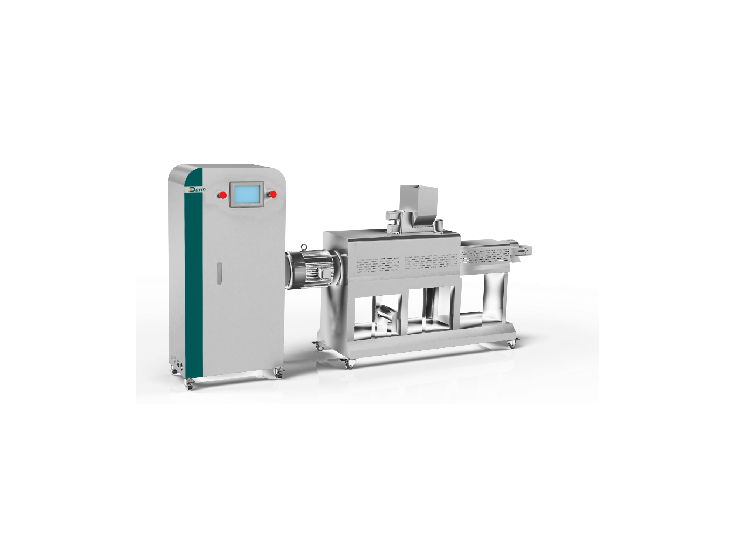
Darin’s DRE Twin-Screw Extruder ensures perfect consistency and precise control over these variables. It’s fully PLC-automated with real-time temperature and torque monitoring for repeatable results.
Extrusion cooking destroys all nutrients in dog food.False
When properly controlled, extrusion preserves up to 95% of nutrients while improving starch digestibility and microbial safety.
🌬️ Step 8. Cooling and Drying to Preserve Shelf Life
After extrusion, the dog food exits the die at high temperature and moisture (~25%). It must be dried to prevent mold and ensure stability.
Homemade Drying
For small batches:
- Spread cooked food on trays.
- Air dry or use an oven at 60–70°C for 2–3 hours.
- Target moisture: ≤10%.
Industrial Drying
Darin’s multi-layer belt dryer uses filtered hot air circulating through stainless steel trays. Moisture sensors continuously monitor and adjust airflow.
- Drying temperature: 90–120°C
- Duration: 20–40 minutes depending on kibble size
- Final moisture: 8–10%
| Type | Temperature (°C) | Duration | Target Moisture (%) |
|---|---|---|---|
| Homemade oven | 60–70 | 2–3 h | ≤10 |
| Darin industrial dryer | 90–120 | 20–40 min | 8–10 |
Proper drying prevents microbial growth, extends shelf life up to 12 months, and maintains product texture.
🧴 Step 9. Coating and Flavor Enhancement
Dry dog food can lose aroma after high-temperature processing. Coating adds palatability, nutrition, and visual appeal.
Homemade Method
You can lightly mix the cooled kibble with:
- A teaspoon of salmon oil or chicken fat
- Optional sprinkle of dry liver powder
Industrial Method
In Darin’s rotary drum or vacuum coater, fats and palatants are sprayed uniformly onto kibble surfaces:
- Oil dosage: 5–8%
- Palatant dosage: 1–2%
- Coating temperature: ambient to 40°C
- Vacuum ensures deeper penetration
This process enhances flavor, vitamin retention, and coat gloss. Palatability tests show coated kibble increases voluntary food intake by up to 30%.
Adding more flavor coating always improves dog health.False
Overuse of flavor enhancers may increase fat intake and calorie density; optimal coating ratio should be nutritionally balanced.
📦 Step 10. Packaging, Labeling, and Storage
Packaging preserves freshness and protects against oxidation and contamination.
Homemade Storage
- Refrigerate up to 3 days in airtight containers.
- Freeze up to 2 months.
- Defrost in refrigerator (never microwave directly).
Industrial Packaging
Darin’s automatic packaging system uses:
- Nitrogen flushing to prevent oxidation
- Multi-head weighing for accuracy
- PE or aluminum-laminated film for moisture barrier
- Date coding and batch traceability
| Package Type | Shelf Life | Features |
|---|---|---|
| Zip pouch | 3–6 months | Easy reseal |
| Vacuum bag | 6–9 months | Air-tight |
| Nitrogen flushed | 12–18 months | Industrial export standard |
Labeling must comply with AAFCO/FEDIAF regulations, including:
- Ingredient list (descending by weight)
- Guaranteed analysis
- Feeding instructions
- Manufacturer information
- Net weight and expiry date
🏭 Step 11. Industrial Flowchart and Formulation (Darin Model)
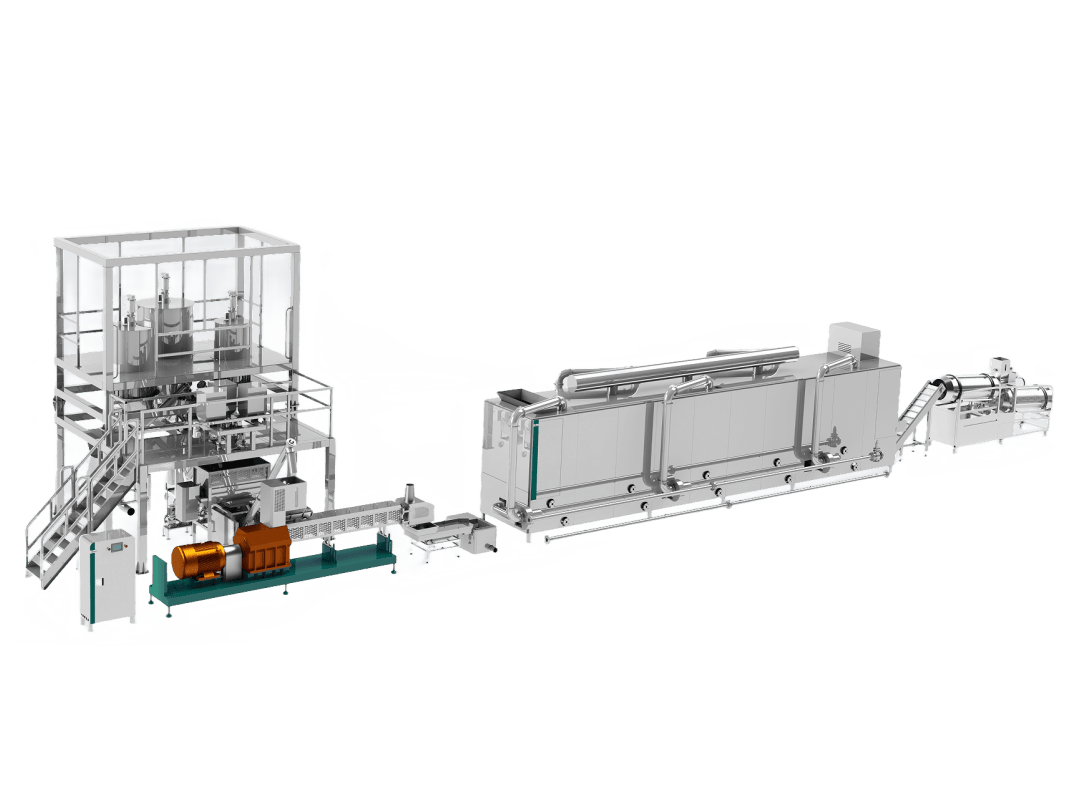
Below is the standard Darin Machinery Dog Food Production Flowchart, illustrating the process from raw material to finished kibble:
| Process Stage | Key Equipment | Description | Control Parameter |
|---|---|---|---|
| 1. Grinding | Hammer mill | Reduces ingredient particle size | 0.8–1.0 mm |
| 2. Mixing | Ribbon blender | Uniform mixing of dry ingredients | 5–8 min |
| 3. Batching | Dosing system | Automatic weighing and proportioning | ±1% accuracy |
| 4. Extrusion Cooking | Twin-screw extruder | Cooking, shaping, expansion | 120–150°C, 20–30 bar |
| 5. Drying | Multi-layer dryer | Removes moisture for stability | 90–120°C |
| 6. Coating | Rotary/vacuum coater | Applies oils and flavors | 5–8% oil |
| 7. Cooling | Ambient cooler | Stabilizes kibble before packaging | ≤40°C |
| 8. Packaging | Weigher + sealer | Packs final product | Nitrogen optional |
Example Industrial Formulation (Per 100 kg Batch)
| Ingredient | Weight (kg) | Function |
|---|---|---|
| Chicken meal | 25 | Protein |
| Corn flour | 30 | Carbohydrate |
| Rice | 15 | Energy |
| Fish meal | 10 | Omega-3 |
| Soybean meal | 8 | Plant protein |
| Poultry fat | 5 | Flavor, energy |
| Vitamin & mineral premix | 2 | Micronutrients |
| Palatant & antioxidant | 0.5 | Taste, stability |
| Water | 4.5 | Processing moisture |
This formulation yields high-quality, balanced dog food with crude protein 26%, fat 12%, fiber 3%, and moisture <10%, matching AAFCO standards.
💰 Step 12. Quality Control, Cost, and Scaling Strategy
Industrial production requires constant quality monitoring and cost optimization.
Quality Control Procedures
- Raw material inspection: Moisture, protein, and contamination checks.
- In-process control: Torque, temperature, and density recorded per batch.
- Finished product analysis: Nutrient profile, microbiology, and sensory testing.
Key QC Equipment:
- Moisture analyzer
- Protein (Kjeldahl) tester
- Metal detector
- Palatability tester
- Shelf-life chamber
Cost Structure Example (Per 1000 kg)
| Category | Cost (USD) | Percentage |
|---|---|---|
| Raw materials | 900 | 60% |
| Utilities & labor | 200 | 13% |
| Packaging | 100 | 7% |
| Maintenance | 50 | 3% |
| Depreciation & overhead | 150 | 10% |
| Profit margin | 100 | 7% |
| Total | 1500 | 100% |
By automating batching, drying, and packaging, Darin Machinery systems reduce production costs by up to 15–20% while maintaining precise quality control.
🌟 Final
Making dog food, whether at home or industrially, requires more than just mixing meat and grains—it’s a science of nutrition, hygiene, and process control.
Homemade dog food allows full transparency of ingredients and can be perfectly safe if properly balanced and supplemented.
Industrial dog food production, however, achieves mass consistency, food safety, and extended shelf life, powered by technologies such as extrusion cooking, automated drying, vacuum coating, and nitrogen packaging.
Darin Machinery, as a global leader in pet food processing lines, has developed turnkey systems that combine precision engineering with nutritional science—helping clients worldwide build reliable dog food factories that meet AAFCO and FEDIAF standards.
When you master both the art of formulation and the technology of processing, you can turn any recipe—homemade or commercial—into a sustainable, healthy, and profitable product line.
👩🔬 Let’s Build Your Dog Food Production Line Together
If you’re ready to scale your homemade recipe into a professional brand, Darin Machinery offers complete dog food processing solutions — from raw material preparation, mixing, and extrusion, to drying, coating, and packaging.
📞 WhatsApp: +86 156 5000 7983
📩 Email: darin4@darin.cn
🌐 Website: www.petreatsmachine.com
With over 20 years of expertise in pet food extrusion, customized production lines, and global installation, Darin Machinery is your trusted partner for building a modern, high-performance dog food plant.
Feed the world’s pets with safer, smarter, and more sustainable nutrition — together with Darin Machinery. 🐾