Making dog food pellets might seem complex, but it’s a rewarding and profitable process when done correctly. Pet owners and manufacturers alike face challenges such as unbalanced nutrition, poor pellet consistency, and contamination risks when using low-quality equipment or improper methods. These problems can lead to pet health issues or production losses. The good news is that with the right knowledge and reliable machinery, anyone—from home hobbyists to professional manufacturers—can produce high-quality dog food pellets safely and efficiently.
Dog food pellets are made by mixing a balanced formula of ingredients (meat, grains, fats, vitamins, and minerals), grinding them into uniform size, conditioning with steam or heat, extruding them into pellet form, drying, cooling, and finally coating with flavor enhancers and oils before packaging.
Whether you want to make small batches at home or set up a complete industrial dog food production line, the following step-by-step guide will walk you through both processes in detail.
Dog food pellets are made only from meat ingredients.False
High-quality dog food pellets include a balanced mix of animal proteins, grains or starches, fats, fibers, vitamins, and minerals to meet a dog's complete nutritional needs.
 Step-by-Step Guide: Homemade Dog Food Pellets
Homemade dog food pellet making focuses on small-scale preparation using kitchen tools or mini extruders. This is ideal for breeders, pet owners, or small startups.
Step 1: Prepare Ingredients
Create a balanced recipe. Use a mix of:
| Ingredient Type | Common Examples | Function |
|---|---|---|
| Protein Source | Chicken, beef, fish, lamb, eggs | Builds muscle, supports growth |
| Carbohydrates | Rice, cornmeal, sweet potatoes, oats | Provides energy |
| Fats & Oils | Chicken fat, fish oil, flaxseed oil | Improves taste and coat health |
| Fiber | Beet pulp, carrots, peas | Aids digestion |
| Vitamins & Minerals | Calcium, phosphorus, vitamin A, D, E | Supports immune and bone health |
Step 2: Grind & Mix
Use a meat grinder or food processor to grind all ingredients evenly. Combine dry and wet components in a mixer to achieve a consistent texture. The moisture content should be around 20–30% for easy extrusion.
Step 3: Precondition
Preconditioning helps gelatinize starches and sterilize materials. You can heat the mixture slightly (around 70–90°C) using steam or by cooking it in a pot for a few minutes.
Step 4: Form Pellets
Use a mini dog food extruder or meat grinder with a pellet mold plate. The mixture is forced through small holes and cut into uniform pellet shapes.
Step 5: Dry the Pellets
Spread the pellets on trays and dry them in an oven at 100–120°C for 2–3 hours until the moisture content drops below 10%.
Step 6: Cool and Coat
Let pellets cool to room temperature. Optionally, coat them with a light layer of oil or gravy for improved palatability.
Step 7: Store Properly
Keep the pellets in airtight containers or bags to prevent moisture absorption and spoilage.
Homemade dog food pellets can be stored indefinitely without preservatives.False
Even well-dried pellets should be consumed within 1–2 months, or frozen for longer storage, to maintain freshness and safety.
 Step-by-Step Guide: Industrial Dog Food Pellet Production Line
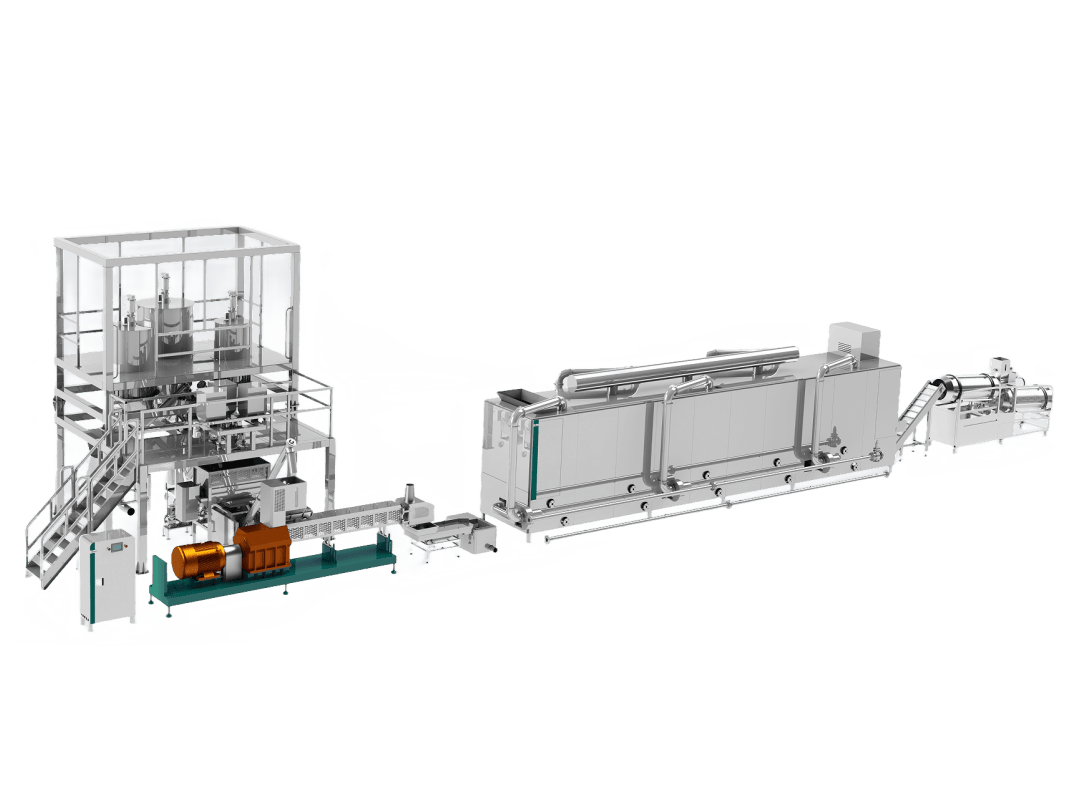
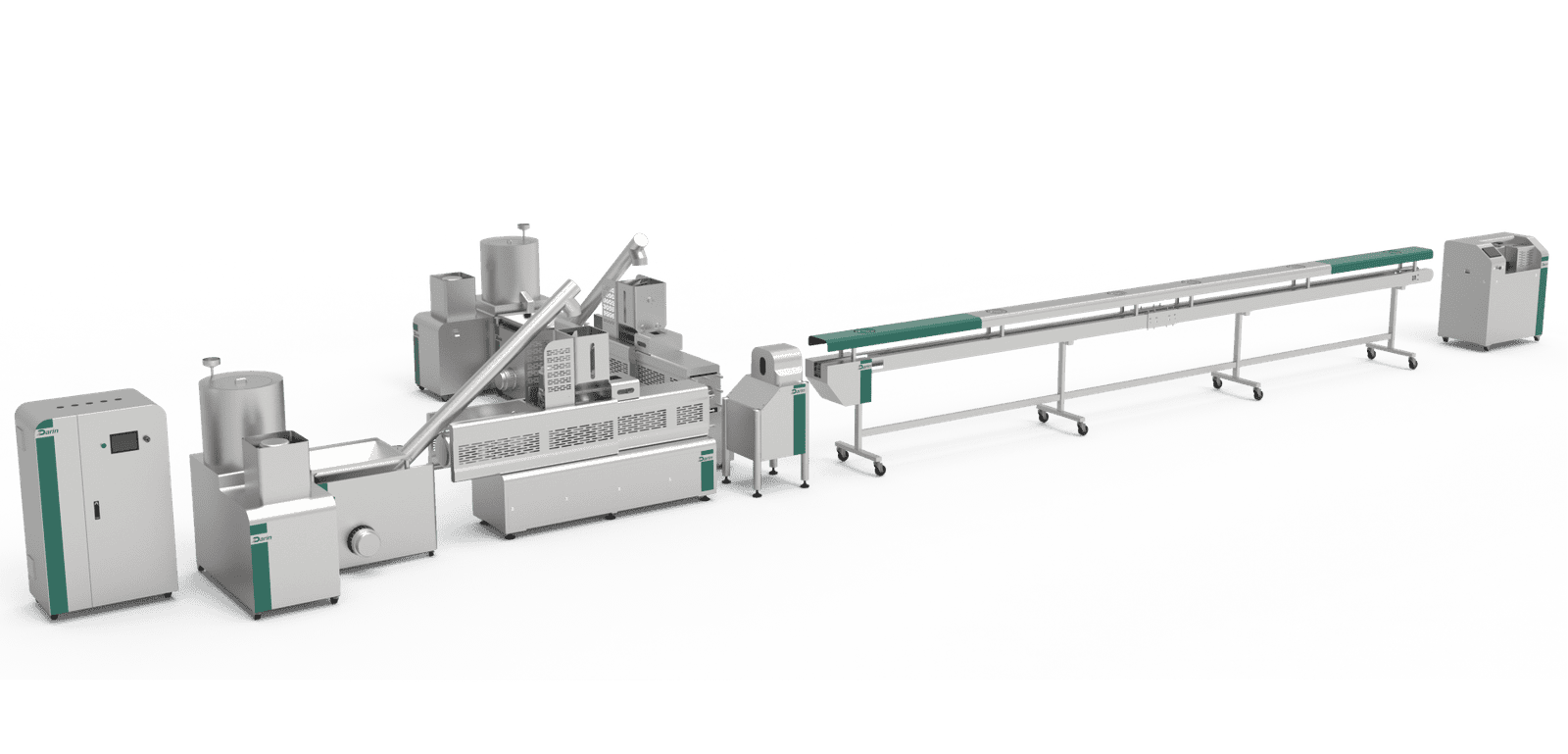
Industrial production allows for consistent quality, large-scale output, and advanced control over nutritional profiles. Darin Machinery specializes in designing and manufacturing these complete lines.
Step 1: Raw Material Preparation
The first step involves selecting and preparing the right mix of meat meals, fish meals, grains, starches, oils, and vitamins. Raw materials are weighed and batched using an automatic dosing system to ensure accuracy.
| Equipment | Function |
|---|---|
| Grinder / Crusher | Reduces particle size for uniform mixing |
| Mixer / Blender | Ensures homogenous ingredient distribution |
| Dosing System | Measures precise ingredient ratios |
| Preconditioner | Softens materials using steam and moisture |
Step 2: Extrusion Cooking
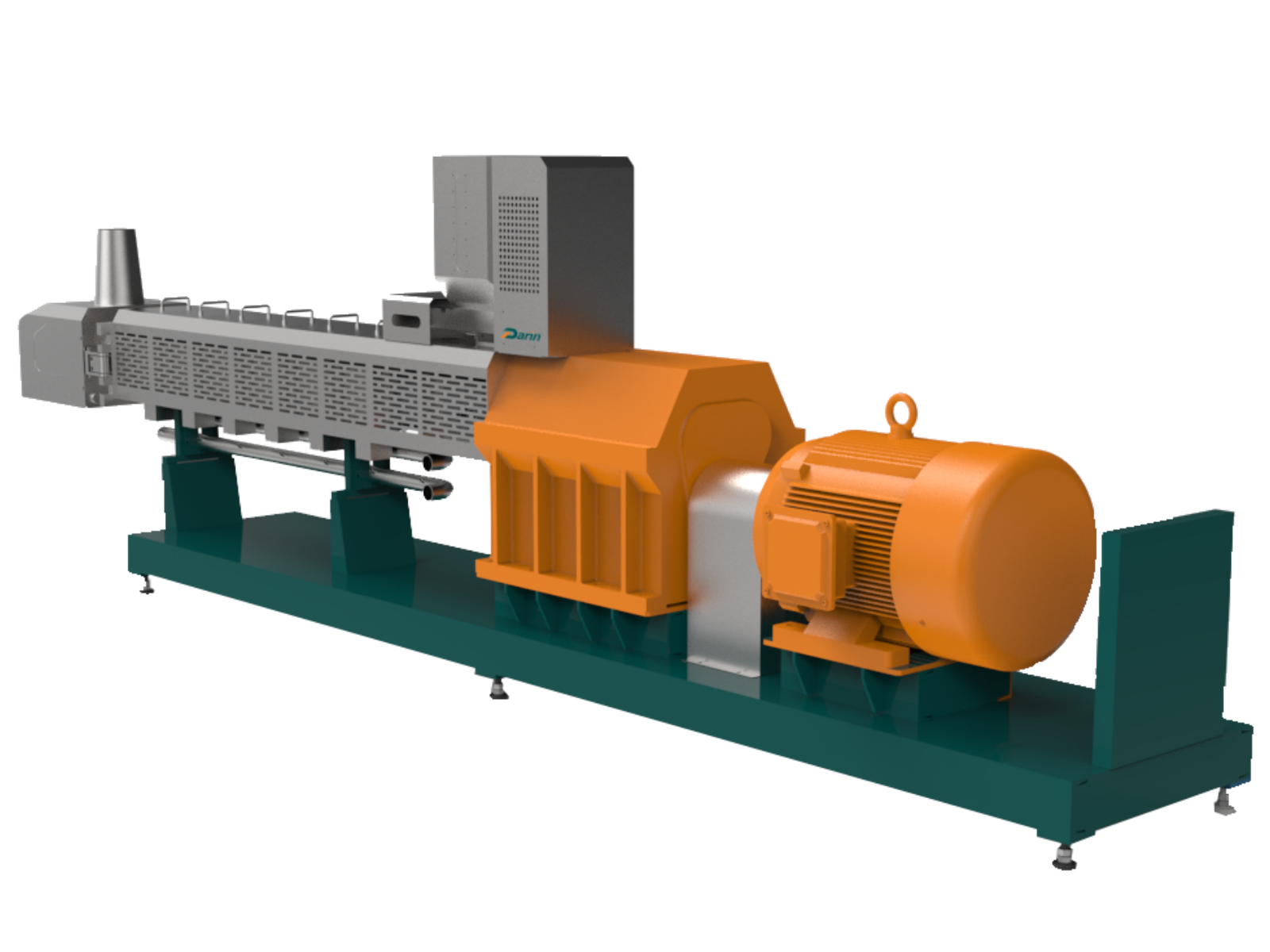
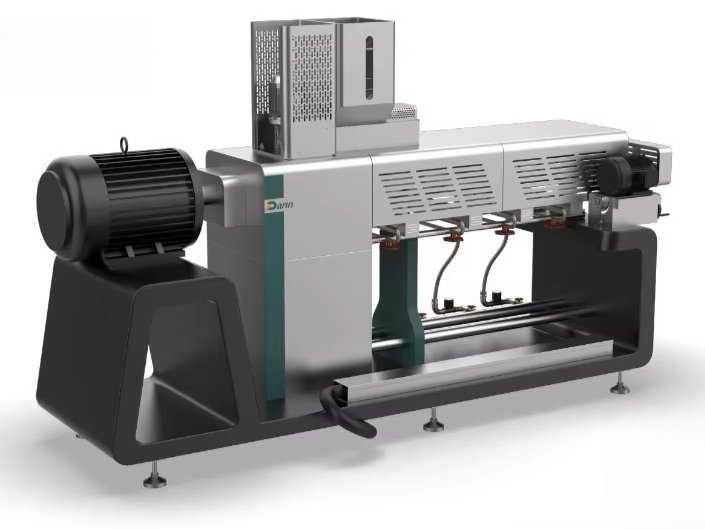
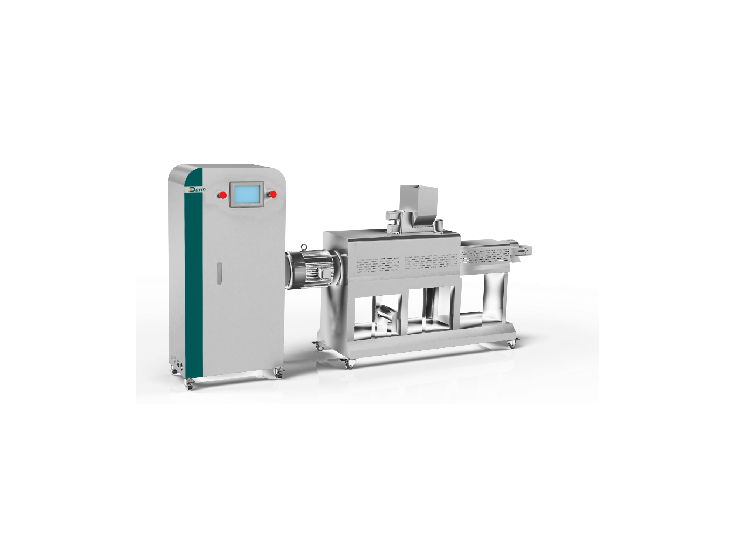
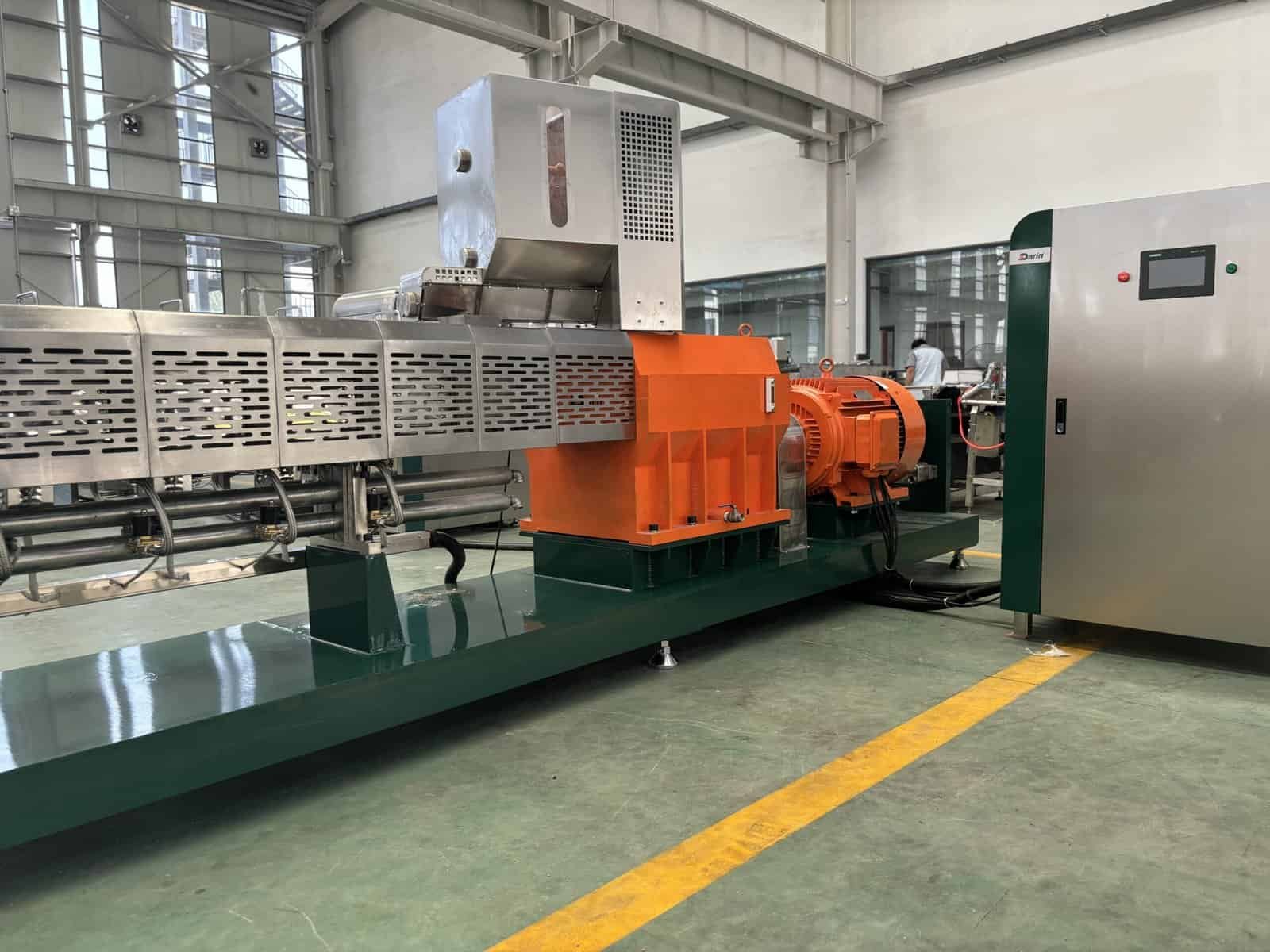
The heart of the process. The twin-screw food extruder from Darin Machinery cooks, expands, and shapes the pellets through mechanical shear and thermal energy.
- Temperature: 100–160°C
- Pressure: 4–8 bar
- Moisture content: 20–25%
- Screw speed: 300–600 rpm
| Parameter | Typical Range | Effect on Product |
|---|---|---|
| Temperature | 100–160°C | Determines expansion and texture |
| Screw Speed | 300–600 rpm | Affects density and shape |
| Moisture | 20–25% | Controls softness and digestibility |
Dog food extruders only shape the product.False
Modern extruders simultaneously cook, sterilize, expand, and shape the product through controlled heat, pressure, and mechanical force.
Step 3: Drying Process
The extruded pellets enter a multi-layer continuous dryer to remove moisture and stabilize texture.
- Drying Temperature: 90–130°C
- Final Moisture Content: 8–10%
- Drying Time: 15–25 minutes
Industrial dryers can be electric, gas, or steam heated depending on production scale and energy efficiency requirements.
Step 4: Cooling
After drying, pellets are passed through a cooling tower or vibrating cooler to bring them to room temperature. Proper cooling prevents condensation inside packaging.
Step 5: Flavoring & Coating
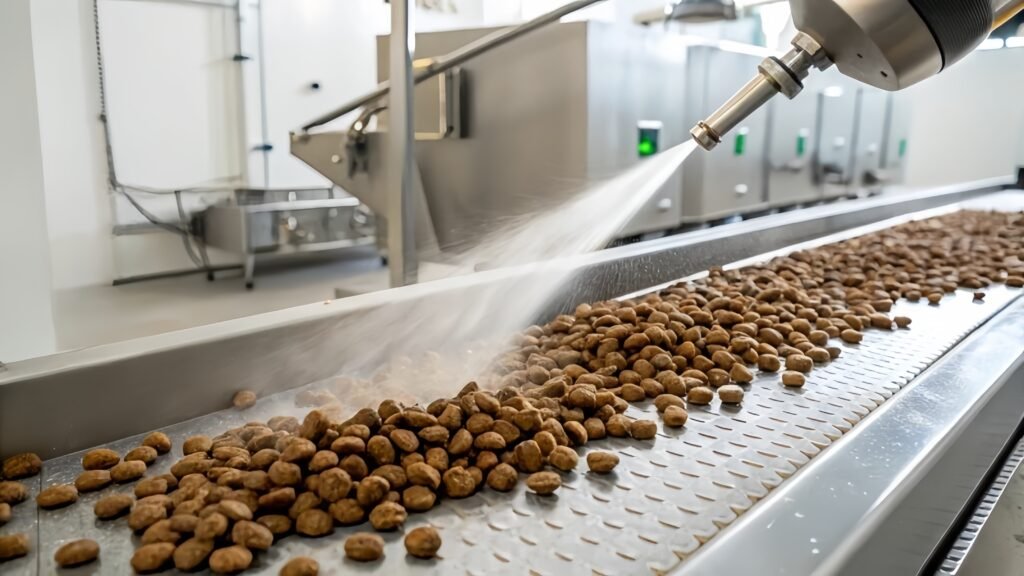
This stage adds taste and nutrition. The rotary flavoring drum sprays a fine mist of oil, palatants, or vitamins uniformly.
Typical coatings include:
- Chicken oil or beef tallow
- Vitamin & mineral premix
- Natural flavors or probiotics
Step 6: Packaging
Fully dried and coated pellets are automatically weighed, bagged, and sealed using vertical form-fill-seal (VFFS) packaging machines. Options include:
- 1–20 kg plastic bags for retail
- 25–50 kg woven bags for bulk
Each bag can include batch coding and nitrogen flushing for freshness.
Step 7: Quality Control
Industrial production follows strict HACCP and ISO standards. Sampling, moisture analysis, and microbial testing ensure consistent quality before dispatch.
| Test Type | Purpose | Standard |
|---|---|---|
| Moisture | Ensure shelf stability | <10% |
| Protein | Confirm nutritional balance | >22% typical |
| Microbial | Prevent contamination | <1000 CFU/g |
| Fat Oxidation | Maintain freshness | Peroxide <5 meq/kg |
Industrial dog food pellets do not require quality inspection.False
Every production batch must undergo moisture, nutrient, and microbiological testing to ensure safety and consistency.
 Flowchart of Industrial Dog Food Pellet Line
| Stage | Equipment | Function |
|---|---|---|
| 1. Grinding | Grinder / Crusher | Reduces raw material size |
| 2. Mixing | Ribbon Mixer | Ensures even ingredient blending |
| 3. Preconditioning | Steam Preconditioner | Improves starch gelatinization |
| 4. Extrusion | Twin-Screw Extruder | Cooks and forms pellets |
| 5. Drying | Multi-layer Dryer | Reduces moisture to stable level |
| 6. Cooling | Air Cooler | Prevents condensation |
| 7. Coating | Flavoring Drum | Adds oils and nutrients |
| 8. Packaging | Automatic Packer | Seals and labels bags |
 Example of Output Capacities by Line Type
| Model | Output Capacity | Power | Application |
|---|---|---|---|
| DR-65 | 120–150 kg/h | 75 kW | Small commercial |
| DR-70 | 200–300 kg/h | 95 kW | Medium factory |
| DR-85 | 400–600 kg/h | 120 kW | Industrial plant |
| DR-100 | 800–1000 kg/h | 180 kW | Large-scale production |
 Sustainable & Safe Production Considerations
- Use stainless steel food-grade materials for all contact surfaces.
- Recover hot air from dryers to reduce energy costs.
- Ensure regular sanitation and CIP (Clean-in-Place) maintenance.
- Utilize automated weighing and recipe control for consistent batches.
- Design factory layouts with separate zones for raw and finished goods to prevent cross-contamination.
 Summary
Both homemade and industrial processes share the same principles — balance, heat treatment, and drying — but differ in scale, automation, and control. Homemade pellets are great for small-scale feeding, while industrial systems like Darin Machinery’s Dog Food Pellet Production Line deliver superior consistency, higher output, and long shelf life.
 Contact Darin Machinery — Build Your Dog Food Production Line Today!
Whether you are starting a new pet food business or upgrading to a fully automated production line, Darin Machinery provides complete turnkey solutions, including design, manufacturing, installation, and training.
Jinan Darin Machinery Co., Ltd. www.petreatsmachine.com
 Email: marketing@darin.cn WhatsApp: +86 138 0531 2637
Let’s help you turn high-quality ingredients into profitable, nutritious pet food pellets.