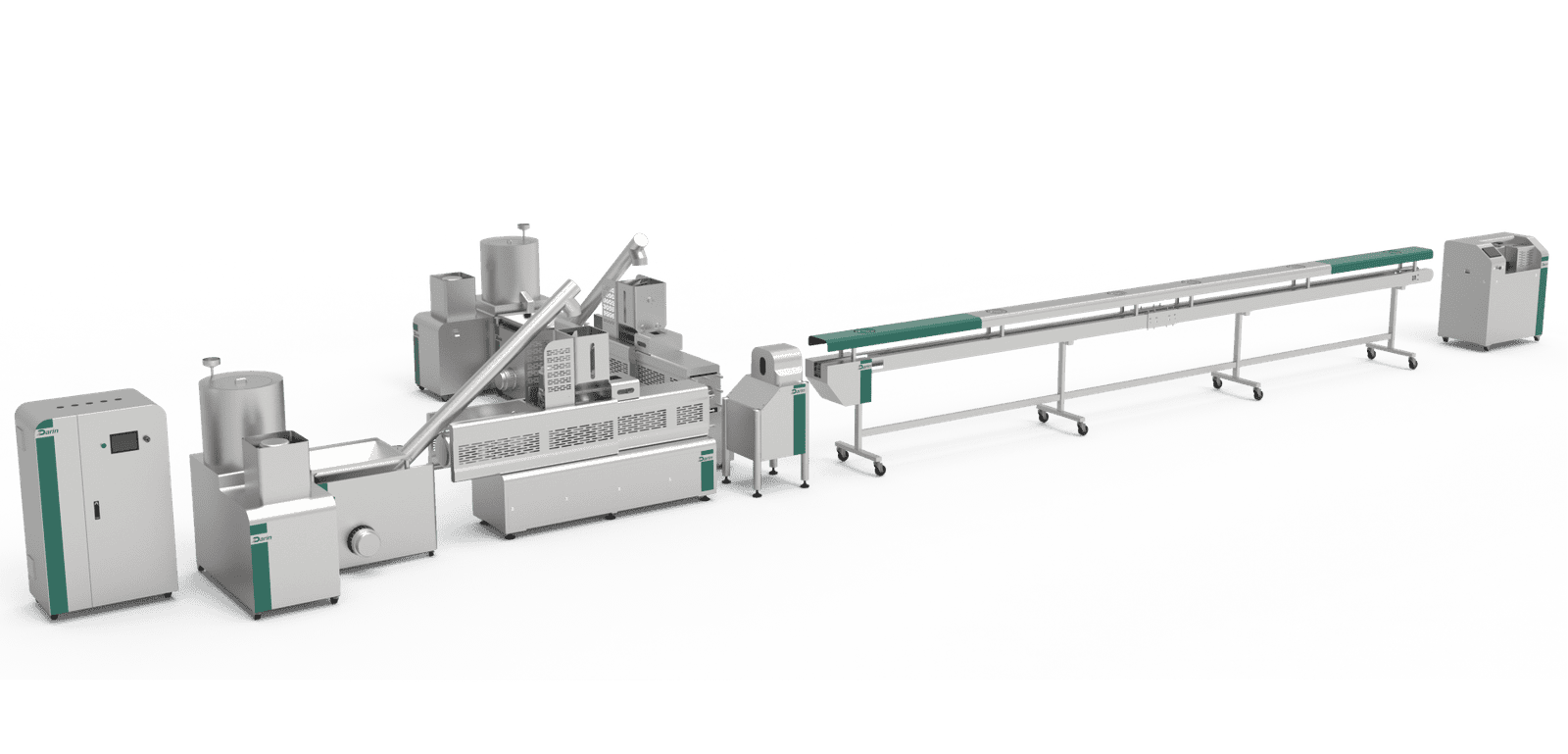
Fish skin dog chews are made by processing raw fish skin into flat, dried treats. For manufacturers, the process can involve several labor-intensive steps, including descaling, washing, fleshing, trimming, bone inspection, stacking, drying, and cutting.
A fully automatic fish skin flatties processing line is designed to mechanize and connect these operations, helping pet treat manufacturers reduce manual handling, improve production efficiency, and achieve a more consistent production process.
Darin Machinery provides fish skin treats processing equipment for manufacturers looking to move from manual processing toward an integrated production line.
What Equipment Is Needed for Fish Skin Treats Manufacturing?
The equipment required depends on the raw material, finished product specifications, and desired level of automation. A fish skin treats production line generally needs to address the following processing stages:
- Descaling: Mechanically removes scales from the raw fish skin.
- Washing: Removes loose scales, blood, mucus, and other surface impurities.
- Fleshing and trimming: Processes residual flesh and fat on the inner side of the skin and trims the material into a suitable shape.
- Bone inspection and removal: Allows fish bones to be identified and remaining bones to be removed as required.
- Stacking: Arranges the prepared fish skins before drying.
- Drying: Uses hot air drying to reduce moisture and help develop the required finished product characteristics.
- Cutting: Cuts the dried fish skin into the specified dimensions.
These operations form the main processing sequence for fish skin flatties and similar fish skin dog chews. The actual equipment configuration should be confirmed according to the manufacturer's product requirements and production conditions.
From Manual Processing to an Integrated Production Line
In a manual fish skin processing operation, workers may need to handle the material at almost every stage. Descaling, washing, trimming, bone inspection, stacking, drying preparation, and cutting all require labor and coordination.
When these operations are not mechanically connected, material may need to be transferred and handled repeatedly between processing stages. Manufacturers planning to increase production may therefore consider mechanizing individual operations and integrating them into a complete processing line.
A fully automatic fish skin flatties processing line is intended to address this challenge by connecting the main processing stages into a more coordinated workflow.
The key objective is not simply to replace one machine with another. It is to reduce manual intervention across the production process and make the flow of material between operations more efficient.
How Does the Fish Skin Flatties Processing Line Work?
1. Mechanical Descaling
Raw fish skin enters the preparation stage, where mechanical processing removes the scales. This prepares the material for subsequent washing and processing.
2. Washing and Cleaning
The fish skin is washed to remove loose scales, blood, mucus, and other impurities. Effective cleaning is an important part of preparing the raw material for further handling.
3. Fleshing, Trimming, and Bone Handling
Residual flesh and fat on the inner side of the fish skin are processed, and the material is trimmed into a suitable shape.
Fish bones also require attention during processing. Inspection and removal are important steps in preparing fish skin for use as a dog chew. The specific inspection and removal arrangements should be confirmed for the selected equipment configuration.
4. Stacking the Prepared Fish Skin
After preparation, the fish skin is stacked before drying. This stage helps organize the material for the next operation.
5. Hot Air Drying
Drying reduces the moisture content of the prepared fish skin and helps develop the desired finished form.
Drying conditions depend on the raw material, product dimensions, loading conditions, and target moisture content. Manufacturers should validate the appropriate temperature and drying time for their own product and process.
6. Cutting to the Required Size
After drying, the fish skin is cut into the required dimensions to produce flat fish skin treats or chews.
The target size and shape should be established before finalizing the production line configuration.
A Real Processing Reference: Manual Fish Skin Production in Latvia
A customer in Latvia currently processes this type of fish skin product manually. The process described by the customer includes descaling, washing, fleshing and trimming, manual bone inspection, removal of remaining bones, stacking, drying, and cutting.
The customer provided the following details about the existing drying process:
| Item | Customer's manual process |
|---|---|
| Drying temperature | 35–40°C |
| Initial moisture content | Approximately 70% |
| Finished moisture content | Approximately 10% |
| Reported drying duration | Approximately 12 hours |
| Initial setting stage | The customer reports that the fish skin begins to set after about one hour |
The customer also reports a moisture reduction of approximately 20% during the first hour. The measurement basis for this figure should be clarified before using it for technical calculations.
These figures describe the customer's existing manual production process. They are not verified operating parameters or guaranteed performance figures for Darin's fully automatic production line.
For manufacturers evaluating automation, the case illustrates why drying deserves particular attention. Drying is a significant part of the overall process, and any proposed automated solution needs to be assessed against the required finished product, moisture target, and production schedule.
What Are the Benefits of Automating Fish Skin Treats Production?
The main objectives of an integrated fish skin processing line are to improve the organization and efficiency of production.
Reduced manual labor
Mechanizing operations such as descaling, washing, material preparation, and cutting can reduce the amount of manual handling required. The actual reduction in staffing depends on the equipment configuration and the remaining inspection, loading, unloading, and quality-control tasks.
Improved production efficiency
Connecting processing stages can help reduce unnecessary transfers between separate operations. Actual throughput should be evaluated using the complete line configuration and the required product specifications.
Better coordination between processing stages
An integrated workflow helps manufacturers coordinate raw material preparation, stacking, drying, and final cutting rather than managing every operation as an isolated task.
More consistent processing
Mechanized operations can help standardize how materials are handled. Finished product consistency still depends on raw material variation, machine settings, drying conditions, and quality-control procedures.
For these reasons, automation should be evaluated as a complete production solution rather than as the purchase of a single machine.
Is a Fully Automatic Fish Skin Processing Line Right for Your Factory?
A fish skin treats production line may be worth evaluating if your factory:
- Currently relies on manual fish skin preparation and handling.
- Wants to reduce labor-intensive processing operations.
- Plans to improve coordination between preparation, drying, and cutting.
- Needs to produce flat fish skin treats or fish skin dog chews in specified sizes.
- Is planning to expand production and needs a more integrated workflow.
Before selecting equipment, manufacturers should define their raw material characteristics, target product dimensions, required output, drying requirements, available factory space, and acceptable staffing levels.
These details help determine whether a fully automatic line is suitable and which processing stages need to be included.
Fish Skin Treats Processing Equipment from Darin Machinery
Darin Machinery provides pet food and pet treat processing equipment, including solutions for fish skin flatties and fish skin dog chews.
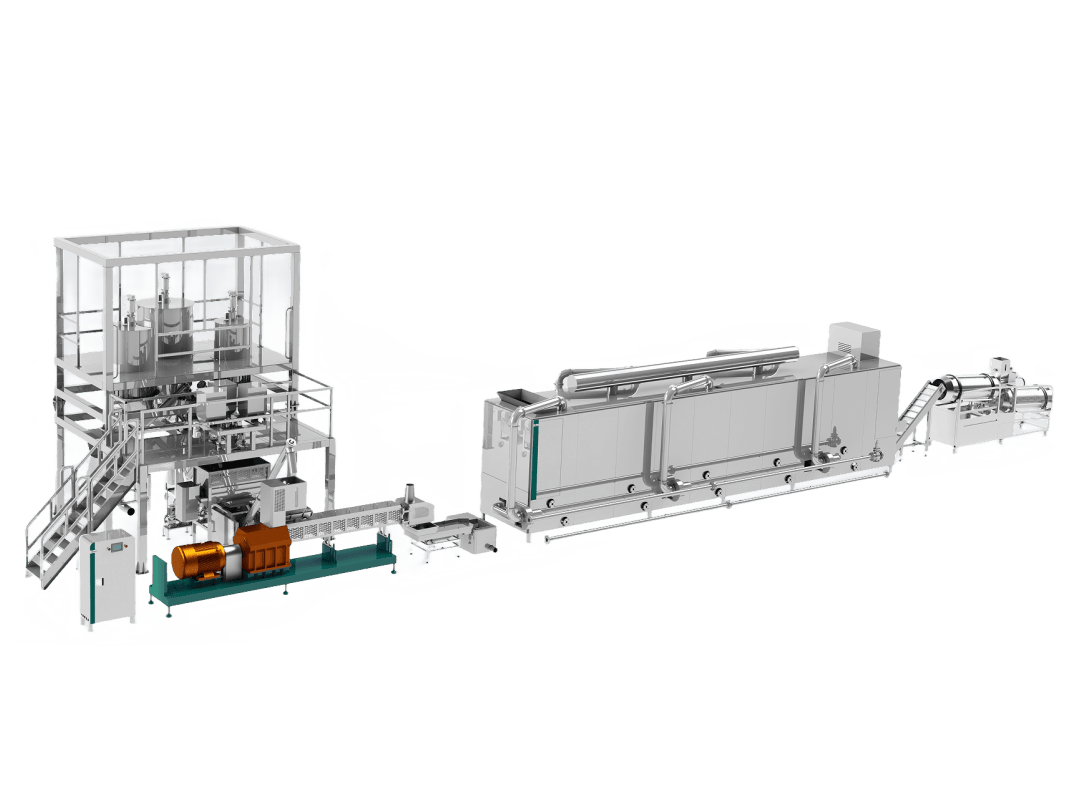
The fish skin processing line is designed around the main production sequence of descaling, washing, fleshing and trimming, bone inspection and removal, stacking, drying, and cutting.
For manufacturers moving from manual processing toward automation, the next step is to evaluate the required product specifications and production conditions before confirming the equipment configuration.
Planning a fish skin dog chew production line?
Contact Darin Machinery at marketing@darin.cn to discuss your raw materials, target product dimensions, production requirements, and automation goals.
Frequently Asked Questions
What is a fish skin flatties processing line?
A fish skin flatties processing line is a system of equipment used to process raw fish skin into flat, dried pet treats. The main stages include descaling, washing, fleshing and trimming, bone inspection and removal, stacking, drying, and cutting.
What raw material is used to make fish skin dog chews?
The raw material is fish skin. The specific material condition and preparation requirements depend on the product and the manufacturing process.
How long does it take to dry fish skin dog treats?
Drying time varies with the raw material, product thickness, loading conditions, drying temperature, and target moisture content. One customer in Latvia reports approximately 12 hours for their existing manual process at 35–40°C. This should not be treated as a universal drying time or as a specification for an automated line.
Can fish skin treats production be automated?
The main processing stages can be mechanized and incorporated into an integrated production line. The actual level of automation depends on the selected equipment, material transfer arrangements, inspection requirements, and the factory's production objectives.
How can manufacturers choose the right fish skin processing equipment?
Manufacturers should begin with the raw material, finished product size, required output, drying target, factory layout, and labor requirements. These factors help determine the necessary equipment and degree of integration.