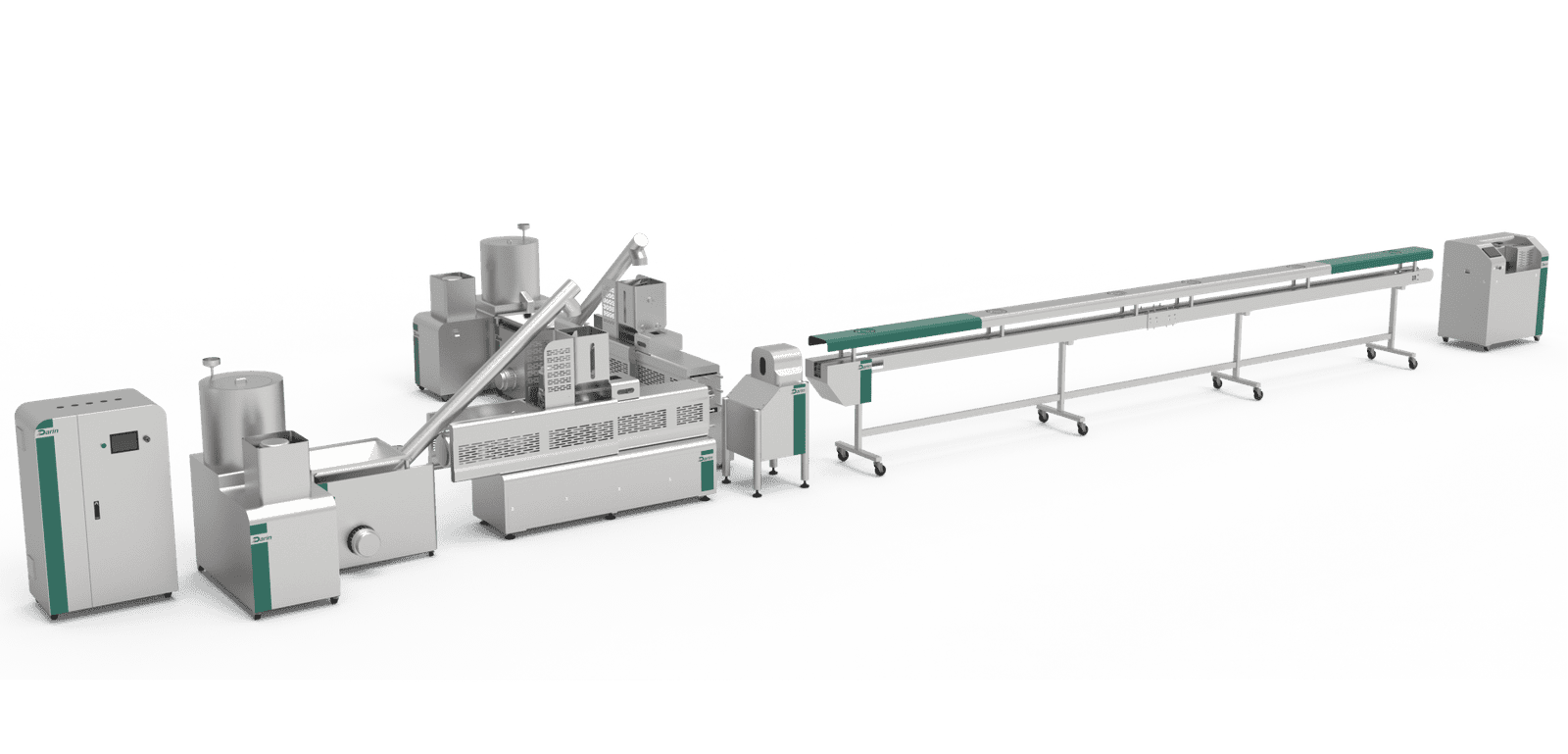
Soft pet treats have become an important product category for pet food manufacturers. Unlike conventional dry biscuits, soft chews and semi-moist treats require a different approach to forming, cutting, and cooling.
For manufacturers looking to produce these products on a larger scale, a pet soft chew production line using cold extrusion technology offers an integrated way to handle the process, from raw material mixing to finished product packaging.
But how does cold extrusion work? What equipment is involved? And what should manufacturers consider when choosing a production line?
This guide explains the production process, key equipment, and practical considerations based on Darin Machinery's Soft Chews Cold Extrusion Line.
What Is a Cold Extrusion Line for Pet Treats?
A cold extrusion line for pet treats is an automated processing system that forms soft pet treat mixtures through continuous extrusion at low temperatures, without relying on an expansion process.
The mixed ingredients are fed into a cold extruder, where the material is continuously shaped before being cut into individual pieces. The products then pass through a controlled cooling process to help stabilize their shape before counting and packaging.
This technology is suitable for manufacturing several types of soft pet products, including:
- Soft pet chews
- Semi-moist pet treats
- Soft dog snacks
- Lecithin-based soft treats
- Vitamin bones
The final product shape, dimensions, and formulation depend on the selected equipment configuration and product requirements.
How Does the Soft Pet Treat Cold Extrusion Process Work?
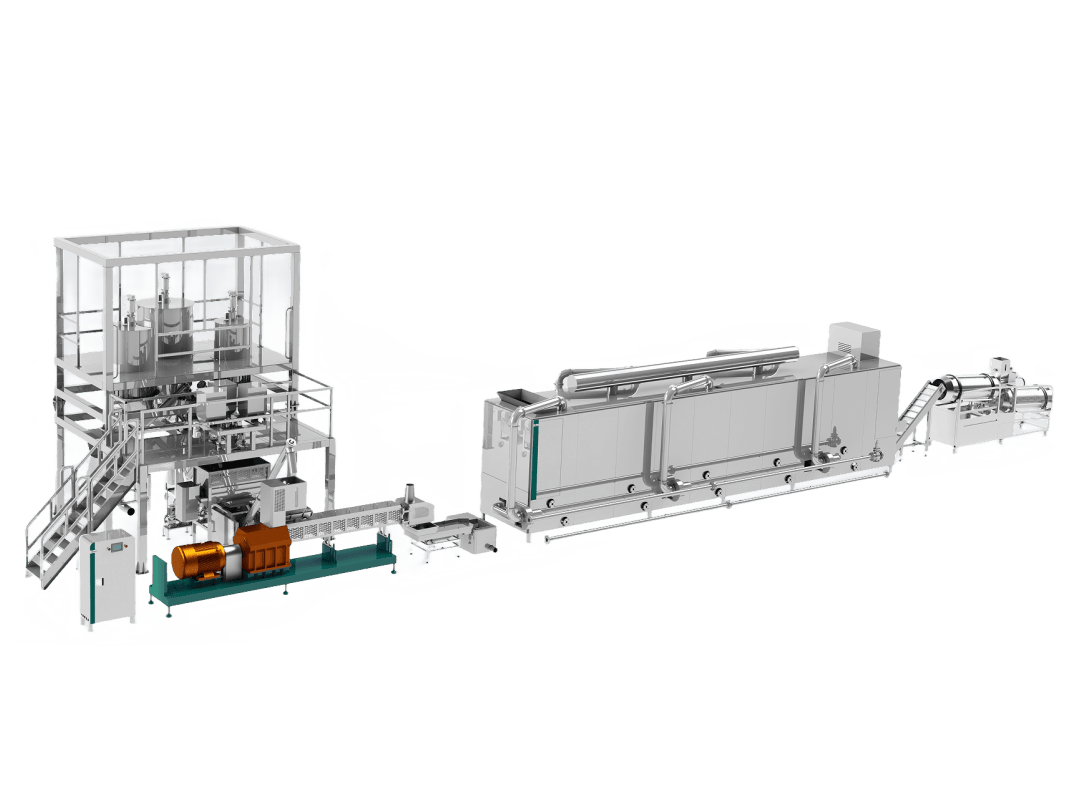
A complete cold extrusion production line connects six main processing stages: mixing, feeding, extrusion, cutting, cooling, and packaging.
Each stage has a specific function, and the coordination between them affects the consistency and continuity of production.
Stage 1: Raw Material Mixing
The process starts with a mixing machine.
Ingredients such as starch, meat powder, glycerin, lecithin, and other formulation components are added according to the product recipe.
The mixer combines the raw materials and additives into a relatively uniform mixture, preparing the material for the next processing stage.
Proper mixing is important because uneven material distribution can affect the consistency of the extruded product.
Stage 2: Material Feeding and Crushing
After mixing, the material needs to enter the extruder continuously.
A crushing device breaks up material that has formed lumps during preparation. An elevator then transfers the material into the extruder hopper.
A waste material recovery system can also return excess material to the feeding process.
This arrangement helps maintain a more continuous material supply and reduces the need for repeated manual handling.
Stage 3: Low-Temperature Cold Extrusion
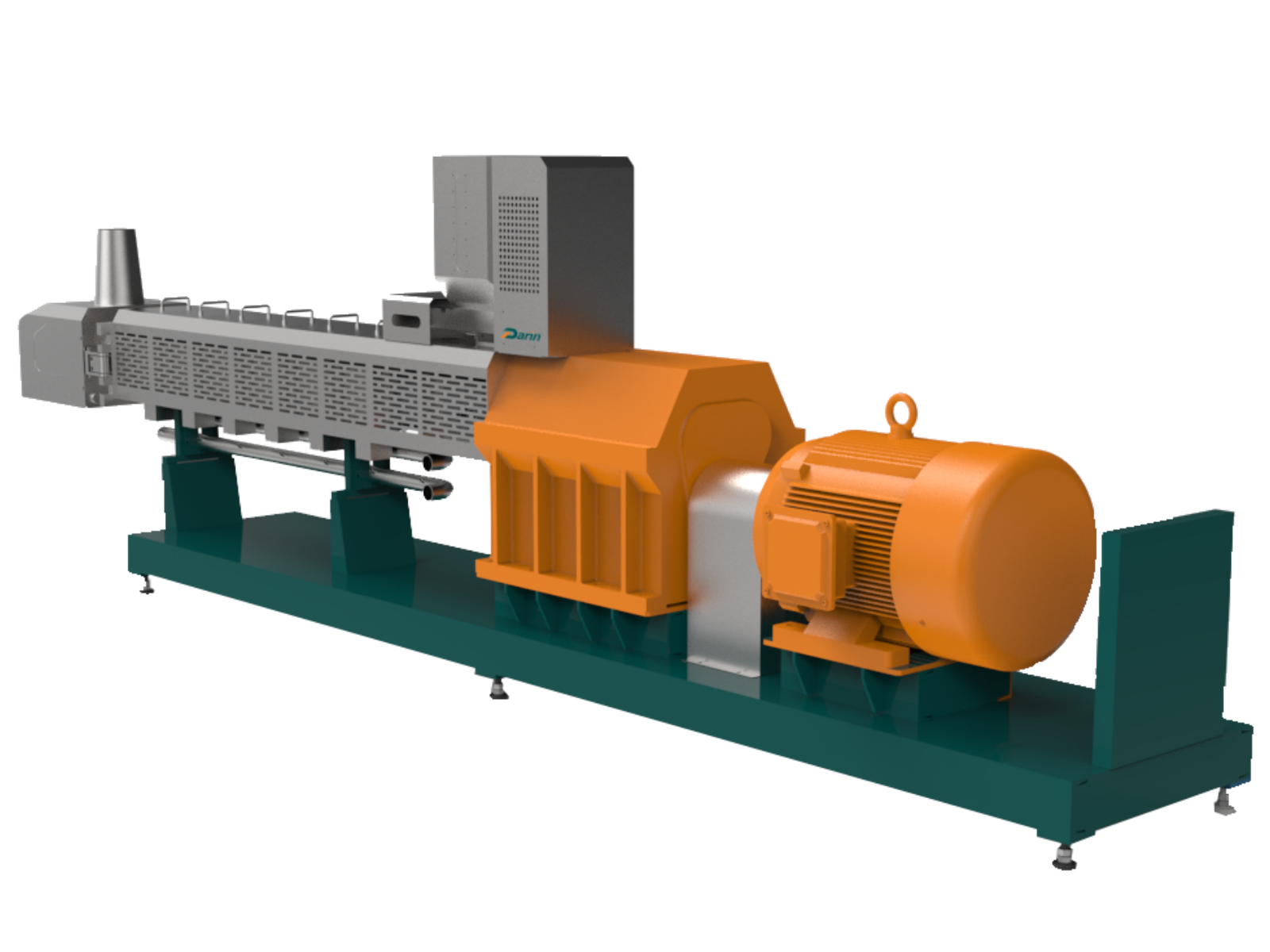
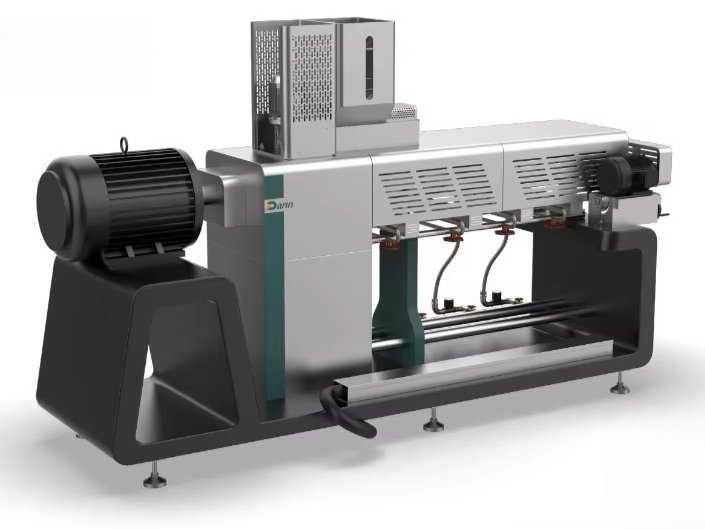
The cold extruder is the main forming machine in the production line.
Unlike an extrusion process designed to expand products through high-temperature processing, cold extrusion forms soft treat material at a relatively low temperature without expansion.
A cooling system is incorporated into the extruder to support stable operation.
The material passes through the forming section and is continuously extruded into the required shape.
The forming die and machine configuration can be selected according to the intended product design.
For manufacturers producing semi-moist pet treats or soft chews, this stage determines the basic shape and consistency of the extruded material.
Stage 4: Servo Cutting
Once the material leaves the extruder, it enters the servo cutting section.
The cutting mechanism operates in synchronization with the extrusion speed. The cutting length can be adjusted according to the production requirements.
Compared with manual cutting, synchronized servo cutting helps produce more consistent product lengths and cleaner cut surfaces.
It also reduces irregular pieces caused by inconsistent manual operation.
Stage 5: Multi-Layer Cooling
Cooling is an important stage in soft pet treat production.
Freshly extruded products may still be susceptible to sticking or deformation during handling. Simply transferring them directly to packaging can create difficulties in maintaining product shape.
Darin's production line uses a multi-layer cooling system equipped with a water chiller.
A distributing device at the cooling entrance helps spread the products evenly across the conveyor belt, reducing product accumulation and supporting more consistent cooling.
The cooling process helps stabilize the product shape and reduce sticking and deformation before the products move to the packaging section.
Stage 6: Automatic Counting, Filling and Weight Inspection
After cooling, the finished treats are transferred to the packaging section.
The system includes automatic counting and filling equipment, followed by a weight inspection machine.
These functions help reduce repetitive manual handling and improve consistency during the final production stage.
What Problems Can Automation Solve in Soft Pet Treat Production?
For manufacturers moving from manual or partially automated production to a complete production line, the biggest changes are often seen in process coordination and product consistency.
Several common production challenges deserve attention.
Inconsistent product weight and length
When extrusion, cutting, and manual handling are not properly coordinated, individual pieces may vary in size and weight.
An integrated extrusion and servo cutting system helps maintain more consistent product dimensions.
Uneven cutting and material waste
Manual cutting can result in irregular cut surfaces, burrs, and inconsistent product lengths.
Synchronized servo cutting helps improve cutting consistency and reduce irregular products.
Sticking and deformation during cooling
Soft products can be difficult to handle immediately after forming.
A multi-layer cooling system with an evenly distributed feeding arrangement helps control product accumulation and supports more stable product handling.
Production interruptions between processing stages
When mixing, feeding, extrusion, cutting, and cooling depend heavily on manual transfers, the production rhythm can become inconsistent.
Automatic connections between these stages help maintain a more continuous material flow.
High dependence on manual labor
Manual production requires operators to coordinate multiple individual processes.
An integrated production line reduces repetitive handling and allows operators to supervise several connected machines.
Key Equipment in Darin's Soft Chews Cold Extrusion Line
Darin Machinery's cold extrusion solution combines several machines into one connected production system.
The main equipment configuration includes:
| Equipment | Main function |
|---|---|
| Mixing machine | Combines raw materials and additives |
| Crushing device | Breaks up material lumps |
| Elevator and feeding system | Transfers material into the extruder |
| Waste recovery system | Returns excess material to the feeding process |
| Cold extrusion machine | Continuously forms soft treat material |
| Servo cutting device | Cuts extruded material to the required length |
| Elevator and vibrating distributor | Transfers and evenly distributes products |
| Multi-layer cooling system | Helps stabilize product shape |
| Discharge elevator | Transfers cooled products |
| Automatic counting and filling machine | Counts and fills finished treats |
| Weight inspection machine | Checks finished product weight |
The exact equipment arrangement can vary according to the product, factory layout, and production requirements.
A Reference Project: Soft Chew Cold Extrusion Line for Spain
Darin's project information includes a cold extrusion production line for a customer in Spain.
The recorded configuration includes:
- Mixing equipment
- Crushing device
- Feeding and waste recovery systems
- Cold extrusion machine
- Servo cutting system
- Elevator and vibrating distribution equipment
- 6-meter, 7-layer cooling system
- Discharge elevator
- Counting and filling equipment
- Weight inspection machine
This configuration illustrates how several independent processing stages can be connected into a complete production system.
Technical Specifications of Darin's Soft Pet Treat Production Line
The following specifications are from Darin's supplied equipment configuration.
| Parameter | Specification |
|---|---|
| Production line type | Soft Chews Cold Extrusion Line |
| Processing technology | Low-temperature cold extrusion |
| Installed power | 60 kW |
| Electrical supply | 380 V, 50 Hz, 3-phase |
| Voltage customization | Available |
| Application | Pet treat production |
| Product types | Soft pet treats, semi-moist soft products, lecithin soft treats |
| Automation | Automatic processing from production to packaging |
| Reference footprint | Approximately 16 × 3.3 × 2.3 m |
| Operator requirement | Approximately 2–3 people |
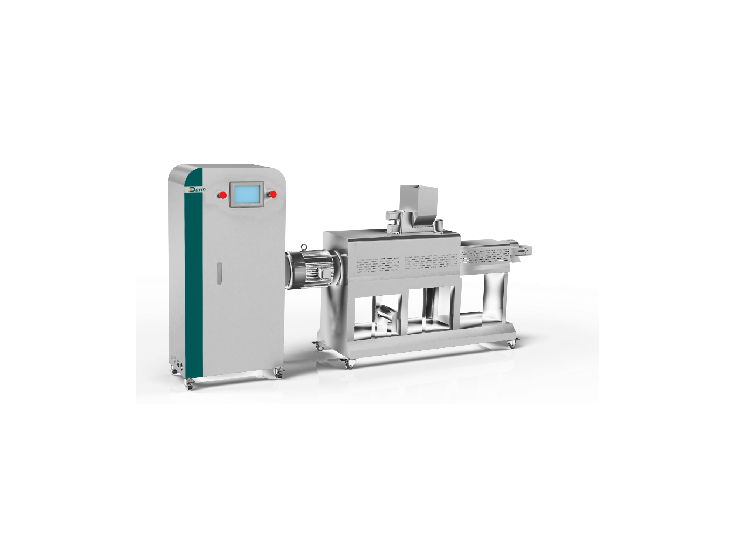
| Main control system | Siemens PLC and HMI |
| Material of product-contact parts | SUS304 stainless steel |
The production capacity should be confirmed against the final machine configuration and technical quotation before project planning.
What Should Manufacturers Consider Before Choosing a Cold Extrusion Line?
Not every soft pet treat manufacturer has the same production requirements.
Before selecting equipment, it is useful to clarify several points.
1. What products do you plan to manufacture?
Soft chews, semi-moist treats, and vitamin bones may have different forming and handling requirements.
2. What is your target production capacity?
The required output affects equipment selection and the coordination of individual processing stages.
3. How will the products behave after extrusion?
Soft products may require different cooling arrangements depending on their formulation, shape, and dimensions.
4. How much automation do you need?
Some factories only need an extrusion and cutting system, while others want to connect mixing, feeding, cooling, counting, and filling into one complete line.
5. Does the line fit your factory?
Available floor space, equipment layout, electrical supply, operator access, and material flow all need to be considered.
Darin Machinery: Integrated Solutions for Pet Treat Production
Darin Machinery focuses on automated processing equipment and complete production line solutions for pet food and pet treat manufacturers.
Rather than supplying only individual machines, Darin works with customers to connect different processing stages into an integrated production system.
For soft pet treats, this includes material mixing, feeding, cold extrusion, servo cutting, multi-layer cooling, and automatic counting and filling.
The equipment configuration can be considered according to the customer's product type, production requirements, and available factory space.
Darin Machinery
Website: https://petreatsmachine.com/ https://www.darin.cn
Email: marketing@darin.cn
Frequently Asked Questions About Soft Pet Treat Cold Extrusion Lines
Q1. What is the difference between cold extrusion and conventional extrusion for pet treats?
Cold extrusion forms material at a relatively low temperature without relying on product expansion. Conventional high-temperature extrusion often uses heat and pressure to cook and expand the material. The two processes serve different product and processing requirements.
Q2. What products can a cold extrusion line produce?
Depending on the formulation, forming configuration, and equipment setup, a cold extrusion line can be used for soft pet chews, semi-moist pet treats, soft dog snacks, lecithin-based soft treats, and vitamin bones.
Q3. Why is a cooling system necessary after cold extrusion?
Although the product is formed through low-temperature extrusion, it still needs suitable post-forming handling. Cooling helps stabilize the product shape and reduce sticking and deformation before counting and packaging.
Q4. How many operators are required for a complete soft chew production line?
Darin's reference configuration lists approximately 2–3 operators. The actual number depends on the production arrangement, factory conditions, and packaging requirements.
Q5. Can the production line automatically count and fill soft pet treats?
Yes. Darin's reference configuration includes automatic counting and filling equipment, followed by a weight inspection machine.
Q6. Can the cold extrusion line be customized?
Equipment configuration, electrical supply, production layout, and related processing sections can be discussed according to the customer's product and factory requirements.
Q7. What information should I provide when requesting a cold extrusion line quotation?
It is helpful to provide your intended product photos or samples, product dimensions, formulation characteristics, target hourly output, factory layout, and electrical supply information.