
In the pet food industry, manufacturers are under constant pressure to create dog chews that are both safe and nutritious while maintaining cost-efficiency and high production yield. Poorly chosen or low-quality raw materials can lead to brittle textures, poor digestibility, or even health risks to pets. To avoid these pitfalls, producers must understand the science and functionality behind each ingredient. In this guide, we’ll explore what raw materials are used in dog chew production — and more importantly, why they are chosen.
Dog chew production uses a blend of protein sources (meat, gelatin, collagen), carbohydrates (starch, flours), binding agents (glycerin, gelatin), fats, and additives (minerals, vitamins, colorants, and flavors). These ingredients are carefully balanced to achieve the desired chew texture, nutritional value, and product stability while ensuring safety, digestibility, and palatability for dogs.
Selecting the right raw materials determines everything — from texture elasticity to shelf stability and production cost. Below, we’ll dive deeper into each category of ingredient, their technical functions, and how manufacturers like Darin Machinery design their production lines to maximize the value of these materials.
Rawhide is the main ingredient in all dog chews.False
Modern dog chews use various materials such as starch, collagen, meat, or vegetable-based ingredients, and rawhide is only one type among many.
Glycerin is used in dog chews to improve flexibility and moisture retention.True
Glycerin acts as a humectant, helping to maintain softness, prevent cracking, and extend shelf life.
1. Protein Sources — The Structural and Nutritional Core of Dog Chews
Protein is the backbone of most dog chew products. It determines chew texture, tensile strength, and nutritional value.
| Protein Type | Common Sources | Function in Chews | Benefits for Dogs |
|---|---|---|---|
| Animal Protein | Chicken, Beef, Fish, Duck | Base material for meat-type chews | High digestibility, essential amino acids |
| Collagen / Gelatin | Bovine or fish collagen | Provides elasticity, binding, and shape retention | Promotes joint and skin health |
| Milk Protein | Casein, whey | Enhances texture, flavor, and protein content | Supports muscle development |
| Plant Protein | Soy, pea, potato protein | Used in vegetarian chews | Low allergen risk, sustainable source |
Why it matters:
Proteins influence the bite resistance and elasticity of chews. High-collagen sources like bovine hide or fish skin are ideal for products that need a leathery yet digestible texture. For vegetarian or hypoallergenic markets, soy protein isolates provide similar chewiness without animal ingredients.
2. Carbohydrate Binders — The Texture Builders
Carbohydrates (mainly starches and flours) serve as binding and shaping agents during extrusion and molding.
| Carbohydrate Source | Typical Inclusion (%) | Role in Chew Structure | Notes |
|---|---|---|---|
| Corn Starch | 10–30% | Builds structure, provides smooth extrusion | Economical, widely available |
| Tapioca Starch | 10–25% | Enhances elasticity and clarity | Used for translucent chews |
| Potato Starch | 5–20% | Increases chewiness and elasticity | Gluten-free and digestible |
| Rice Flour / Wheat Flour | 10–40% | Adds density and texture | Common in baked chews |
Why it matters:
These starches gelatinize under heat and pressure inside the twin-screw extruder, forming a flexible chew structure. Tapioca and potato starches are particularly favored for grain-free dog treats, aligning with market trends toward allergy-friendly formulations.
3. Humectants and Plasticizers — Retaining Moisture and Softness
Without proper moisture control, chews can become brittle or crack during drying.
| Ingredient | Function | Typical Usage |
|---|---|---|
| Glycerin | Maintains softness and prevents drying | 5–15% |
| Sorbitol | Provides mild sweetness, aids plasticity | 2–10% |
| Propylene Glycol | Alternative humectant for long shelf-life | <5% |
| Water | Activates starch and gelatin during extrusion | Adjusted per formulation |
Why it matters:
These agents act like “moisture managers.” Glycerin, in particular, keeps the chew flexible even after months of storage. It also prevents microbial spoilage by lowering water activity levels. Darin’s extrusion systems precisely control temperature and moisture injection to optimize this balance.
4. Fats and Oils — Flavor Carriers and Energy Sources
Fats play a critical role in palatability and nutrition.
| Fat Source | Function | Benefits |
|---|---|---|
| Chicken Oil / Beef Fat | Enhances flavor and texture | Provides aroma and taste appeal |
| Fish Oil | Nutritional supplement | Rich in omega-3 fatty acids |
| Vegetable Oils | Used for vegetarian chews | Adds gloss and mild flavor |
Why it matters:
Dogs are driven by smell. The right fat combination improves taste attractiveness and ensures smooth extrusion flow. Controlled addition prevents oil leakage or surface greasiness during packaging.
5. Functional Additives — Enhancing Value and Differentiation
| Additive Type | Examples | Purpose |
|---|---|---|
| Vitamins & Minerals | Vitamin E, calcium carbonate, zinc | Nutritional enrichment |
| Colors | Caramel, titanium dioxide (food-grade), beet powder | Aesthetic appeal |
| Flavors | Chicken, beef, bacon, peanut butter | Boosts palatability |
| Preservatives | Potassium sorbate, citric acid | Extends shelf life |
| Fibers | Cellulose, oat fiber | Supports digestion and structure |
Why it matters:
Functional additives help brands differentiate products—for instance, a “dental chew” with added zinc or chlorophyll targets oral hygiene, while vitamin-enriched chews target joint or immune health.
6. Case Study — Collagen-Based Chews vs. Starch-Based Chews
| Feature | Collagen-Based Chews | Starch-Based Chews |
|---|---|---|
| Primary Raw Material | Animal collagen, gelatin | Tapioca or potato starch |
| Texture | Elastic, leathery | Soft, flexible |
| Digestibility | High | Very high |
| Production Method | Extrusion + drying | Extrusion + baking |
| Target Market | Premium, natural market | Grain-free or vegetarian market |
| Shelf Life | 6–12 months | 12–18 months |
Key takeaway:
While collagen chews appeal to the premium natural segment, starch-based chews dominate in cost-sensitive and vegetarian markets. Manufacturers often blend both for balanced performance.
7. Importance of Raw Material Quality and Supplier Selection
Choosing certified suppliers ensures consistency and safety.
| Quality Criteria | Why It’s Important |
|---|---|
| Protein Purity | Impacts chew strength and nutrition |
| Microbial Safety | Prevents contamination (Salmonella, mold) |
| Moisture Level | Affects drying efficiency and texture |
| Traceability | Essential for export compliance (FDA, EU) |
Darin Machinery assists clients with ingredient testing, formulation optimization, and pilot production trials to guarantee stable outcomes.
8. How Darin Machinery Optimizes Material Usage
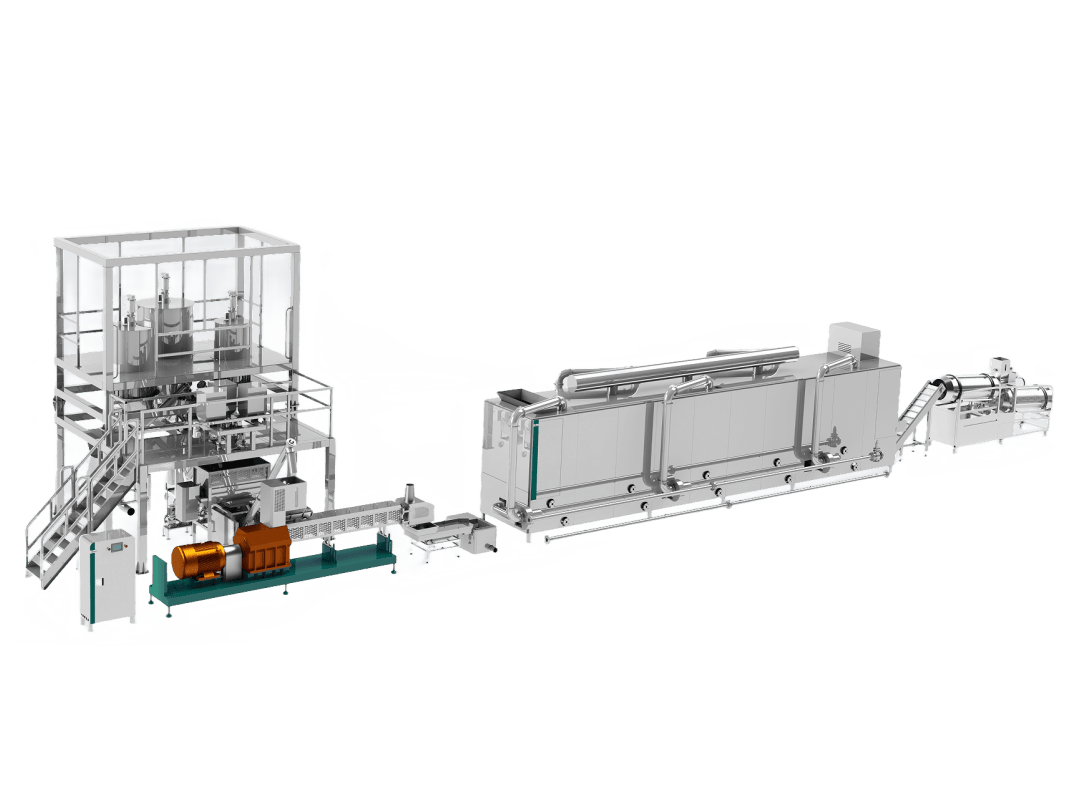
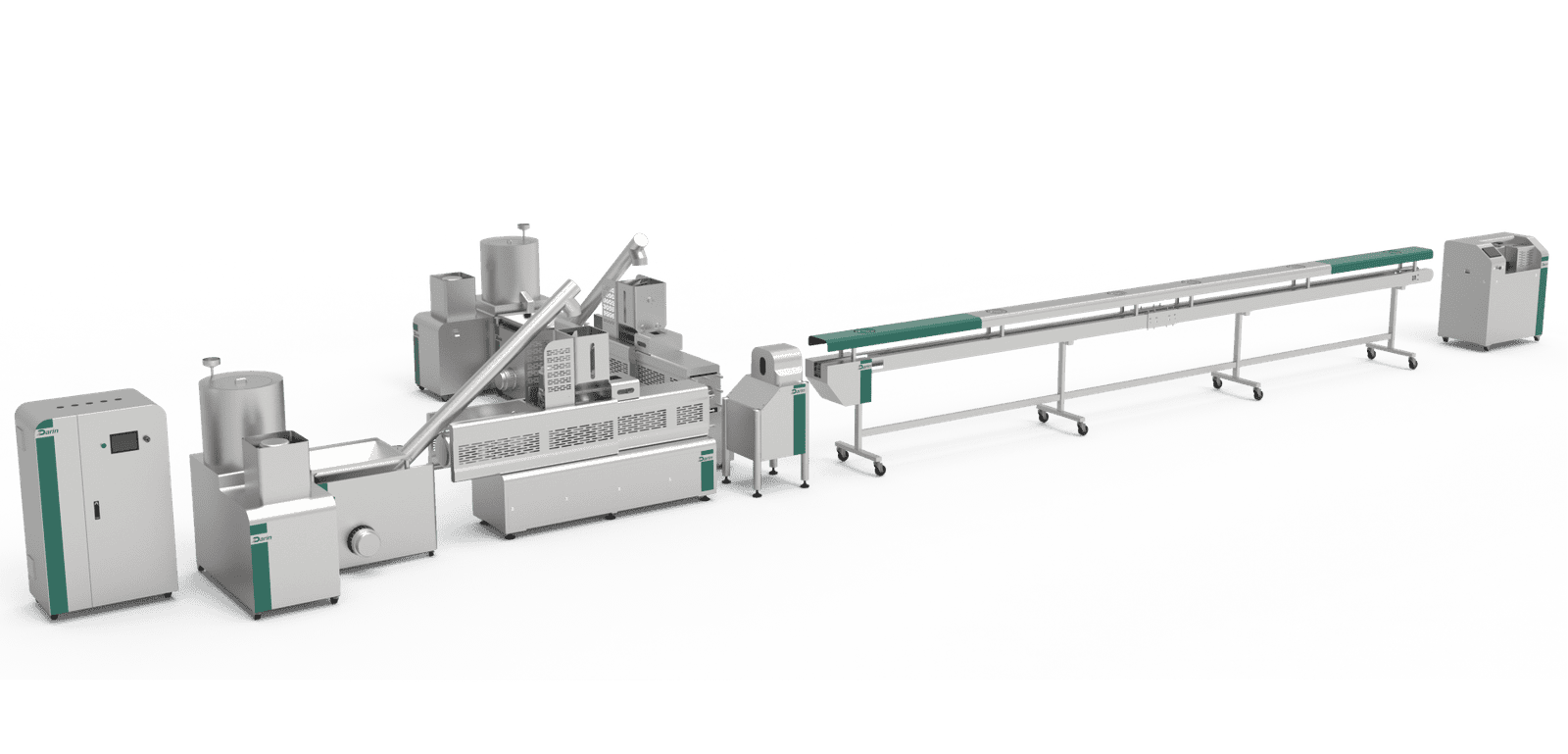
Our dog chew production lines are designed to maximize ingredient efficiency and product uniformity.
| Machine | Function | Benefit |
|---|---|---|
| Mixer | Blends raw materials evenly | Consistent texture |
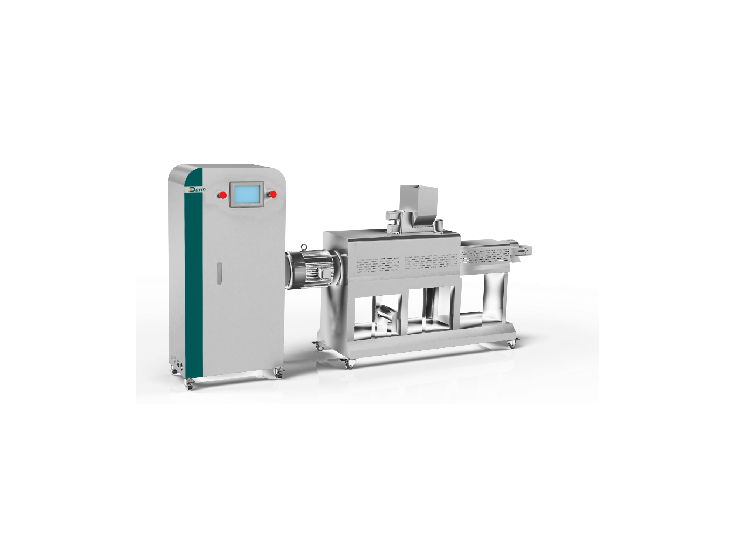
| Twin-Screw Extruder | Gelatinizes starch & proteins | Stable and flexible chews |
| Molding Cutter | Shapes sticks, bones, or twists | Product variety |
| Dryer / Cooler | Reduces moisture for long shelf life | Prevents spoilage |
| Flavor Coater | Adds oil/flavor layer | Enhanced palatability |
By precisely controlling temperature, pressure, and moisture, Darin Machinery ensures optimal conversion of raw materials into high-quality, safe, and market-ready dog chews.
9. Environmental and Sustainable Raw Material Trends
Modern consumers demand sustainability. Manufacturers are shifting toward:
- Plant-based proteins (pea, soy, potato) for eco-friendly chews
- Upcycled materials (e.g., fish skin from seafood processing)
- Biodegradable packaging aligned with pet eco-consciousness
These innovations help brands reduce environmental footprints and attract green-conscious buyers.
10. Conclusion — The Science Behind Every Chew
Every dog chew is a result of precise material engineering. Proteins give it structure, starches bind it, glycerin keeps it soft, and fats make it delicious. Behind each batch lies the manufacturer’s mastery of material science and process control.
At Darin Machinery, we combine deep ingredient knowledge with advanced extrusion technology to help pet food manufacturers produce superior, consistent, and profitable dog chews — tailored to your market’s needs.
✅ Ready to Upgrade Your Dog Chew Production Line?
Contact Jinan Darin Machinery Co., Ltd. today to discuss your formulation and equipment needs.
🌐 www.petreatsmachine.com
📧 darin4@darin.cn
We help you turn raw materials into profitable, premium-quality dog chews — efficiently, safely, and smartly.