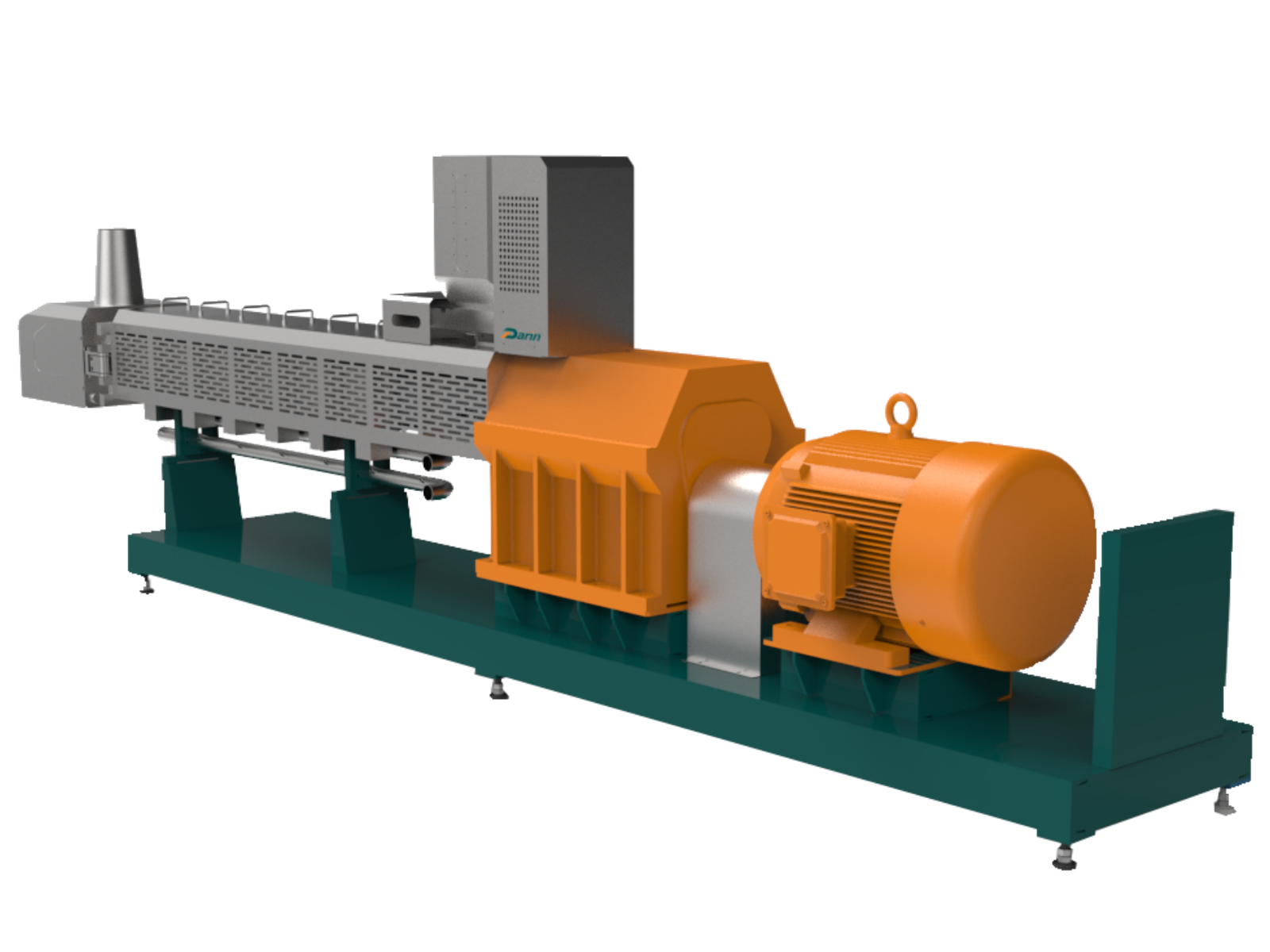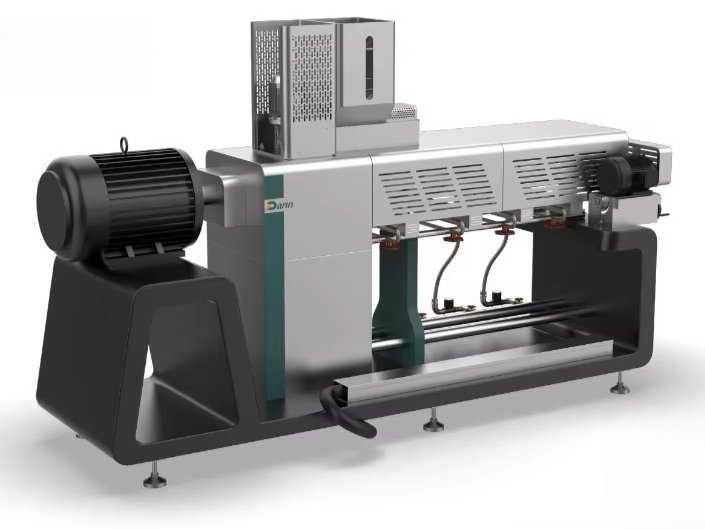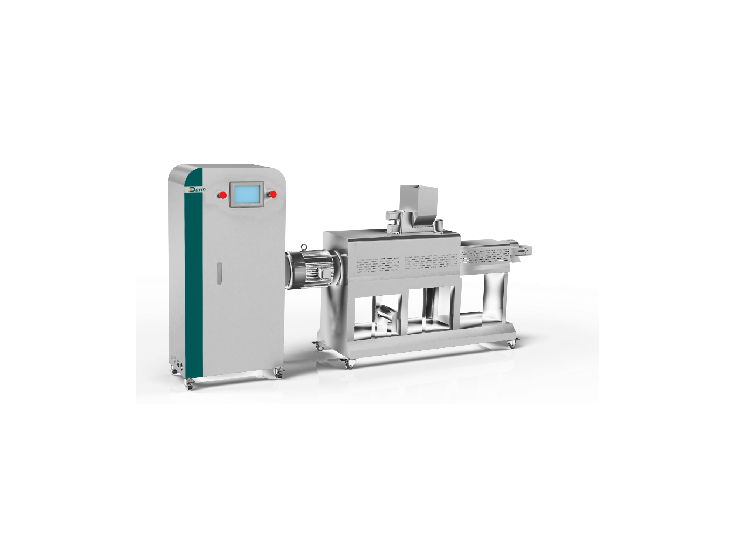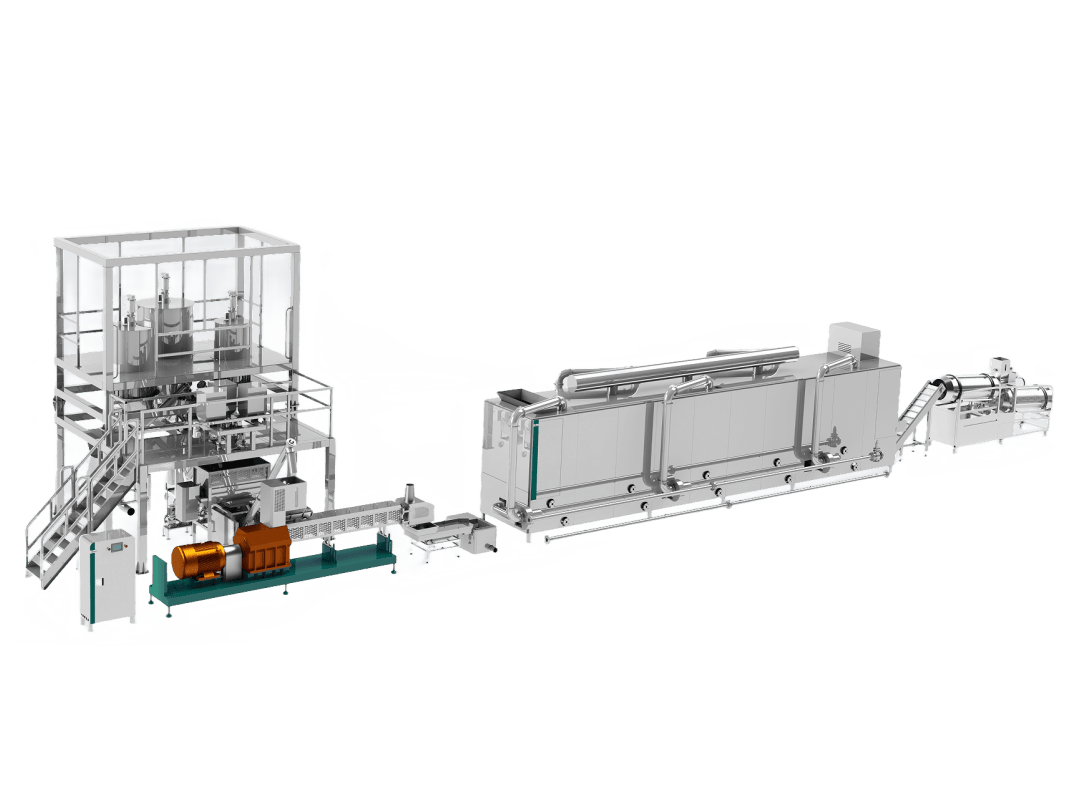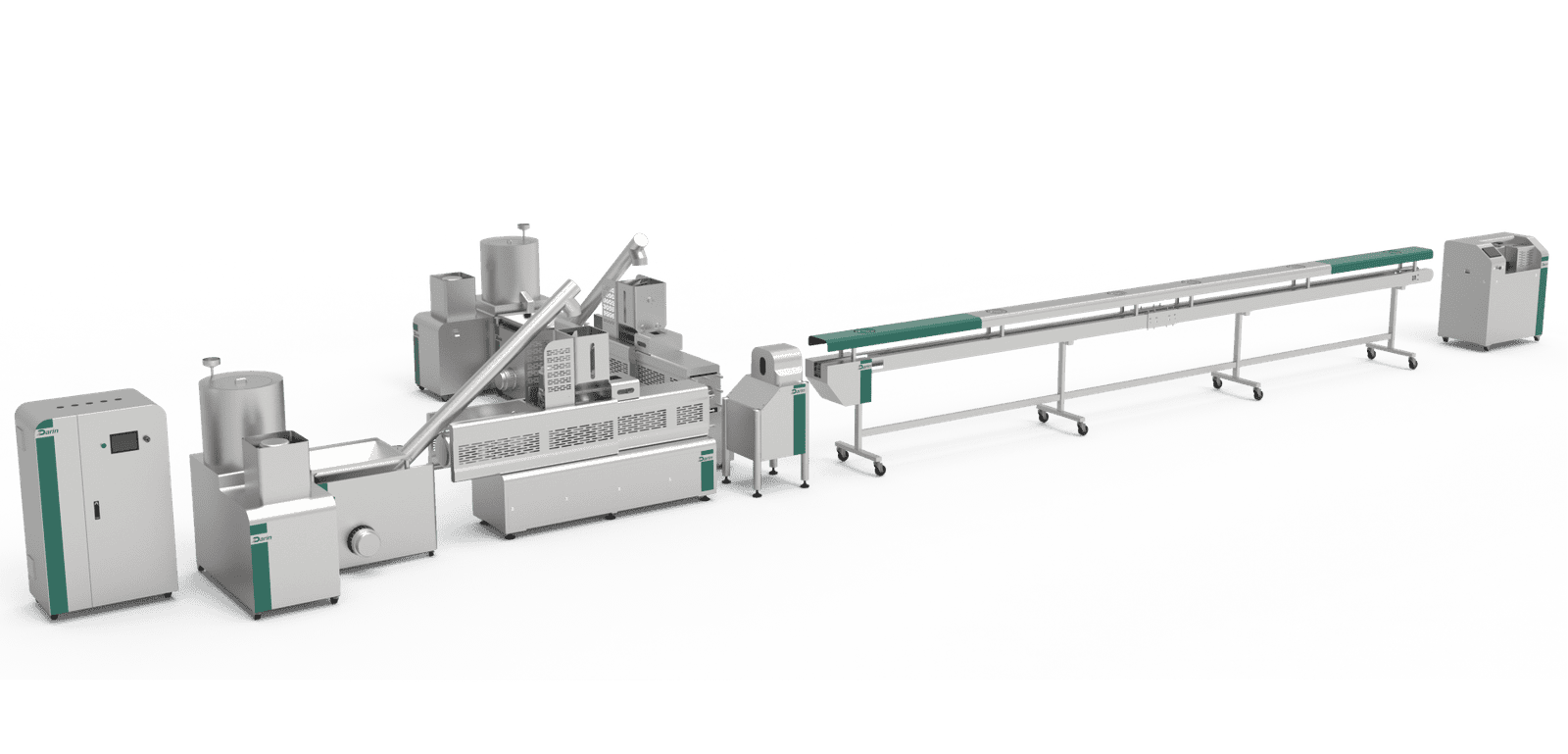

Dog chew manufacturing has evolved from a simple craft to a precise industrial science. The modern consumer demands more than just a treat — they expect consistent texture, safety, digestibility, and nutritional value. Yet, many new manufacturers encounter a persistent challenge: what exact raw materials should be used in a professional dog chew production line, and how should they be formulated for stable extrusion and long shelf life?
Using the wrong type of starch, poor-quality gelatin, or unbalanced plasticizers can cause severe technical issues — extrusion pressure instability, product cracking during drying, color streaking, or microbial growth. The cost of a failed batch or equipment blockage can be enormous.
The solution is found in scientifically engineered formulations and precise material control throughout the process. Each ingredient in a dog chew — from starch to glycerin — plays a defined mechanical and biochemical role. When optimized together, they yield a smooth, shiny, elastic chew that retains moisture yet resists spoilage.
A modern dog chew production line uses a combination of starch-based binders (corn, potato, tapioca), animal and plant proteins (gelatin, collagen, meat meal, soy, gluten), humectants (glycerin, sorbitol), fats, minerals, fibers, and natural colors and flavors. Each ingredient interacts under heat, shear, and pressure in the extruder to form a stable chew matrix that offers elasticity, taste, and long-term stability.
Choosing the right ingredients is as important as selecting the right machinery. Even with the best extruder, poor raw materials lead to inconsistent torque, irregular moisture profiles, and non-uniform appearance. In the following sections, we’ll go step-by-step through every material group used in industrial dog chew manufacturing, including their function, composition, quality parameters, and how Darin Machinery’s systems adapt to handle them efficiently.
Only natural starch and water are sufficient for making high-quality dog chews.False
While starch provides the structural base, high-quality dog chews also require proteins, gelatin, plasticizers, and additives for elasticity, nutrition, and shelf stability.
Step 1. Starch and Carbohydrate Base — The Structural Backbone
1.1 Function
Starch is the primary matrix-forming agent in most extruded dog chews. Under heat and shear inside the twin-screw extruder, starch granules gelatinize, lose their crystalline structure, and form a continuous viscoelastic phase that solidifies upon cooling.
1.2 Common Starch Sources
| Type | Amylose (%) | Gelatinization Temp (°C) | Function in Chew | Recommended Ratio (%) |
|---|---|---|---|---|
| Corn Starch | 25–28 | 65–75 | Provides firmness and dense texture | 30–50 |
| Potato Starch | 18–20 | 60–70 | Adds elasticity, prevents cracking | 10–30 |
| Tapioca Starch | 17 | 65–80 | Glossy finish, flexible chew | 10–25 |
| Wheat Flour | 26 | 60–70 | Natural binder, gluten improves structure | 5–15 |
| Rice Flour | 20 | 70–80 | Soft texture, hypoallergenic | 10–20 |
Engineering Note:
The optimal combination for starch-based dog chews typically maintains 60–70% total carbohydrate in the dry mix. Excess amylopectin leads to too soft a chew; excess amylose leads to brittle texture.
Best Practice:
- Precondition starch with 10–15% water and 0.2 MPa steam before extrusion.
- Maintain extrusion zone temperatures at 90–130°C for ideal gelatinization.
- Use PID-controlled barrel zones to prevent localized scorching.
Potato starch produces puffed, porous chews during extrusion.False
Dog chew extrusion operates at lower moisture (20–35%) and higher pressure than snack extrusion, resulting in dense, non-expanded texture.
Step 2. Protein Sources — The Binding and Nutritional Component
Proteins act as natural binders and enhance mechanical strength. They crosslink with gelatinized starch during extrusion, forming a resilient structure. Additionally, they enrich the nutritional profile.
| Protein Source | Protein (%) | Functional Role | Optimal Level (%) |
|---|---|---|---|
| Soy Protein Isolate | 85–90 | Elasticity, cohesive strength | 5–10 |
| Wheat Gluten | 70–80 | Film-forming, increases stretch | 3–8 |
| Meat Meal (Beef/Chicken) | 55–65 | Flavor, brown color | 5–15 |
| Fish Meal | 60–65 | Marine flavor, Omega-3 source | 2–5 |
| Pea Protein | 70–75 | Plant-based substitute | 3–7 |
Technical Relationship:
A higher protein ratio (30–40%) leads to firmer, denser chews ideal for dental sticks, while lower protein (15–25%) yields soft chews or jerky-style treats.
Screw Torque vs. Protein Content Graph (text illustration):
Protein % → 10   20   30   40
Torque (Nm) → 25  30   38   45
↑
Higher protein = higher torque load; adjust motor speed & cooling accordingly
Tip from Darin Engineers:
Keep barrel temperature 10–15°C higher in mixing zones when using high-protein formulas to avoid undercooked areas.
Step 3. Gelatin and Collagen — The Elastic Network
3.1 Why They Matter
Gelatin and collagen provide the signature chewiness that differentiates dog chews from snacks. They form an internal network that gives both flexibility and gloss.
3.2 Comparison Table
| Type | Source | Bloom Strength | Inclusion (%) | Functional Description |
|---|---|---|---|---|
| Gelatin Type A | Porcine | 150–250 | 3–8 | Quick gel formation |
| Gelatin Type B | Bovine | 200–300 | 4–10 | Strong elasticity |
| Hydrolyzed Collagen | Fish/Bovine | — | 2–5 | Improves digestibility |
Preparation Steps:
- Dissolve gelatin in warm water (60–70°C).
- Add during wet mixing stage before extrusion.
- Maintain pre-mix moisture at 20–25%.
Process Caution: Overheating (>90°C) in the extruder can break collagen chains, reducing elasticity and gloss.
Key Benefit: Collagen increases chew tensile strength by up to 15% and allows lower drying temperature without brittleness.
Gelatin is used only for surface shine in dog chews.False
Gelatin forms an internal gel network that contributes elasticity and structural cohesion, not just surface gloss.
Step 4. Glycerin and Plasticizers — Moisture Retention and Flexibility
4.1 Core Function
Glycerin acts as both a plasticizer and humectant, maintaining softness while reducing water activity (aw). It binds water molecules through hydrogen bonding, stabilizing texture during storage.
4.2 Common Humectants
| Ingredient | Function | Inclusion (%) | aw Reduction Effect |
|---|---|---|---|
| Glycerin (99.7% food-grade) | Moisture retention, elasticity | 5–15 | ↓ aw to 0.6–0.7 |
| Sorbitol | Sweetness, surface gloss | 3–6 | ↓ aw to 0.65 |
| Propylene Glycol | Preservation, soft texture | 1–3 | ↓ aw to 0.6 |
| Vegetable Oil | Lubrication | 2–4 | Improves bite feel |
Recommended Glycerin-Starch Ratio: 1:4 by weight.
Excess glycerin (>20%) causes sticky surfaces during drying.
4.3 Engineering Integration
- Injected into preconditioner or mixer via liquid dosing pump.
- Metered precisely to ±0.2% via flowmeter.
- Inline temperature maintained at 25–35°C to prevent crystallization.
Step 5. Meat and Animal By-products — Flavor and Natural Appeal
Consumers value real meat content for flavor authenticity. While these are minor in total weight, they strongly affect palatability.
| Ingredient | Description | Level (%) | Function |
|---|---|---|---|
| Chicken Powder | Spray-dried flavor | 2–5 | Palatant |
| Beef Meal | Rendered beef tissue | 5–10 | Protein and aroma |
| Liver Hydrolysate | Enzyme-treated | 1–3 | Flavor booster |
| Bone Meal | Calcium source | 2–5 | Nutritional additive |
| Fish Oil | Lipid and omega-3 source | 0.5–2 | Palatability enhancer |
Technical Tip:
- Add meat meals in dry mix; add liquid palatants post-extrusion.
- Maintain barrel temperature below 130°C for natural meat aroma retention.
- Filter bone meal to ≤0.5 mm mesh to avoid die blockage.
Step 6. Fibers and Fillers — Digestive and Structural Balance
6.1 Purpose
Fibers improve stool quality, regulate digestion, and help control expansion by absorbing water.
| Fiber Type | Source | Inclusion (%) | Function |
|---|---|---|---|
| Beet Pulp | Sugar beet residue | 2–5 | Fiber enrichment |
| Cellulose Powder | Plant fiber | 1–3 | Controls texture |
| Oat Fiber | Cereal husk | 2–4 | Enhances chew resistance |
| Rice Bran | Grain residue | 2–5 | Adds bulk and minerals |
Engineering Role:
Fibers act as moisture moderators in extrusion, stabilizing torque and preventing over-expansion.
Step 7. Minerals, Vitamins, and Functional Additives
Functional additives provide nutritional enhancement and support specific health claims (dental, joint, skin).
| Additive | Typical Inclusion (%) | Function |
|---|---|---|
| Calcium Carbonate | 1–2 | Bone strength, whiteness |
| Sodium Hexametaphosphate | 0.5–1 | Dental plaque reduction |
| Vitamin E | 0.05 | Antioxidant |
| Zinc Sulfate | 0.1–0.3 | Skin and coat health |
| Chlorophyll | 0.2–0.5 | Breath freshness |
| Glucosamine | 0.2–0.5 | Joint health support |
Mixing Tip:
Add heat-sensitive vitamins in post-extrusion coating drum rather than main mix.
Quality Control: Use precise micro-dosing hoppers for uniform distribution.
Step 8. Colorants and Flavor Agents
Dog owners are influenced by product color and aroma, though dogs rely primarily on scent.
| Type | Source | Dosage (%) | Application |
|---|---|---|---|
| Natural Color (Paprika, Caramel) | Plant extract | 0.2–0.5 | Aesthetic |
| Titanium Dioxide (Food Grade) | Synthetic white | 0.1–0.3 | Whitening dental chews |
| Carob Powder | Natural brown | 1–3 | Chocolate-like appearance |
| Chicken/Bacon Flavor | Spray-dried | 1–3 | Aromatic profile |
Extrusion Stability:
Maintain temperature ≤120°C to prevent pigment degradation.
Step 9. Water — The Hidden but Critical Ingredient
Water is both a reactant and process medium. It controls viscosity, temperature transfer, and starch gelatinization.
| Stage | Moisture Target (%) | Function |
|---|---|---|
| Mixing | 10–15 | Hydration |
| Preconditioning | 20–30 | Steam absorption |
| Extrusion | 20–35 | Gelatinization medium |
| Drying (final product) | 8–12 | Shelf-stable moisture |
Rule of Thumb:
For every 1% moisture change, adjust extruder torque by 2–3%.
Water content is unimportant in extrusion.False
Moisture directly controls starch gelatinization, pressure, and final chew density; improper control leads to inconsistent quality.
Step 10. Preservatives and Antioxidants
While dog chews are low-moisture products, oxidation of fats and flavor compounds can shorten shelf life.
| Additive | Function | Inclusion (%) |
|---|---|---|
| Potassium Sorbate | Mold inhibition | 0.1–0.2 |
| Sodium Benzoate | Bacterial inhibition | 0.1–0.3 |
| Tocopherol (Vit. E) | Natural antioxidant | 0.05 |
| Rosemary Extract | Natural preservative | 0.1–0.3 |
Best Practice: Dissolve preservatives in water before mixing for uniform distribution.
Shelf Life Expectation: 12–18 months under <60% RH and 25°C storage.
Step 11. Formulation Balance and Process Example
Example Formula: Starch-Based Dental Stick (100 kg batch)
| Ingredient | Amount (kg) | Function |
|---|---|---|
| Corn Starch | 35 | Structure |
| Potato Starch | 15 | Elasticity |
| Soy Protein Isolate | 10 | Strength |
| Gelatin | 6 | Flexibility |
| Glycerin | 10 | Plasticizer |
| Calcium Carbonate | 2 | Dental whitening |
| Chlorophyll | 0.5 | Breath freshener |
| Colorant & Flavor | 1 | Appearance |
| Water | 10.5 | Moisture balance |
Expected Output: 88 kg finished chews (12% moisture loss)
Extrusion Temperature: 110–130°C
Drying: 2.5 h at 90–100°C
Shelf Life: 15 months
Step 12. Quality Control of Raw Materials
Before use, every raw ingredient must meet strict standards to ensure consistency and safety.
| Parameter | Target | Testing Method |
|---|---|---|
| Moisture | <12% | Oven drying |
| Protein (meat meal) | >55% | Kjeldahl method |
| Gelatin Bloom | 200–250 | Gel tester |
| Glycerin Purity | ≥99.7% | GC analysis |
| Microbial Count | <10³ CFU/g | Plate culture |
| Heavy Metals | <0.1 ppm | ICP test |
Incoming Inspection Protocol:
- Random sampling 1% of batch.
- Record lot number for traceability.
- Store under <60% RH and sealed containers.
Step 13. Material Handling and Storage
| Material | Storage Condition | Shelf Life | Handling Note |
|---|---|---|---|
| Starch | Cool, dry (≤30°C) | 12 months | Avoid humidity |
| Gelatin | 15–25°C | 12 months | Airtight container |
| Glycerin | 25°C, sealed | 24 months | Avoid contamination |
| Meat Meal | <25°C | 6 months | Check odor regularly |
| Vitamins | <20°C, dark | 12 months | Light-sensitive |
| Colorants | 15–20°C | 18 months | Avoid moisture exposure |
Step 14. Sustainability and Alternative Ingredients
To meet sustainability goals, pet treat manufacturers increasingly use eco-friendly or plant-based substitutes.
| Traditional Ingredient | Alternative | Benefit |
|---|---|---|
| Gelatin (animal) | Pea or algal protein | Vegan-friendly |
| Corn starch | Cassava starch | Tropical source, non-GMO |
| Meat meal | Plant-based umami flavor | Lower CO₂ footprint |
| Sorbitol | Glycerin from biodiesel | Renewable resource |
Darin Machinery’s extruders are adaptable to both conventional and plant-based materials, using adjustable shear and moisture profiles.
Step 15. Troubleshooting Raw Material Issues
| Problem | Likely Cause | Corrective Action |
|---|---|---|
| Cracked chews | Low glycerin or gelatin | Increase plasticizer or collagen |
| Sticky surface | Excess glycerin or incomplete drying | Reduce plasticizer, extend drying |
| Weak structure | Low protein or excessive moisture | Adjust ratio to 25–30% protein |
| Poor color | Overheating of pigment | Reduce barrel temp |
| Low flavor | Volatile loss during extrusion | Apply flavor in coating drum |
Step 16. Material Cost Overview (USD/kg Estimate)
| Ingredient | Typical Price (USD/kg) | Cost Contribution (%) |
|---|---|---|
| Corn Starch | 0.6 | 25 |
| Soy Protein | 1.5 | 15 |
| Gelatin | 3.0 | 12 |
| Glycerin | 1.2 | 10 |
| Meat Meal | 1.8 | 8 |
| Additives & Colors | 2.5 | 5 |
| Water, Packaging, Energy | — | 25 |
Material Cost Share: ~70–75% of total production cost in a dog chew line.
Step 17. Global Compliance for Ingredients
| Market | Regulatory Authority | Core Requirements |
|---|---|---|
| EU | EFSA | CE + feed hygiene regulation |
| USA | FDA (CFR Title 21) | GRAS ingredient list |
| China | MARA | Feed additive catalog |
| GCC | SFDA / SASO | Halal compliance |
| Latin America | SENASA / MAPA | Registration of ingredients |
All Darin formulations comply with ISO 22000 and HACCP food-grade standards, ensuring export clearance worldwide.
Step 18. Material-to-Machine Compatibility (Darin Engineering Insight)
Darin
Machinery customizes extruder screws and barrel configurations to match raw material rheology:
| Material Characteristic | Screw Design Feature | Result |
|---|---|---|
| High protein (viscous) | Long kneading section | Improved mixing |
| High starch (sticky) | Deep flight screw | Stable feeding |
| Gelatin-rich (elastic) | Cooling sleeve at end zone | Prevents overcooking |
| High glycerin (wet) | Venting port | Prevents pressure surge |
This engineering flexibility ensures smooth operation across a wide range of raw material compositions.
Step 19. Environmental & Safety Management
- Avoid dust accumulation during starch handling (explosion risk).
- Use stainless bins with nitrogen blanket for gelatin to prevent mold.
- Maintain mixing area humidity <55%.
- Ensure traceability with digital batch recording (QR-coded ingredient tags).
Step 20. Conclusion
Raw materials are the true foundation of dog chew production. Each ingredient — from starch to collagen — influences extrusion performance, texture, nutritional value, and consumer perception. When selected scientifically and processed under Darin’s precise engineering controls, these materials yield durable, safe, and high-value pet treats.
The secret of successful dog chew manufacturing lies not in guesswork but in material science and process synergy. The right ingredients, processed through the right machines, create the consistency and quality that build global trust.
Build Your Own Dog Chew Formula with Darin Machinery
At Darin Machinery, we don’t just supply machines — we engineer complete pet treat ecosystems. Our R&D team can help you select the most suitable starches, proteins, and additives for your target market, and fine-tune extrusion parameters to match your desired texture and cost goals.
📞 Contact Darin Machinery Today
🌐 www.petreatsmachine.com
📧 Email: darin4@darin.cn
📱 WhatsApp: +86 156 5000 7983
Let’s formulate the next generation of healthy, elastic, and delicious dog chews — designed with precision, made with Darin reliability.