
The global pet food industry has shifted dramatically in the past decade, with dog chews emerging as one of the fastest-growing categories. Once considered simple by-products, today’s dog chews are engineered snacks that support dental health, satisfy chewing instincts, and provide functional nutrition. However, many small and mid-sized producers face problems like inconsistent quality, microbial risks, high labor costs, and difficulties scaling production to meet global demand. These challenges make it difficult to compete with established international brands.
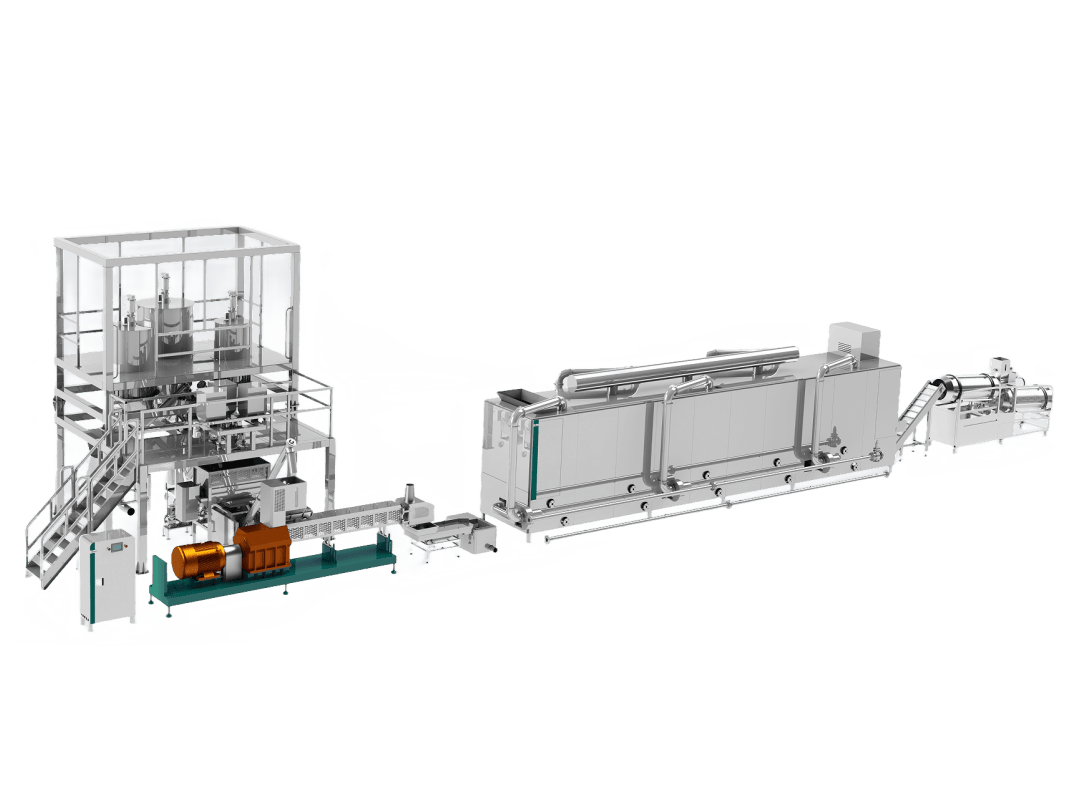
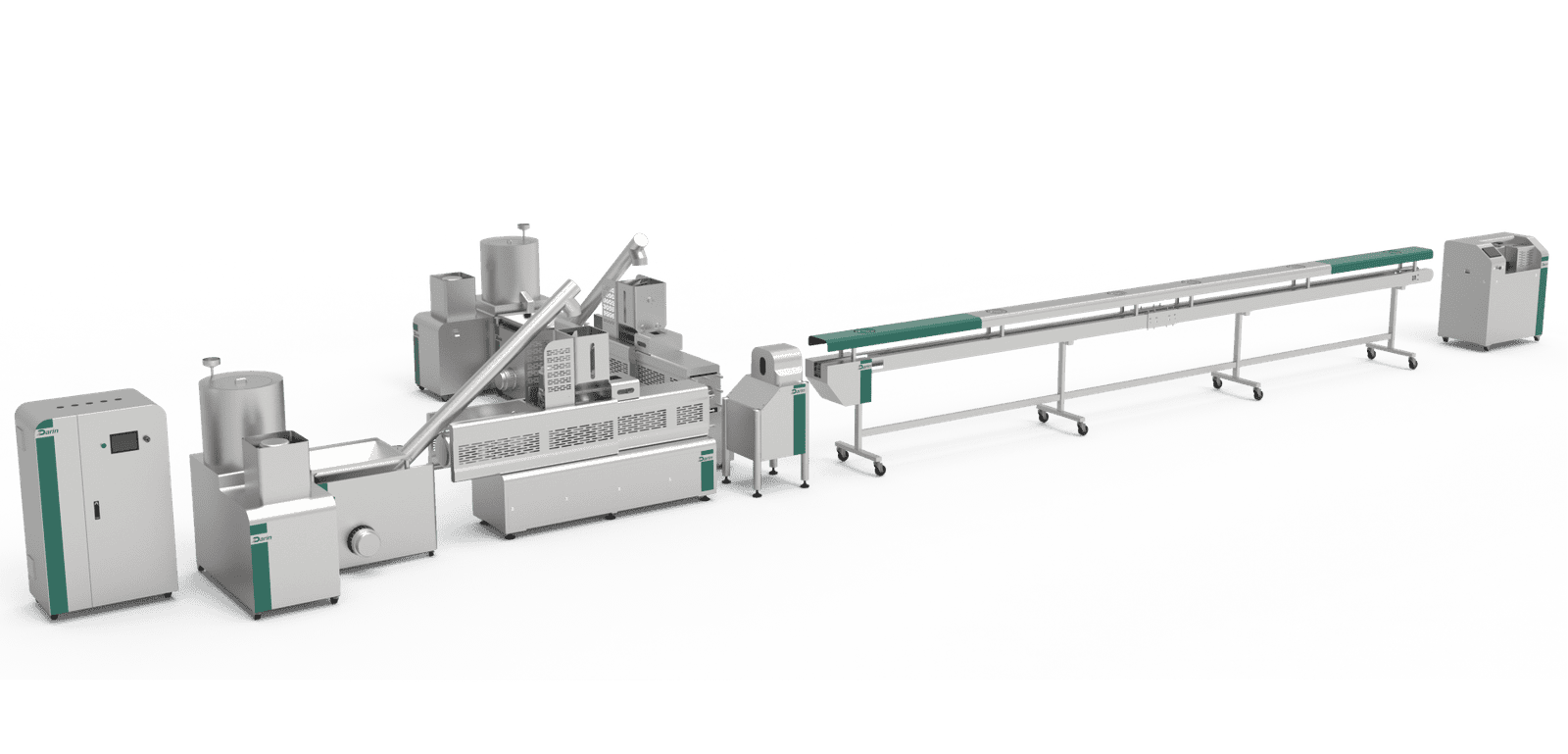
A dog chew production line is an automated system that transforms raw materials—such as rawhide, starches, meat by-products, or plant-based proteins—into uniform, safe, and appealing chew products for dogs. The line integrates raw material processing, extrusion, molding, drying, sterilization, flavor coating, cooling, and packaging. Automation ensures consistent quality, high efficiency, and compliance with global pet food safety standards.
For entrepreneurs, pet food manufacturers, and investors, understanding how a dog chew production line works is critical to entering or scaling within this lucrative market.
Dog chews can be manufactured safely without heat treatment or sterilization.False
Controlled heating and sterilization are essential to reduce microbial load and ensure product safety and shelf stability.
Automated dog chew lines can reduce labor costs by over 50% compared to manual methods.True
Automation reduces manual handling, improves consistency, and allows scaling with fewer workers.
Part 1 – Introduction & Market Overview of Dog Chews
The Rise of Dog Chews in the Global Pet Food Market
The global pet care market exceeded USD 250 billion in 2024, with pet food making up over half of that value. Within the pet food segment, dog chews and treats are one of the most dynamic growth drivers, valued at USD 9.5 billion in 2024 and projected to grow at a CAGR of 7–9% through 2030.
Dog chews fulfill multiple functions:
- Dental health – Abrasive chewing action reduces tartar and plaque.
- Behavioral needs – Chewing satisfies instinctual urges and reduces anxiety.
- Nutritional enrichment – Many chews are fortified with vitamins, minerals, and functional additives.
- Owner satisfaction – Pet parents see chews as a way to reward and bond with their dogs.
Market Segmentation by Product Type
| Type | Description | Market Demand |
|---|---|---|
| Rawhide Chews | Traditional pressed or knotted chews from cattle hides | Declining in Western markets due to digestibility concerns |
| Starch-Based Chews | Extruded from corn, potato, rice, or tapioca starch | Growing as rawhide alternatives |
| Meat-Based Chews | High meat content, natural taste appeal | Expanding premium segment |
| Dental Chews | Shaped for oral care, often functional | Fastest-growing segment |
| Plant-Based Chews | Vegan or vegetarian formulations | Niche but rising with eco-conscious owners |
👉 Insight: Traditional rawhide chews are losing market share in North America and Europe due to safety concerns, while starch-based and dental chews are rapidly expanding.

Pain Points in Traditional Dog Chew Manufacturing
Despite demand growth, many producers rely on manual or semi-automatic methods, which introduce challenges:
- Inconsistent Quality – Manual shaping leads to variable chew size and hardness.
- Safety Risks – Without sterilization, microbial contamination can occur.
- High Labor Dependency – Manual rolling, knotting, or shaping is labor-intensive.
- Limited Scalability – Small-batch drying and manual packaging restrict capacity.
- Export Barriers – Compliance with AAFCO, FDA, and EU regulations requires precision that manual processes cannot provide.
These problems not only limit profitability but also hinder entry into international markets.
Why Invest in Automated Dog Chew Production Lines?
Automation addresses these pain points by providing:
- Consistency – Uniform extrusion, shaping, and drying ensure product standardization.
- Efficiency – Automated lines scale from 100 kg/day up to 5,000+ kg/day.
- Safety Compliance – Built-in sterilization and hygienic design meet AAFCO, FDA, EU standards.
- Cost Reduction – Automation reduces labor costs by 50–60%.
- Flexibility – Same line can produce different chew types (sticks, bones, twisted chews).
- Market Access – Certification-ready facilities can export to premium markets.
👉 For investors, the ROI window is typically 9–15 months depending on scale and product type.
General Workflow of a Dog Chew Production Line
| Stage | Description | Key Equipment |
|---|---|---|
| 1. Raw Material Preparation | Grinding starch, meat, or hide into processable form | Grinder, mixer |
| 2. Mixing & Blending | Adding palatants, binders, and functional additives | Ribbon blender, vacuum mixer |
| 3. Extrusion/Forming | Shaping into sticks, bones, twists | Twin-screw extruder, molding machine |
| 4. Drying & Sterilization | Removing moisture, ensuring shelf life | Hot air dryer, sterilizer |
| 5. Coating & Flavoring | Spraying flavors, fats, or vitamins | Coating drum, sprayer |
| 6. Cooling & Stabilization | Preventing condensation and microbial growth | Cooling conveyors |
| 7. Packaging | Vacuum or MAP for extended shelf life | Vacuum packer, MAP sealer |
This modular workflow allows producers to tailor the line to different product categories and capacities.
Global Regulatory Framework for Dog Chews
Producing dog chews is not just about machinery—it’s also about compliance.
- AAFCO (U.S.) – Ingredient definitions, labeling rules.
- FDA (U.S.) – Food safety and sanitation requirements.
- EU Pet Food Regulations (Regulation EC 1069/2009) – Hygiene and traceability.
- ISO 22000 / FSSC 22000 – Food safety management.
- Halal / Kosher Certification – Expands access to global markets.
👉 Note: Automated lines designed in stainless steel 304/316, with CIP (Clean-in-Place) systems and sanitary conveyors, help manufacturers meet these requirements efficiently.
Transition to Next Part
This introduction highlighted the global market for dog chews, current pain points in production, and the benefits of investing in automation. In Part 2, we will take a technical deep dive into each processing stage—from raw material preparation to drying and packaging—showing how modern production lines transform raw inputs into premium, safe, and market-ready dog chews.
Part 2 – Core Processing Stages in Dog Chew Production
In Part 1, we explored the market landscape, pain points, and benefits of automation for dog chews. Now, we shift focus to the technical backbone: the processing stages that turn raw materials—whether rawhide, starch, meat, or plant-based proteins—into safe, durable, and appealing dog chews.
A dog chew production line follows sequential steps: raw material preparation, mixing, extrusion/forming, drying/sterilization, coating, cooling, and packaging. Each step requires precision to ensure safety, compliance, and consistency in chew hardness, size, and palatability.
Step 1: Raw Material Preparation
The foundation of chew quality is raw material selection and pre-processing.
1.1 Common Raw Materials
- Rawhide: Traditionally sourced from cattle hides; now declining in Western markets due to digestibility concerns.
- Starch: Corn, rice, potato, tapioca—used in extrusion-based chews.
- Meat By-Products: Organ meats, meat meals, or trims for flavor and nutrition.
- Plant-Based Proteins: Soy, pea, or lentil proteins for vegan chews.
1.2 Pre-Treatment
- Grinding – Rawhide, starch, or meat reduced to uniform granules.
- Hydration – Rawhide soaked to soften before shaping.
- Sieving – Removes impurities and standardizes particle size.
Equipment
- Meat grinders (single/twin-screw).
- Starch milling systems.
- Hydration tanks for rawhide.
| Material | Preparation Method | Key Challenges |
|---|---|---|
| Rawhide | Soaking & cutting | Digestibility concerns |
| Starch | Grinding & pregelatinization | Consistency in extrusion |
| Meat By-Products | Grinding | Microbial load |
| Plant Proteins | Milling | Binder requirement |
Fact: Many modern chew lines avoid rawhide altogether, using starch-based or hybrid formulas for better digestibility and global acceptance.
Step 2: Mixing & Blending
Once raw materials are prepared, they must be blended with additives.
2.1 Ingredients Typically Added
- Binders – Starch, gluten, gelatin for structure.
- Palatants – Liver powder, hydrolyzed proteins to improve flavor.
- Functional Additives – Calcium (dental health), glucosamine (joint health).
- Colorants – Natural pigments (spinach for green, turmeric for yellow).
2.2 Mixing Methods
- Ribbon Blender – Ideal for dry powders and starch blends.
- Vacuum Mixer – Improves hydration and uniformity, removes air.
- Planetary Mixer – For viscous meat or protein slurries.
Equipment
- Ribbon blender (500–2,000 L capacity).
- Vacuum mixer with jacketed temperature control.
| Method | Time | Application | Benefit |
|---|---|---|---|
| Ribbon Blender | 10–20 min | Starch-based blends | Uniform dry mixing |
| Vacuum Mixer | 15–30 min | Starch + meat blends | Better water retention |
| Planetary Mixer | 20–40 min | Sticky doughs | Homogeneous mixing |
Fact: Proper mixing can increase chew yield by 3–5% due to improved water binding.
Step 3: Extrusion & Forming
This is the most critical stage, where dough is shaped into final chew forms.
3.1 Extrusion Types
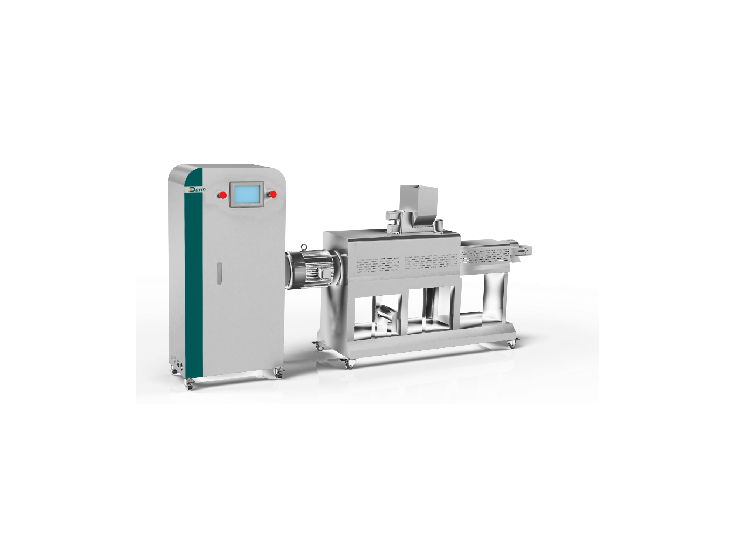
- Single-Screw Extruder – Suitable for simple starch-based chews.
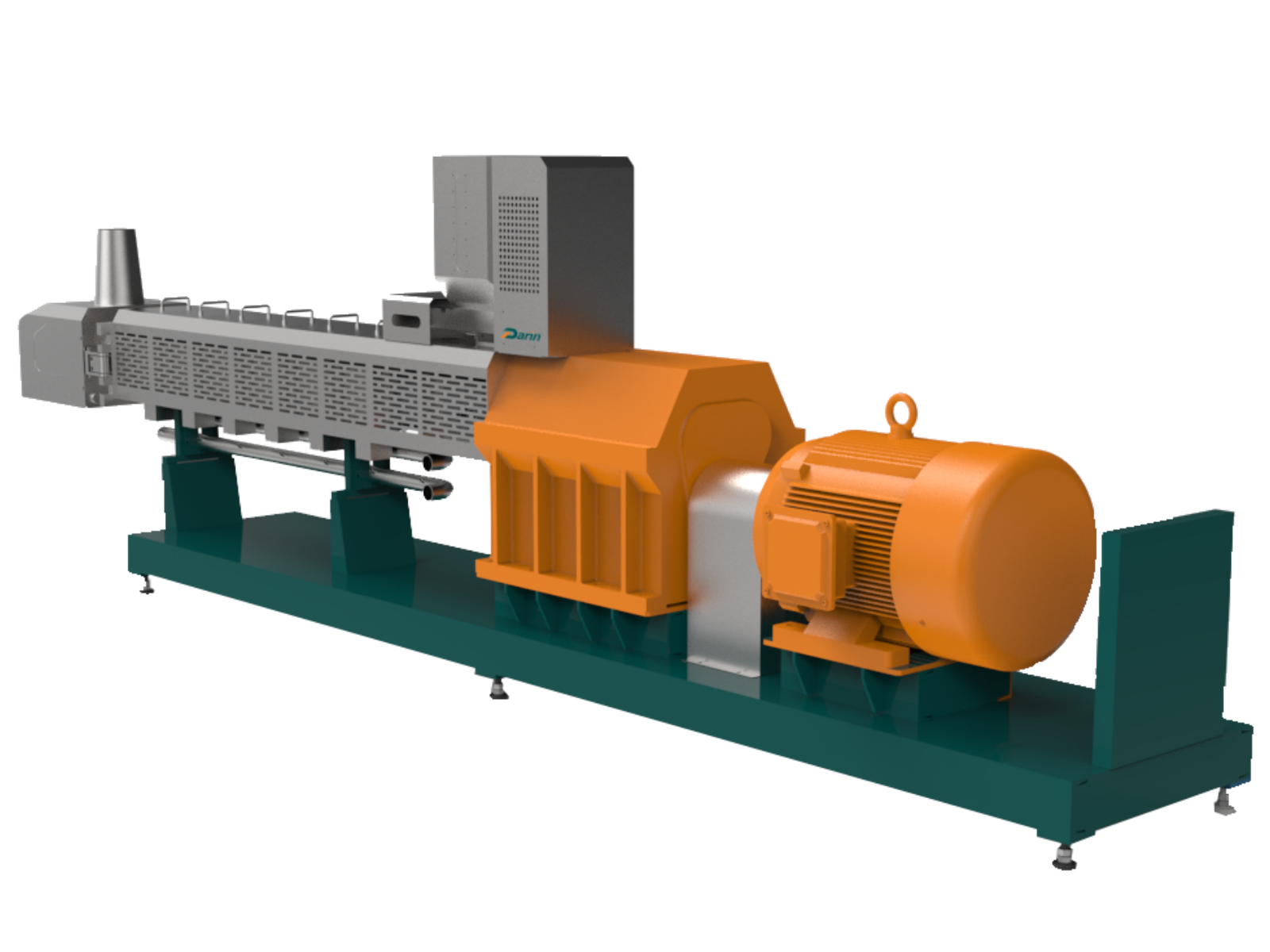
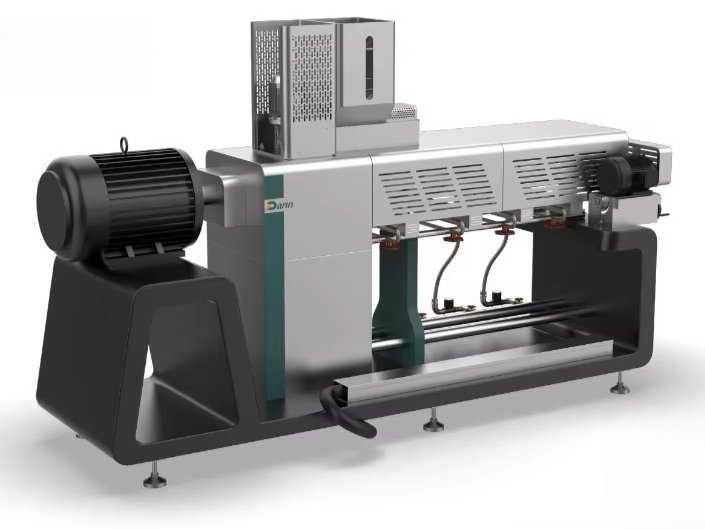
- Twin-Screw Extruder – Superior for complex formulas, allows cooking, sterilization, and shaping in one step.
3.2 Forming Methods
- Extrusion Dies – Produce sticks, twists, bones, or custom shapes.
- Hydraulic Pressing – Shapes rawhide into knots or pressed bones.
- Molding Machines – For creative 3D designs.
Equipment
- Twin-screw extruder (high-shear, 100–500 kg/h).
- Forming dies (bone, stick, twist).
- Molding press machines.
| Product | Process | Advantage | Market Segment |
|---|---|---|---|
| Rawhide Bones | Hydraulic press | Traditional appeal | Asia, low-cost markets |
| Starch Chew Sticks | Extrusion + die cutting | Digestible, scalable | Global mainstream |
| Dental Chews | Extrusion + molding | Functional | Premium export markets |
| Vegan Chews | Twin-screw extrusion | Eco-friendly | Niche, Europe/US |
Fact: Twin-screw extrusion allows incorporation of up to 30% meat by-products into starch chews, enhancing palatability without compromising structure.
Step 4: Drying & Sterilization
Drying reduces moisture, sterilizes, and ensures shelf stability.
4.1 Drying Technologies
- Hot Air Drying – Multi-layer conveyor systems, 60–80°C for 6–12 hours.
- Microwave Drying – Faster, uniform, 2–4 hours.
- Hybrid Drying – Combination of hot air and microwave for efficiency.
4.2 Sterilization
- Built into dryers or conducted in separate chambers.
- Ensures microbial safety (salmonella, mold).
Equipment
- Multi-layer hot air dryers (up to 3,000 kg/day).
- Microwave/hybrid dryers for energy savings.
| Method | Time | Energy Efficiency | Product Quality |
|---|---|---|---|
| Hot Air | 6–12 hrs | Medium | Traditional chewiness |
| Microwave | 2–4 hrs | High | Uniform moisture |
| Hybrid | 3–6 hrs | High | Balanced efficiency |
Fact: Drying accounts for 40–50% of total energy costs in chew production, making efficiency vital for ROI.
Step 5: Coating & Flavoring
To improve palatability and add functional benefits, chews are often coated.
- Flavor Coating – Chicken, beef, or bacon flavors.
- Functional Coating – Omega-3 oils, vitamins, probiotics.
- Color Coating – Natural plant-based pigments.
Equipment
- Coating drum (rotating stainless steel).
- Spray system (automated nozzles for uniform coverage).
👉 Example: Dental chews are often coated with chlorophyll to reduce bad breath.
Step 6: Cooling & Stabilization
Cooling prevents condensation inside packaging, which can lead to spoilage.
- Cooling Conveyors – Fans and stainless-steel belts.
- Air Chill Rooms – For bulk industrial lines.
Fact: Improper cooling is a leading cause of mold growth in poorly managed chew facilities.
Step 7: Packaging
Packaging extends shelf life and makes products retail-ready.
Packaging Types
- Vacuum Packs – Long shelf life, export-focused.
- Modified Atmosphere Packaging (MAP) – Nitrogen flush, premium markets.
- Small Resealable Bags – Consumer convenience.
Equipment
- Vacuum packers (single/double chamber).
- MAP sealers.
- Flow wrappers with resealable zippers.
| Packaging Type | Shelf Life | Market Application |
|---|---|---|
| Vacuum | 6–12 months | Bulk/export |
| MAP | 9–18 months | Premium retail/export |
| Resealable | 3–9 months | Consumer retail packs |
Transition to Next Part
Part 2 detailed the step-by-step processing stages of dog chew production, showing how raw starch, hide, or protein can be transformed into high-value chew products.
In Part 3, we’ll examine the equipment configurations in detail—covering small, medium, and industrial lines, compliance standards, automation technologies, and Darin Machinery case studies.
Part 3 – Equipment & Configurations of Dog Chew Production Lines
In Part 2, we reviewed the step-by-step processing stages of dog chew production. Now, we’ll focus on the machinery and line configurations that bring those processes to life. A dog chew production line is essentially a collection of specialized machines arranged in a workflow, designed to handle everything from raw material preparation to finished product packaging. The configuration varies depending on scale (small, medium, industrial), automation level, and target product category (starch chews, dental chews, rawhide alternatives, plant-based).
A dog chew production line can be modular or fully integrated. Core machines include grinders, mixers, extruders, forming systems, dryers, coating equipment, and packaging units. By adjusting configuration and automation, manufacturers can optimize for cost, compliance, or output.
Core Equipment in a Dog Chew Production Line
1. Raw Material Preparation
- Meat Grinder / Rawhide Cutter – Reduces beef, by-products, or starch blends to uniform size.
- Starch Millers – Ensure powder fineness for extrusion.
- Hydration Tanks – For softening rawhide before forming.
👉 Key Feature: Industrial grinders process up to 1,000 kg/h, allowing high throughput.
2. Mixing & Blending Units
- Ribbon Blender – For dry starch and additive mixing.
- Vacuum Mixer – Prevents oxidation, improves hydration, ensures even distribution.
- Planetary Mixer – Handles viscous formulations (high meat or protein blends).
👉 Key Feature: Vacuum mixing boosts chew yield by 3–5% via better water binding.
3. Extrusion & Forming Machines
- Single-Screw Extruder – For basic starch chews.
- Twin-Screw Extruder – For multi-functional chews with meat or plant proteins.
- Hydraulic Press – Shapes rawhide into bones, knots, or pressed chews.
- Molding Machines – Produce creative 2D or 3D chew designs.
👉 Key Feature: Twin-screw extruders allow incorporation of meat, vitamins, and functional additives while shaping.
4. Drying & Sterilization Systems
- Hot Air Dryers – Multi-layer conveyor dryers, 60–80°C.
- Microwave Dryers – Faster, uniform drying with microbial kill-step.
- Hybrid Dryers – Combine hot air + microwave for efficiency.
👉 Key Feature: IoT-enabled dryers monitor temperature, humidity, and moisture content in real time, ensuring compliance.
5. Coating & Flavoring Systems
- Rotary Coating Drum – Rotates chews for even coating.
- Spray Nozzles – Apply oils, palatants, or vitamins.
👉 Key Feature: Automated coaters reduce waste and ensure even flavor distribution.
6. Cooling Conveyors
- Stainless steel belts with air fans.
- Prevent condensation and microbial growth.
👉 Key Feature: Essential for export markets where shelf life is critical.
7. Packaging Systems
- Vacuum Sealers – Bulk/export-ready packaging.
- MAP (Modified Atmosphere Packaging) – Nitrogen flush extends shelf life.
- Flow Wrappers with Resealable Zippers – For consumer retail convenience.
👉 Key Feature: Premium jerky-style chews with MAP packaging achieve 9–18 month shelf life.
Line Configurations by Production Scale
| Scale | Typical Configuration | Daily Output | Labor Requirement | Investment (USD) |
|---|---|---|---|---|
| Small-Scale (Startups) | Grinder + Mixer + Single-Screw Extruder + Batch Dryer + Vacuum Packer | 100–300 kg/day | 5–8 workers | \$25,000–60,000 |
| Medium-Scale (Growing Brands) | Grinder + Vacuum Mixer + Twin-Screw Extruder + Tunnel Dryer + MAP Packer | 500–1,500 kg/day | 10–15 workers | \$100,000–220,000 |
| Industrial-Scale (Factories) | Automated grinding, mixing, extrusion + Hybrid Dryers + Robotic MAP Packaging | 3,000–5,000+ kg/day | 15–25 workers | \$350,000+ |
👉 Observation: Small-scale lines are cost-effective entry points, but medium/industrial lines achieve lower cost per kg and faster ROI.
Compliance & Hygiene Design
Hygienic Equipment Features
- 304/316 Stainless Steel – Corrosion-resistant, food-grade.
- CIP (Clean-in-Place) Systems – Automated washing for mixers and dryers.
- Sealed Conveyors – Prevent contamination between zones.
International Standards
- AAFCO (U.S.) – Ingredient definitions and labeling.
- FDA (U.S.) – Sanitation, microbial safety.
- EU (Regulation 1069/2009) – Pet food hygiene and traceability.
- ISO 22000 / FSSC 22000 – Food safety management systems.
- Halal / Kosher – For Middle East and Jewish markets.
Case Studies of Darin Machinery Dog Chew Installations
Case Study 1 – Medium-Sized Dental Chew Plant in Eastern Europe
- Setup: 1,200 kg/day twin-screw extruder + hybrid dryer + MAP packaging.
-
Results:
- Labor cut from 20 → 12 workers.
- Yield up 10% due to vacuum mixing.
- Export approval to Germany and Italy.
- ROI: 11 months.
Case Study 2 – Industrial Starch Chew Factory in Southeast Asia
- Setup: 3,500 kg/day fully automated line with robotic MAP packaging.
-
Results:
- Energy use cut 25% with IoT dryers.
- Expanded into plant-based chews using same extruder.
- Contracts with Japan and Korea retail chains.
- ROI: 9 months.
Visualization: Typical Production Line Layout
| Section | Equipment Placement | Notes |
|---|---|---|
| Raw Zone | Grinder + Storage | Separate hygienic area |
| Mixing Zone | Ribbon/Vacuum Mixer | CIP-enabled |
| Forming Zone | Extruder + Molding Machines | Linked with conveyors |
| Drying Zone | Multi-layer or Hybrid Dryers | Zonal humidity control |
| Coating Zone | Rotary Coating Drum | Post-drying functional step |
| Cooling Zone | Conveyor with fans | Prevents condensation |
| Packaging Zone | MAP + Flow Wrappers | Dust-free, sealed environment |
Transition to Next Part
We’ve now explored the machinery and configurations of dog chew production lines, from small startup setups to fully automated industrial systems.
In Part 4, we’ll shift focus to the financial and operational side: capital investment, cost breakdowns, yield ratios, profitability curves, and ROI models.
Part 4 – Cost Analysis, ROI & Operational Considerations
Having reviewed the market overview, processing stages, and equipment configurations, we now focus on the financial and operational side of dog chew production. For manufacturers and investors, understanding cost structures, ROI timelines, and operational considerations is essential for decision-making.
A dog chew production line requires initial capital investment, raw material procurement, energy and labor costs, and ongoing maintenance. Profitability depends on production scale, product type (starch-based, dental, meat-infused, vegan), and market positioning (bulk vs. premium retail). A well-optimized line can achieve ROI in 9–15 months.
1. Capital Investment
The initial cost of a dog chew production line varies by automation, scale, and target product.
| Scale | Core Configuration | Investment Range (USD) | Daily Capacity |
|---|---|---|---|
| Small-Scale | Grinder + Ribbon Mixer + Single-Screw Extruder + Batch Dryer + Vacuum Packer | \$25,000 – 60,000 | 100–300 kg/day |
| Medium-Scale | Grinder + Vacuum Mixer + Twin-Screw Extruder + Tunnel Dryer + MAP Packer | \$100,000 – 220,000 | 500–1,500 kg/day |
| Industrial-Scale | Automated Grinding/Mixing + Twin-Screw Extruder + Hybrid Drying + Robotic MAP Packaging | \$350,000 – 800,000+ | 3,000–5,000+ kg/day |
👉 Note: Some industrial facilities with robotics and IoT monitoring may exceed \$1M.
2. Operating Costs Breakdown
Operating costs typically represent 60–70% of total expenses.
2.1 Raw Materials
- Starch (corn, potato, tapioca): \$0.35–0.60/kg
- Meat By-Products: \$0.70–1.20/kg
- Plant Proteins (soy, pea): \$0.80–1.50/kg
- Additives/Flavorings: \$0.20–0.50/kg
- Packaging Materials: \$0.15–0.30/kg
2.2 Energy Costs
- Drying Stage: 40–50% of total energy use.
- Extrusion Stage: 15–20% of energy use.
- Cost: \$0.08–0.15/kg (varies by electricity rates).
2.3 Labor Costs
- Small-scale: 5–8 workers → \$8,000–12,000/month (developed markets).
- Medium-scale: 10–15 workers → \$15,000–25,000/month.
- Industrial-scale: 15–25 workers → \$25,000–40,000/month.
2.4 Maintenance
- Spare parts, cleaning, service: 3–5% of capital cost annually.
3. Yield Ratios
Yield measures raw material → finished chew conversion.
| Input Material | Output (Finished Chews) | Efficiency |
|---|---|---|
| 1,000 kg starch blend | 900–940 kg chews | 90–94% |
| 1,000 kg starch + meat blend | 870–920 kg chews | 87–92% |
| 1,000 kg rawhide | 800–850 kg chews | 80–85% |
👉 Highest yield is achieved with starch-based extrusion chews due to low processing loss.
4. Profitability & ROI Analysis
4.1 Typical Retail Pricing (USD/kg)
- Rawhide Chews: \$3–5/kg
- Starch-Based Chews: \$5–7/kg
- Meat-Infused Chews: \$7–10/kg
- Dental Chews (functional): \$10–15/kg
- Vegan/Plant-Based Chews: \$12–18/kg
4.2 Gross Margin Estimates
| Product Type | Avg. Cost/kg | Avg. Price/kg | Gross Margin |
|---|---|---|---|
| Rawhide | \$2.0–2.5 | \$3–5 | 30–40% |
| Starch-Based | \$2.5–3.0 | \$5–7 | 45–55% |
| Meat-Infused | \$3.5–4.5 | \$7–10 | 40–50% |
| Dental | \$4.0–5.0 | \$10–15 | 55–65% |
| Vegan | \$4.5–6.0 | \$12–18 | 60–70% |
👉 Dental and vegan chews offer the highest margins, but require advanced extrusion/molding.
5. ROI Models
Example: Medium-Scale Line (1,000 kg/day)
- CapEx: \$180,000
- OpEx (raw + energy + labor): \~\$3.2/kg
- Product Mix: Starch + dental chews → Avg. \$8.5/kg retail
- Gross Margin: \~55%
- Daily Profit: (1,000 kg × \$5 margin) = \$5,000
- Payback Period: \~12 months
Example: Industrial-Scale Line (4,000 kg/day)
- CapEx: \$550,000
- OpEx: \~\$3.5/kg
- Product Mix: Premium dental & vegan chews → Avg. \$12/kg
- Gross Margin: \~65%
- Daily Profit: (4,000 × \$7.5 margin) = \$30,000
- Payback Period: 9–10 months
6. Operational Considerations
6.1 Workforce & Training
- Operators require knowledge of extrusion parameters, drying control, and HACCP.
- Automation reduces reliance on unskilled labor.
6.2 Quality Control
- Regular moisture, microbial, and hardness testing.
- ISO/FSSC 22000 audits mandatory for export.
6.3 Maintenance Strategy
- Scheduled preventive maintenance reduces downtime.
- Spare part stock (screws, dies, bearings) essential.
6.4 Logistics & Storage
- Finished chews need cool, dry warehouses.
- Exporters must plan for cold chain if using meat-rich formulations.
7. Financial Risks & Mitigation
| Risk | Impact | Mitigation Strategy |
|---|---|---|
| Raw material price spikes | Reduces margin | Diversify suppliers, long-term contracts |
| Regulatory non-compliance | Export bans, recalls | Invest in compliance-ready equipment |
| Energy cost inflation | Higher operating costs | Hybrid dryers, renewable energy |
| Market saturation (low-cost chews) | Price competition | Focus on premium niche products |
Transition to Next Part
We’ve now analyzed cost structures, ROI, and operational challenges, showing how different line scales impact profitability.
In Part 5, we will explore the future of dog chew production: trends like functional chews, sustainable raw materials, eco-friendly packaging, and smart automation. This will highlight how manufacturers can remain competitive in the next decade.
Part 5 – Future Trends, Innovations & Conclusion
Having covered the market overview, processing stages, equipment configurations, and ROI analysis, we now look ahead to the future of dog chew production lines. The pet food and treat sector is evolving rapidly, influenced by consumer preferences, regulatory changes, sustainability pressures, and technological advancements. For manufacturers, staying ahead of these trends will determine long-term competitiveness and profitability.
The future of dog chew production lines lies in functional chews, plant-based alternatives, sustainability in packaging, and digitalized automation. Manufacturers who adopt these innovations early will capture premium markets, reduce costs, and strengthen global presence.
1. Functional Dog Chews – Beyond Basic Nutrition
Pet owners increasingly demand chews that serve specific health functions, not just entertainment.
1.1 Dental Health Chews
- Formulated with abrasives and ridged textures.
- Reduce tartar buildup by 20–40% with regular use.
- Often infused with chlorophyll or zinc for breath freshening.
1.2 Joint Health Chews
- Enriched with glucosamine, chondroitin, and MSM.
- Targeted at aging dogs and large breeds prone to arthritis.
1.3 Digestive Support Chews
- Incorporate probiotics, prebiotics, and soluble fibers.
- Improve gut microbiome balance.
1.4 Calming Chews
- Contain chamomile, L-theanine, or CBD (where legally permitted).
- Growing demand in stress-management products for pets.
👉 Market Insight: Functional chew sales are growing at >12% CAGR, faster than traditional chews (\~5–6%).
2. Plant-Based & Rawhide Alternatives
2.1 Rise of Vegan & Plant-Based Pet Products
- Driven by humanization of pets and eco-conscious consumers.
- Common proteins: soy, pea, lentil, chickpea.
- Example: Vegan chews priced 2–3× higher than rawhide chews.
2.2 Decline of Rawhide in Western Markets
- Concerns over digestibility and chemical processing.
- EU and US markets shifting toward starch-based or collagen-based chews.
2.3 Hybrid Formulas
- Combining plant starch with meat by-products for palatability.
- Allows lower raw material costs with premium positioning.
👉 Fact: In the U.S., rawhide alternatives now account for >65% of chew sales.
3. Automation & Smart Factories
Automation is reshaping production efficiency and consistency.
3.1 IoT Monitoring
- Sensors track moisture, extrusion pressure, and drying humidity.
- Prevents batch failures and ensures compliance.
3.2 Robotics in Packaging
- Robotic arms automate MAP packaging.
- Reduces labor by 30–40% in large plants.
3.3 AI-Driven Process Optimization
- Machine learning adjusts extrusion parameters in real time.
- Enhances yield and reduces waste.
3.4 Blockchain for Traceability
- Digital records of raw material origin.
- Increases trust in export markets.
4. Sustainability & Eco-Friendly Packaging
Consumer demand for sustainable products extends to chew packaging.
4.1 Biodegradable Packaging
- Compostable films made from PLA or starch.
- Decompose within 6–12 months under industrial conditions.
4.2 Recyclable Materials
- Mono-layer plastics replace multi-layer composites.
- Easier for recycling plants to process.
4.3 Reduced Carbon Footprint in Processing
- Hybrid dryers save 20–25% energy.
- Solar or biomass integration for heating.
👉 Case: A Darin Machinery client in Europe reduced packaging costs by 15% and gained export contracts by switching to compostable packaging films.
5. Global Market & Regulatory Trends
- EU: Stricter hygiene regulations (Reg. 1069/2009), focus on rawhide alternatives.
- US: FDA and AAFCO tightening ingredient definitions; push for functional chews.
- Asia-Pacific: Rapidly expanding middle class driving double-digit growth.
- Middle East: Halal certification increasingly required for exports.
👉 Prediction: By 2030, functional and plant-based chews will represent >50% of the global chew market.
6. Future-Proofing Your Production Line
To remain competitive, manufacturers must:
- Diversify product range (dental, vegan, functional).
- Adopt hybrid extrusion technology to handle starch, meat, or plant-based inputs.
- Invest in smart automation to reduce labor dependence.
- Upgrade packaging lines for eco-friendly formats.
- Align with global compliance (FDA, EU, ISO, Halal, Kosher).
Conclusion
The dog chew industry is no longer just about low-cost rawhide bones. It is shifting toward premium, functional, and sustainable products that command higher margins. For manufacturers, the path forward lies in modern, automated production lines that integrate flexibility, compliance, and efficiency.
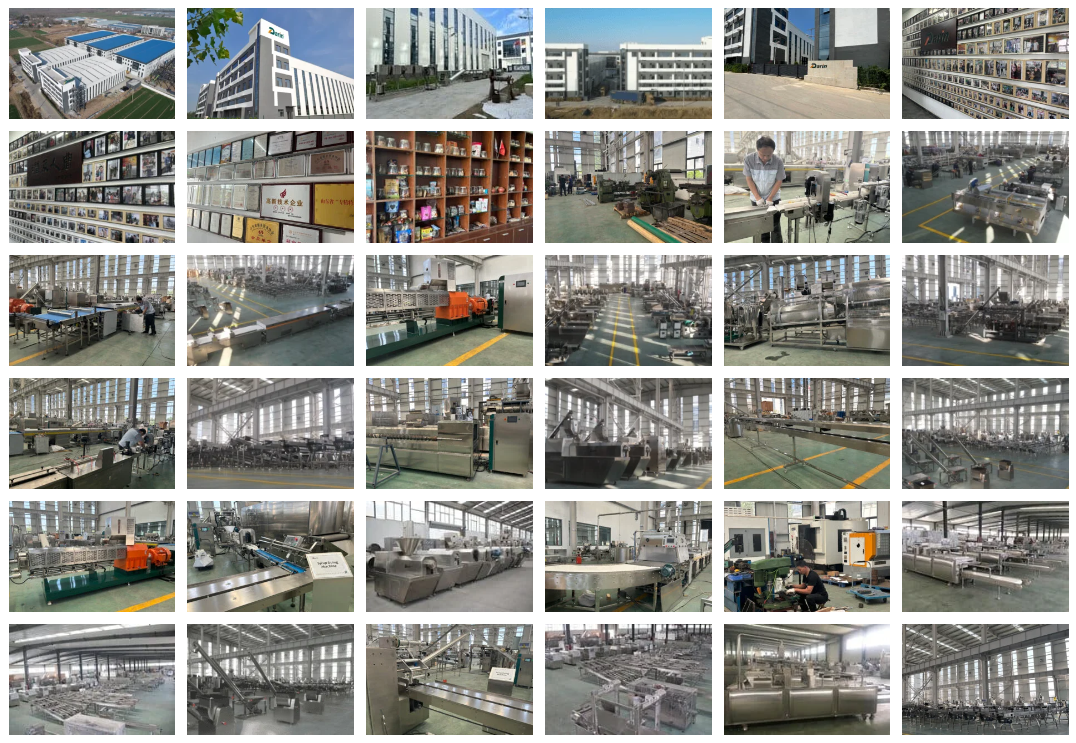
Companies like Darin Machinery are at the forefront of this transformation, offering turnkey chew production lines capable of producing starch-based, meat-infused, vegan, and dental chews—all with global compliance and future-ready technology.
Let’s Build the Future of Chews Together
If you’re planning to start or expand your dog chew production facility, Darin Machinery can provide customized, turnkey solutions tailored to your market and capacity goals.
📩 Contact us today at darin4@darin.cn or visit https://petreatsmachine.com/ to discuss how we can help you launch or upgrade your production line successfully.