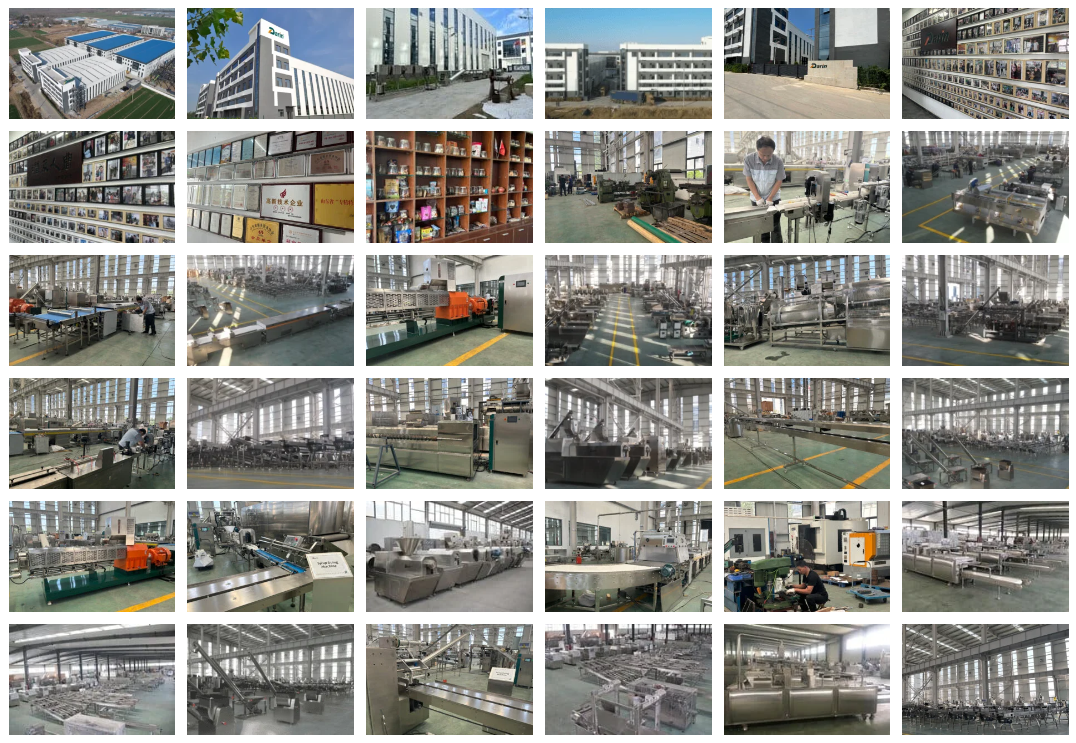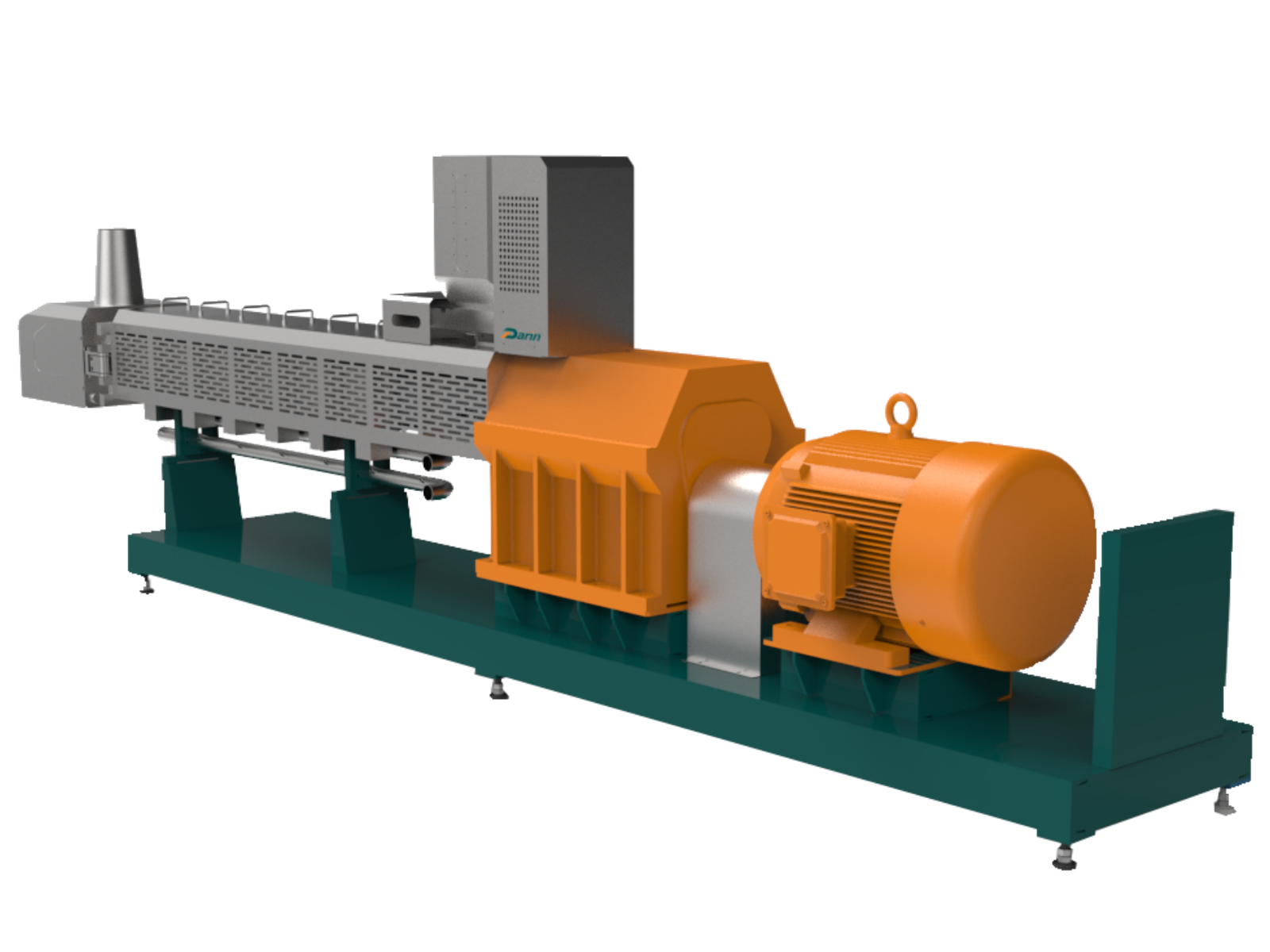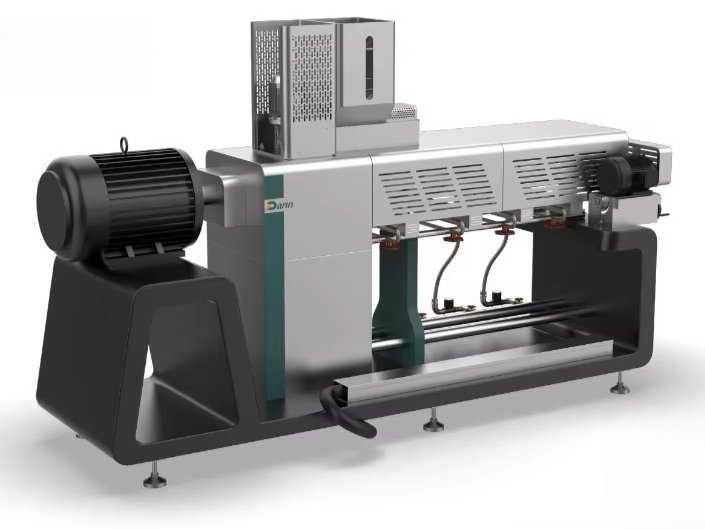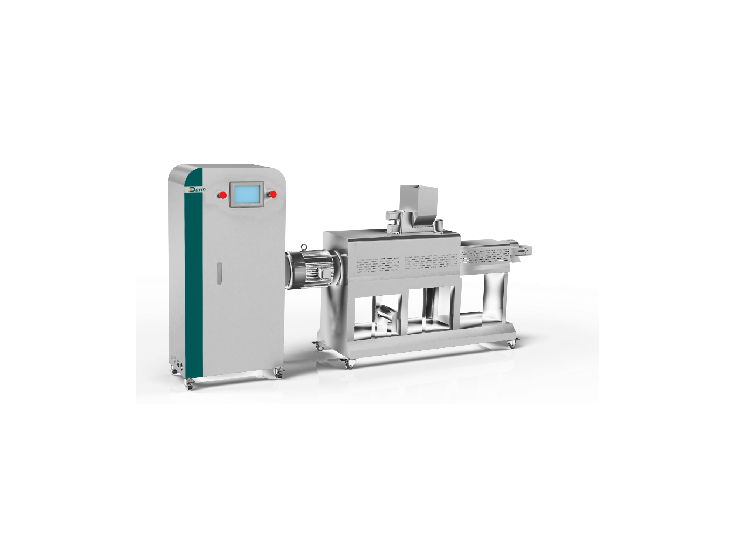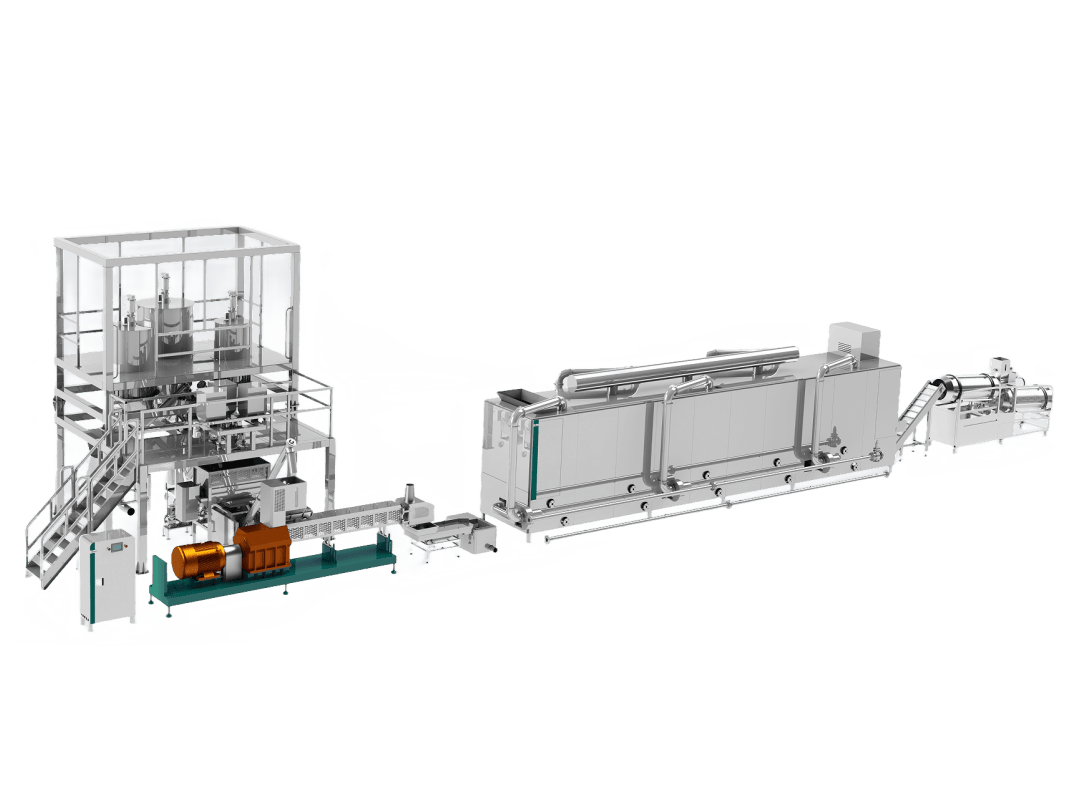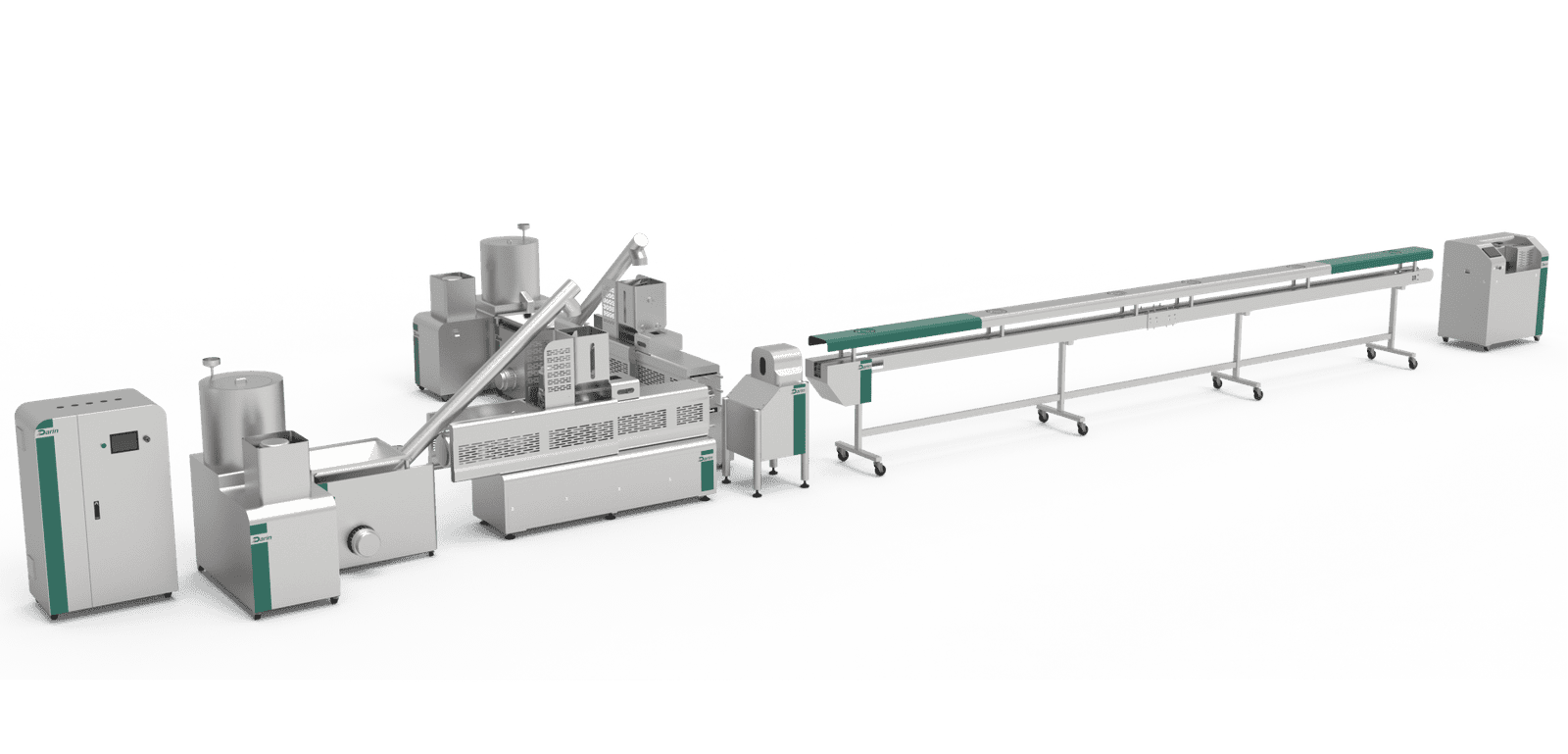

In today’s rapidly expanding pet food industry, manufacturers face intense pressure to deliver consistent, safe, and nutritionally balanced cat food that meets the demands of increasingly discerning consumers. Without a modern, well-designed production system, companies risk inconsistent product texture, uncontrolled nutrient loss, microbial contamination, high production waste, and escalating operational costs. Over time, these issues can erode brand trust, reduce competitiveness, and cut into profit margins.
A cat food production line solves these challenges by integrating automated, synchronized machinery to handle the entire process — from raw material intake to final packaging — with precision, hygiene, and efficiency. It ensures that every batch meets exact quality specifications, complies with international standards, and maximizes return on investment.
A cat food production line is a coordinated system of industrial machines designed to process raw ingredients into finished cat food — whether in dry kibble, semi-moist, or wet/canned format — through a series of controlled steps. These include ingredient storage and handling, grinding, mixing, pre-conditioning, extrusion or cooking, drying or sterilization, coating, cooling, and automated packaging. Each stage is engineered to maintain nutritional integrity, achieve consistent shape and texture, ensure food safety, and optimize efficiency for high-volume production.
For cat food manufacturers, mastering how a production line works is not just about knowing the equipment — it’s about designing an integrated process, selecting the right technology, and controlling each parameter to match product goals and market expectations. In the following sections, we will explore the entire production process in detail, with real-world examples from Darin Machinery’s global projects, comprehensive cost analysis, and actionable insights to help you make better investment decisions.
Cat food production lines can only produce dry kibble.False
Modern cat food production lines can produce various types, including dry, semi-moist, and wet formats, by adjusting recipes, process parameters, and machinery configurations.
1. Understanding the Cat Food Production Line Concept
A cat food production line is a fully integrated industrial system designed to transform raw materials — such as meat meal, fish meal, cereals, vegetable proteins, fats, vitamins, and minerals — into a finished cat food product ready for packaging and distribution.
It operates under controlled temperature, pressure, moisture, and mechanical shear to achieve the desired texture, nutritional profile, and safety standards.
Unlike small-scale or manual production, an automated line minimizes human error, improves efficiency, and ensures consistent results across large batches. The system can be designed to produce dry kibble, semi-moist food, or wet/canned food — or even a combination of them — depending on market demand.
2. The Three Main Categories of Cat Food & Their Process Differences
Before examining the workflow in detail, it’s important to understand that dry, semi-moist, and wet cat food differ not just in water content but also in formulation, processing method, shelf life, and equipment requirements.
| Cat Food Type | Moisture Content | Typical Shelf Life | Key Consumer Benefits | Primary Processing Method | Common Packaging |
|---|---|---|---|---|---|
| Dry (Kibble) | 8–10% | 12–18 months | Long storage stability, easy to handle, economical | Extrusion + drying + coating | Bags (1–20 kg), pouches |
| Semi-Moist | 25–35% | 6–9 months | Soft texture, high palatability, portion control | Extrusion/baking + partial drying | Pouches, trays |
| Wet (Canned/Pouched) | 70–85% | 12–36 months | High moisture for hydration, premium image, fresh taste | Cooking + retort sterilization | Cans, retort pouches |
3. General Production Flow for All Cat Food Types
While the specifics vary, all cat food production lines follow a core sequence of operations to ensure quality and efficiency.
- Raw Material Reception & Storage – Ingredients are received, tested for quality, and stored in silos or bins.
- Grinding – A hammer mill or roller mill reduces particle size for better mixing and extrusion performance.
- Mixing – Dry and wet ingredients are blended, with liquids such as water, fats, and flavor enhancers added.
- Pre-Conditioning (Dry/Semi-Moist) – Steam and water are injected to partially cook and hydrate ingredients.
- Extrusion or Cooking – High temperature and pressure cook the product while shaping it into desired forms.
- Drying or Sterilization – Dry products pass through multi-layer dryers; wet products undergo retort sterilization.
- Coating (Dry/Semi-Moist) – Fats, oils, and palatants are applied to enhance taste and aroma.
- Cooling – Product temperature is reduced to prevent condensation during packaging.
- Packaging – Fully automated systems weigh, fill, seal, and label the product in consumer-ready formats.
4. Workflow Differences Between Dry, Semi-Moist, and Wet Cat Food
| Step | Dry (Kibble) | Semi-Moist | Wet (Canned/Pouched) |
|---|---|---|---|
| Grinding | Fine particle size (0.5–1.0 mm) for uniform extrusion | Medium-fine (0.8–1.5 mm) | Coarse (1.0–2.0 mm) for texture |
| Mixing | Mainly dry ingredients + water | Dry + humectants (sugar, glycerin) | Wet mix with high water content |
| Cooking | Twin-screw extrusion at 110–150°C | Extrusion or baking at 90–120°C | Steam cooking or batch kettle |
| Moisture Reduction | Multi-layer dryer to 8–10% | Partial drying to 25–35% | No drying — sterilization instead |
| Coating | Vacuum or drum coating | Light surface coating | Not applicable |
| Shelf Life | 12–18 months | 6–9 months | 12–36 months |
5. Example: Dry Cat Food Process Flow in Detail
Let’s take dry kibble as an example to see the workflow in more detail:
- Ingredient Storage – Stainless steel silos for meat meal, grains, and other dry ingredients.
- Grinding – Hammer mill ensures fine particles for extrusion consistency.
- Mixing – Ribbon mixer combines dry and liquid ingredients evenly.
- Pre-Conditioning – Steam injection raises mix temperature and moisture before extrusion.
- Extrusion – Twin-screw extruder cooks and shapes kibble under precise conditions.
- Drying – Multi-layer dryer reduces moisture to safe levels.
- Coating – Vacuum coater applies fats and palatants.
- Cooling – Counterflow cooler reduces temperature to prevent condensation.
- Packaging – Automated packing line fills bags or pouches, seals, and labels.
6. Key Equipment in a Cat Food Production Line
A complete cat food production line is made up of specialized machinery, each designed to perform a critical function. The selection, capacity, and configuration of these machines determine production efficiency, product quality, and operational cost.
6.1 Core Equipment Overview
| Machine | Function | Capacity Range | Power (kW) | Material | Key Features | Typical Lifespan |
|---|---|---|---|---|---|---|
| Silo & Storage Bin | Ingredient storage | 5–50 m³ | N/A | SS304 or coated steel | Moisture control, pest-proof | 15+ years |
| Hammer Mill / Grinder | Particle size reduction | 500–5,000 kg/h | 22–90 | SS304 contact parts | Magnet separator, dust filter | 8–12 years |
| Ribbon Mixer | Dry ingredient blending | 500–3,000 kg/batch | 7.5–22 | SS304 | Liquid injection nozzles | 10+ years |
| Paddle Mixer | Wet/semi-moist mixing | 300–2,500 kg/batch | 7.5–18 | SS304 | Gentle mixing to preserve texture | 10+ years |
| Twin-Screw Extruder | Cooking & shaping | 200–5,000 kg/h | 45–200 | SS304 barrel, hardened screws | PLC control, quick die change | 15+ years |
| Multi-Layer Dryer | Moisture reduction | 500–6,000 kg/h | 15–75 | SS304 belts/trays | Multi-zone temperature control | 15+ years |
| Vacuum Coater | Fat/palatant infusion | 500–4,000 kg/h | 7.5–18 | SS304 | ±0.1% dosing accuracy | 12+ years |
| Retort Sterilizer | Wet food sterilization | 300–3,000 kg/h | 45–90 | SS304 | F0 ≥ 8 guarantee | 15+ years |
| Automatic Packer (VFFS) | Bag/pouch filling | 15–60 bags/min | 3–12 | SS304 | Servo drive, multi-head weigher | 10+ years |
6.2 Darin Machinery Engineering Strength
Darin designs equipment with:
- Modular construction for easy upgrades
- Food-grade stainless steel contact parts
- PLC + touchscreen for precise control
- Recipe management system for quick product changeovers
- Energy-optimized dryers for lower OpEx
7. Process Parameters & Quality Control Targets
Each stage of cat food production has critical control points to maintain quality and compliance.
7.1 Dry Cat Food Parameters
| Process Stage | Control Parameter | Target Value |
|---|---|---|
| Grinding | Particle size | 0.5–1.0 mm |
| Pre-conditioning | Moisture | 20–25% |
| Extrusion | Barrel temp | 110–150°C |
| Drying | Final moisture | 8–10% |
| Coating | Fat content | 3–7% |
7.2 Semi-Moist Parameters
| Process Stage | Control Parameter | Target Value |
|---|---|---|
| Grinding | Particle size | 0.8–1.5 mm |
| Mixing | Humectant level | 10–20% |
| Baking | Core temp | 90–120°C |
| Drying | Final moisture | 25–35% |
7.3 Wet Food Parameters
| Process Stage | Control Parameter | Target Value |
|---|---|---|
| Grinding | Particle size | 1.0–2.0 mm |
| Cooking | Core temp | ≥ 80°C |
| Retort | F0 value | ≥ 8 |
| Cooling | Final temp | ≤ 35°C |
8. Investment Cost & ROI Analysis
Capital expenditure (CapEx) depends on capacity, automation level, and product range.
Operating expenditure (OpEx) includes labor, energy, maintenance, and ingredients.
| Plant Size | Capacity | Estimated CapEx (USD) | OpEx (USD/h) | Payback Period |
|---|---|---|---|---|
| Small | 1 t/h | 250k–350k | 120–180 | 2.5–3 yrs |
| Medium | 3 t/h | 450k–650k | 280–350 | 2–2.5 yrs |
| Large | 5+ t/h | 700k–950k | 400–550 | 1.5–2 yrs |
9. Darin Machinery Global Case Studies
Case Study 1 – 5 t/h Dry Line in Poland
- Challenge: High energy costs & inconsistent moisture
- Solution: Energy-optimized multi-layer dryer + real-time moisture sensors
- CapEx: USD 820,000
- Annual Savings: USD 96,000 (energy + reduced product loss)
- Payback Period: 1.9 years
Case Study 2 – 2.5 t/h Wet Line in Thailand
- Challenge: Product spoilage in tropical distribution
- Solution: Retort with automatic overpressure control + improved seam integrity
- CapEx: USD 540,000
- Complaint Reduction: 82%
- Payback Period: 2.2 years
10. Quality Control & Compliance in Cat Food Production Lines
High-quality cat food production requires strict quality control at every stage to ensure safety, nutritional integrity, and regulatory compliance. Darin Machinery designs lines to meet or exceed ISO 22000, HACCP, CE, and FDA standards, enabling products to enter major markets worldwide.
10.1 Critical Control Points (CCPs)
| Stage | Risk | Control Method |
|---|---|---|
| Ingredient Reception | Contaminants (metal, mold) | Sampling, lab testing, magnetic separation |
| Grinding | Foreign objects | Inline magnets & sieves |
| Extrusion/Cooking | Undercooked product | Temperature & pressure monitoring |
| Drying | Excess moisture | Inline moisture sensors |
| Coating | Over/under dosing | Automated dosing control |
| Packaging | Seal integrity failure | Vision inspection systems |
10.2 Product Testing & Documentation
- Nutritional Analysis: Protein, fat, fiber, ash, moisture
- Microbiological Tests: Salmonella, E. coli, mold, yeast
- Shelf Life Studies: Accelerated & real-time aging tests
- Batch Records: Traceability from raw materials to final shipment
11. Maintenance & Troubleshooting Guide
Regular maintenance ensures maximum uptime and extends equipment lifespan.
11.1 Preventive Maintenance Schedule
| Equipment | Daily | Weekly | Monthly |
|---|---|---|---|
| Extruder | Clean die/barrel | Check screw wear | Replace worn parts |
| Dryer | Remove debris | Inspect belts | Check motors & bearings |
| Coater | Flush oil lines | Calibrate nozzles | Inspect vacuum seals |
| Retort | Check gauges | Inspect seals | Pressure test vessel |
11.2 Common Issues & Solutions
| Issue | Likely Cause | Solution |
|---|---|---|
| Uneven kibble size | Worn die or feed inconsistency | Replace die, calibrate feeder |
| High final moisture | Dryer imbalance or overload | Adjust airflow & belt speed |
| Poor coating adhesion | Product too hot or wet | Adjust cooling before coating |
| Seal failures in pouches | Low sealing temp or contamination | Increase heat, clean sealing jaws |
12. Frequently Asked Questions (FAQ)
Q1: Can one production line make all three types of cat food?
Yes, with modular design and interchangeable processing units, a single facility can produce dry, semi-moist, and wet formats — though each requires specific equipment configurations.
Q2: How long does it take to install a Darin production line?
Typical installation and commissioning take 4–8 weeks, depending on complexity and local conditions.
Q3: What is the average payback period?
Most Darin installations achieve ROI in 1.5–3 years, depending on plant size and production volume.
13. Future Trends in Cat Food Production
The industry is evolving rapidly, and future-ready production lines will integrate:
- IoT-enabled monitoring for real-time performance tracking
- AI-based recipe optimization for cost savings without compromising quality
- Sustainable manufacturing with energy-efficient dryers and recyclable packaging
- High-meat formulations to meet premium consumer demands
- Alternative proteins such as insect meal for eco-conscious buyers
A cat food production line is a synchronized industrial system that turns raw materials into safe, nutritious, and appealing pet food at scale. By controlling every step — from ingredient intake to packaging — manufacturers can ensure product consistency, meet global safety standards, and maximize profitability.
With Darin Machinery’s turnkey solutions, you benefit from:
- Proven engineering expertise in dry, semi-moist, and wet food processing
- Equipment that meets global compliance standards
- Automation and energy-saving designs for optimal ROI
- Custom recipes and market support for faster product launches
📞 Contact Darin Machinery today for a custom-engineered cat food production solution.
🌐 Visit: https://petreatsmachine.com
📧 Email: darin4@darin.cn