Cat owners and pet food manufacturers face a growing demand for safe, nutritious, and customized food options. Whether you're a pet parent looking to make healthy meals at home, a lab technician formulating feline diet trials, or a manufacturer scaling commercial production—selecting the right cat food machine is essential. Using the wrong type of equipment can lead to nutrient loss, poor texture, contamination, or inefficiencies. Fortunately, specialized cat food machines now exist for each scale of production. This guide outlines the types of machines available for home, lab, and commercial use—and how to choose the right one.
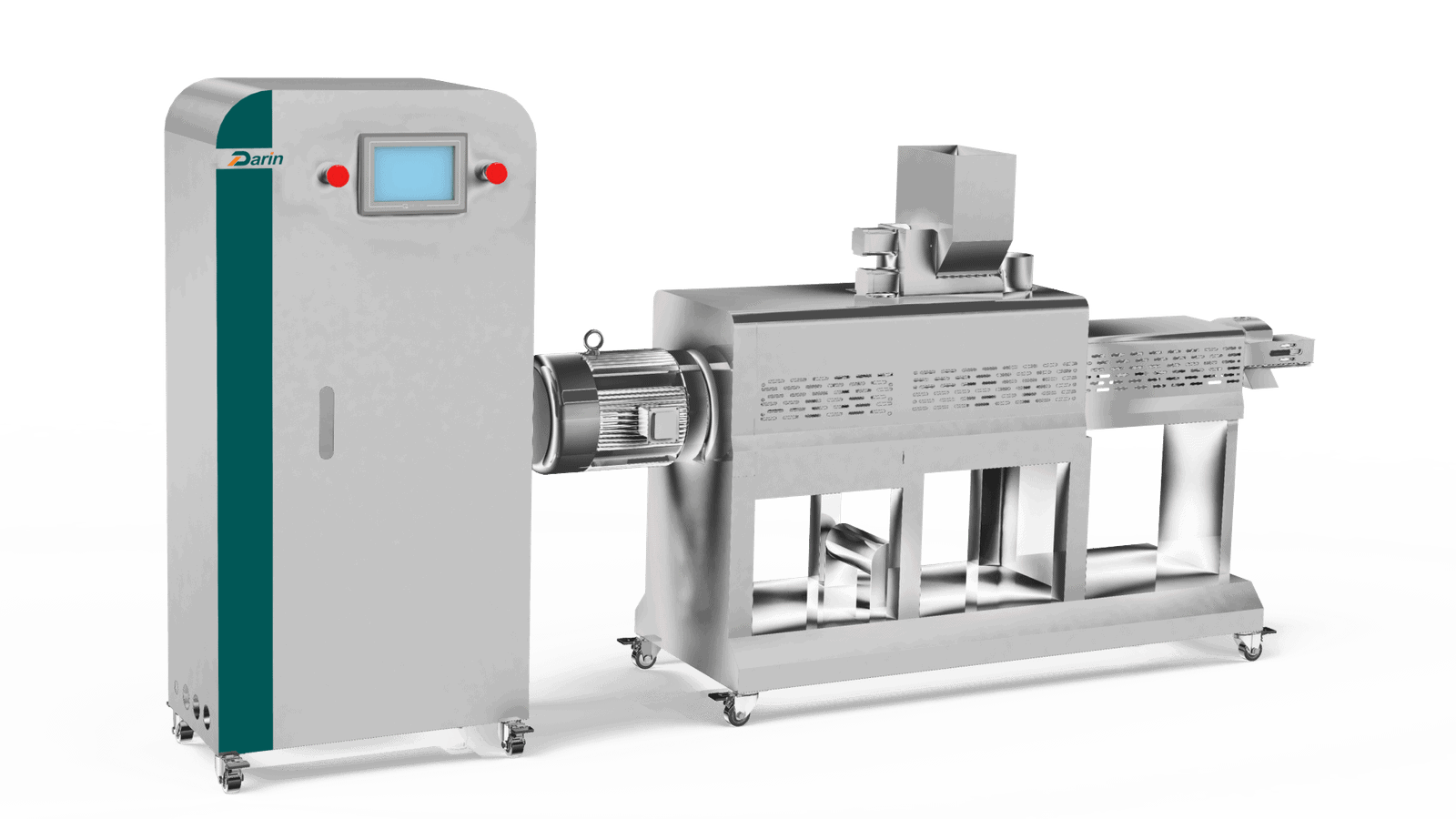
A cat food machine is a specialized piece of equipment designed to produce formulated cat food in various forms (kibble, wet, or treats) at different scales: small machines for home use focus on safety and ease, lab-scale machines prioritize precision and testing control, and commercial industrial machines support large-scale, automated production with high consistency, efficiency, and compliance.
Selecting the appropriate cat food machine depends entirely on your operational goal—DIY daily meals, scientific formulation testing, or mass production. In this guide, you’ll discover which machine suits your use case, the technologies involved, and the performance capabilities across scales.
Cat food machines are the same as general pet food machines.False
Cat food machines require specific design adjustments for feline nutrition and formulation behavior, which differs from general pet food.
🏠 Home Cat Food Machines: Safe and Simple Nutrition
Homemade cat food is gaining popularity among pet owners seeking better ingredient transparency, control over allergens, and customized nutrition. However, cats have unique dietary needs—high protein, low carbohydrate—which must be preserved during processing. The home cat food machine addresses this challenge.
Key Features of Home-Use Cat Food Machines
| Feature | Ideal Specification |
|---|---|
| Batch Size | 0.5 – 2 kg |
| Control System | Manual or digital with basic temperature control |
| Food Forms | Dry kibble, semi-moist, soft bites |
| Cleaning System | Easy disassembly, stainless steel |
| Output Speed | Low to moderate (5–10 kg/h) |
| Safety Features | BPA-free materials, auto-shutdown on overload |
Popular Machine Types:
- Mini Extruders for dry kibble shaping.
- Meat Grinders + Mixers for wet food and raw diets.
- Molding Machines with Air Dehydrators for treats.
Target Users: Cat owners, breeders, small batch formulators
Typical Cost Range: \$200–\$800
Case Note: A cat owner in Seoul reported switching from commercial food to using a mini cat food machine to make rabbit-based hypoallergenic kibble for their allergic cat. The transition reduced vet visits by 40%.
🧪 Laboratory Cat Food Machines: Precision for Research & Trials
When researching feline dietary science, formulation, and texture impact, lab-scale machines allow control and repeatability. Lab-grade cat food machines are engineered for experimental batch runs and data collection.
Lab-Scale Cat Food Equipment Essentials
| Capability | Why It Matters |
|---|---|
| Batch Accuracy | Supports dosing within ±0.1g |
| Parameter Control | Temperature, pressure, moisture, screw speed |
| Modular Design | Allows trial of various extruder screws and dies |
| Logging and Feedback Systems | Necessary for formulation optimization |
| Compliance Support | Ideal for veterinary and nutrition lab settings |
Equipment Types:
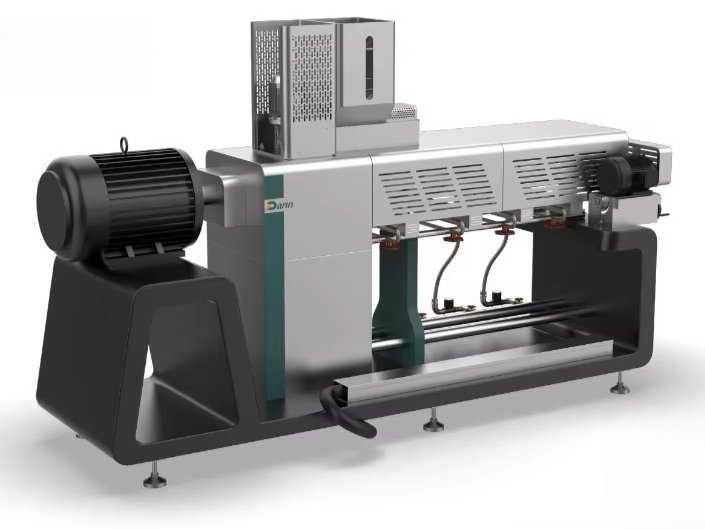
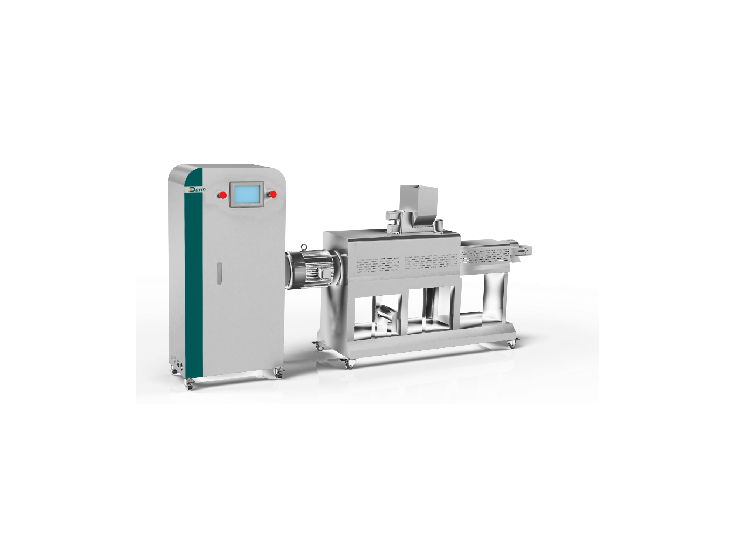
- Precision Benchtop Extruder (multi-zone temperature control)
- Programmable Mixers for staged addition of protein/fat/vitamins
- Controlled Dryers & Texture Testers
Typical Users: Pet food R\&D labs, universities, veterinary nutrition developers
Price Range: \$5,000 – \$30,000
Example: Controlled Formulation Trials
| Test Objective | Lab Machine Used | Output |
|---|---|---|
| Protein digestibility test | Twin-screw extruder | 750g kibble with 45% protein |
| Taurine stability at high temp | Modular dryer with sensors | 95% retention with slow-dry |
| Palatability test for flavors | Mixer + mold + dryer | 6 treat flavors sampled by cats |
🏭 Industrial Cat Food Machines: High-Volume, Hygienic, Automated
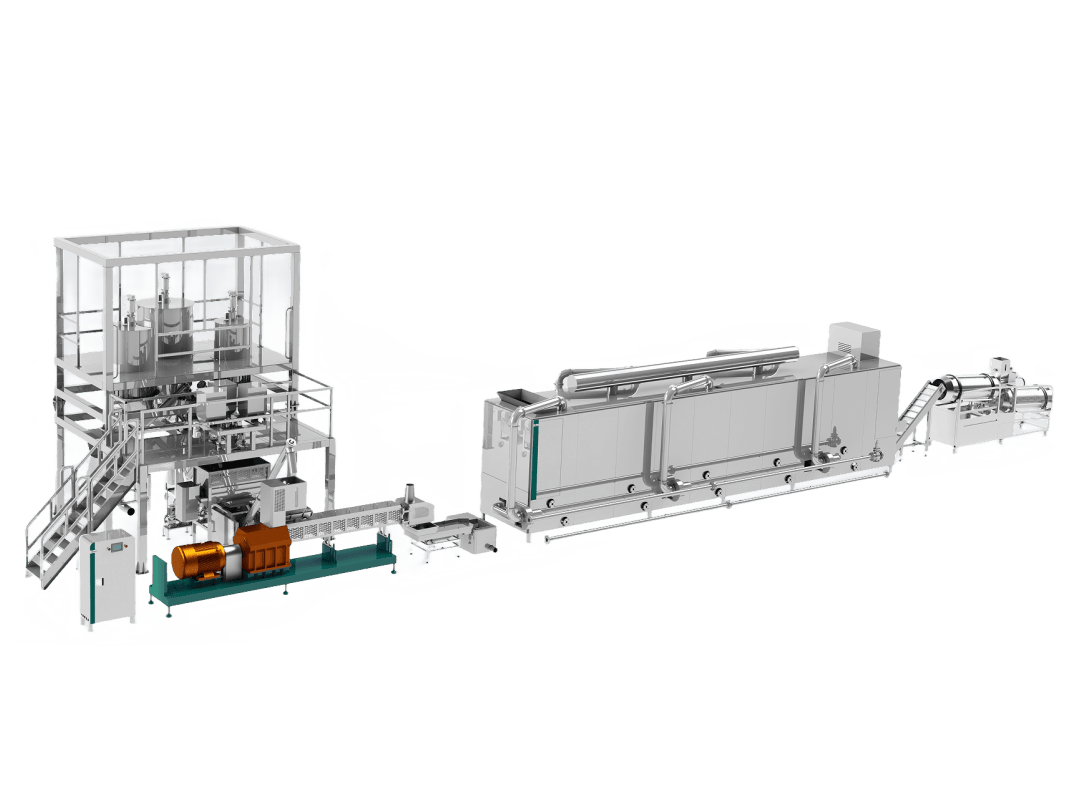
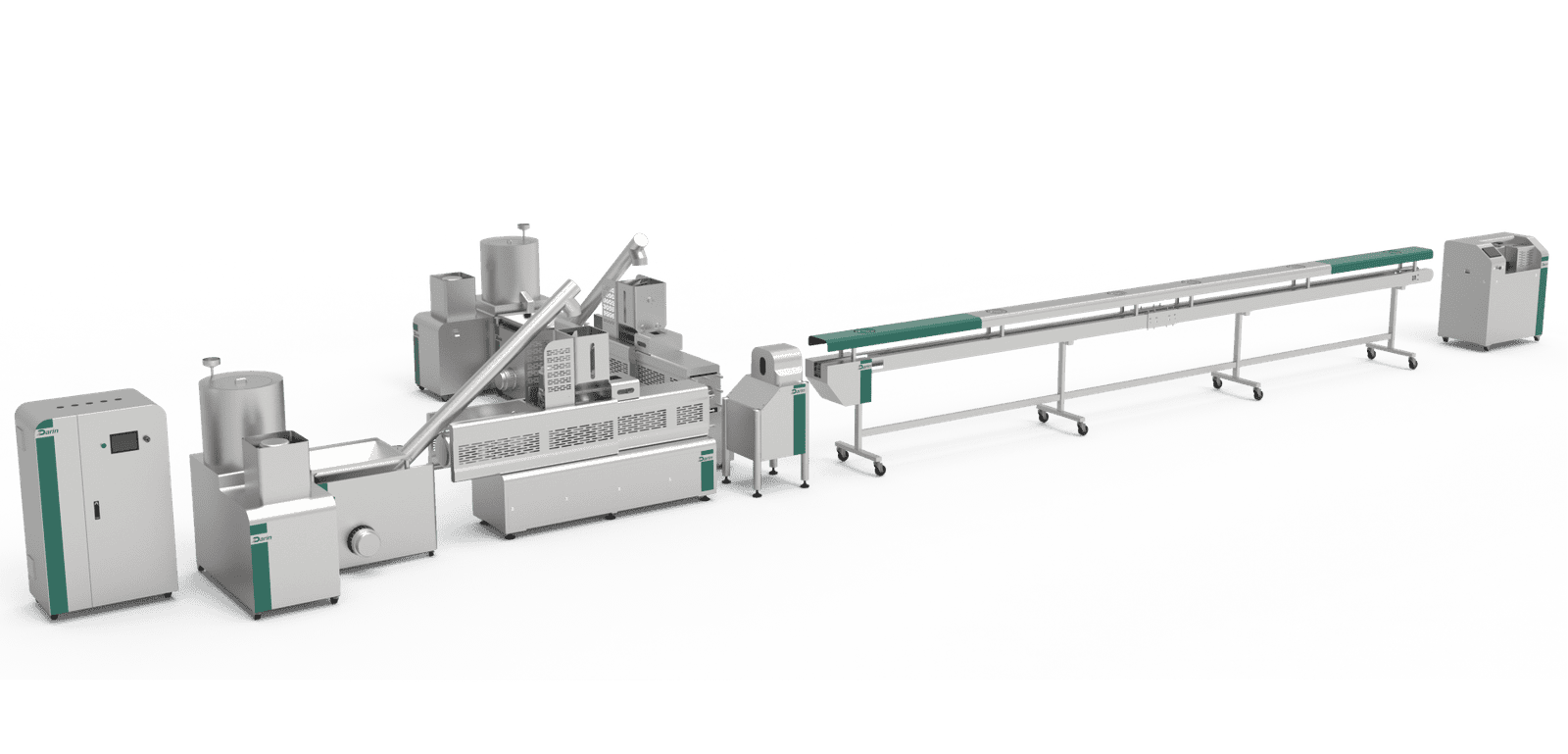
Industrial machines are designed for processing hundreds to thousands of kilograms per hour, with full automation and sanitation compliance. Cat food processing plants typically include multiple integrated systems: mixing, extruding, drying, coating, and packaging.
Features of a Commercial Cat Food Line
| Component | Description |
|---|---|
| Ingredient Feed System | Weighing, mixing of meat meal, grains, supplements |
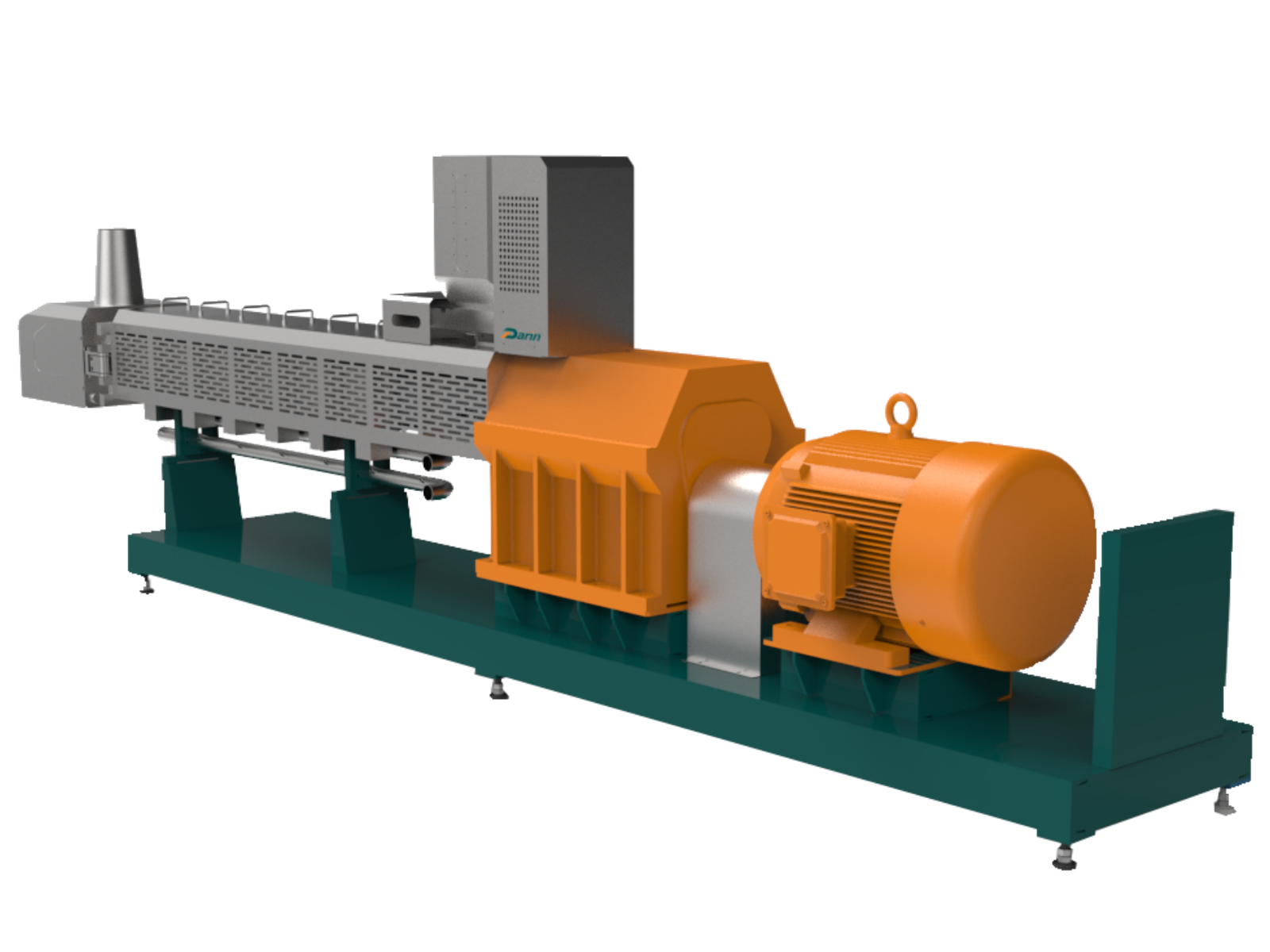
| Twin-Screw Extruder | Precision shaping and cooking with high protein inputs |
| Multilayer Belt Dryer | Gentle drying to preserve nutrients, adjustable airflow |
| Liquid Coating System | Sprays fats, flavors, and taurine post-extrusion |
| Cooling & Sifting Unit | Cools kibble and removes crumbs or contaminants |
| Packaging Line | Weighs and seals in airtight bags |
Scalable Outputs:
| Scale | Capacity | Use Case |
|---|---|---|
| Small Commercial Line | 100–300 kg/h | Local brands, start-ups |
| Medium Industrial Line | 500–1,000 kg/h | Regional/national production |
| Large Industrial Line | 2,000–5,000+ kg/h | Multinational, private label |
Price Range: \$100,000 – \$700,000+
Case Study: A Thailand-based pet food company scaled to 2,000 kg/h production using a fully automated line with real-time moisture monitoring, reducing batch rejection by 22%.
Performance Comparison Chart
| Feature | Home Use | Lab Use | Industrial Use |
|---|---|---|---|
| Output Capacity | 0.5 – 2 kg | 0.1 – 2 kg/batch | 100 – 5,000 kg/h |
| Automation Level | Manual | Semi-automated | Fully automated |
| Cost | \$200–\$800 | \$5,000–\$30,000 | \$100,000–\$700,000+ |
| Regulatory Compliance | Optional | Required | Mandatory (HACCP, GMP) |
| Protein Sensitivity Control | Low | High | Very High |
📈 Nutritional and Processing Considerations for Cats
Unlike dogs, cats are obligate carnivores, meaning their food must contain high levels of animal protein and specific nutrients like taurine, arachidonic acid, and vitamin A.
| Nutrient | Processing Challenge | Machine Feature Needed |
|---|---|---|
| Taurine | Heat-sensitive | Post-extrusion coating or low-temp drying |
| Protein (40%+) | May cause sticking in extrusion | Dual-screw with pressure balancing |
| Moisture Control | Affects shelf-life | Inline moisture sensors and adjustable airflow |
Industrial cat food machines often use real-time analytics to ensure each batch meets the nutritional profile and regulatory standards.
Final Summary: Cat Food Machines by Application
Choosing the right cat food machine means understanding your scale, product form, and nutritional goals. Home users should focus on safe, easy-to-clean machines for small batches. Labs need precision and data logging. Industrial facilities must prioritize hygiene, automation, and nutrient preservation. No matter your position in the supply chain, today’s cat food machines are smarter, safer, and more scalable than ever.
📞 Need Help Choosing the Right Cat Food Machine?
We manufacture and supply cat food machines tailored to home kitchens, R\&D labs, and commercial factories. Get in touch today for expert guidance, machine specs, and pricing based on your production goals.