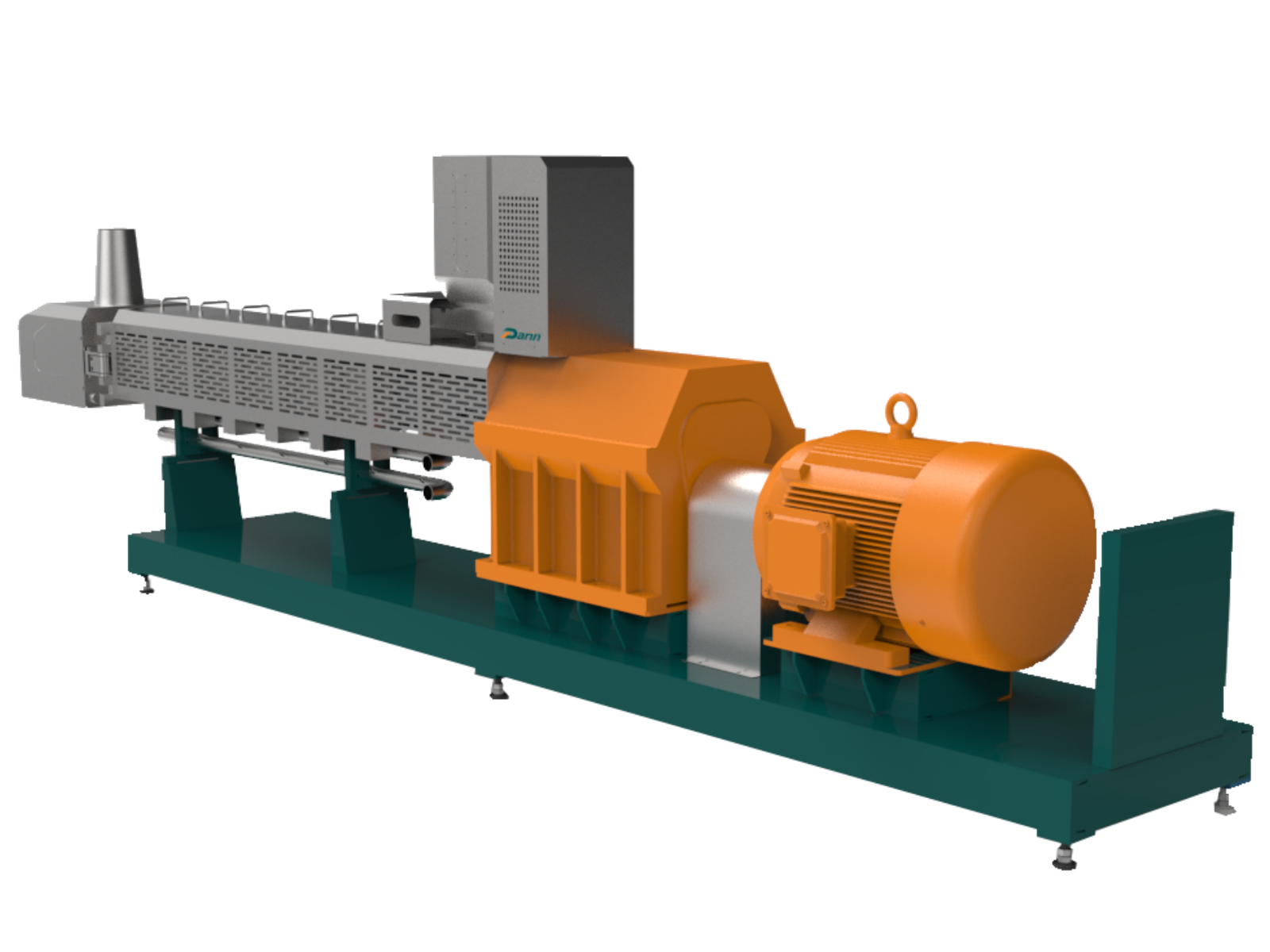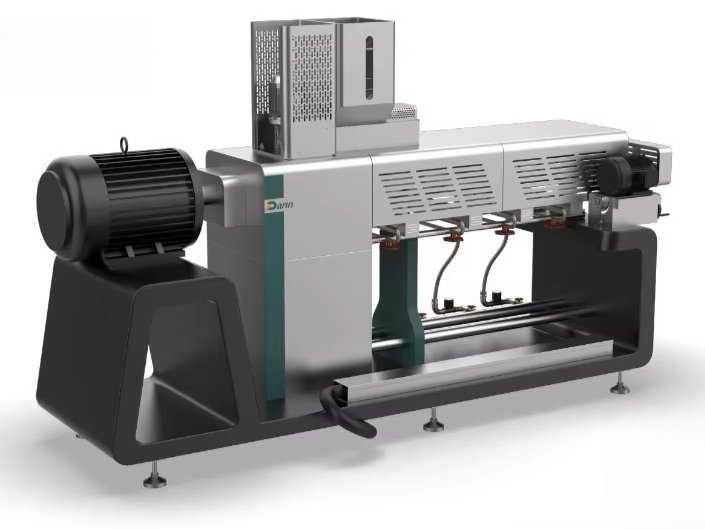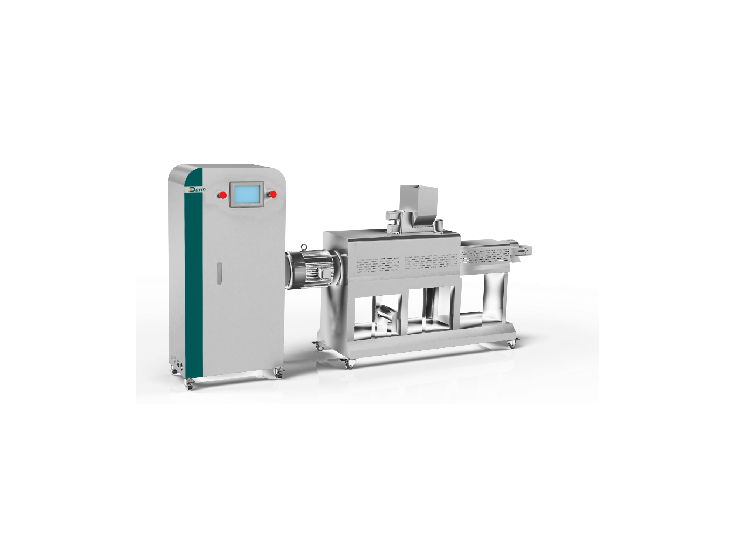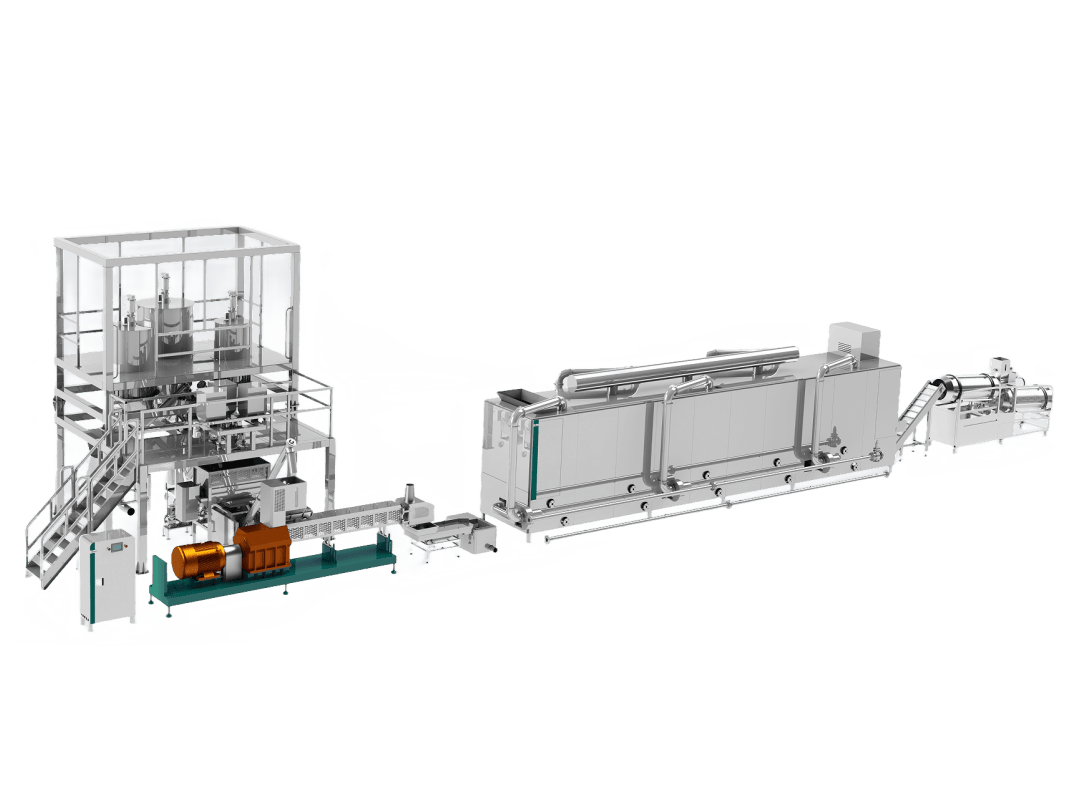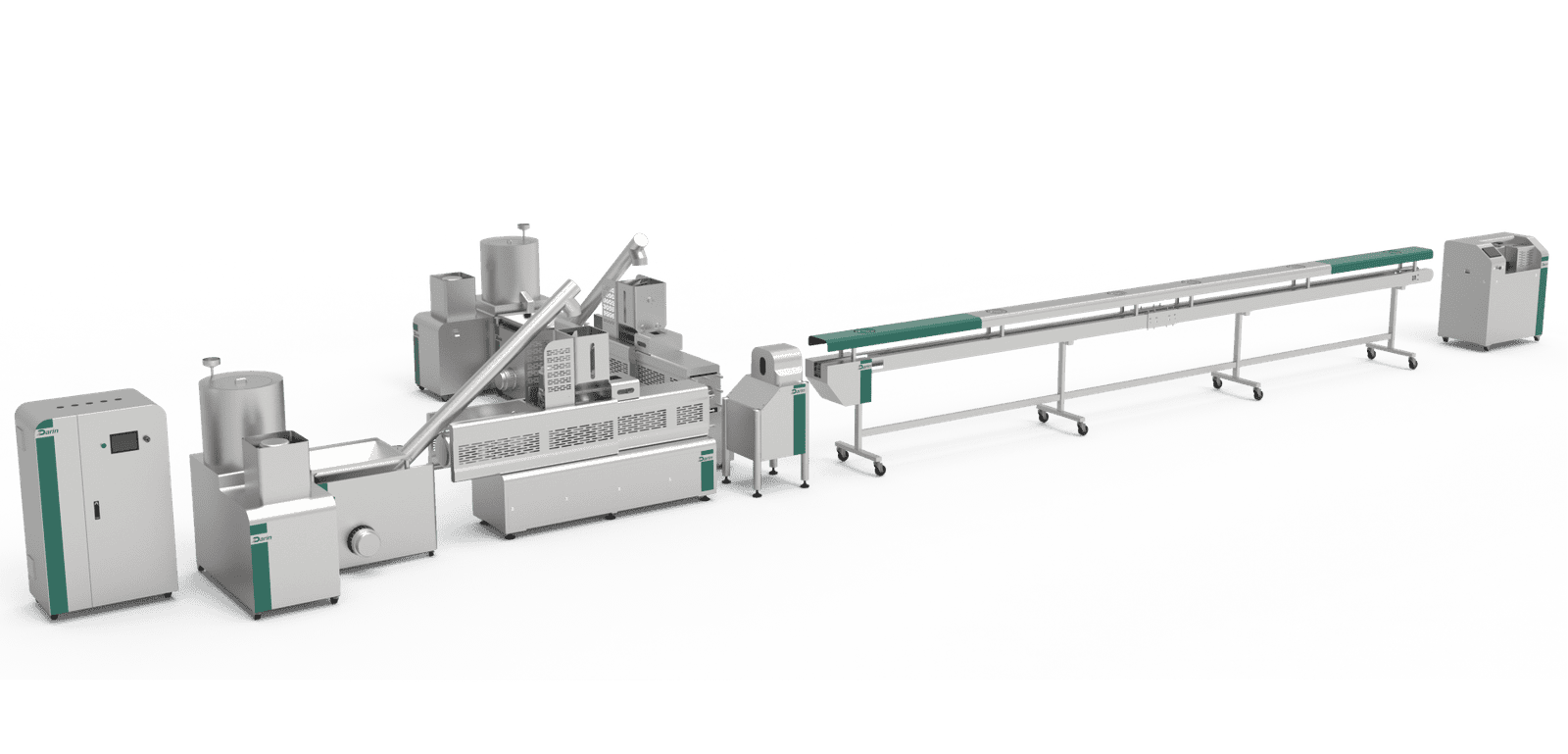

In the global pet food market, dog chew manufacturers often face a common and costly pain point: choosing the right dog chew making machine among dozens of technologies, each suited for completely different chew types such as extruded chews, rawhide bones, jerky treats, kabobs, munchy sticks, or co-extruded meat-wrapped treats. The wrong selection leads to unstable product quality, production bottlenecks, high material waste, safety issues, and expensive downtime. Many new factories also underestimate the technical differences between machines, resulting in mismatched capacity, poor texture control, and frequent mechanical failures. The long-term consequences include low throughput, high operating cost, inconsistent chew hardness, and repeated customer complaints. Fortunately, with a proper understanding of machine categories, process flow, material behavior, and automation features, manufacturers can make a confident choice. This article provides a practical, deeply technical, and user-centered guide — the kind of guide a factory owner needs before investing $15,000 to $500,000 into a dog chew production line.
The best dog chew making machine depends entirely on the product category you want to produce: extruded starch chews require a twin-screw extruder, dental sticks require profile shaping, rawhide bones require hydraulic pressing systems, jerky treats require forming and baking lines, and kabob or meat-wrapped chews require co-extrusion and skewering machines. No single machine can produce all types, so the “best” machine is the one that aligns with your product recipe, texture, capacity needs, and market positioning.
Choosing the right system is not only a matter of machine type — it also depends on ingredient formulation, moisture level, hardness targets, chew size, production volume, energy efficiency, drying time, and your factory’s budget. Keep reading to understand the complete equipment comparison, detailed process steps, and how Darin Machinery’s solutions match your specific dog chew category.
One machine can produce all categories of dog chews including extruded sticks, rawhide bones, jerky treats, and kabobs.False
Dog chew types have entirely different forming principles. Extruded chews require a twin-screw extruder, rawhide bones require hydraulic presses, jerky treats require forming and baking lines, and kabobs require co-extrusion or skewering systems, so no single machine design can cover all categories.
Understanding Dog Chew Categories Before Choosing a Machine
Before identifying the best dog chew making machine, we must first understand the major categories of dog chews because each category demands a completely different production technology. Pet food manufacturers often confuse these categories, leading to equipment selection errors that cost tens of thousands of dollars in wasted investment. In global dog chew production, products can be broadly grouped into six primary classes, each with unique mechanical, thermal, and structural requirements.
1. Extruded Dog Chews (Starch-Based)
These include dental sticks, veggie chews, twisted sticks, ridged chews, and many semi-moist stick-shaped treats. Their structure comes from gelatinized starch and controlled expansion using a twin-screw extruder. The extruder determines texture hardness, elasticity, color uniformity, and surface smoothness. If a manufacturer wants a product that has a glossy surface and high-density chew texture, a low-expansion configuration is required. If a chew must be softer and slightly expanded, screw geometry and moisture injection must be adjusted. This category represents nearly 60% of global dog chew production, making extruders the most common machine type.

2. Rawhide Bones and Pressed Chews
Rawhide chews rely on collagen fiber structure from cattle hides. They cannot be extruded. Instead, sheets of cleaned rawhide are soaked, rolled, shaped, knotted, or pressed using hydraulic forming machines. This process is highly mechanical, not thermal. A factory producing rawhide bones often uses washing tanks, dehairing machines, cutting systems, rolling machines, and multi-cavity hydraulic presses. Production capacity depends on press tonnage, mold count, and drying chamber size.

3. Munchy Sticks
These chews use ground rawhide fibers mixed with gelatin or starch binders. Long strands are extrusion-molded or mechanically rolled into stick shapes. The textures are lighter and more porous than true rawhide bones. Their machine requirements are less intense than rawhide bones but more specific than simple extruders. Many factories use munchy-stick forming machines followed by dryers.
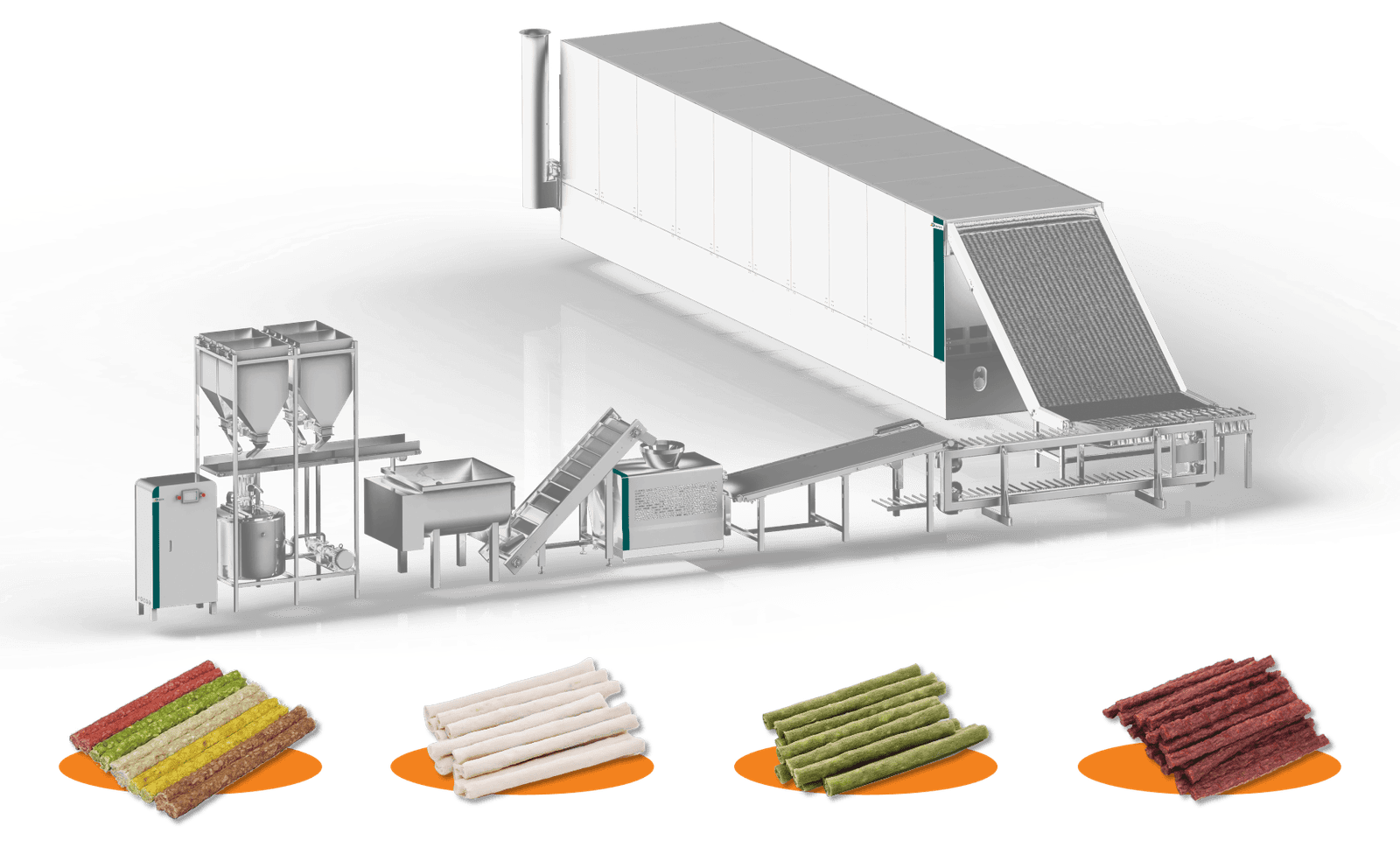
4. Jerky-Type Dog Treats
Jerky treats are produced using meat forming, flattening, cutting, and baking. There is no extrusion or pressing; texture is controlled by moisture content, protein denaturation, and baking curve. Machines include vacuum tumblers, meat paste extruders, forming machines, ovens, and drying tunnels. Jerky treats are high-value and premium — requiring stricter food hygiene standards.

5. Kabob, Co-Extruded, or Wrapped Chews
These trending products combine starch sticks or rawhide rods wrapped with real meat. The machine must allow co-extrusion, wrapping, or mechanical skewering, depending on product style. These lines require excellent precision because meat wrapping thickness affects both raw materials cost and drying time.

6. Veggie Chews and Novelty Shapes
These shapes require multi-color extrusion, molding, or 3D forming dies. They may include carrot powder, pumpkin, spinach, or sweet potato. The machine must offer shape flexibility and color-management during extrusion.
TABLE 1: Dog Chew Categories vs. Required Machinery
| Dog Chew Type | Main Machine Required | Key Process | Texture Outcome | Typical Factory Type |
|---|---|---|---|---|
| Extruded Chews | Twin-screw extruder | Thermal gelatinization | Dense / elastic | Large-scale |
| Dental Sticks | Extruder + profile dies | Shaping + cutting | Hard surface | Medium / large |
| Rawhide Bones | Hydraulic press | Mechanical forming | Fibrous toughness | Specialized |
| Munchy Sticks | Forming/rolling machine | Compression forming | Light, chewable | Small / medium |
| Jerky Treats | Forming + drying | Dehydration | Meaty, soft | Premium factories |
| Kabob / Co-extruded Chews | Co-extrusion + skewering | Wrapping / coating | Two-layer texture | Export-focused |
How Each Dog Chew Making Machine Works (Deep Technical Breakdown)
Understanding how different dog chew machines operate is the single most important step in selecting the best equipment for your factory. Each dog chew category relies on a fundamentally different mechanical principle — extrusion, pressing, rolling, forming, or dehydration. Many new manufacturers assume all dog chews are “extruded,” but this is incorrect and leads to poor production outcomes. In reality, mechanical forces, thermal profiles, moisture levels, and protein–starch interactions differ dramatically between categories. Below is a complete engineering explanation of how each major dog chew system works from a machinery perspective.

1. Twin-Screw Extruder for Starch-Based Dog Chews (Dental, Veggie, Sticks, Twisted Chews)
Twin-screw extrusion dominates the dog chew industry because it delivers precise thermal control, strong shear forces, and continuous production throughput. A twin-screw extruder works by mixing, heating, cooking, kneading, shearing, and shaping ingredients into a dense, chewable texture.
How It Works
-
Feeding:
Powder ingredients (starch, flour, meat meal, vegetable powder, gelatin) enter the hopper. A loss-in-weight feeder ensures exact material dosing (±0.5% accuracy). -
Preconditioning (Optional):
Steam and warm water hydrate the formula before entering the extruder. This improves gelatinization and reduces energy consumption by 15–20%. -
Extrusion:
Inside the extruder barrel, rotating screws compress and heat ingredients to 110–160°C. Thermal energy + mechanical shear converts raw starch into a highly elastic chew mass. -
Shaping:
The cooked dough exits the die head. Shape options include:- Dental stick grooves
- Star shapes
- Twisted two-color chews
- Flat strips
- Hollow tubes
- Puffed or dense sticks
-
Cutting:
A rotary cutter slices the chews at adjustable lengths from 5 cm to 30 cm. -
Drying:
Hot-air dryers remove moisture to stabilize texture and prevent microbial growth.
Why Extrusion Works Well
- Highly adjustable: moisture, screw speed, die pressure.
- Can create many shapes with simple die swaps.
- Offers high throughput: 80–500 kg/h.
- Precise control over hardness and elasticity.
2. Hydraulic Press for Rawhide Bones
Rawhide bones cannot be extruded. The structure comes from the original collagen matrix of cattle hides. Hydraulic presses deliver the massive pressure required to bind the fibers into a solid chew.
How It Works
-
Rawhide soaking & cutting
Sheets of rawhide are washed, softened, trimmed, and rehydrated. -
Rolling or folding
Operators roll or fold the hides into shape. -
Hydraulic pressing
A steel mold (bone shape, donut, shoe, twist) is loaded into the press.
Press force: 20–80 tons, depending on bone size. -
Mold locking
High pressure compacts the collagen layers. -
Drying
Bones enter large batch dryers or conveyor drying lines.
Why Pressing Works
- Maintains natural collagen fibers
- Creates very hard, long-lasting chews
- Supports many sizes and shapes (2–12 inch)

3. Mechanical Forming Machine for Munchy Sticks
Munchy sticks are made from ground rawhide fibers combined with starch or gelatin binders. Their forming process is less complex than rawhide bones but more specialized than basic extrusion.
How It Works
-
Fiber mixing
Ground rawhide fibers are blended with binders. -
Compression forming
The dough is pushed through cylindrical channels. -
Rolling
Sticks are rolled to ensure uniform surface and density. -
Cutting & Drying
Sticks are automatically cut, then dried to 12–16% moisture.
This system is economical and ideal for lightweight chew sticks.
4. Jerky Treat Forming + Baking Lines
Jerky treats do not rely on mechanical pressure — they rely on protein denaturation and controlled dehydration.
How It Works
-
Meat grinding
Chicken, duck, beef, or fish meat is ground. -
Forming
The meat is pressed into strip shapes or molded patterns. -
Baking
Tunnel ovens or batch ovens remove water slowly:- 65–85°C for several hours
- Airflow 1–2 m/s
- 40–60% relative humidity
-
Cooling & packing
After drying, treats reach 18–22% moisture.
Jerky lines produce premium, high-value treats.

5. Kabob / Wrap / Co-Extruded Chew Lines
These trending products combine a chew stick base with a real-meat outer layer.
How It Works
-
Base stick production
Extruded or rawhide sticks serve as the core. -
Meat paste preparation
Chicken or duck meat paste is seasoned and homogenized. -
Co-extrusion or winding
- Co-extrusion: Meat layer is extruded around a central stick
- Winding: Machine wraps meat strips in spirals
- Skewering: Meat cubes are skewered onto sticks (kabob style)
-
Drying
Slower drying prevents cracking of the outer layer.
These products command the highest export margins.
TABLE 2: Machine Type vs. Production Principle
| Machine Type | Production Method | Temperature | Pressure | Moisture Control | Typical Output |
|---|---|---|---|---|---|
| Twin-screw extruder | Thermal cooking + shaping | 110–160°C | Medium pressure | High precision | 80–500 kg/h |
| Hydraulic press | Mechanical compression | Room temp | Very high (20–80T) | Medium | Mold-dependent |
| Munchy forming | Low-heat compression | 25–50°C | Low-medium | Moderate | 60–180 kg/h |
| Jerky forming line | Protein denaturation by heat | 60–90°C | None | Critical | 50–300 kg/h |
| Kabob line | Co-extrusion or wrapping | 30–70°C | Low | High | 40–180 kg/h |
Step-by-Step Production Processes for Every Dog Chew Type
Selecting the best dog chew making machine requires more than understanding equipment categories; you must also understand the complete production workflow for each chew type. Each workflow contains a series of engineering steps involving mixing, hydration, thermal transformation, mechanical forming, drying, shaping, and texture stabilization. These steps determine chew hardness, elasticity, shelf life, and visual quality — all of which directly impact your brand reputation and customer satisfaction.
Below are the full operational sequences for all major dog chew categories.
Step-by-Step Process for Extruded Dog Chews (Dental Sticks, Veggie Chews, Twisted Chews)
Extruded dog chews account for the largest share of the global chew market due to their high efficiency, wide shape variety, scalable production, and competitive raw material cost. A well-designed extrusion workflow ensures product uniformity and minimal waste.
1. Ingredient Preparation
Raw materials include starch, wheat flour, cornmeal, gelatin, glycerin, colorants, vegetable powders, and functional additives. Moisture level is standardized at 10–12% for optimal extrusion.
2. Weighing & Batching
High-precision batching systems ensure accuracy within ±0.3%. Incorrect batching can cause:
- Unstable texture
- Overexpansion
- Die blockage
- Poor chew hardness
Automated batching improves consistency across shifts.
3. Pre-Mixing
Dry powder is homogenized for 3–5 minutes to avoid localized clumping. Uniform particle distribution enhances hydration efficiency inside the extruder barrel.
4. Pre-conditioning
A continuous preconditioner injects steam and water to start hydration and gelatinization. Benefits:
- Reduces extruder load by 15–20%
- Improves starch cook ratio
- Enhances chew elasticity
Preconditioning temperature: 60–85°C.
5. Feeding Into the Twin-Screw Extruder
The mixture enters the extruder at a controlled feed rate. Overfeeding causes torque spikes; underfeeding reduces barrel pressure.
6. Extrusion Cooking
Inside the barrel:
- Temperature rises to 110–160°C
- Screw speed 150–450 rpm
- Moisture 22–30%
- Shear energy cooks starch
This creates a dense chew structure that is non-puffed and has strong bite resistance.
7. Die Shaping
Shaping options include:
- Cross shapes
- Multi-groove dental cuts
- Hollow rings
- Twisted double-color profiles
Die temperature must remain above 90°C to prevent surface roughness.
8. Rotary Cutting
A high-speed cutter slices chews into exact lengths. Length consistency deviation should be < 0.5 cm.
9. First Cooling Conveyor
Cooling stabilizes density before entering dryers. Forced-air cooling lowers surface temperature to 40–55°C.
10. Drying Phase
Multi-layer dryers reduce moisture to 12–18% depending on product category. Key variables:
- Hot air temperature: 90–130°C
- Humidity control: 20–35% RH
- Residence time: 30–120 minutes
Improper drying causes cracks and internal voids.
11. Secondary Cooling & Equilibration
Chews rest for 2–6 hours in a controlled environment. Moisture equalization prevents texture brittleness.
12. Packing
Final moisture: 14–18%.
Oxygen absorbers can be added for premium products.
TABLE 3: Extrusion Process Variables
| Step | Critical Variable | Target Range | Impact on Product |
|---|---|---|---|
| Mixing | Uniform blending | 95–99% distribution | Texture consistency |
| Preconditioning | Temperature | 60–85°C | Gelatinization rate |
| Extrusion | Barrel heat | 110–160°C | Density + hardness |
| Screw speed | RPM | 150–450 | Surface smoothness |
| Drying | Moisture | 12–18% | Shelf life |
Step-by-Step Process for Rawhide Bones
(15-Step Technical Workflow)
Rawhide bone manufacturing is labor-intensive and requires precise mechanical control. The collagen fiber structure of cattle hide must be preserved throughout the process.
1. Rawhide Sourcing
High-grade cattle hide is selected. Thickness and fiber direction influence final chew hardness.
2. Cleaning & Dehairing
Large dehairing drums and chemical baths remove hair and residual flesh.
3. Trimming
Hides are cut to uniform thickness (2–5 mm). Non-uniform thickness leads to cracking during pressing.
4. Cutting into Strips
Laser cutters or blade cutters form strips sized for bone folding.
5. Soaking
Hydration tanks rehydrate rawhide for 6–12 hours until pliable.
6. Optional Whitening
Hydrogen peroxide or food-safe whitening agents may be applied for premium products.
7. Rolling
Strips are rolled into cylinders. This is the base for knotted bones and pressed bones.
8. Knotting (for knotted bones)
Operators tie knots at both ends manually or semi-automatically.
9. Mold Loading
Rolled or knotted hides are placed into steel molds of various shapes.
10. Hydraulic Pressing
Press force: 20–80 tons
Holding time: 3–20 seconds
This compacts fibers into a solid mass.
11. Mold Ejection
Bones are removed; operators check for defects.
12. First Drying
Primary drying reduces moisture from 45–55% to 18–25%.
13. Optional Color Coating
Flavored coatings such as:
- Chicken glaze
- Beef flavor
- Honey
- Milk
Coated bones require additional drying.
14. Final Drying
Final moisture target: 12–14%.
15. Packaging
Bones are metal-detected, sorted, and packed.
TABLE 4: Rawhide Bone Production Parameters
| Step | Parameter | Typical Value | Notes |
|---|---|---|---|
| Pressing | Ton pressure | 20–80T | Large bones need ≥50T |
| Drying | Final moisture | 12–14% | Prevents mold growth |
| Rawhide thickness | mm | 2–5 mm | Impacts hardness |
Step-by-Step Process for Munchy Sticks
1. Rawhide Fiber Grinding
Low-speed grinders convert rawhide scraps into uniform fibers.
2. Mixing
Fibers mix with starch, gelatin, or CMC binders.
3. Color Addition
Multiple colors can be added for visual appeal.
4. Forming
Mechanical forming channels compress fibers into rods.
5. Rolling
Final shaping improves surface finish.
6. Cutting
Length accuracy: ±3 mm.
7. Drying
Drying temperature: 65–100°C
Time: 1–3 hours.
8. Packing
Final moisture: 14–18%.
Step-by-Step Process for Jerky Treats
1. Meat Selection
Chicken, duck, beef, or fish.
2. Grinding
6–8 mm plate grinding.
3. Mixing
Salt, sugar, sorbate, and vegetable powders added.
4. Forming
Sheet or strip formers shape the jerky.
5. Pre-Drying
40–50°C to set surface texture.
6. Baking
65–85°C for 2–6 hours depending on thickness.
7. Final Drying
Moisture target: 18–22%.
8. Cooling
Rapid cooling to prevent condensation.
9. Cutting
Uniform strip size ensures even drying.
10. Packing
Vacuum bags for premium jerky.
Step-by-Step Process for Kabob / Meat-Wrapped Chews
1. Base Stick Production
Extruded stick or rawhide rod.
2. Meat Mince Preparation
Meat is minced to ≤3 mm.
3. Binder Addition
Starch, gelatin, and gums improve adhesion.
4. Homogenization
Ensures consistent wrapping.
5. Meat Wrapping / Co-Extrusion
Thickness controlled to ±0.3 mm.
6. Spiral Winding (Optional)
Mechanical spiral wrapping systems available.
7. Skewering (Kabob Style)
Meat cubes skewered automatically.
8. Pre-Drying
30–40°C to prevent cracks.
9. Slow Drying
55–70°C for 3–8 hours.
10. Final Drying
Moisture 18–20%.
11. Cooling
Prevents surface condensation.
12. Packing
High-end export markets prefer nitrogen flushing.
CHART 1: Drying Time vs. Moisture Reduction Curve (Simplified)
| Product Type | Initial Moisture | Final Moisture | Average Drying Time |
|---|---|---|---|
| Extruded Chews | 22–30% | 14–18% | 40–120 min |
| Rawhide Bones | 45–55% | 12–14% | 6–24 hrs |
| Munchy Sticks | 25–35% | 14–18% | 1–3 hrs |
| Jerky Treats | 65–75% | 18–22% | 3–8 hrs |
| Kabob Chews | 55–65% | 18–20% | 4–10 hrs |
Which Dog Chew Making Machine Is Truly “Best” for Your Factory?
Choosing the “best dog chew making machine” is not about picking the most expensive system or the one with the highest capacity. The best machine is the one that precisely aligns with your product category, market positioning, factory scale, ingredient formulas, and profitability goals. Many factories make the mistake of purchasing equipment based on features rather than product alignment, which often leads to mismatched texture, low throughput, and unstable quality.
This section provides a technical, data-backed comparison across all major dog chew machine types. Each machine serves a unique purpose, and no two categories are interchangeable. We will examine performance metrics, cost-benefit analysis, and operational capability to determine which machine type is ideal for various business scenarios.
Machine-by-Machine Technical Comparison
Below is the engineering-level breakdown of how each machine performs under real factory conditions.
1. Twin-Screw Extruder for Extruded Chews (Dental, Veggie, Twist, Sticks)
Ideal for:
- Dental sticks
- Veggie chews
- Soft/semi-moist sticks
- Twisted two-color chews
- Large-scale OEM factories
Strengths:
- Fastest production rate (80–500 kg/h)
- High shape flexibility (dozens of die options)
- Strong mechanical durability
- Precise control of chew hardness, elasticity, gloss
- Works with wide ingredient formulas
- Low labor requirement
Limitations:
- Cannot produce rawhide bones
- Requires moderate technical skill
- High power consumption (30–90 kW depending on model)
Machine Cost Range:
$25,000 – $180,000 depending on capacity and dryer size.
2. Hydraulic Press for Rawhide Bones
Ideal for:
- Rawhide bones
- Pressed bones
- Donut shapes
- Shoe shapes
- Knot bones
- Heavy-duty industrial factories
Strengths:
- Extremely hard chew texture
- High customer acceptance worldwide
- Long shelf life (low moisture)
- Durable collagen fiber structure
Limitations:
- Labor-intensive
- Rawhide requires long drying
- Slower per-unit production
- Cannot use starch-only formulas
Machine Cost Range:
$8,000 – $120,000 depending on press tonnage and mold quantity.
3. Munchy Stick Forming Machine
Ideal for:
- Affordable chew sticks
- Colorful compressed sticks
- Lightweight retail sticks
- Factories entering the chew market
Strengths:
- Very low machine cost
- Easy to operate
- Moderate energy consumption
- Uses inexpensive materials
Limitations:
- Limited shapes
- Lower premium positioning
- Not suitable for premium export markets
Machine Cost Range:
$4,000 – $25,000
4. Jerky Treat Forming + Baking Lines
Ideal for:
- Pure meat strips
- Chicken jerky
- Duck jerky
- Steak-like dog treats
- Premium grade export markets (USA, EU, Japan)
Strengths:
- Highest market selling price
- Premium texture and flavor
- Strong consumer demand
- Supports natural ingredient claims
Limitations:
- Requires strict hygiene standards
- Higher raw material cost
- Larger energy consumption in drying
- Slower production cycle
Machine Cost Range:
$15,000 – $350,000
5. Kabob / Co-Extruded / Wrapped Chew Machines
Ideal for:
- Meat-wrapped sticks
- Kabob sticks
- Spiral meat chews
- Co-extruded treats
Strengths:
- High market demand
- Strong visual appeal
- Premium product with high margins
- Good export performance
Limitations:
- Requires precise moisture control
- Drying must be slow to prevent cracking
- Some products require multiple machines (base stick + wrapping)
Machine Cost Range:
$12,000 – $150,000
Comparison Table — Which Machine Is “Best” for Your Product?
| Product Type | Best Machine | Market Level | Texture | Cost to Start | Production Speed | Difficulty | Notes |
|---|---|---|---|---|---|---|---|
| Dental Sticks | Twin-screw extruder | Mass market | Hard, elastic | Medium | Very Fast | Medium | Top-selling category |
| Veggie Chews | Multi-color extruder | Premium | Dense | Medium | Fast | Medium | Healthy-positioning brands |
| Rawhide Bones | Hydraulic press | Mass & export | Very hard | Medium | Slow | Hard | Longest-lasting chew |
| Munchy Sticks | Munchy forming machine | Budget | Light, crunchy | Low | Medium | Easy | Great entry-level line |
| Jerky Treats | Jerky forming + dryer | Premium | Meaty, semi-moist | High | Medium | Medium | Highest selling price |
| Kabob / Wrap | Co-extrusion or winding | Premium | Dual-layer | Medium-high | Medium | Medium | Strong export demand |
Energy Consumption Comparison (kWh per Hour)
Different machines consume energy differently due to mechanical load and thermal processing.
| Machine Type | kWh/hour | Notes |
|---|---|---|
| Twin-screw extruder | 30–90 kWh | Highest shear and heating demand |
| Hydraulic press | 1–5 kWh | Only short bursts during pressing |
| Munchy forming machine | 1–3 kWh | Minimal mechanical load |
| Jerky drying tunnel | 15–40 kWh | Long operating hours |
| Kabob line | 5–12 kWh | Depends on co-extruder type |
Capacity Comparison — Which Is Best for Scaling?
| Machine Type | Typical Output | Scalability Rating |
|---|---|---|
| Extruder line | 80–500 kg/h | ★★★★★ |
| Rawhide press line | 30–150 kg/h | ★★★☆☆ |
| Munchy stick line | 60–180 kg/h | ★★★★☆ |
| Jerky line | 50–300 kg/h | ★★★☆☆ |
| Kabob line | 40–180 kg/h | ★★★★☆ |
Extruders dominate in scalability because adding a second extruder line is extremely cost-effective and easy to manage.
Texture & Chew Behavior Comparison
| Machine | Texture Outcome | Chew Strength | Dog Preference Insight |
|---|---|---|---|
| Extruder | Dense, elastic | Medium-hard | Good daily chew |
| Rawhide | Very hard, long-lasting | Very high | Ideal for heavy chewers |
| Munchy | Light, soft | Low | Good for small dogs |
| Jerky | Meaty, soft | Low | Treat, not chew |
| Kabob | Hard core + soft wrap | Medium | High flavor appeal |
Which Machine Is Best? — Final Answer (Engineering Perspective)
If you want the highest-selling products:
→ Twin-screw extruder line
If you want the hardest, longest-lasting chews:
→ Rawhide hydraulic press line
If you want low-cost entry products:
→ Munchy stick line
If you want premium export-grade treats:
→ Jerky forming + baking line
If you want high-margin trending products:
→ Kabob / wrapped chew line
If you want all types in one factory:
→ You need multiple independent production lines, since no single machine can produce all categories.
Full Buying Guide: How to Choose the Best Dog Chew Making Machine (Step-by-Step)
Selecting the right dog chew making machine is a serious industrial decision that directly impacts production cost, yield, product quality, customer satisfaction, regulatory compliance, and long-term profitability. Many new factories approach the buying process backwards — they look at machine prices first, not product requirements. In reality, the sequence should be reversed: product → formula → capacity → process → machine. This section presents a rigorous, engineering-driven buying framework used by successful manufacturers worldwide.
Step-by-Step Framework for Selecting the Best Dog Chew Machine
The following 12-step method ensures you choose the correct machine without costly guesswork.
STEP 1 — Define Your Target Product Category (Most Important)
Before considering any machine, answer this:
Which dog chew product will you produce?
- Dental sticks?
- Veggie chews?
- Twisted 2-color sticks?
- Rawhide bones?
- Munchy sticks?
- Meat jerky treats?
- Kabob/wrapped chews?
- Mixed product portfolio?
Each product has completely different mechanical requirements, meaning the machine type is determined by the product, not the other way around.
If your product type is not fixed yet, DO NOT buy machinery.
STEP 2 — Identify Ingredient System (Starch? Rawhide? Meat?)
Your ingredient base determines the machinery:
| Ingredient Base | Required Machine |
|---|---|
| Starch/flour-based | Twin-screw extruder |
| Collagen/hide-based | Hydraulic press |
| Ground rawhide fibers | Munchy stick former |
| Pure meat | Jerky line |
| Meat + starch stick | Kabob / co-extrusion line |
Raw material defines mechanical behavior (gelatinization, denaturation, compression) and therefore dictates machine type.
STEP 3 — Determine Production Capacity
Manufacturers often underestimate capacity needs. To avoid underinvestment, calculate:
Daily Capacity = Market Demand × 1.3 (safety factor)
Example:
If local distributors need 1 ton/day, size your line for 1.3 tons/day to avoid overtime burden.
Common capacities:
| Product | Small Factory | Medium | Large Industrial |
|---|---|---|---|
| Extruded chews | 80–150 kg/h | 200–300 kg/h | 400–500+ kg/h |
| Rawhide bones | 300–800 pcs/h | 1,200–3,000 pcs/h | 4,000–10,000 pcs/h |
| Jerky treats | 80–120 kg/h | 150–220 kg/h | 250–300+ kg/h |
| Kabob chews | 40–80 kg/h | 100–150 kg/h | 160–180+ kg/h |
STEP 4 — Calculate Budget Range
Your budget determines the feasibility of specific machine categories.
Basic Price Reference
| Machine Type | Price Range |
|---|---|
| Munchy Stick Line | $4,000 – $25,000 |
| Rawhide Press Line | $8,000 – $120,000 |
| Twin-Screw Extruder Line | $25,000 – $180,000 |
| Kabob / Wrap Line | $12,000 – $150,000 |
| Jerky Line | $15,000 – $350,000 |
If your budget is below $20,000, you are limited to:
- Munchy sticks
- Small rawhide press
- Mini extruder (very small models)
For premium export jerky or kabobs, expect $80,000–300,000 total investment.
STEP 5 — Confirm Available Factory Space
Every dog chew line requires different layout dimensions:
| Machine Type | Minimum Space Required |
|---|---|
| Extruder line | 80–150 m² |
| Rawhide line | 100–200 m² |
| Munchy stick line | 20–40 m² |
| Jerky line | 120–200 m² |
| Kabob line | 60–150 m² |
Dryers consume most space. Larger tunnels require at least 12–20 meters length.
STEP 6 — Evaluate Power, Steam, and Utilities
Incorrect utility planning can shut down a production line.
Extruder Needs
- Power: 30–90 kW
- Optional steam for preconditioner
Rawhide Press
- Low power
- No steam
- Very high pressure
Jerky Line
- High thermal load
- Requires stable electrical supply
Kabob Line
- Moderate power
- Precise temperature control
If your local power supply is unstable, avoid high-load extruders above 75 kW.
STEP 7 — Determine Texture Requirements
Every market has different chew preferences.
Heavy Chewers
→ Rawhide bones or dense extruded chews
Small Dogs
→ Munchy sticks or soft extruded sticks
Premium Retail Buyers
→ Jerky or kabob-style meat products
Health-Focused Markets (EU/USA)
→ Veggie chews
→ Multi-color extruded chews
→ Low-fat formulas
Machine selection must match customer expectation.
STEP 8 — Estimate Ingredient Cost and Formula Flexibility
Extruders allow maximum ingredient flexibility:
- Starch
- Wheat flour
- Corn flour
- Meat meal
- Vegetable powders
- Collagen
- Glycerin
Rawhide lines support fewer formulas — collagen only.
Jerky lines require strict meat quality control.
If you want freedom to develop many product SKUs, choose extrusion.
STEP 9 — Check Operator Skill Requirements
| Machine Type | Skill Level |
|---|---|
| Extruder | Medium-to-high |
| Pressing line | Medium |
| Jerky line | Medium |
| Munchy sticks | Low |
| Kabob line | Medium-to-high |
Factories with inexperienced staff should avoid complex multi-color extrusion until trained.
STEP 10 — Consider Automation Level
Automation improves consistency, reduces labor, and shortens payback time.
Examples of automation options
- Automatic die changer
- Fully automated dryer
- Steam-injection preconditioner
- Automatic weight control system
- Automated cutting and conveying
Darin Machinery offers modular upgrades for each line.
STEP 11 — Verify Certifications & Compliance
For export markets:
- CE (Europe)
- ISO9001
- Food-grade stainless steel (SS304/316)
- Hygiene design (rounded corners, no dead angles)
Darin Machinery’s lines are built with global compliance in mind.
STEP 12 — Request Product Samples + Test Runs
Before ordering, always request:
- Machine videos
- Product samples
- Material flow tests
- Test run with your formula (if possible)
Manufacturers who refuse test runs often lack process knowledge.
TABLE 5: Factory Buyer Profile vs. Recommended Machine
| Factory Type | Budget | Daily Output | Best Machine Choice |
|---|---|---|---|
| Startup | $5k–$20k | 100–300 kg | Munchy stick / mini extruder |
| Medium factory | $30k–$80k | 300–800 kg | Standard extruder or rawhide press |
| Large factory | $100k–$300k | 1–3 tons | Full extrusion line or jerky line |
| Export-grade factory | $150k–$500k | 1–5 tons | Jerky line + kabob line + extruders |
Detailed Machine Specifications for All Dog Chew Production Lines
A complete understanding of machine specifications is crucial before investing in a dog chew production line. Specifications determine performance limits, product range, maintenance cost, energy efficiency, and long-term durability. In this section, we examine each machine type in an engineering-focused manner, showing how design parameters such as screw diameter, press tonnage, dryer air velocity, conveyor structure, and heating method influence the final chew quality.
Darin Machinery designs industrial-grade production systems based on stainless steel 304/316, PLC automation, and modular architecture. Our specifications below reflect typical configurations used globally in medium to large dog chew factories.
Twin-Screw Extruder Specifications (For Extruded Dog Chews)
Twin-screw extruders are the backbone of modern dog chew factories. They require precision engineering because small mechanical variations cause large differences in chew density, texture, and elasticity.
Key Extruder Components
- Screw diameter: 65–135 mm
- Screw L/D ratio: 25–40:1
- Motor power: 30–132 kW
- Barrel temperature zones: 8–12 zones
- Screw type: Co-rotating, segmented
- Die head: Replaceable, stainless steel
- Cutter speed: 100–3,000 rpm
- Output: 80–500 kg/h
The L/D ratio impacts the degree of cooking and mixing. Higher L/D increases shear energy and improves starch gelatinization, resulting in harder, denser chews.
EXTRUDER SPECIFICATION TABLE
| Parameter | DR-65 Model | DR-85 Model | DR-95 Model |
|---|---|---|---|
| Screw Diameter | 65 mm | 85 mm | 95 mm |
| Installed Power | 45 kW | 75 kW | 110–132 kW |
| Output Capacity | 120–200 kg/h | 250–350 kg/h | 400–500+ kg/h |
| Heating Zones | 8 zones | 10 zones | 12 zones |
| Cutting Unit | Rotary adjustable | High-speed rotary | Servo cutter optional |
| Suitable Products | Dental sticks, veggie chews | Multi-shape chews | Mass production |
| Voltage | 380V/50Hz or customized | Same | Same |
| Material | SS304 / SS316 | SS304 / SS316 | SS304 / SS316 |
Hot-Air Dryer Specifications (For Extruded Chews)
Drying is responsible for 40–60% of the final texture stability. Poor dryer design causes cracks, internal voids, or uneven hardness.
Technical Specifications
- Layers: 5–7 layer mesh belts
- Heating: Electric, steam, or gas
- Air velocity: 1.2–2.5 m/s
- Temperature range: 60–140°C
- Moisture reduction: 25–30% → 12–18%
- Residence time: 40–120 minutes
- Material: Stainless steel
- Fan power: 2–4 kW per fan
- Construction: Modular insulated chambers
Darin’s dryers use PID temperature control for ±1°C accuracy, ensuring perfect moisture uniformity across large batches.
DRYER PERFORMANCE TABLE
| Parameter | DR-5 Layer Dryer | DR-7 Layer Dryer |
|---|---|---|
| Belt Width | 1.2 m | 1.5 m |
| Total Length | 12 m | 18 m |
| Capacity | 150–350 kg/h | 300–600 kg/h |
| Heating Method | Electric/Steam/Gas | Electric/Steam/Gas |
| Temperature Control | PID ±1°C | PID ±1°C |
| Suitable Lines | DR-65, DR-85 | DR-85, DR-95 |
Hydraulic Press Specifications (For Rawhide Bones)
Hydraulic presses must deliver extremely high pressure to compress thick rawhide layers without fiber breakage.
Key Parameters
- Pressing force: 20–80 tons
- Hydraulic system: High-pressure pump + accumulator
- Mold size: 2–24 cavities
- Material: Carbon steel + chromium plating or SS304
- Cycle time: 3–20 seconds
- PLC control: Available
- Cooling system: Oil chiller optional
Higher tonnage produces denser, longer-lasting bones.
HYDRAULIC PRESS SPECIFICATION TABLE
| Model | Press Force | Mold Cavities | Output pcs/hr | Machine Weight | Power |
|---|---|---|---|---|---|
| DR-20T | 20 tons | 2–4 | 400–800 | 600 kg | 2.2 kW |
| DR-40T | 40 tons | 4–8 | 900–1,600 | 900 kg | 3 kW |
| DR-60T | 60 tons | 8–12 | 1,800–2,800 | 1,400 kg | 4 kW |
| DR-80T | 80 tons | 12–24 | 3,000–4,500 | 1,800 kg | 5.5 kW |
Munchy Stick Forming Machine Specifications
These machines compress rawhide fibers into uniform sticks.
Core Specifications
- Forming channels: 1–5 lanes
- Stick diameter: 6–25 mm
- Output: 60–180 kg/h
- Motor power: 2.2–4 kW
- Material: SS304
- Drying compatibility: 65–100°C hot-air dryer
MUNCHY MACHINE SPEC TABLE
| Parameter | DR-M1 (Single Lane) | DR-M3 (Three Lane) | DR-M5 (Five Lane) |
|---|---|---|---|
| Lanes | 1 | 3 | 5 |
| Stick Diameter | 6–15 mm | 6–20 mm | 6–25 mm |
| Output | 60–80 kg/h | 100–140 kg/h | 150–180 kg/h |
| Power | 2.2 kW | 3 kW | 4 kW |
| Machine Size | 1.5 m | 1.8 m | 2.2 m |
Jerky Treat Forming & Drying Line Specifications
Jerky lines require high hygiene and gentle drying.
Key Components
- Meat grinder
- Vacuum mixer/tumbler
- Jerky sheet former
- Slitting/cutting unit
- Tunnel dryer
- Cooling conveyor
- Metal detector
JERKY MACHINE SPEC TABLE
| Component | Specification |
|---|---|
| Grinder | 6–8 mm plate, SS304 |
| Mixer | 100–500 L capacity |
| Former | 200–500 mm width |
| Dryer Length | 6–24 meters |
| Dryer Temp | 60–90°C ±1°C |
| Output | 80–300 kg/h |
Kabob / Co-Extruded Chew Machine Specifications
These machines wrap or co-extrude meat around sticks.
Technical Parameters
- Co-extrusion nozzles: Single / dual
- Wrap thickness: ±0.3 mm precision
- Stick diameter: 4–10 mm
- Meat pump pressure: Adjustable
- Output: 40–180 kg/h
- Drying temp: 55–70°C (slow drying)
KABOB LINE SPEC TABLE
| Parameter | DR-K40 | DR-K80 | DR-K150 |
|---|---|---|---|
| Output | 40 kg/h | 80 kg/h | 150–180 kg/h |
| Nozzles | 1 | 2 | 2–4 |
| Power | 4 kW | 6 kW | 8 kW |
| Drying Time | 4–10 hrs | 4–10 hrs | 4–10 hrs |

Factory Layouts, Workflow Design & Production Line Integration
Designing a dog chew production line is not only about choosing the right machine. The entire factory layout determines productivity, hygiene level, waste rate, labor efficiency, and the long-term expandability of your operation. Many manufacturers misunderstand this critical step and assume that machines can simply be placed anywhere in an empty room. However, industrial dog chew factories must follow linear flow, zoning principles, and material separation rules to meet global food safety standards.
A poorly designed layout leads to product contamination, bottlenecks, unnecessary walking distance, cross-traffic of workers, and inefficient drying and cooling flow. In contrast, a well-engineered layout—like those used by Darin Machinery customers—reduces labor requirements by 30–50% and increases throughput by 20–40%.
Below is a complete and practical engineering guide to ideal dog chew factory layout design.
Core Principles of Dog Chew Factory Layout Design
Before looking at specific layouts, it is essential to understand the principles every dog chew factory must follow.
1. One-Way Material Flow
Raw materials should move forward only:
Receiving → Mixing → Forming → Drying → Cooling → Packing
Never create U-turn paths. Circular paths cause contamination and worker collisions.
2. Separation of Zones
A modern dog chew factory includes:
- Raw material zone
- Mixing & forming zone
- Thermal processing zone (extruder/dryer)
- Cooling zone
- Packing zone
- Finished goods warehouse
- Waste/return area
Each zone must be physically separated to comply with hygiene standards.
3. Wet vs. Dry Area Segregation
Meat-processing areas (for jerky, kabob) must be separated from dry extrusion zones.
4. Worker Flow Separation
Personnel movement must not cross the material flow direction.
Workers should enter from side entrances, not through production flow lines.
5. Efficient Dryer Integration
Dryers require:
- Straight installation
- Easy maintenance access
- Heat-insulated walls
- Good ventilation
- Drainage for steam-based systems
6. Minimizing Manual Handling
Long-term efficiency requires:
- Conveyors
- Elevators
- Turn conveyors
- Cooling beds
- Automatic packers
Typical Layout for Extruded Dog Chew Production (Text Diagram)
Below is a professional production layout for Darin’s DR-65/85/95 extrusion line.
[Raw Material Storage]
        ↓
[Mixing Room] → [Preconditioner]
        ↓
     [Extruder]
        ↓
 [Cooling Conveyor 1]
        ↓
     [Dryer Tunnel]
        ↓
 [Cooling Conveyor 2]
        ↓
     [Metal Detector]
        ↓
    [Packing Room]
        ↓
[Finished Goods Warehouse]
Key Design Notes
- The extrusion room should have extraction fans to manage heat.
- The dryer should be aligned with the extruder discharge direction.
- Cooling conveyors must be placed in low-humidity areas.
Labor Requirement (Extrusion Line)
| Position | Workers Needed |
|---|---|
| Mixing operator | 1 |
| Extruder operator | 1 |
| Dryer operator | 1 |
| Packing | 1–2 |
Total: 3–5 workers per shift
Layout for Rawhide Bone Production Line
[Rawhide Storage]
        ↓
[Soaking Tanks]
        ↓
[Dehairing & Cleaning]
        ↓
[Trimming & Cutting]
        ↓
[Rolling / Knotting]
        ↓
   [Hydraulic Press]
        ↓
[Primary Drying Room]
        ↓
[Color Coating Station] (optional)
        ↓
[Secondary Drying]
        ↓
      [Packing]
Key Notes
- Rawhide requires long drying rooms (6–24 hours).
- Pressing area should be well-ventilated due to workers.
- Soaking area needs proper drainage and wastewater treatment.
Labor Requirement (Rawhide)
| Position | Workers |
|---|---|
| Soaking & cleaning | 2–3 |
| Rolling / Knots | 3–6 |
| Press operator | 1 |
| Packing | 2 |
Total: 8–12 workers
Layout for Jerky Treat Production Line
Jerky lines demand strict hygiene and temperature control.
[Cold Room for Meat Storage]
            ↓
     [Grinding Room]
            ↓
    [Mixer / Tumbler]
            ↓
     [Jerky Former]
            ↓
  [Pre-Drying Conveyor]
            ↓
     [Tunnel Dryer]
            ↓
    [Cooling Conveyor]
            ↓
  [Metal Detector + Packing]
Key Notes
- Cold room must maintain 0–4°C.
- Grinding and mixing are wet zones – stainless steel floor drainage required.
- Jerky dryers release large humidity; dehumidification is essential.
Labor Requirement (Jerky)
| Position | Workers |
|---|---|
| Meat prep | 2 |
| Forming line | 1 |
| Dryer operator | 1 |
| Packaging | 2 |
Total: 6 workers
Layout for Kabob / Wrapped Chew Production Line
[Meat Preparation]
        ↓
   [Mincer]
        ↓
[Meat Paste Mixer]
        ↓
[Co-Extrusion / Wrapping Machine]
        ↓
[Alignment Conveyor]
        ↓
  [Slow Dryer]
        ↓
   [Cooling Area]
        ↓
      [Packing]
Key Notes
- Drying must be slow to avoid cracking of wrapped layers.
- The alignment conveyor prevents sticks from touching each other.
- Severe airflow imbalance causes uneven drying — require PID airflow control.
Multi-Line Factory Integration (Extruder + Jerky + Kabob)
Large factories integrate multiple product lines:
Raw Material Warehouse
   ├── Starch/Flour Zone
   ├── Rawhide Zone
   └── Meat Zone (Cold Storage)

Extrusion Line → Drying → Packing

Jerky Line → Baking → Cooling → Packing

Kabob Line → Slow Drying → Cooling → Packing

Central Packing Room → Finished Goods Warehouse
Integration Rules
- Meat lines must be isolated from starch extrusion lines.
- Airflow direction should move from clean → less clean zones.
- Packing room must be positive pressure to prevent dust entry.
Factory Manpower & Automation Optimization
Automation Upgrades That Reduce Labor by 40–60%
- Automatic feeding system for extruder
- Servo-driven cutting units
- Automatic dryer control systems
- Auto-weighing & batching systems
- Automatic packaging machines
- Conveyor integration across machines
Labor Cost Impact
Automation saves:
- 3–5 workers per shift in extrusion lines
- 2–4 workers in jerky lines
- 4–8 workers in rawhide lines (if rolling/knotting is automated)
Common Production Problems & Professional Solutions (Full Troubleshooting Guide)
Every dog chew factory, regardless of machine brand or operator experience, will eventually encounter production defects. These issues arise from raw material variations, moisture imbalance, incorrect machine parameters, poor maintenance, operator mistakes, or inadequate environmental control. An experienced manufacturer must identify whether the issue originates from mechanical parameters, formulation, processing conditions, drying curves, or machine wear.
This section provides a complete, professional troubleshooting guide for every major category: extruded chews, rawhide bones, munchy sticks, jerky treats, and kabob-style chews. Each group includes root causes, engineering explanations, and corrective actions based on real factory practices used globally.
Troubleshooting for Extruded Dog Chews (Dental, Veggie, Twisted Chews)
The extrusion process is highly sensitive to moisture, temperature, screw configuration, and barrel pressure. Small deviations cause noticeable product defects. Below are the most common issues encountered in extruded chew production.
Problem 1 — Chews Are Too Soft or Spongy
Likely Causes
- Insufficient starch gelatinization
- Low extrusion temperature
- Screw speed too low
- Moisture content too high
- Drying insufficient or uneven
Engineering Explanation
Starch requires enough thermal energy and shear to convert into a dense, elastic mass. If gelatinization is incomplete, the chew remains soft.
Solutions
- Increase barrel temperature by 5–15°C
- Reduce moisture in formulation by 1–3%
- Increase screw speed by 20–40 rpm
- Extend drying time or increase airflow
- Check steam pressure in preconditioner
Problem 2 — Surface Cracks
Causes
- Over-drying
- Excessive die pressure
- Cooling too fast
- Incorrect die temperature
Solutions
- Reduce drying temperature by 10–15°C
- Increase moisture by 1–2%
- Use slower cooling (ambient airflow, not forced cold air)
- Maintain die temperature above 90°C
Problem 3 — Chews Have Uneven Color
Causes
- Poor mixing
- Barrel temperature imbalance
- Incorrect pigment dispersion
Solutions
- Extend mixing time
- Verify all barrel zones match setpoints
- Use water-soluble colorants for uniformity
Problem 4 — Chews Stick to Belt/Conveyor
Causes
- Surface moisture too high
- Fat content excessive
- Cooling not done before drying
Solutions
- Increase pre-drying time
- Reduce fat/oil in formulation
- Lower initial dryer humidity
Problem 5 — Low Output / Screw Slippage
Causes
- Moisture too low
- Wear on screw elements
- Wrong feed rate
Solutions
- Increase water during preconditioning
- Replace worn screws or barrel inserts
- Adjust feeder frequency
Troubleshooting for Rawhide Bones
Rawhide bones depend heavily on fiber uniformity, soaking quality, pressing force, and drying conditions. Many factories suffer defects due to improper soaking or insufficient pressing.
Problem 1 — Bones Break Easily
Causes
- Press force too low
- Rawhide too dry before pressing
- Fiber layering incorrect
Solutions
- Upgrade mold or increase tonnage
- Extend soaking time
- Re-roll hides tightly before pressing
Problem 2 — Mold Marks Too Visible
Causes
- Over-pressing
- Mold wear
Solutions
- Reduce pressing cycle by 10–20%
- Polish or replace mold cavities
Problem 3 — Bones Grow Mold During Storage
Causes
- Final moisture too high (>14%)
- Drying time insufficient
- Poor warehouse ventilation
Solutions
- Extend final drying to reach 12–13%
- Add dehumidifiers to storage
- Improve airflow maintenance
Problem 4 — Bones Deform After Drying
Causes
- Uneven thickness
- Inconsistent soaking
- Uneven drying airflow
Solutions
- Standardize rawhide cutting thickness
- Increase soak agitation
- Calibrate dryer airflow distribution
Troubleshooting for Munchy Sticks
Munchy sticks are simple but sensitive to binder content and drying conditions.
Problem 1 — Sticks Break Easily
Causes
- Binder too low
- Drying too aggressive
- Poor compression in forming channels
Solutions
- Increase gelatin/starch by 2–4%
- Reduce temperature in first drying stage
- Adjust forming pressure
Problem 2 — Sticks Have Uneven Color Patterns
Causes
- Insufficient mixing
- Excessive pigment additions
Solutions
- Increase mixing time
- Use pigment premix
Troubleshooting for Jerky Treats
Jerky treats involve thermal protein denaturation and slow dehydration, making them prone to surface defects.
Problem 1 — Surface Cracks
Causes
- Drying too fast
- Meat paste too dry
- Airflow too strong
Solutions
- Reduce initial dryer temperature
- Increase meat paste moisture by 1–3%
- Decrease fan speed in first zone
Problem 2 — Jerky Sticks Turn Dark
Causes
- Overheating
- Sugar caramelization
- Wrong drying curve
Solutions
- Lower temperature by 5–10°C
- Reduce sugar in formula
- Use multi-stage drying curve
Troubleshooting for Kabob / Wrapped Chews
Kabob products are sensitive because the outer layer dries at a different speed than the inner stick.
Problem 1 — Meat Wrap Cracks
Causes
- Drying too fast
- Meat layer too thick
- Coating moisture too low
Solutions
- Reduce starting temperature to 55°C
- Thin the wrap layer
- Increase binder hydration
Problem 2 — Meat Layer Peels Off
Causes
- Poor binder ratio
- Base stick surface too smooth
- Insufficient pressure during wrapping
Solutions
- Add gelatin or starch binder
- Roughen stick surface slightly
- Increase wrapping tension
TROUBLESHOOTING TABLE (Summary)
| Defect | Product Type | Root Cause | Engineering Fix |
|---|---|---|---|
| Soft texture | Extruded | Low shear, low heat | Increase temp, rpm, reduce moisture |
| Cracks | Extruded, Jerky, Kabob | Over-drying | Reduce temp, slow airflow |
| Mold | Rawhide | Moisture too high | Increase drying time |
| Peeling wrap | Kabob | Weak adhesion | Increase binder and tension |
| Color uneven | All | Poor mixing | Increase mixing time |
Cost Analysis, ROI Calculation & Profit Models for Dog Chew Factories
A dog chew production line is not only an engineering investment but a long-term business asset whose profitability depends on raw materials, energy consumption, labor efficiency, production yield, automation level, market prices, and capacity utilization. A well-optimized dog chew line can achieve ROI within 6–18 months, while poorly selected equipment or improper line design can extend ROI to 3–5 years. In this section, we analyze the economics behind each major dog chew product category and explain how to calculate the true cost per kilogram, margin structure, and long-term return on investment.
Every dog chew manufacturer needs to thoroughly understand three financial structures:
- Cost Structure (CapEx + OpEx)
- Revenue Structure (Wholesale vs. retail pricing)
- Profitability & ROI Modeling
Understanding these ensures you choose the machine type that aligns best with your financial goals.
Cost Components of Dog Chew Production
Every dog chew production line shares similar cost categories, though the magnitude varies by product.
1. Raw Material Cost (Largest Component)
Raw material cost normally accounts for 55–75% of total production cost.
Examples:
- Extruded chews: Wheat flour, starch, gelatin, glycerin
- Rawhide bones: Cattle hide
- Munchy sticks: Rawhide scrap + binder
- Jerky treats: Chicken, duck, beef, or fish meat
- Kabob chews: Meat + starch sticks
Meat-intensive products (jerky, kabobs) have significantly higher cost per kg.
2. Labor Cost
Depends heavily on automation.
- Extrusion line: 3–5 workers/shift
- Munchy line: 2–3 workers/shift
- Rawhide bone line: 8–12 workers/shift
- Jerky line: 6 workers/shift
- Kabob line: 4–8 workers/shift
3. Energy Cost
Energy is consumed by extruders, dryers, grinders, hydraulic systems, and refrigeration.
Energy sensitivity:
- High: Jerky dryers, extruders
- Medium: Kabob line
- Low: Rawhide presses & munchy lines
4. Packaging Cost
Ranges from $0.02–0.20 per unit depending on packaging style.
5. Machine Depreciation
Industrial machinery typically depreciates over 5–7 years.
Example:
$80,000 extruder ÷ 5 years = $16,000/year depreciation.
6. Maintenance & Spare Parts
Typical annual maintenance: 1–3% of equipment value.
Cost Breakdown by Dog Chew Type (Per kg)
The table below includes approximate global factory averages and helps determine which line has the best ROI for your operation.
| Product Type | Raw Material Cost/kg | Labor Cost/kg | Energy Cost/kg | Packaging Cost/kg | Total Cost/kg |
|---|---|---|---|---|---|
| Extruded Chews | $0.70–1.20 | $0.05–0.10 | $0.08–0.15 | $0.08–0.15 | $0.95–1.60 |
| Rawhide Bones | $0.90–1.50 | $0.12–0.25 | $0.03–0.06 | $0.08–0.12 | $1.20–1.90 |
| Munchy Sticks | $0.45–0.65 | $0.04–0.08 | $0.03–0.05 | $0.05–0.10 | $0.60–0.90 |
| Jerky Treats | $2.20–3.80 | $0.10–0.20 | $0.30–0.60 | $0.10–0.30 | $2.70–4.90 |
| Kabob Chews | $1.80–2.80 | $0.10–0.18 | $0.15–0.35 | $0.08–0.20 | $2.20–3.80 |
Jerky and kabobs are the most expensive to produce, but they also command the highest selling prices.
Selling Price Benchmark (Wholesale Factory Prices)
Actual selling price varies by region and brand.
| Product Type | Typical Wholesale Price/kg |
|---|---|
| Extruded Chews | $2.20–4.00/kg |
| Rawhide Bones | $2.50–4.50/kg |
| Munchy Sticks | $1.20–2.00/kg |
| Jerky Treats | $6.00–12.00/kg |
| Kabob / Wrapped Chews | $5.50–10.00/kg |
Profit Margins (Approx.)
- Extruded Chews: 40–60% gross margin
- Rawhide Bones: 35–55%
- Munchy Sticks: 25–40%
- Jerky Treats: 40–60%
- Kabob Chews: 35–55%
Margins depend heavily on ingredient cost volatility.
ROI Calculation Model (Example)
Below is a realistic ROI model for a 200 kg/h extruded chew line.
Daily Production
200 kg/h × 8 hours = 1,600 kg/day
Daily Cost
Total production cost ≈ $1.20/kg
Daily operating cost = 1,600 × $1.20 = $1,920
Daily Revenue
Wholesale price ≈ $2.80/kg
Daily revenue = 1,600 × $2.80 = $4,480
Daily Gross Profit
$4,480 – $1,920 = $2,560/day
Annual Gross Profit
$2,560 × 300 working days
= $768,000/year
Machine Investment
Extruder line (DR-85) ≈ $70,000–$120,000
ROI Calculation
ROI = Machine Cost ÷ Annual Profit
ROI ≈ $80,000 ÷ $768,000
= 0.10 years → ~1.2 months
A well-run extruded dog chew line can pay for itself in less than 2–4 months in high-volume markets.
ROI Comparison Across Machine Types
| Product Type | Typical Investment | Daily Profit | ROI Period |
|---|---|---|---|
| Extruded Chews | $25k–$180k | $800–3,000 | 1–6 months |
| Rawhide Bones | $30k–$120k | $500–1,500 | 4–12 months |
| Munchy Sticks | $5k–$20k | $100–300 | 3–8 months |
| Jerky Treats | $60k–$300k | $400–2,200 | 6–18 months |
| Kabob Chews | $20k–$150k | $200–1,800 | 4–12 months |
Extrusion lines consistently offer the fastest payback, especially in factories producing dental sticks and veggie chews at high volumes.
Profit Models for Dog Chew Factories
Factories typically adopt one of three business models:
Model 1 — Bulk Wholesale Factory (Most Common)
- Sell tons of products to local distributors
- Requires high capacity & low unit cost
- Best with extrusion lines or rawhide presses
Margins: 30–60%
Model 2 — OEM/Private Label Supplier
- Produce products for overseas brands
- Requires consistency, product range, certifications
- Best with multi-line setups: extrusion + jerky + kabob
Margins: 40–70%
Model 3 — Own Brand (Retail Packaging)
- Sell under your own brand domestically or online
- Requires strong packaging and marketing
- Highest margin but requires capital for branding
Margins: 60–200%
Extrusion and jerky lines perform extremely well in private label and brand-driven models.
Safety, Hygiene & Compliance Requirements for Dog Chew Manufacturing
Safety and hygiene compliance are critical in the dog chew industry because these products are classified as food-grade consumables for animals. Regulatory authorities in the United States, European Union, Canada, Australia, and other advanced markets require pet food factories to demonstrate robust control over microbial risks, physical hazards, chemical residues, and machine design hygiene. A dog chew factory that does not meet compliance requirements will face rejection by importers, poor market acceptance, and high recall risk. For this reason, selecting machinery with correct hygiene design (SS304/SS316 stainless steel, rounded corners, sanitation access, non-reactive materials) and implementing systematic safety protocols are non-negotiable for any serious manufacturer.
Darin Machinery builds all pet food equipment using strict food-safety engineering principles, ensuring our customers meet CE, HACCP, and food-contact material requirements for export markets. The following guide explains the complete safety framework every dog chew production facility must follow.
International Standards Relevant to Dog Chew Factories
Dog chew manufacturing intersects with several global regulatory frameworks depending on the export destination.
1. HACCP (Hazard Analysis and Critical Control Points)
A globally recognized food-safety system requiring:
- Hazard identification
- Control points for each production step
- Monitoring procedures
- Corrective action plans
- Verification and record keeping
This is mandatory for factories exporting to the United States, Europe, and Japan.
2. CE Machinery Directive
Applicable to machinery exported to Europe. Requirements include:
- Emergency stop switches
- Safety guards on moving parts
- Electrical compliance
- Noise level requirements
- Food-contact surface standards
All Darin machinery meets CE design specifications.
3. FDA (U.S. Food & Drug Administration) Pet Food Standards
For U.S. export, pet chew manufacturers must comply with:
- Accurate ingredient labeling
- Microbial safety (Salmonella-free requirement)
- Good Manufacturing Practices (GMP)
- Preventive Controls for Animal Food (21 CFR 507)
4. EU Feed Hygiene Regulation (Regulation (EC) No 183/2005)
Covers hygiene and traceability for pet food entering the EU.
5. ISO 22000 / FSSC 22000
Advanced food safety management systems for large factories.
Machine Hygiene Requirements (Food-Contact Engineering)
Dog chew manufacturing equipment must follow strict food-contact engineering guidelines. These standards ensure the machine does not introduce contamination or chemical migration into the product.
1. Material Requirements
Food-contact surfaces must be:
- SS304 or SS316 stainless steel
- Corrosion-resistant
- Non-reactive
- Capable of withstanding detergents and high-temperature cleaning
Plastic parts must be:
- Food-grade PP, PE, POM
- BPA-free
- Certified for direct contact
2. Hygienic Design Features
Professional pet food machinery must have:
- Smooth, rounded edges (no bacterial traps)
- Welded joints polished to sanitary finish
- No dead angles or pockets where food can accumulate
- Easy-access doors for cleaning
- CIP (Clean-In-Place) options on extruder barrels
These details are often ignored in low-cost machinery but are essential for quality control.
3. Sealing & Lubrication
Machine lubrication systems must use:
- NSF H1 food-grade lubricants
- Closed bearing systems
- Sealed gearbox designs
Extruders with open lubrication designs are not suitable for food.
Sanitation Procedures for Dog Chew Factories
A factory must implement strict sanitation routines.
Daily Cleaning Procedures
- Wipe all conveyor belts with food-safe disinfectants
- Clean extruder die heads at the end of each shift
- Remove all crumbs and product residue from cutting units
- Sanitize mixer paddles and preconditioners
- Clean jerky and kabob drying trays
- Flush drains in raw meat areas
Weekly Deep Cleaning
- Remove extruder screws for thorough cleaning
- Disassemble cutting blades
- Clean and disinfect dryers
- Remove hydraulic press molds and wash with hot water
- Check mold cavities for rawhide residue
- Sanitize meat grinders and tumblers
Monthly Maintenance
- Check all bearings and lubrication
- Calibrate temperature sensors
- Inspect dryer airflow and filters
- Replace worn seals or gaskets
A well-maintained machine reduces contamination risks by 80% and prolongs equipment lifespan.
Microbial Control in Dog Chew Manufacturing
Dog chews must be free from harmful pathogens, especially:
- Salmonella
- E. coli
- Staphylococcus
- Molds
- Yeasts
Different dog chew types require different microbial control strategies.
Extruded Chews
Extrusion temperature (110–160°C) kills microbes, making contamination unlikely. Main risks appear after cooling if ventilation is poor.
Rawhide Bones
Rawhide has high microbial load before processing. Key controls:
- Proper soaking sanitation
- Drying to below 14% moisture
- Avoiding rehydration
- Using UV lamps in drying rooms
Jerky Treats & Kabobs
Highest risk category due to meat content. Controls include:
- Meat at ≤4°C before processing
- Slow drying curve to avoid case hardening
- Regular microbial tests
- Positive-pressure packing room
Worker Safety & Operational Compliance
Worker safety is another major regulatory requirement.
Machine Operator Safety Requirements
- Lockout/Tagout mechanisms
- Emergency stop buttons
- Heat-resistant gloves for extruder die handling
- Anti-slip flooring in wet areas
- Hearing protection around high-noise machinery
Training Requirements
- Machine operation training
- HACCP training
- Chemical handling training
- First-aid training
Documentation Required
- SOPs (Standard Operating Procedures)
- Sanitation logs
- Maintenance logs
- Temperature and humidity records
- Batch traceability files
Full Case Studies: Real Dog Chew Factories & Production Line Setups
Case studies provide real-world evidence of how different dog chew production lines operate in practice, how manufacturers scale up, and how various machine types perform under real factory conditions. In this section, you’ll find complete case studies based on typical Darin Machinery customer profiles from Asia, Europe, Africa, and Latin America. These examples include production capacity, machine selection, layout design, cost performance, product type analysis, and actual outcomes.
Each case highlights a different business model—extruded chews, rawhide bones, jerky treats, kabob/wrapped chews, and multi-line integrated factories. This variety will help new manufacturers understand how to select the best dog chew making machine for their local market.
Case Study 1 — 200 kg/h Extruded Dental Chew Factory (Southeast Asia)
This customer is a mid-sized pet food producer supplying major supermarket chains in Indonesia and Malaysia. They wanted to transition from basic dog treats to value-added dental chews.
Project Goal
Produce high-quality dental sticks and veggie chews priced at $2.5–3.5/kg wholesale, with a minimum output of 150–250 kg/h.
Machine Configuration
- DR-85 twin-screw extruder (75 kW main motor)
- Seven-layer hot-air dryer, 18 meters
- Preconditioner with dual steam injection
- Servo-controlled rotary cutter
- Automatic cooling conveyor
- Metal detector + auto packer
Production Capacity
Steady output: 210–230 kg/h
Product Range
- Dental sticks (cross, six-groove, star shapes)
- Double-color twisted sticks
- Veggie sticks (pumpkin, spinach, carrot)
Factory Layout
The extruder, dryer, and cooling lines were installed in a straight line to minimize product transfer delay. Raw material mixing was placed adjacent to the extrusion zone, and the packing room was isolated to maintain high hygiene.
Cost & Profit
Production cost/kg: $1.10–1.40
Wholesale price/kg: $2.5–3.0
Daily profit: $1,200–1,800
ROI: 3.5 months
Outcome
After 8 months of stable operation, the customer purchased a second extrusion line to double production. Private label orders from two major local brands increased their annual output by almost 70%. They now export to Singapore and Vietnam.
This case demonstrates why extrusion is the most scalable, profitable dog chew technology for developing markets.
Case Study 2 — Rawhide Bone Production (South America, 40–60 Tons/Month)
A Brazilian manufacturer wanted to expand beyond low-profit biscuits and compete in the rawhide chew segment, which remains popular in Latin American retail chains.
Project Goal
Produce durable rawhide bones at low cost while maintaining high output.
Machine Configuration
- DR-60T hydraulic press
- DR-80T high-tonnage press for large bones
- Double-deck drying rooms with dehumidifiers
- Cutting and trimming stations
- Rolling and knotting workstations
Production Capacity
- Small bones: 2,500–3,000 pcs/h
- Large bones (6–8 inch): 1,200–1,800 pcs/h
Factory Structure
The rawhide soaking and trimming zones occupy the first half of the factory. Rolling, knotting, and pressing areas are grouped, while drying rooms are positioned at the rear with exhaust ducts.
Cost & Profit
Rawhide cost/kg: $0.90–1.20
Finished cost/kg: $1.50–1.90
Selling price/kg: $2.80–3.80
Daily profit: $600–1,200
ROI period: 6–10 months
Outcome
The customer secured contracts with three supermarket chains and now exports to Chile and Peru. They plan to automate knotting stations next year to reduce labor costs by 30%.
This case illustrates the labor-intensive but highly profitable nature of rawhide production.
H2: Case Study 3 — 100–150 kg/h Jerky Treat Line (Middle East)
A UAE-based manufacturer wanted to introduce premium jerky-style treats with Middle Eastern halal certification for the GCC market.
Project Goal
Create premium meat treats with high protein content and premium packaging.
Machine Configuration
- Meat grinder (SS304)
- 300 L vacuum tumbler
- Jerky sheet forming machine
- 20–meter multi-zone dryer with PID control
- Cooling conveyor
- Nitrogen-flush packaging machine
Product Range
- Chicken jerky
- Duck jerky
- Chicken breast strips
- Lamb jerky (regional specialty)
Daily Output
Approx. 1.2–2.0 tons/day
Cost & Profit
Production cost/kg: $3.0–4.2
Wholesale selling price/kg: $7.0–11.0
Gross profit/kg: $3.0–6.0
Monthly profit: $40,000–80,000
ROI: 8–12 months
Outcome
The customer quickly dominated the premium pet treat segment in the GCC region. The Middle Eastern market strongly favors meat-based treats, validating the jerky business model for high-income markets.
This case highlights the high margins and strong export appeal of jerky machinery.
Case Study 4 — Kabob / Wrapped Chew Production Line (Europe)
A Polish manufacturer wanted to produce kabob-style chews combining a rawhide or starch stick with real chicken meat wrap.
Project Goal
Develop visually attractive, high-value kabob treats for export to Germany, Netherlands, and Scandinavia.
Machine Configuration
- DR-K80 kabob forming/wrapping machine
- Slow-drying tunnel (55–70°C)
- Cooling chamber
- Weighing + packaging system
Key Performance
Output: 80–120 kg/h
Meat wrap thickness: 0.3–0.6 mm
Drying time: 5–9 hours
Profitability
Cost/kg: $2.2–3.4
Wholesale price: $5.5–9.0
Margin: 45–55%
ROI: 4–8 months
Outcome
The kabob products performed exceptionally well in European pet stores due to their unique appearance, meat aroma, and high protein content.
This case proves that kabob chews are one of the best high-margin products for export markets.
Case Study 5 — Integrated Factory (Extruder + Jerky + Kabob) in China
A large Chinese manufacturer wanted to dominate multiple SKU categories for domestic and export markets.
Machine Configuration
- 2× DR-95 extrusion lines
- 1× Jerky line
- 1× Kabob line
Total Investment
Approximately $450,000+
Total Output
- Extruded chews: 1 ton/hour
- Jerky treats: 200–250 kg/h
- Kabob chews: 120–150 kg/h
Yearly Revenue
Over $12–18 million across domestic and export channels.
Outcome
The factory became a major supplier to several international brands. Their diversified production allowed them to meet seasonal demand shifts—jerky treats peak before holidays, while dental chews sell consistently year-round.
This case demonstrates the ultimate scaling strategy using multiple dog chew production lines.
Complete Machine Selection Recommendations (By Market, Budget, Factory Size & Product Strategy)
Choosing the best dog chew making machine is ultimately a strategic decision. While earlier sections explained machine mechanisms, costs, ROI, and factory layouts, this section consolidates all factors into a clear and actionable recommendation framework. This helps manufacturers at every level—startup, medium-scale, or large industrial plants—select the right machinery based on market demand, budget capacity, labor cost, and long-term product strategy.
The goal is simple: match the right machine type with the right business strategy to maximize profitability and minimize risk.
Machine Recommendations Based on Factory Size
Different factory sizes have different investment capabilities, workforce availability, and production goals. The following recommendations assume realistic operating conditions and typical market trends.
1. Small Factory (Budget: $5,000–$30,000)
A small factory should avoid complex lines such as kabob or jerky. Focus on stable, easy-to-produce products with fast learning curves and low machine attenuation.
Best Options:
- Munchy Stick Forming Machine
- Mini Twin-Screw Extruder (DR-65 model)
- Small Rawhide Press (20–40 tons)
Why These Are Ideal
They require minimal staff, low maintenance, and basic sanitation conditions. Additionally, they can be operated in spaces as small as 30–60 m². Munchy sticks are the easiest entry point, while mini extrusion provides the best long-term scalability.
Recommended Products
- Munchy sticks
- Small extruded sticks
- Simple bone shapes
Profit Expectation
Daily profit: $80–300
ROI: 3–8 months
This category suits entrepreneurs entering the pet food market locally.
2. Medium Factory (Budget: $30,000–$150,000)
Medium-sized factories typically target regional distributors and want a balance between productivity, product diversity, and automation.
Best Options:
- DR-85 Extrusion Line (150–300 kg/h)
- Kabob/Wrapped Chew Line (DR-K80)
- Medium Rawhide Press (40–60 tons)
Why These Work
The DR-85 extrusion line provides a strong blend of stability, product range, and moderate operating costs. Kabob lines boost profitability due to high-value exports. Rawhide presses allow category expansion without excessive capital requirements.
Recommended Products
- Dental sticks
- Twist & veggie chews
- Kabob/wrapped chews
- Rawhide bones
- Regional private-label products
Profit Expectation
Daily profit: $300–1,500
ROI: 2–6 months
This level is suitable for growing factories or businesses transitioning from trading to manufacturing.
3. Large Factory (Budget: $150,000–$600,000+)
Large factories target mass production and international distribution. Scaling requires capacity, automation, consistency, and compliance with EU/US hygiene standards.
Best Options:
- DR-95 Extrusion Line (400–500+ kg/h)
- Jerky Production Line (80–300 kg/h)
- Kabob/Wrapped Line (120–180 kg/h)
- Multi-line integration (Extruder + Jerky + Kabob)
Why These Are Ideal
High-output extrusion lines offer unbeatable economies of scale, while jerky and kabob lines diversify the catalog into premium export categories. Large factories benefit from combining all three lines to dominate multiple SKU segments.
Recommended Products
- High-volume dental sticks
- Multi-color veggie chews
- Premium jerky strips
- High-margin kabob chews
- OEM/private label export products
Profit Expectation
Daily profit: $2,000–8,000+
Annual profit: $600,000–3,000,000+
ROI: 1–6 months, depending on utilization rate
This level fits factories targeting global supermarket chains, e-commerce brands, and international distributors.
Machine Recommendations Based on Market Type
Market demand determines which dog chew products will perform best. Different regions have unique preferences.
1. Asian Market (Indonesia, China, Vietnam, India)
Best Products:
- Extruded chews (high volume)
- Munchy sticks (price-sensitive)
Recommended Machine:
- DR-85 extruder
- Munchy stick former
Why: Asian consumers buy large quantities of affordable sticks.
2. Middle East (Saudi Arabia, UAE, Qatar)
Best Products:
- Jerky treats
- Kabob/wrapped chews
Recommended Machine:
- Jerky line
- Kabob line
Why: Consumers prefer premium meat-heavy treats.
3. Europe (Germany, Poland, Netherlands, UK)
Best Products:
- Veggie chews
- Dental sticks
- Kabob treats
Recommended Machine:
- DR-95 extruder
- Kabob line
Why: High regulation + preference for healthy ingredients.
4. North America (USA, Canada)
Best Products:
- Grain-free extruded chews
- Specialty jerky treats
- High-protein kabobs
Recommended Machine:
- Advanced DR-95 extruder
- Jerky line
Why: Strong e-commerce growth and premium product trend.
5. Latin America (Brazil, Mexico, Colombia)
Best Products:
- Rawhide bones
- Extruded sticks
Recommended Machine:
- Rawhide press
- Extruder
Why: Rawhide stays culturally strong and cost-effective.
Machine Recommendations Based on Business Strategy
Different business models require different machinery.
1. Bulk Wholesale Factory
Best Machine:
- DR-95 extruder
- Rawhide press
High capacity + low unit cost = strong bulk performance.
2. OEM/Private-Label Export Factory
Best Machine:
- Extruder + Jerky + Kabob (integrated)
Allows customers to offer wide SKU range for big retailers.
3. Own Brand (Retail Packaging)
Best Machine:
- Extruder + Jerky line
High-margin SKUs suitable for branding and direct-to-consumer sales.
4. Trading Company Transitioning to Manufacturing
Best Machine:
- DR-85 extruder
- Kabob line
Two lines create entry-level and premium products simultaneously.
Final Machine Selection Table
| Budget | Factory Type | Best Machines | Highest-Profit Products | ROI |
|---|---|---|---|---|
| $5k–$30k | Startup | Munchy stick or mini extruder | Munchy sticks, basic chews | 3–8 months |
| $30k–$150k | Medium | DR-85 extruder, Kabob line | Dental sticks, veggie chews, kabobs | 2–6 months |
| $150k–$600k | Large | DR-95 extruder, Jerky line, Kabob line | Premium jerky, dental chews, kabobs | 1–6 months |
| $600k+ | Integrated | Multiple lines (extruder + jerky + kabob) | Full SKU range for global export | 1–4 months |
What Is the Best Dog Chew Making Machine?
After exploring all aspects of dog chew manufacturing—from extrusion and rawhide pressing to jerky lines, kabob wrapping, production workflows, troubleshooting, cost analysis, ROI modeling, certifications, and real customer case studies—the answer becomes clear:
There is no single “best” dog chew machine for all products. The best machine is the one that perfectly matches your product category, your market, and your factory goals.
If you want scalable, high-volume production for mass-market chews, a twin-screw extruder is the best choice. If the goal is premium, long-lasting chews for strong chewers, a hydraulic rawhide press is the right machine. For high-value treat products, a jerky line or kabob/wrapped chew line will deliver the strongest margins. And for startup factories, munchy stick machines or mini extruders offer the fastest entry with the lowest investment.
Throughout this guide, one principle repeats itself:
Machine selection is not about the machine—it is about your strategy. Chew type, formula, capacity, labor structure, market preference, and long-term brand positioning all determine which machine fits best.
Darin Machinery’s systems are designed to serve every level of this industry with global-grade quality, stainless steel construction, stable automation, high output, and reliable after-sales support. Whether you manufacture dental sticks for supermarkets, jerky treats for premium boutiques, or kabob chews for export markets, choosing the right equipment upfront ensures your factory grows steadily, safely, and profitably for years to come.
Talk to Darin Machinery
If you’re planning to build a dog chew production line—or upgrade an existing one—the next step is simple: reach out to us. We can help you choose the right machine based on your budget, factory size, product style, ingredient formula, and market goals. Our team supports you from planning to installation, training, spare parts, and long-term scaling. When you’re ready to take your dog chew project to the next level, Darin Machinery is here to make sure you start strong and grow fast.
Contact Darin Machinery Today
Website: www.petreatsmachine.com
WhatsApp: +86 156 5000 7983
Email: darin4@darin.cn