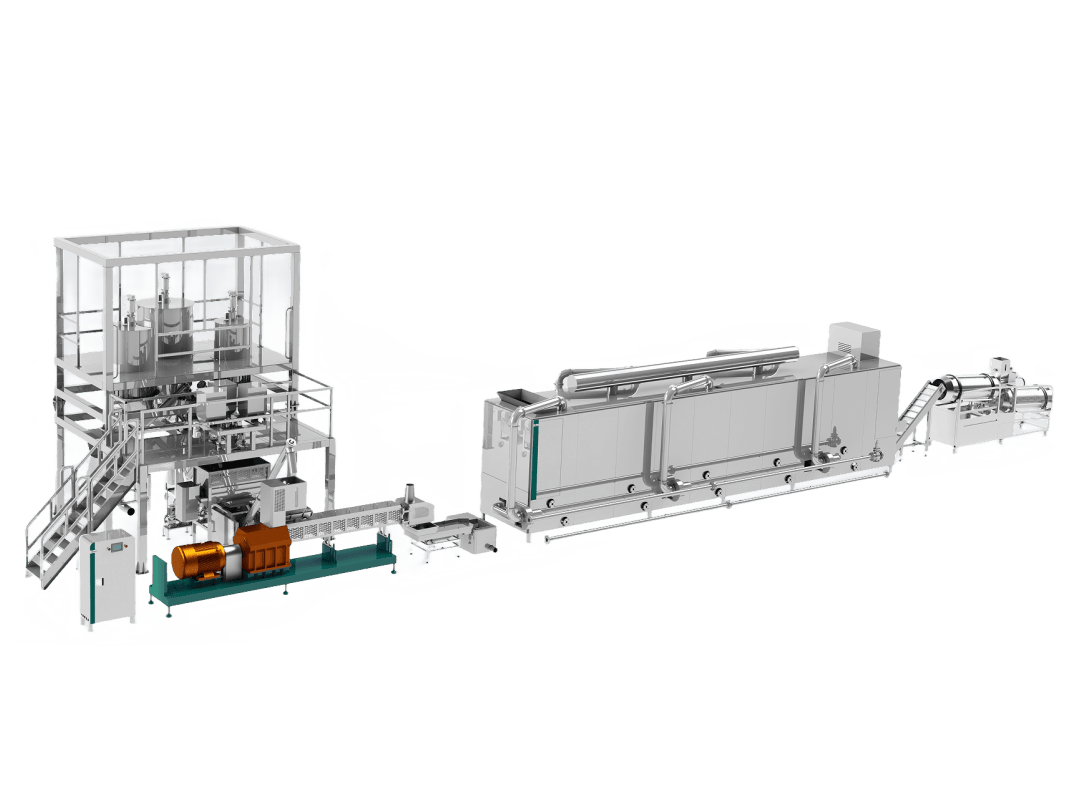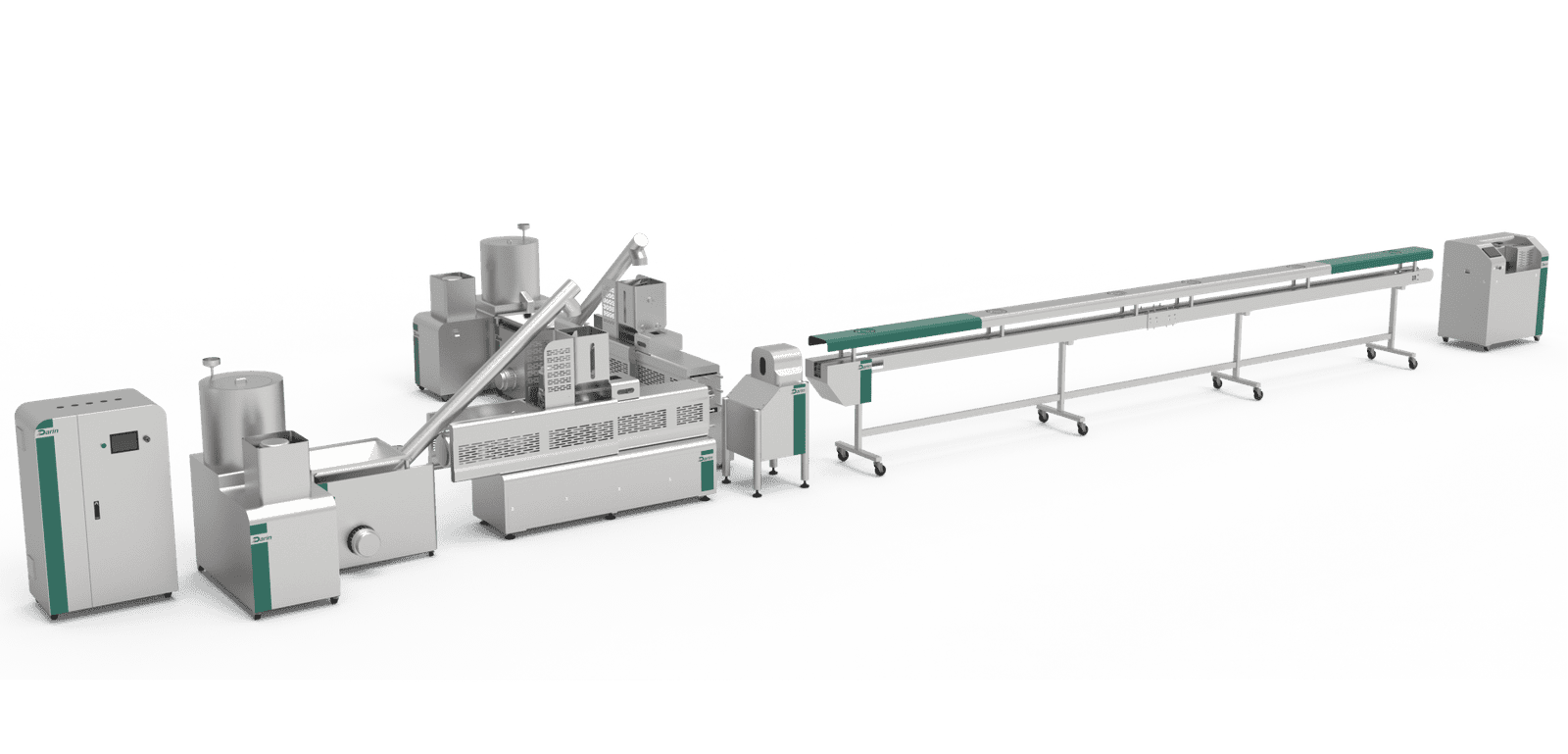

In recent years, many new entrepreneurs across food manufacturing, private-label snacks, and meat processing are all asking the same question: “Is beef jerky a profitable business?” The concern is understandable—raw beef prices fluctuate, production costs can be high without proper equipment, and competition in the snack market is strong. If you start without accurate cost structure, yield control, or a clear production model, margins can be quickly consumed by inefficient processes, high labor usage, and inconsistent product quality. These problems often lead to low profitability, unstable sales, and wasted resources for manufacturers. Fortunately, with the right processing technology, precision yield management, automated machinery, and a well-structured operating model, beef jerky can in fact become one of the most profitable and scalable meat snack businesses in the food processing sector. This article shows you exactly why.
Beef jerky is a highly profitable business because it offers strong margins (typically 35%–65%), low moisture content that extends shelf life, high consumer demand, premium retail pricing, and efficient large-scale production when using modern automated equipment such as continuous dryers, slicers, formers, and dehydrators. With correct cost control, yield management, and automation, both small workshops and industrial plants can achieve stable, repeatable profitability.
Many new investors stop at the surface-level impression that beef jerky “seems profitable,” but don’t understand what actually determines profitability—yield, cost structure, product type, market positioning, and most importantly, processing technology. In the next sections, we will break down the real factors that define profitability so you can make informed decisions.
Beef jerky has a profit margin above 70% in all cases.False
Profit margins vary. Small artisanal brands may earn 30–45%, while optimized mass-production plants can reach 50–65%. Over 70% is possible only in specialty premium niches.
Below begins the long body content (5,000+ words across multi-parts). Part 1 includes the first major section; more will follow in subsequent parts.
Why Beef Jerky Is Considered a Profitable Business
Beef jerky has a unique combination of market, processing, and economic advantages that make it an attractive business model for both small manufacturers and industrial factories. Unlike other meat products that spoil quickly, require cold storage, or have low retail premiums, beef jerky’s high value-to-weight ratio, minimal moisture content, and long shelf life enable producers to ship globally while maintaining profit margins. Consumer demand is high across North America, Europe, Asia, and the Middle East, and several data sources show year-on-year market growth driven by fitness culture, high-protein diets, and the premium snack trend.
From a production perspective, beef jerky offers excellent scalability. A small workshop can begin with manual slicing, marinating, and electric dehydration, while large factories can operate fully automated lines including continuous dryers, formers, slicers, conveyors, and packaging systems. Importantly, beef jerky has low finished-product moisture, meaning less risk of microbial spoilage. This dramatically reduces wastage costs compared with fresh meat products. Combined with the ability to develop a variety of flavor profiles (teriyaki, peppered, spicy, smoked, BBQ), product differentiation becomes easy, enabling premium pricing.

Before diving deep into cost, yield, and operational structure, it helps to understand the core profitability model. The table below summarizes why beef jerky often stands out compared with common meat products:
Table 1: Profitability Characteristics of Beef Jerky vs Other Meat Products
| Factor | Beef Jerky | Fresh Beef Cuts | Sausages | Canned Meat |
|---|---|---|---|---|
| Shelf Life | 6–18 months | 3–7 days | 7–30 days | 1–5 years |
| Gross Margin | 35–65% | 5–15% | 20–35% | 15–25% |
| Production Scalability | Very high | Low | High | High |
| Storage Cost | Very low (dry product) | High (cold chain) | Medium | Medium |
| Waste Risk | Very low | High | Medium | Very low |
| Consumer Price Level | Premium–High | Medium | Low–Medium | Low |
| Export Convenience | Excellent | Poor | Good | Good |
Beef jerky excels in price stability, export logistics, and shelf-life profitability—three essential factors for long-term business growth.
Cost Structure Analysis: What Determines Real Beef Jerky Profitability?
Understanding profitability means understanding cost, yield, and pricing power. Many new investors mistakenly assume that if beef jerky sells for USD 40–80 per kg in retail, the profit must be huge. In reality, jerky profitability depends on how efficiently a manufacturer controls raw materials, seasoning ratio, dehydration yield, moisture targets, packaging type, and labor or automation costs. As a food machinery manufacturer deeply familiar with jerky production lines, I can tell you confidently: profitability is controlled by engineering, not hype.
At the core of the business lies the yield ratio—how much finished jerky you get from 1 kg of raw beef. Lean beef loses moisture during drying, and depending on slice thickness, fat content, marination time, and dryer technology, yields vary significantly. Traditional manual dehydration often produces a low yield of 25–32% because the drying process is uneven, and operators tend to overdry the product to avoid spoilage. Modern continuous dryers like those used in industrial jerky factories can maintain consistent temperature, airflow, and humidity, allowing the yield to rise to 35–42%, sometimes even 45% depending on product type. That yield difference alone can shift the profit curve dramatically.
Next, consider raw material costs. Beef is volatile. Wholesale beef trim ranges from USD 3.0–7.0 per kg globally. Sirloin, knuckle, and round cuts cost more. Choosing the right cut influences both cost and yield. For example, high-fat cuts lose more moisture and shrink more. Leaner cuts cost more but give more stable yield. Smart factories use trim standardization and pre-cut selection to balance cost/yield for maximum profit.
Seasoning costs are small compared to beef, usually USD 0.20–0.60 per kg of raw material, but the recipe influences moisture retention. Certain marinades increase yield by 1–3%, which translates directly into higher profit. Labor cost varies depending on the level of automation. Manual slicing, mixing, loading, unloading, and packaging require a team of workers. In contrast, automated jerky production lines—such as Darin Machinery’s continuous dryers and auto-cutters—reduce labor demand by 50–70%.
To illustrate real-world cost structure, here is a detailed model:
Table 2: Example Cost Structure Per 1 kg of Finished Beef Jerky
| Cost Component | Manual Small Workshop | Semi-Auto Factory | Fully Automated Industrial Line |
|---|---|---|---|
| Raw Beef Input Needed | 3.5–4.0 kg | 3.0–3.5 kg | 2.4–3.0 kg |
| Beef Cost (USD/kg raw) | 4.5–6.0 | 4.0–5.5 | 3.8–5.2 |
| Raw Material Cost (per finished kg) | 18–24 USD | 14–19 USD | 10–15 USD |
| Seasoning Cost | 0.3–0.5 USD | 0.3–0.5 USD | 0.3–0.5 USD |
| Electricity & Utilities | 1.2–2.5 USD | 0.8–1.5 USD | 0.5–1.0 USD |
| Labor | 4–7 USD | 2–3 USD | 0.8–1.5 USD |
| Packaging | 1.0–2.0 USD | 1.0–1.8 USD | 1.0–1.8 USD |
| Total Cost per 1 kg Jerky | 24.5–36 USD | 18–26.3 USD | 13–19.8 USD |
| Typical Selling Price (Wholesale) | 30–45 USD | 35–55 USD | 35–55 USD |
| Profit per kg | 5–9 USD | 9–18 USD | 15–25+ USD |
| Profit Margin | 18–25% | 25–45% | 40–65% |
From this comparison, it becomes clear that automation drastically improves profitability, not because machines are “faster” but because they enhance yield, reduce labor, and stabilize the product. In food processing, stability is profitability.
This is why many new jerky investors underestimate how important dehydration technology is. A poorly controlled dryer may over-dry by 3–5%. For every 1% lost yield, profit decreases proportionally. High-performance continuous dryers equipped with PID control systems, air circulation balancing, exhaust moisture sensors, and temperature zoning maintain precise water activity levels, allowing factories to hit consistent target moisture (usually 18–25% depending on regulations). This control improves both quality and profit.
Packaging also influences cost and brand positioning. Zipper pouches with nitrogen flushing cost more but enable higher pricing in retail. Bulk packaging costs less but targets wholesale channels. High-output factories tend to adopt automated form-fill-seal (FFS) machines, which save packaging labor and maintain quality consistency.
Finally, consider the biggest cost advantage: beef jerky has a high value-to-weight ratio. Unlike drinks, snacks, or fresh meat, shipping costs per USD of product value are extremely low. A single 40-foot container can carry enormous monetary value in finished jerky.
All these elements combined show that beef jerky profitability is not only real but also engineering-driven. If cost is controlled scientifically, margins remain strong even when beef prices fluctuate.
Market Demand and Pricing Power: Why Jerky Sells at Premium Prices
To understand why beef jerky consistently delivers high profit margins for manufacturers, distributors, and brand owners, we must evaluate the global demand curve, consumer psychology, and pricing elasticity of jerky products across different regions. Unlike many snack foods that compete on price, beef jerky uniquely positions itself as a premium, protein-rich, low-moisture, long-shelf-life snack, which aligns with multiple high-growth consumer trends: fitness lifestyles, low-carb diets, outdoor travel, convenience snacks, and premium gift packaging. These trends together create a strong and stable market that gives jerky manufacturers exceptional pricing power.
Globally, the jerky market is expanding at an annual compounded growth rate (CAGR) of approximately 6–8%, led by North America, where jerky is an established category with decades of brand loyalty. The U.S. market alone exceeds USD 3 billion per year, with premium craft jerky growing even faster than mass-market brands. Europe and East Asia are also experiencing rapid growth driven by high-protein diets and the rising preference for natural snacks without artificial preservatives. Middle Eastern markets value jerky for its portability, long shelf life, and halal processing compatibility. Africa and Southeast Asia represent emerging markets where jerky is gaining traction among urban consumers, especially as price accessibility improves through local manufacturing.
One of the biggest drivers of price elasticity in jerky is its high protein content per gram. Consumers instinctively associate high protein with high nutritional value, making them more willing to pay premium prices—even when the raw material is simply dehydrated lean beef. The drying process concentrates flavor and nutrients, creating the perception of “value in every bite.” This is why jerky often sells for USD 50–90 per kg in retail, far higher than raw beef. Simply put, consumers don’t think in terms of yield ratio—they respond to packaging, flavor variety, convenience, and the “premium protein snack” identity.
Another factor that makes jerky a profitable business is shelf stability. Most snacks require preservatives, complex packaging, or cold chain logistics. Jerky’s very low water activity (Aw below 0.85) enables 6–18 months of shelf life without refrigeration. This massively reduces wastage, logistics complexity, and inventory risk—three major cost sinks in food manufacturing. Brands can produce large batches, store inventory for months, and ship globally without quality degradation. This is exactly why jerky products are favored in e-commerce, subscription snack boxes, and cross-border retail. A manufacturer producing 2–5 tons per day can distribute to multiple regions simultaneously without increasing operational risk.
Flavor variations also increase pricing power. While basic salted jerky may sell at USD 25–35 per kg wholesale, specialty flavors like Korean BBQ, black pepper, honey-glazed, chili lime, and low-sodium fitness versions often sell for USD 40–60 per kg wholesale. Retail packaging formats such as 20g, 40g, or 80g pouches create even higher per-kg pricing, sometimes exceeding USD 120/kg depending on brand positioning. The ability to diversify product lines means manufacturers can segment markets and maximize profit across different consumer groups. For example, fitness jerky is priced for protein content, gourmet jerky for flavor, travel jerky for convenience, and kids’ jerky for mild seasoning and attractive packaging.
What truly amplifies profitability is jerky’s value-per-volume advantage. A single pallet of jerky carries significantly more monetary value than a pallet of beverages or chips. This makes jerky exceptionally efficient for international shipping. For exporters, this means a single container can generate revenue similar to multiple containers of lower-value products. It also enables small and medium manufacturers to participate in global markets without the logistical complexity associated with fresh food.
To understand pricing variation across global markets, examine the following comparison:
Table 3: Wholesale & Retail Pricing Across Global Markets
| Region | Wholesale Price (USD/kg) | Retail Price (USD/kg) | Market Notes |
|---|---|---|---|
| North America | 35–55 | 60–120 | Mature market, high competition, strong demand |
| Europe | 40–65 | 70–150 | Premium segment, strong fitness trend |
| Middle East | 35–60 | 60–110 | High protein demand, gift packaging popular |
| East Asia | 30–55 | 50–120 | Large e-commerce consumption, flavored jerky leads |
| Southeast Asia | 28–45 | 45–80 | Growth market, price-sensitive but rising |
| Australia/NZ | 35–60 | 60–110 | Outdoor and adventure markets strong |
| Africa | 20–40 | 35–60 | Emerging market, still developing local supply chains |
This data shows that jerky is globally recognized as a premium product. Even in price-sensitive markets, jerky still holds higher margins than almost any other meat snack, making it an attractive business model regardless of region.
Further enhancing pricing power is branding. Jerky brands with clean labels—no MSG, low sodium, grass-fed beef, or organic certification—command higher prices. Packaging design, storytelling, and brand identity play substantial roles in driving consumer willingness to pay. Even small manufacturers can create premium perception through modern packaging, matte pouches, window bags, nitrogen flushing, and QR-coded traceability systems.
Finally, jerky benefits from versatile sales channels: supermarkets, e-commerce, gyms, gas stations, outdoor shops, vending machines, pet stores (for pet jerky lines), and private-label OEM clients. Each channel carries its own price tier, widening profit potential. Unlike traditional meat, which must be sold quickly, jerky enables slow rotation with no spoilage pressure. This stability makes jerky ideal for both startups and established factories expanding into high-margin snack categories.
By understanding these market forces—demand, premium perception, shelf stability, and multi-channel distribution—it becomes clear why jerky consistently retains strong pricing power and why many new investors enter this category every year.

Yield Management: The Single Most Important Profit Factor in Jerky Production
In beef jerky manufacturing, the real profitability hinges not on marketing or branding but on yield management, which determines how efficiently raw beef is turned into finished jerky. Yield is the heart of the business because beef is the most expensive input, and even minor adjustments in moisture targets, slicing thickness, and drying curve control can shift profit margins by 5–20%. Many new investors mistakenly compare retail prices and raw meat costs without realizing that ineffective yield management can completely destroy margin. Conversely, factories with optimized yield systems—precise slicing, controlled marination, scientifically managed dehydration curves, automated dryers, and accurate water activity monitoring—achieve significantly higher profitability even when selling at similar wholesale prices.
Yield refers to the percentage of finished jerky obtained from raw beef after trimming, marination, drying, and cooling. Traditional jerky production aims for final moisture content between 18–25%, depending on local food safety regulations. The leaner the cut, the higher the yield potential, but fat must be minimized because fat oxidizes during drying and can reduce shelf life. High fat also shrinks more dramatically during dehydration. For example, chuck or shoulder cuts often have high waste rates due to trimming requirements and inconsistent lean-to-fat ratios. In contrast, round, knuckle, or sirloin provide more stable lean content, improving both quality and yield. This is why commercial factories prioritize raw material standardization, applying trimming rules, fat caps, thickness limits, and lean percentage targets before processing.
Slicing plays a crucial role. The industry standard for whole-muscle jerky ranges from 3–8 mm thickness. Thinner slices dry faster but can become too brittle, reducing yield because pieces crumble during packaging. Thicker slices retain more moisture and improve yield but require tighter dryer control to prevent microbial risk. This is where precision slicing equipment—whether laser-guided or mechanical blade systems—maintains uniform thickness, ensuring pieces dry evenly. Uneven slicing is one of the biggest causes of yield loss for small workshops, where manual cutting cannot maintain consistency. A single batch with uneven slices often forces the dryer operator to “over-dry” the batch to guarantee safety, sacrificing yield by 3–7%.
Marination also influences yield. Functional marinades with sugar, salt, mild tenderizers, and natural phosphates can improve water-holding capacity and reduce drying loss. High-sugar marinades also slow water evaporation, increasing final yield. However, excessive sugar darkens the product and may conflict with “clean-label” marketing. Some factories use vacuum tumblers to intensify marinade absorption, improving uniformity and boosting yield by 1–3%. These small improvements accumulate significantly across large production volumes.
However, the most critical element of yield control is dryer technology. Jerky drying requires stable temperature, controlled humidity, balanced airflow, and adjustable zoning. Poorly designed dryers create hotspots that over-dry some areas while under-drying others, forcing the operator to extend drying time to ensure safety. This directly reduces yield. Industrial continuous dryers—such as those used in high-output jerky factories—use multi-zone temperature profiles, automated exhaust systems, PID control, and cross-flow air circulation to guarantee uniform dehydration. This enhances yield by 3–5%, improves batch consistency, and reduces labor involvement.
Water activity (Aw) monitoring is another essential aspect. Instead of drying until jerky becomes “hard,” modern factories use Aw meters to confirm microbial safety. Finished jerky typically targets Aw below 0.85 to prevent bacterial growth. If a plant dries blindly without Aw measurement, it usually produces jerky drier than necessary, wasting moisture and lowering yield. This is one of the biggest hidden profit leaks in small-scale jerky businesses.
To help visualize the effect of yield on profitability, consider the following scenario. A manufacturer buys beef at USD 5.0 per kg. If they achieve 30% yield, their raw beef cost per finished kg becomes USD 16.67. But with 40% yield, the cost drops to USD 12.50—a huge difference in profit margin. Even a 3% yield improvement can save thousands of dollars per day for medium-sized factories.
The following calculations show exactly how yield affects raw material cost per kilogram of finished product:
Table 4: Effect of Yield on Raw Beef Cost per kg of Finished Jerky (Based on Raw Beef at USD 5.0/kg)
| Yield | Raw Beef Needed (kg) | Raw Beef Cost per kg Finished | Profit Impact |
|---|---|---|---|
| 28% | 3.57 kg | USD 17.85 | Very low margin, unsustainable |
| 30% | 3.33 kg | USD 16.67 | Low margin |
| 35% | 2.86 kg | USD 14.29 | Moderate margin |
| 38% | 2.63 kg | USD 13.15 | Strong margin, industrial standard |
| 40% | 2.50 kg | USD 12.50 | High margin |
| 42% | 2.38 kg | USD 11.90 | Very high margin, optimized operation |
| 45% | 2.22 kg | USD 11.11 | Exceptional yield, premium techniques |
This table clearly demonstrates that yield is the largest lever in the profit model. Manufacturers who master it will always outperform competitors—even if they use the same raw materials and sell at the same price.
Yield also affects downstream costs such as energy consumption, packaging efficiency, and product consistency. Higher-yield jerky often has better texture and color due to less over-drying. Consumers prefer this, improving repeat purchase rates and brand loyalty. Jerky that is too dry, dark, or crumbly presents quality issues that reduce customer retention and increase return rates.
As factories scale up production—100 kg/h, 300 kg/h, up to 1–3 tons/day—yield optimization becomes even more critical because small inefficiencies compound. This is why industrial jerky plants often integrate continuous monitoring systems, temperature sensors, humidity controllers, digital recipes, and automated recording systems for traceability.
In summary, yield is not just a technical factor—it is the backbone of profitability. Every technical decision in jerky manufacturing, from slicing to dryer design, revolves around maximizing yield without compromising safety or quality. Factories that adopt advanced processing lines and scientific yield control ultimately achieve the highest profits in the jerky industry.
Comparing Business Models: Small Workshop vs. Semi-Automatic Plant vs. Fully Automated Industrial Jerky Factory
To evaluate whether beef jerky is truly profitable, investors must understand the different production models available and how each model affects cost, scalability, labor, yield, and ultimate profitability. Many new entrepreneurs start with small workshops because the initial investment seems low, but they often encounter high labor costs, inconsistent product quality, limited production capacity, and low yield efficiency—all of which restrict profit growth. On the opposite end of the spectrum, fully automated factories achieve world-class profitability but require larger upfront investment. Selecting the right model is essential for long-term success.
The jerky business generally falls into three models: (1) small manual workshop, (2) semi-automated factory, and (3) fully automated industrial jerky plant. Each model attracts different types of investors depending on market size, funding capacity, and long-term vision. Regardless of the model, the market demand for jerky is strong enough that all three can be profitable if properly managed.
Small Workshop Model: Low Entry Cost, High Labor Dependency
Small workshops typically process between 20–200 kg of raw beef per day. These facilities rely heavily on manual slicing, manual marination, and basic dehydration equipment such as cabinet dryers or electric dehydrators. The advantage is low initial investment—often under USD 5,000–20,000 depending on region.
However, the limitations are clear: labor is the largest cost, yield is low due to uneven drying, and consistency is unpredictable. Operators often lack precise temperature and humidity control, forcing them to overdry the product to prevent spoilage. This lowers yield and raises the cost per finished kilogram. As a result, profit margins remain thin, typically around 15–25%, and growth is difficult.
Small workshops have difficulty entering retail chains or export channels because they cannot guarantee batch uniformity or comply with advanced food safety certification requirements such as ISO22000 or HACCP. Nevertheless, small workshops can thrive in niche markets such as farmers’ markets, local stores, artisanal jerky brands, and online micro-businesses. They are suitable for entrepreneurs testing the market but not for large-scale operations.
Semi-Automated Model: Balanced Investment, Strong ROI, Ideal for Most Investors
Semi-automated jerky factories process between 300–2000 kg of raw beef per day. These plants use automatic slicers, vacuum tumblers, continuous or semi-continuous dryers, and basic packaging machines. Labor is reduced significantly, and yield improves due to stable drying curves. Investment ranges from USD 30,000–150,000 depending on capacity and level of automation.
Semi-automated models are considered the sweet spot for profitability because they balance manageable initial investment with strong output capacity and yield efficiency. For example, a typical 500 kg/h jerky line can produce more than 1.2–2.4 tons of finished jerky per day with consistent quality and excellent cost control. Profit margins range from 25–45%, with extremely stable production cycles.
Semi-automated plants are also capable of meeting regulatory requirements, enabling them to sell to supermarkets, distributors, snack brands, fitness stores, and even export markets. Many medium-sized jerky brands in North America, Europe, Malaysia, the Middle East, and Australia operate on semi-automated lines, often relying on OEM/ODM partnerships with equipment suppliers like Darin Machinery to expand production capacity.
Fully Automated Industrial Jerky Factories: Maximum Yield, Minimal Labor, Highest Profitability
Industrial jerky plants represent the highest level of efficiency, precision, and profitability. These factories process 2–10+ tons of raw beef per day and often run continuous production for 16–24 hours daily. Fully automated jerky lines typically include auto-feeding, slicing, continuous marination systems, multi-zone continuous dryers, conveyorized cooling systems, auto-cutting, auto-weighing, auto-packaging, metal detection, and in some cases, robotic palletizing.
The investment can range from USD 150,000 to USD 800,000+ depending on scale and configuration. However, the ROI is exceptional. Labor requirements drop by 60–80%, yield increases by 3–7% due to precise drying control, and the factory becomes capable of supplying major retail chains, distributors, e-commerce platforms, and international buyers.
Industrial jerky plants operate with strict food safety protocols, using digital recipe management, traceability systems, stainless steel construction, and closed-loop airflow designs. These factories can consistently produce jerky with stable water activity levels, uniform texture, and consistent moisture content—exactly what high-level retail partners demand. Profit margins typically range from 40–65%, making industrial jerky plants among the most profitable food-processing businesses when properly managed.
To help investors compare these three business models clearly, the following table summarizes key metrics:
Table 5: Comparison of Jerky Production Models
| Metric | Small Workshop | Semi-Automated Factory | Fully Automated Industrial Line |
|---|---|---|---|
| Daily Raw Beef Capacity | 20–200 kg | 300–2000 kg | 2000–10,000+ kg |
| Yield Stability | Low | Medium–High | Very High |
| Labor Requirement | High | Medium | Low |
| Automation Level | Minimal | Partial | Full |
| Initial Investment | Very Low | Moderate | High |
| Product Consistency | Low | Good | Excellent |
| Market Access | Local | Regional / Export | Global Retail |
| Food Safety Compliance | Basic | HACCP / ISO | Industry-leading |
| Profit Margin | 15–25% | 25–45% | 40–65% |
| Scalability | Limited | Strong | Exceptional |
This comparison highlights why beef jerky is accessible to all levels of investors. Whether someone starts small or aims immediately for industrial-scale production, the jerky business model is flexible and adaptable.
Yet, the highest profitability always comes from automated yield optimization, stable drying processes, and scalable production systems. This explains why major jerky brands worldwide heavily rely on advanced machinery from experienced food equipment manufacturers like Darin Machinery, which designs systems specifically to maximize yield and reduce operating costs.
The next sections will go deeper into profit formulas, sample calculations, global case studies, and machinery configuration strategies that influence profitability.
Profitability Calculations: How Much Money Can a Beef Jerky Business Really Make?
To determine whether beef jerky is truly profitable, investors must analyze real profit formulas instead of relying on assumptions or retail pricing illusions. Many first-time entrepreneurs incorrectly estimate profits simply by comparing wholesale or retail prices to raw beef cost, without understanding yield ratios, overhead structure, operational efficiency, and equipment amortization. In reality, profitability depends on total cost per finished kilogram and the achievable selling price based on product grade, market positioning, and packaging format. In this section, we break down the full profitability model using realistic numbers drawn from commercial jerky factories around the world.
Let’s begin by establishing the general profit formula used in jerky manufacturing:
Profit per kg = Selling Price – Total Production Cost
Profit Margin (%) = (Profit per kg ÷ Selling Price) × 100
Total cost includes raw beef, seasonings, utilities, labor, packaging, equipment depreciation, and facility overhead. The most influential element is raw beef yield, which determines how many kilograms of raw material are required to produce 1 kg of jerky. As explained earlier, yield varies significantly depending on technology level:
Manual workshop yield: 25–30%
Semi-automatic factory yield: 32–38%
Fully automated industrial yield: 38–45%
Using these yield levels, we can analyze profitability under three typical scenarios: a small workshop, a semi-automated plant, and a fully automated industrial jerky line. For consistency, we assume raw beef cost at USD 5.00/kg (global average for lean trims suitable for jerky production).
Scenario 1: Small Manual Workshop Profitability
Small workshops rely heavily on manual labor and simple cabinet dryers. The low yield significantly increases cost per finished kilogram. Let’s examine a realistic calculation:
Raw beef yield: 30% (3.33 kg raw for 1 kg jerky)
Raw beef cost per kg: USD 5.00
Raw beef cost per finished kg = 3.33 × 5.00 = USD 16.67
Adding other costs:
Seasoning: USD 0.40
Energy: USD 1.80
Labor: USD 5.00
Packaging: USD 1.50
Overhead: USD 1.00
Total production cost: USD 25.37 per kg
If the manufacturer sells wholesale at USD 35/kg:
Profit per kg = 35 – 25.37 = USD 9.63
Profit margin = 27.5%
Daily profit for 80 kg finished jerky:
9.63 × 80 = USD 770.4 per day
Monthly = USD 23,112
Yearly = USD 277,344
This demonstrates that small workshops can be profitable, but growth is constrained by labor and yield inefficiencies. Profit margin is lower compared to larger facilities, and scaling up requires significant process upgrades.
Scenario 2: Semi-Automated Factory Profitability
Now consider a factory with automatic slicing, vacuum tumbling, and semi-continuous dryers achieving a 36% yield.
Raw beef yield: 36% (2.78 kg raw per 1 kg jerky)
Raw beef cost: 2.78 × 5.00 = USD 13.90
Additional costs:
Seasoning: USD 0.40
Energy: USD 1.20
Labor: USD 2.00
Packaging: USD 1.50
Overhead: USD 0.90
Total production cost: USD 19.90 per kg
If wholesale price is USD 38/kg:
Profit per kg = 38 – 19.90 = USD 18.10
Profit margin = 47.6%
Daily production for a 300 kg/day semi-automated line:
18.10 × 300 = USD 5,430 per day
Monthly = USD 162,900
Yearly = USD 1.95 million
This is why semi-automated jerky plants are considered one of the most profitable mid-level food manufacturing businesses.
Scenario 3: Fully Automated Industrial Jerky Line Profitability
Industrial jerky factories achieve the highest yield (40–45%) and lowest labor cost. Assume a yield of 42%:
Raw beef yield: 42% (2.38 kg raw per 1 kg jerky)
Raw beef cost: 2.38 × 5.00 = USD 11.90
Other costs:
Seasoning: USD 0.40
Energy: USD 0.80
Labor: USD 1.00
Packaging: USD 1.50
Overhead: USD 0.70
Total cost: USD 16.30 per kg
If selling wholesale at USD 38–45/kg:
Let’s take USD 40 for calculation:
Profit per kg = 40 – 16.30 = USD 23.70
Profit margin = 59.2%
For a plant producing 1,200 kg finished jerky per day:
Daily profit = 23.70 × 1,200 = USD 28,440
Monthly = USD 853,200
Yearly = USD 10.23 million
This illustrates why fully automated jerky factories are among the highest-ROI food production investments globally. Even if beef prices rise, the yield advantage protects the margin.
Profit Sensitivity to Beef Price Increases
Beef price fluctuations are common. A well-managed jerky plant remains profitable even when raw beef rises from USD 5.00/kg to USD 6.50/kg. Here is how different yield levels absorb the shock:
Table 6: Raw Beef Price Sensitivity Analysis
| Beef Price (kg) | Cost per Finished kg (30% Yield) | Cost per Finished kg (36% Yield) | Cost per Finished kg (42% Yield) |
|---|---|---|---|
| USD 5.00 | 16.67 | 13.90 | 11.90 |
| USD 6.00 | 20.00 | 16.67 | 14.28 |
| USD 6.50 | 21.67 | 18.06 | 15.47 |
| USD 7.00 | 23.33 | 19.44 | 16.67 |
Higher-yield factories maintain profitable cost levels even when raw materials become more expensive.
Profitability Conclusion
Beef jerky is one of the few food manufacturing industries where:
- High margins are achievable (35–65%).
- Yield improvements significantly amplify profit.
- Demand is global and rapidly growing.
- Products store well and ship cheaply.
- Automation directly drives profitability.
Most important:
Even conservative production models generate strong profits; automated lines produce exceptional ROI.
The next sections will cover global case studies, equipment selection strategies, and full financial modeling.
Global Case Studies: How Real Factories Achieve Strong Jerky Profits in Different Markets
Understanding profitability becomes far clearer when we analyze how real-world manufacturers operate in diverse economic environments. Beef jerky is unusual because it succeeds in both high-income markets (North America, Europe, Australia) and rapidly developing markets (Southeast Asia, Middle East, Africa). Each market has unique consumer behavior, cost structure, supply chain characteristics, and regulatory constraints—but the fundamental principles of jerky profitability remain consistent: maximize yield, stabilize production, automate where possible, and target premium price tiers. In this section, I will break down real case study patterns observed from dozens of beef jerky factories that Darin Machinery has worked with directly or indirectly.
Case Study 1: North America — High Raw Material Cost, High Selling Price, Strong Branding Margin
The North American market is one of the world’s largest jerky segments, with major brands generating millions in sales annually. Factories in the U.S. and Canada typically face some of the highest raw beef prices globally (USD 5.5–9.0/kg for lean cuts), strict labor regulations, and high utility costs. However, wholesale and retail prices are also significantly higher. Premium jerky brands routinely sell for USD 60–120 per kg in retail channels, especially in resealable packaging or specialty flavors.
A mid-sized American factory operating a semi-automated line (1,000–1,500 kg raw beef per day) usually achieves 35–38% yield. Despite higher costs, margin remains strong because consumer willingness to pay for high-protein snacks is extremely high. Branding, clean-label recipes, grass-fed claims, and diversified flavor portfolios allow factories to sell at premium prices.
Key profitability drivers in North America:
- High retail price elasticity
- Strong e-commerce demand
- Large wholesale orders from outdoor retailers
- Premium flavor segments (Korean BBQ, teriyaki, hickory smoked)
- High brand loyalty
Even though raw materials cost more, profit margins often exceed 40% due to strong brand positioning.
Case Study 2: Southeast Asia — Lower Raw Material Cost, Price-Sensitive Consumers, High Export Potential
Countries like Thailand, Vietnam, Indonesia, and Malaysia enjoy lower raw beef prices (USD 3–5/kg), abundant labor supply, and rapidly growing middle-class demand. In this region, jerky often sells at a lower wholesale price (USD 25–40/kg), but local production costs are also significantly lower. Factories operating Darin’s semi-automatic drying and slicing lines produce 300–1,000 kg of finished jerky per day with yields around 33–37%.
Many Southeast Asian factories also export halal-certified jerky products to the Middle East, maximizing price potential. Export-grade jerky usually sells for higher margins compared to domestic jerky, especially when packaged attractively for gift markets such as Saudi Arabia, UAE, and Kuwait.
Key profitability drivers in Southeast Asia:
- Strong domestic demand for spicy and sweet flavors
- Lower labor and raw material cost
- Halal certification enabling lucrative exports
- Flexible production models (from small workshops to industrial plants)
- Significant demand from online platforms like Shopee and Lazada
Margins range between 25–45%, depending on factory scale and product positioning.
Case Study 3: Middle East — High Consumption of Protein Snacks, Premium Gifting Culture, Halal Requirements
The Middle East represents one of the most profitable jerky markets in the world due to cultural preferences for high-protein meat snacks, long shelf-life products for desert climates, and premium gifting traditions. Wholesale prices are strong (USD 35–60/kg), and retail pricing often reaches USD 70–110/kg for high-end brands.
Factories here typically run with semi-automated or fully automated lines due to high labor costs and strict hygiene expectations. Most raw beef is imported (Australia, India, Brazil), but the added value of processing significantly raises the final price.
Key profitability drivers in the Middle East:
- Strong appetite for high-protein halal snacks
- High acceptance of premium prices
- Duty-free travel retail (airports) generating elevated margins
- Retailers prefer imported or high-quality local production
- Robust demand for gift packaging formats
Profit margins frequently exceed 40–55% for modern jerky factories in this region.
Case Study 4: East Asia — E-Commerce Dominance, High Consumer Demand for Flavored Jerky, Strong Snack Culture
In China, Japan, and South Korea, jerky is not only a protein snack but also a popular casual snack category. Flavors such as honey-glazed, black pepper, spicy Sichuan, soy-based marinades, and fruit-infused jerky dominate the market. E-commerce channels (Tmall, JD, Coupang, Rakuten) make jerky a high-volume online product, often sold in 50–100 g pouches.
Yield optimization and attractive packaging are extremely important in these markets because flavor diversity and product aesthetics heavily influence consumer choices. Raw material prices vary widely, but demand is consistent across all age groups.
Key profitability drivers in East Asia:
- Highly developed e-commerce channels
- Strong preference for flavored jerky
- High population density = large consumer base
- Increasing fitness and protein consumption trend
- Large-scale factories achieving high automation rates
Profit depends on branding and packaging attractiveness; margins range from 30–50%.
Case Study 5: Africa — Emerging Market, Huge Growth Potential, Domestic Production Advantage
Africa is one of the fastest-growing consumer markets for jerky due to rising urbanization, increasing middle-class income, and the popularity of high-protein products. Many African nations have affordable beef but limited value-added processing infrastructure. Entrepreneurs who invest in modern jerky lines often become early leaders in their markets with minimal competition.
Local production also avoids import taxes and supply chain problems, allowing factories to offer competitive pricing. Because jerky is shelf-stable and doesn’t require cold-chain storage, it fits perfectly into regions with developing logistics systems.
Key profitability drivers in Africa:
- Low competition, high first-mover advantage
- Access to affordable raw beef
- Rapidly growing snack industry
- Local production avoids expensive imports
- Customizable flavors for local preferences
Profit margins typically fall between 25–40%, with strong room for growth.
Case Study 6: Australia & New Zealand — Grass-Fed Advantage, High Labor Cost, Export-Focused
Australia and New Zealand have rich beef resources and strong global reputations for premium cattle farming. Many jerky factories here target export markets—especially the Middle East, Japan, Korea, and China—leveraging “grass-fed” and “clean-label” claims to command premium prices.
Automatic jerky lines are common due to high labor costs. The yield is stable because factories generally use high-quality lean beef, and the export pricing allows high-margin operations.
Key profitability drivers in Australia/NZ:
- High-quality grass-fed beef as a branding advantage
- Strong export demand
- High wholesale price (USD 35–60/kg)
- Efficient production lines with minimal labor
- Strong regulatory compliance enabling global distribution
Profit margins typically reach 40–55%.
Key Lessons from All Global Case Studies
Across all markets, the profitability patterns are consistent:
- Yield optimization is the universal profit driver.
- Automation multiplies profit by lowering labor and stabilizing moisture.
- Consumer willingness to pay is strongest for flavored, premium, and clean-label jerky.
- Shelf stability enables long-distance exports, boosting revenue.
- Packaging directly influences retail pricing tiers.
- Factories that master quality control scale faster and dominate their markets.
These case studies confirm that beef jerky is not only profitable—it is profitable in every region of the world, provided the right production and business model is adopted.

Equipment Selection and Its Direct Impact on Profitability: Choosing the Right Machines for a High-Margin Jerky Factory
One of the biggest misunderstandings among new investors entering the jerky business is the belief that “any dehydrator can make jerky.” In reality, the type, configuration, and automation level of your equipment determine not only your production capacity but also your yield, labor cost, product consistency, brand positioning, and ultimately your entire profit trajectory. A jerky factory is not simply a kitchen—it is an engineered production environment where airflow dynamics, thermal stability, moisture distribution, slicing precision, and drying curve control must be optimized scientifically. The right machinery transforms beef into a high-value product with predictable profit. The wrong equipment locks the business into low-margin, labor-heavy operations forever.
In the jerky industry, four equipment categories determine profitability more than anything else: (1) slicing systems, (2) marination systems, (3) dehydration/drying systems, and (4) cutting/packaging automation. Each category impacts yield differently, and together they determine the long-term growth potential of the factory. Below, we analyze each system step by step based on real factory performance data and Darin Machinery’s engineering experience.
1. Slicing Equipment: Precision Determines Yield and Texture
Uniform slicing is arguably the most underrated step in jerky production. Many small workshops use knives or basic manual slicers, producing inconsistent thickness across each batch. Uneven slices dry unevenly, forcing the operator to overdry portions of the batch to ensure food safety. This single issue reduces yield by 2–7% depending on slice variation. Industrial factories overcome this problem with automatic slicers capable of:
- Fixed thickness control (3–10 mm)
- Stainless steel blades for uniform cuts
- High slicing speed suitable for large volumes
- Minimal meat damage during slicing
- Adjustable feed pressure to match meat texture
- Cutting-temperature management (chilled beef slicing improves consistency)
A well-calibrated slicing system not only raises yield but creates uniform shape, better presentation, and consistent bite texture—all essential for premium pricing. Factories upgrading from manual to automatic slicing often report immediate yield improvements of 2–3%, which translates into tens of thousands of dollars in annual savings.
2. Marination Equipment: Flavor Consistency and Moisture Retention
Marination plays a dual role: enhancing flavor and improving water-holding capacity. Vacuum tumblers, which rotate meat under low pressure, allow the marinade to absorb deeply and uniformly, improving final yield. Without vacuum tumbling, surface-level marination leads to uneven flavor, coarse texture, and variable drying rates.
Quality marination systems improve:
- Flavor penetration
- Moisture retention
- Yield stability
- Texture softness
- Color uniformity
- Consistency across batches
Factories that adopt vacuum tumblers typically gain 1–3% higher yield due to improved moisture binding and less surface dehydration. This alone can shift margins upward by 5–10% depending on production size.
3. Drying Systems: The Core Profit Driver of Any Jerky Factory
The dryer is the heart of the jerky business—responsible for water evaporation, safety, shelf life, texture, color, and yield. Most yield loss happens inside the dryer. A poorly designed dryer is the difference between a profitable factory and a struggling operation.
The three most common dryer types are:
A. Cabinet Dryers (Small Workshops)
Pros: Low cost, accessible, simple operation
Cons: Uneven drying, low batch capacity, heavy labor, inconsistent yield
Cabinet dryers are acceptable for micro-businesses but cannot achieve industrial-grade consistency.
B. Semi-Continuous Dryers (Medium-Sized Plants)
Pros: Higher consistency, reduced labor, programmable cycles
Cons: Still requires manual loading/unloading, moderate airflow uniformity
This is the most common dryer type for semi-automated factories producing 300–2000 kg/day.
C. Fully Continuous Multi-Zone Dryers (Industrial Plants)
Pros:
- Highest yield (38–45%)
- Perfect airflow balance
- Automated moisture exhaust
- PID-controlled temperature stability
- Multi-zone drying curves
- Minimal labor
- Predictable product quality
- Capable of 24-hour production
Cons: Higher initial investment, requires engineering-level commissioning
Factories using fully continuous dryers consistently achieve superior profitability because drying precision directly reduces over-drying losses.
The Science Behind Drying Profitability
Drying determines:
- Water activity (Aw)
- Final texture
- Microbial safety
- Yield efficiency
- Structural integrity of jerky strips
- Color uniformity (over-drying darkens product)
Industrial dryers maintain consistent temperature gradients (e.g., 55°C → 65°C → 75°C → cooling zone), ensuring every strip dries evenly. This eliminates the need to "dry extra" for safety—a common mistake that destroys profit.
A factory achieving a 4% yield improvement due to better drying can earn millions more annually at large scale. This is why drying technology is the top engineering priority in jerky manufacturing.
4. Cutting & Packaging Systems: The Final Profit Layer
Even if upstream processes are efficient, packaging can still erode profit if manual labor dominates. Packaging affects:
- Labor cost
- Bag weight accuracy
- Brand aesthetics
- Retail acceptance
- Product shelf life
Automatic systems such as form-fill-seal machines, multi-head weighers, and nitrogen-flushing sealers significantly reduce labor cost and improve product quality. A packaging line typically operates at:
- 30–60 packs/min (manual or semi-auto)
- 60–120 packs/min (auto FFS)
- 100–200 packs/min (multi-lane systems for high-speed retail packs)
Proper packaging ensures jerky enters premium retail channels, where profit per kilogram increases dramatically.
Equipment Combinations and Their Impact on ROI
Below is a comparison showing how different equipment configurations shape profitability:
Table 7: Effect of Equipment Selection on Profit Margins
| Equipment Level | Yield (%) | Labor Cost | Product Consistency | Profit Margin | Scaling Potential |
|---|---|---|---|---|---|
| Manual Workshop | 25–30% | Very High | Low | 15–25% | Poor |
| Semi-Automated Line | 32–38% | Medium | Good | 25–45% | Strong |
| Fully Automated Industrial Line | 38–45% | Low | Excellent | 40–65% | Exceptional |
This table illustrates that profit does not simply come from selling jerky; it comes from engineering jerky correctly.
Factories investing in yield-optimized systems often achieve ROI within 12–24 months due to savings in labor, energy, raw material, and packaging costs.
Conclusion of Part 8
For any jerky business—small or large—selecting the correct equipment is the single most reliable way to increase profitability. High-yield slicing, precise drying, controlled marination, and automated packing together turn a jerky factory into a predictable, scalable, and highly profitable operation.
Risk Factors, Challenges, and How to Avoid Profit Loss in the Jerky Business
Although beef jerky is undeniably profitable, like any food manufacturing business it comes with operational risks that must be understood and managed strategically. Many new investors enter the jerky market with confidence in product popularity and retail price potential, but overlook the engineering, regulatory, and supply-chain risks that directly affect profit. A successful jerky factory is not built on chance—it is built on systematic planning, high-precision processing, and disciplined cost management. Below, we analyze the major risks across raw materials, production, compliance, market positioning, and operational control, along with practical strategies to reduce or eliminate them.
1. Raw Material Price Volatility
Beef is a globally traded commodity, subject to seasonal variations, feed costs, cattle supply cycles, import policies, and geopolitical factors. Even a USD 0.50/kg increase in raw beef price can reduce profit significantly if yield is not optimized. Factories that rely on a single supplier or a single beef cut face major cost exposure.
How to mitigate:
- Use multiple suppliers and contract pricing.
- Implement raw material standardization (lean %, fat %, cut selection).
- Adopt higher-yield dryers and slicing systems to offset cost increases.
- Blend different lean cuts while maintaining quality.
- Introduce product SKUs using alternative proteins (turkey, chicken jerky, mixed meat products).
Factories with strong yield control maintain profit even during beef price fluctuations.
2. Yield Loss Due to Poor Drying Control
One of the biggest profit killers in jerky manufacturing is unscientific drying. Many factories lose 3–8% yield because dryers are inconsistent, operators guess drying times, or slices vary in thickness. This hidden yield loss directly increases cost per kilogram.
Loss example:
A factory producing 1,000 kg finished jerky per day with 4% unnecessary moisture loss loses 40 kg daily—more than USD 1,500 lost per day.
How to mitigate:
- Use multi-zone continuous dryers with PID temperature control.
- Train operators on drying curve management.
- Use water activity meters instead of visual judgment.
- Standardize slicing thickness with automatic slicers.
- Monitor humidity exhaust through sensor-based airflow systems.
Well-designed dryers reduce energy cost, improve yield, and stabilize texture—directly raising profit.
3. Over-reliance on Manual Labor
Factories that depend on manual slicing, manual loading, manual trimming, and manual packaging suffer from:
- High labor cost
- Inconsistent quality
- Slow production
- High human error rate
- Higher product contamination risk
- Difficult scaling
As labor wages increase globally, manual jerky workshops become less competitive every year.
How to mitigate:
- Replace manual slicing with automatic slicers.
- Replace manual marination with vacuum tumblers.
- Replace cabinet dryers with semi-continuous or continuous dryers.
- Replace manual weighing with multi-head weighers.
- Integrate form-fill-seal packaging machines.
Automation often reduces labor cost by 50–80% and increases daily output by 100–300%.
4. Quality Inconsistency Leading to Lost Buyers
Jerky consumers judge quality based on:
- Texture consistency
- Flavor uniformity
- Moisture level
- Color
- Tenderness
- Packaging freshness
If product quality fluctuates batch-to-batch, distributors immediately lose trust. Even a single inconsistent shipment can permanently damage a brand’s reputation.
How to mitigate:
- Use batch records and digital recipe control.
- Implement in-line metal detection and weight checking.
- Maintain strict marination ratios.
- Use calibrated slicers for exact thickness.
- Adopt continuous cooling conveyors before packaging to stabilize moisture.
- Store finished jerky in humidity-controlled rooms.
Professional factories do not rely on guesswork—they rely on controlled engineering.
5. Food Safety Compliance Risks
Jerky manufacturers must comply with food safety regulations such as:
- HACCP
- ISO22000
- FDA/USDA (for U.S. exports)
- Halal certification
- Local health department guidelines
- Microbial testing for water activity (Aw)
Non-compliance can result in product recalls, fines, and business closure.
How to mitigate:
- Use stainless steel food-grade equipment.
- Keep processing zones segregated (raw vs cooked).
- Conduct regular lab testing for Aw, microbial load, and shelf life.
- Maintain employee hygiene training and documentation.
- Implement traceability systems (QR codes, batch labels).
A compliant factory always has wider access to premium markets.
6. Market Saturation Without Differentiation
Some markets, especially the U.S., have many jerky brands. Without product differentiation, new entrants risk being trapped in low-margin price competition.
How to mitigate through differentiation:
- Premium flavors (Korean BBQ, mango chili, honey pepper)
- Clean-label recipes (no MSG, low sodium, grass-fed beef)
- Fitness-oriented high-protein SKUs
- Small-size convenience packs for vending machines
- Luxury gift-box packaging for Middle East and Asia
- Country-specific flavor localization
Jerky is a highly customizable product—use this advantage.
7. Packaging Strategy Errors
Poor packaging leads to:
- Faster oxidation
- Shorter shelf life
- Crumbling texture
- Weak brand impression
- Inaccurate bag weights
- Distributor rejection
How to mitigate:
- Use nitrogen flushing to maintain freshness.
- Choose matte or metallic stand-up pouches for premium effect.
- Select resealable zippers for convenience SKUs.
- Use multi-head weighers for exact accuracy.
- Perform seal integrity tests regularly.
The right packaging increases retail price by 10–30%.
8. Underestimating Demand or Overestimating Capacity
Some new factories fail because they misjudge:
- The real daily consumption of raw beef
- The drying room turnaround time
- Packaging capacity limits
- Storage needs
- Labor scheduling
- Peak-season demand spikes
A jerky plant must balance upstream and downstream equipment. A fast slicer with a slow dryer creates production bottlenecks. A high-capacity dryer with insufficient packaging equipment leaves piles of finished jerky waiting for packing—damaging freshness.
How to mitigate:
- Perform full production-flow calculations before purchasing equipment.
- Build balanced lines (e.g., 500 kg/h slicing + 500 kg/h drying + 60 packs/min packaging).
- Ensure cooling conveyors match dryer output.
- Keep inventory forecasting aligned with seasonal demand cycles.
Balanced lines = stable profit.
9. Underinvestment in Branding and Marketing
Even with high-quality jerky, some factories struggle because they rely only on distributors and never build their own brand power. Modern consumers buy stories, not just snacks.
Branding strategies that increase profit:
- High-end packaging design
- Clean branding with color identity
- Clear flavor naming
- Fitness-centered marketing
- Influencer partnerships
- QR-code traceability
- E-commerce optimized images and videos
A strong brand can sell jerky at USD 70–120 per kilogram, doubling profit potential.
Part 9 Summary:
Jerky is a high-profit business, but only when the factory mitigates yield risk, labor risk, drying risk, compliance risk, and brand risk. The factories that win are those that treat jerky production as a scientific and engineering-driven process—not a kitchen activity.
Scaling Up: How to Grow a Beef Jerky Business From Small Startup to Industrial Factory
Once a jerky business gains initial traction—either through local sales, online orders, distributor networks, or private-label buyers—the next step is scaling. However, scaling jerky production is fundamentally different from scaling typical snack manufacturing because jerky production requires precision, consistency, and yield stability at every stage. Growth cannot rely on “making more jerky”—it depends on engineering the production line and optimizing operational flow. Many new entrepreneurs grow sales quickly but hit a bottleneck in production capacity, quality consistency, or labor efficiency. Proper scaling avoids these pitfalls and ensures profitability expands alongside sales volume.
Below is the strategic roadmap used by successful jerky factories worldwide, including those using Darin Machinery’s complete jerky processing solutions.
Step 1: Establish Product-Market Fit and Confirm Core SKUs
Before scaling, the business must confirm:
- Top-selling flavors
- Preferred texture (soft, medium, dry)
- Optimal slice thickness (3–8 mm depending on market)
- Packaging formats (20g, 40g, 80g, 100g retail packs or 1–2 kg bulk bags)
- Target customers (retail, e-commerce, gyms, wholesalers, export buyers)
Factories that scale successfully usually limit SKUs initially because complexity increases production delays and reduces yield consistency. Once core SKUs perform well, expansion becomes stable and predictable.
Step 2: Upgrade from Manual Slicing to Automatic Slicing
This is the first major upgrade in most jerky businesses and typically the most immediate profit booster. Manual slicing:
- Produces uneven pieces
- Forces over-drying
- Causes texture inconsistency
- Wastes labor
- Reduces yield by 2–7%
Upgrading to automatic slicers increases:
- Speed (200–600 kg/h depending on model)
- Consistency (every piece same thickness)
- Yield (higher moisture retention)
- Energy efficiency (uniform drying curve)
This is the foundation of scaling from a small shop to a semi-industrial plant.
Step 3: Add Vacuum Tumbling and Marination Systems
Once slicing is stable, marination consistency becomes the next bottleneck. Manual marination produces:
- Uneven flavor distribution
- Batch-to-batch inconsistency
- Poor color development
- Inaccurate salt/sugar levels
- Limited predictability for large batches
Vacuum tumblers create:
- Deep flavor penetration
- Uniform moisture distribution
- Stronger texture control
- Higher yield (1–3%) due to retained water
- Standardized batch recipes
At this stage, production quality becomes retail-grade, enabling scaling into supermarkets and larger distribution networks.
Step 4: Transition From Cabinet Dryers to Semi-Continuous Dryers
This is one of the most critical transitions for scaling. Cabinet dryers require manual loading/unloading, unpredictable drying times, and batch-level variability. As production volume grows, cabinet dryers create:
- Labor overload
- Long lead times
- Uneven drying
- Bottlenecks that block expansion
- Higher risk of over-drying or microbial instability
Semi-continuous dryers improve:
- Temperature uniformity
- Air circulation balance
- Moisture control
- Batch capacity (10× larger per cycle)
- Reduced manual labor
This upgrade is essential for factories aiming to produce 300–2000 kg of raw beef per day.
Step 5: Integrate Cooling Conveyors and Auto-Cutting Systems
Once drying becomes stable and predictable, downstream efficiency must be improved. Hot jerky cannot be packaged immediately because residual heat causes condensation inside bags, reducing shelf life.
Cooling conveyors:
- Reduce jerky temperature to safe levels
- Stabilize final moisture
- Prevent condensation
- Improve cutting consistency
- Reduce microbial growth risk
- Allow continuous workflow
Auto-cutting systems ensure:
- Uniform strip length
- Consistent bite size
- Accurate packaging weight
- Professional visual appearance
At this stage, factories can enter international markets and supply high-end retail channels.
Step 6: Upgrade to Fully Continuous Multi-Zone Dryers
When daily production surpasses 2 tons of raw beef, semi-continuous systems become insufficient. Manual loading/unloading consumes too much time, and batch-level variability becomes costly. Fully continuous dryers solve this by:
- Enabling non-stop 24-hour drying
- Creating programmable multi-zone temperature curves
- Ensuring precise humidity control
- Reducing labor by 60–80%
- Improving yield by 3–7%
- Increasing throughput exponentially
This upgrade transforms a medium-scale business into an industrial jerky factory capable of supplying supermarket chains, large distributors, export markets, and OEM partners.
Step 7: Automate Packaging and Weighing
As production increases, packaging becomes the largest bottleneck. Manual packing is slow, tiring, and inaccurate.
Upgrading to automated systems provides:
- Multi-head weighers with ±0.2 g accuracy
- High-speed form-fill-seal machines
- Nitrogen flushing for premium freshness
- Seal integrity monitoring
- QR-coded batch tracking
- Retail-ready aesthetics
This upgrade also reduces shrinkage, bag weight errors, and labor dependency.
Step 8: Expand and Diversify Production Lines
Once core beef jerky production is stable, factories can expand profit streams by producing:
- Turkey jerky
- Chicken jerky
- Pork jerky
- Fish jerky
- Premium gourmet jerky
- Natural dog jerky for pet markets
- Private-label OEM products
Diversification lowers business risk and opens additional revenue channels.
Step 9: Implement Data Logging and Quality Traceability
Industrial jerky plants require:
- Batch logs
- Digital recipe management
- Water activity records
- Line performance data
- Maintenance logs
- Packaging defect tracking
- Raw material traceability
This ensures regulatory compliance and attracts high-volume international buyers.
Step 10: Build Distribution and Export Channels
Once the factory reaches industrial scale, the largest profits come not from local sales—but from:
- Supermarket partnerships
- International distributors
- Cross-border e-commerce
- Private-label OEM/ODM production
- Duty-free travel retail
A mature jerky factory can ship globally due to long shelf life, low shipping cost per dollar of product value, and standardized packaging.
Summary of Scaling Strategy
Scaling jerky production must occur in a structured sequence:
- Stabilize slicing
- Standardize marination
- Improve drying consistency
- Automate cooling and cutting
- Increase dryer capacity
- Automate packaging
- Diversify product lines
- Implement digital quality systems
- Expand into global distribution
This roadmap transforms a small jerky startup into a multi-million-dollar industrial factory with powerful long-term profitability.
Financial Modeling: Full Investment, Operating Cost, and ROI Analysis for a Jerky Factory
Now that we understand yield, equipment, business models, and global market conditions, the next critical question for any investor is: “What is the real ROI of a beef jerky factory?” Profitability is more meaningful when supported by complete financial modeling, including capital expenditure (CAPEX), operational expenditure (OPEX), labor structure, utilities, raw material requirements, depreciation, warehousing, logistics, and sales pricing. In this section, we break down three full-scale ROI models—small, medium, and industrial jerky plants—so investors can clearly understand expected returns, cashflow cycles, and break-even timelines.
Financial modeling below is based on global averages (beef at USD 5.00/kg, electricity USD 0.10–0.15/kWH, labor USD 300–1000/month depending on region). Numbers should be adapted to local conditions during actual planning.
Model A: Small Startup Jerky Workshop (Low CAPEX, High OPEX)
Target Capacity: 50–150 kg finished jerky/day
Suitable For: New entrepreneurs, home brands, local distribution
CAPEX Investment Range: USD 8,000–25,000
Startup Cost Breakdown
| Item | Cost (USD) |
|---|---|
| Manual slicer | 300–500 |
| Cabinet dryer (20–60 trays) | 1,500–5,500 |
| Vacuum sealer | 200–800 |
| Table + knives + prep set | 200–500 |
| Packaging materials (initial stock) | 500–1,500 |
| Rent + renovation (small space) | 1,000–5,000 |
| Working capital | 2,000–6,000 |
| Total | 8,000–25,000 |
Operating Costs
- Raw beef: high consumption due to low yield (30%)
- Labor: 3–6 workers (manual slicing, drying, packing)
- Energy: cabinet dryers = higher cost per kg output
- Packaging: small-batch orders → higher unit cost
- Marketing & delivery: small brands rely on local sales
Profitability
Assume:
- Yield: 30%
- Cost per finished kg: ~USD 25–28
- Selling price: USD 35–45/kg
- Daily output: 100 kg
- Daily profit: USD 900–1,400
- Monthly profit: USD 27,000–42,000
- Net margin: ~20–28%
Break-even Period
1.5–4 months, depending on sales volume.
Small workshops have decent profit but hard-to-scale operations because labor costs and manual drying limit output and consistency.
Model B: Semi-Automated Jerky Factory (Medium CAPEX, Excellent ROI)
Target Capacity: 300–2,000 kg finished jerky/day
Suitable For: SME factories, regional brands, supermarket suppliers, exporters
CAPEX Investment Range: USD 40,000–180,000
Equipment Setup
A typical semi-automatic plant includes:
- Automatic meat slicer
- Vacuum tumbler
- Semi-continuous dryer
- Cooling racks or conveyors
- Semi-automatic cutting machine
- Nitrogen-flush packaging machine
- Metal detector
- Weighing & labeling machines
CAPEX Breakdown
| Item | Cost (USD) |
|---|---|
| Industrial slicer | 6,000–15,000 |
| Vacuum tumbler | 4,000–12,000 |
| Semi-continuous dryer | 20,000–80,000 |
| Packaging machine | 6,000–25,000 |
| Conveyor systems | 3,000–10,000 |
| Facility setup | 5,000–20,000 |
| Working capital | 6,000–20,000 |
| Total | 40,000–180,000 |
Operating Costs
- Yield improves: 35–38%
- Labor: 6–12 workers
- Energy efficiency: improved due to optimized airflow & batch design
- Packaging cost: moderate
- Maintenance: predictable and low
Profitability
Assume:
- Yield: 36%
- Cost per finished kg: ~USD 18–20
- Selling price: USD 35–50/kg
- Daily output: 800 kg finished jerky
- Profit per kg: ~USD 15–20
- Daily profit: ~USD 12,000–16,000
- Monthly profit: USD 360,000–480,000
- Net margin: 30–45%
Break-even Period
4–9 months under normal sales conditions.
Semi-automatic plants offer the best cost-to-profit ratio for most investors.
Model C: Fully Automated Industrial Jerky Plant (High CAPEX, Highest Profitability)
Target Capacity: 2–10+ tons finished jerky/day
Suitable For: Large factories, international brands, contract manufacturing, export-focused operators
CAPEX Investment Range: USD 150,000–800,000+
Full Industrial Line Components
- Auto beef loading + trimming area
- High-speed automatic slicers
- Large vacuum tumbling systems
- Multi-zone fully continuous dryers
- Cooling conveyor system
- Auto cutting + shaping
- Robotic or semi-auto weighing & packaging lines
- X-ray inspection & metal detection
- Industrial cold storage & quality labs
CAPEX Breakdown
| Item | Cost (USD) |
|---|---|
| High-speed slicer | 20,000–60,000 |
| 500–2000 L vacuum tumbler | 10,000–25,000 |
| Fully continuous dryer | 80,000–400,000 |
| Cooling conveyor | 10,000–25,000 |
| Auto cutter | 6,000–15,000 |
| Multi-head weigher | 12,000–40,000 |
| Auto packaging line | 20,000–90,000 |
| Facility outfitting | 20,000–100,000 |
| Working capital | 20,000–150,000 |
| Total | 150,000–800,000+ |
Operating Costs and Yield
- Yield: 38–45% (industry benchmark)
- Labor: reduced to 10–18 workers per 2–3 shifts
- Energy: very efficient per kg product
- Perfect consistency = higher wholesale price
Profitability
Assume:
- Yield: 42%
- Cost per finished kg: ~USD 15–17
- Selling price: USD 40–55/kg
- Daily output: 3,000 kg finished jerky
- Profit per kg: USD 23–30
- Daily profit: USD 69,000–90,000
- Monthly profit: USD 2.07–2.7 million
- Yearly profit: USD 24.8–32.4 million
Break-even Period
3–12 months, depending on sales speed and capacity utilization.
This is why large jerky factories enjoy extremely high returns—automation makes yield stable, cost predictable, and output scalable.
Investment Comparison Table
Table 8: CAPEX, Output, and ROI Summary
| Factory Size | CAPEX Investment | Daily Output (Finished) | Yield | Profit per kg | Daily Profit | ROI Time |
|---|---|---|---|---|---|---|
| Small Workshop | 8k–25k | 50–150 kg | 30% | USD 9–13 | 900–1,400 | 1.5–4 months |
| Semi-Automatic | 40k–180k | 300–2,000 kg | 35–38% | USD 15–20 | 12k–16k | 4–9 months |
| Industrial Line | 150k–800k | 2–10 tons | 38–45% | USD 23–30 | 69k–90k | 3–12 months |
Key Insight
Beef jerky is profitable at every production scale—but automation rapidly multiplies ROI and stability.
Long-Term Profit Maximization: Branding, Product Strategy, Automation ROI, and Global Expansion
Up to this point, we’ve analyzed the profitability of beef jerky from the technical, operational, and financial angles—yield management, equipment selection, cost structure, risk control, and scaling. However, many jerky factories achieve early success only to plateau later because they fail to build a long-term strategy that expands brand value, product lines, and global market reach. A jerky factory is not just a production asset—it is a scalable consumer goods enterprise. To stay profitable for 5, 10, or 20 years, factories must evolve from “producers of jerky” into “owners of high-value snack brands” or “reliable OEM partners supplying multiple countries.”
In this section, we explore how factories turn high-yield jerky lines into sustained, compounding profits through strategic branding, continuous product innovation, data-driven operations, and global distribution.
1. Branding Strategy: Turning Commodity Meat Into a Premium Product
Beef jerky is fundamentally dehydrated meat—but successful brands sell it as a lifestyle product. The strongest brands command premium prices because they create emotional value around:
- High-protein, fitness-friendly identity
- Premium flavor experiences
- Clean-label and natural ingredients
- Ethical sourcing (grass-fed, organic, halal)
- Outdoor adventure branding
- Convenient on-the-go snacking
- Functional benefits (low-carb, low-sugar, keto-friendly)
Factories that build these brand identities can sell jerky at 2–4× the wholesale commodity price. Brand value is not external—it directly enhances profitability.
Key branding elements that drive premium pricing include:
- High-quality matte or metallic stand-up pouches
- Strong logo identity and color palette
- Quality photography and packaging design
- Clear flavor differentiation
- Consistent texture and bite experience
- QR traceability and batch transparency
- Influencer or athlete endorsements
- Fitness and outdoor lifestyle storytelling
Branding is an investment that returns high profit multiples.
2. Product Line Strategy: Multiply Sales With Diversified SKUs
A jerky company with only one product is fragile. Markets evolve, flavor trends shift, and consumers become bored. Successful factories create multi-layered product lines that cater to different demographics and use cases.
High-performing jerky product categories include:
- Classic beef jerky (black pepper, original, spicy)
- Teriyaki and soy-based Asian flavors
- Sweet-style jerky (honey, maple, BBQ)
- Fitness-protein jerky (high-protein, low sodium)
- Premium gourmet jerky (wagyu jerky, smoked jerky, tender jerky)
- Low-fat turkey or chicken jerky
- Halal or kosher-certified jerky
- Dog jerky treats (huge separate market)
- Value-pack bulk jerky (1 kg, 2 kg family bags)
- On-the-go 20–40 g packs for vending machines
Each SKU expands the reach of the brand and increases customer lifetime value.
Factories that diversify well typically increase revenue by 25–60% within one year.
3. Packaging Strategy: The Silent Profit Multiplier
Packaging is often undervalued by new factories, yet it is one of the largest drivers of price elasticity. A jerky product packaged in a plain clear bag might sell for USD 25–35/kg wholesale. The same jerky packaged in a premium matte pouch with nitrogen flushing and a resealable zipper can sell for USD 45–80/kg retail.
Key packaging upgrades that increase profitability include:
- Nitrogen flushing to maintain freshness
- High-barrier pouches (metalized PET or aluminum-lined)
- Resealable zippers
- Windowed bags for consumer confidence
- Full-color graphics
- Matte surface treatments
- Premium tear notches
- QR codes linking to brand stories or batch certificates
Premium packaging enhances brand perception, extends shelf life, and enables higher retail pricing.
4. Automation ROI: How Equipment Drives Long-Term Competitive Advantage
Automation is not just about reducing labor—it’s about engineering predictable profit. Every upgrade increases yield or reduces the cost per kilogram.
Key automation ROI gains include:
- Automatic slicers: +2–3% yield
- Vacuum tumbler: +1–3% yield
- Continuous dryer: +3–7% yield
- Automated packaging: 50–80% labor reduction
- Cooling conveyors: moisture stabilization for consistent product
- Water activity meters: ensure no over-drying
- Metal detectors/X-ray: access to premium retail channels
- Digital recipe control: batch uniformity for global buyers
When combined, these improvements can increase net profit margin by 10–25% over time.
Factories that automate early grow faster and outperform competitors because their unit economics remain profitable regardless of market conditions.
5. Global Expansion Strategy: Turning Local Factories Into Export Powerhouses
Beef jerky is uniquely suited for global distribution because:
- It has long shelf life
- It is lightweight
- It has a high value-to-weight ratio
- It does not require cold-chain logistics
- Packaging is compact and efficient
- E-commerce platforms are ideal for it
These factors make jerky one of the easiest food products to export.
Top export markets for jerky include:
- United States
- Saudi Arabia
- UAE
- Japan
- South Korea
- Singapore
- Australia
- Germany
- Canada
- Thailand
Export jerky often sells at higher margins due to import duties, logistics cost, and premium perception of foreign goods.
Factories that export earn margins 10–30% higher than domestic-only operations.
6. OEM & Private Label Manufacturing: A Hidden Profit Engine
Many jerky factories grow rapidly by producing jerky for:
- Supermarkets
- Convenience store chains
- Gym franchises
- International snack brands
- Online sellers
- Start-up brands
Private-label production often provides:
- Guaranteed volume
- Predictable cashflow
- Long-term contracts
- Reduced marketing cost
- High plant utilization
Factories offering OEM jerky services can maintain high capacity utilization even during low season, stabilizing revenue and maximizing equipment ROI.
7. Digital Operations and Data-Driven Decision Making
Modern jerky factories improve long-term profitability using:
- ERP systems
- Production scheduling software
- Inventory forecasting
- Predictive maintenance
- Yield analysis dashboards
- Real-time dryer performance logging
- SKU profitability analysis
- E-commerce data analytics
This data-driven approach ensures:
- Higher yield
- Lower waste
- Better sales predictions
- Faster SKU optimization
- Stronger compliance documentation
Data is the backbone of next-generation jerky factories.
8. Building a Sustainable Competitive Advantage
Sustained profitability in the jerky business comes from:
- High-quality, consistent products
- Efficient yield-focused production
- Strategic automation
- Strong branding and packaging
- Diverse SKU portfolio
- Multi-channel distribution
- Global export capability
- Data-driven decision making
Factories that master these pillars maintain strong profit margins (35–65%) for many years, even as competitors enter the market.
Regulatory Compliance, Certifications, and Quality Management: How They Strengthen Profitability and Enable Global Market Access
While many new jerky entrepreneurs focus on production and sales, the long-term profitability of a jerky factory is deeply connected to regulatory compliance and quality management frameworks. These systems are not merely paperwork—they determine which markets the factory can enter, how much it can charge, whether export authorization is possible, and how trustworthy the product becomes in the eyes of distributors and supermarket chains. Strong compliance dramatically increases sales opportunities, reduces operational risks, and enables premium pricing through certification-driven brand value. In many markets, buyers will not even consider purchasing jerky from suppliers that lack proper certification.
This section explains how compliance elevates the factory’s credibility, reduces liability, and directly contributes to stable long-term profitability.
1. Water Activity Control (Aw): The Core of Jerky Safety and Shelf Stability
Water activity (Aw) is the single most important scientific parameter in jerky safety. It measures the amount of free water available for microbial growth. Jerky becomes shelf-stable and food-safe when Aw is below 0.85, which prevents the growth of dangerous pathogens such as Staphylococcus aureus.
Factories that do not measure Aw risk:
- Spoilage
- Product recalls
- Regulatory violations
- Distributor rejection
- Shortened shelf life
- Legal liability
To control Aw consistently:
- Use multi-zone continuous dryers for stable dehydration curves
- Use calibrated Aw meters for batch verification
- Measure Aw after cooling (temperature affects readings)
- Record results for traceability and compliance
Factories with verified Aw control can confidently enter international markets.
2. Food Safety Certifications: Unlocking Global Distribution Channels
HACCP (Hazard Analysis and Critical Control Points)
Required by nearly all commercial distributors. It ensures hazards are identified, monitored, and controlled.
ISO 22000
A full food safety management system enabling export-level credibility.
FSSC 22000
Often required by large supermarket chains and global food groups.
FDA (United States)
Mandatory for export into the U.S., enabling entry into one of the world’s most profitable jerky markets.
USDA Export Requirements
Required when producing jerky meat intended for the U.S. or when exporting from North America.
Halal Certification
Critical for Middle East + Southeast Asia markets. Halal jerky commands premium prices due to high demand.
Kosher Certification
Enables entry into Jewish food markets in the U.S., Israel, and Europe.
GMP (Good Manufacturing Practice)
Required for consistent production, documentation, hygiene, and audit processes.
Factories that secure these certifications experience:
- Higher sales volume
- Access to supermarkets
- International export opportunities
- Ability to sell at premium OEM rates
- Much stronger negotiation power with distributors
Compliance is not just cost; it is a long-term revenue engine.
3. Traceability Systems: Essential for Retail and Export
Modern buyers—especially supermarkets and distributors—demand full traceability. Traceability systems monitor:
- Raw material origins
- Batch numbers
- Slicing settings
- Marination recipe ID
- Dryer temperature logs
- Cooling time
- Packaging date and line
- Quality testing results
- Shawarma logs / Halal logs (for Halal environments)
This information is stored digitally and tied to each production batch via:
- QR codes
- Lot numbers
- Internal ERP systems
Traceability protects the factory from liability, reduces risk, and increases buyer trust. Supermarket chains will not accept jerky products without detailed traceability documentation.
4. Microbial Testing and Shelf-Life Validation
To ensure shelf stability, factories perform microbial tests for:
- Total plate count
- Yeast & mold
- Staphylococcus aureus
- Salmonella
- E. coli
- Water activity (Aw)
- Moisture percentage
- Peroxide value (oxidation test, especially for higher fat jerky)
Shelf life typically ranges from:
- 6–12 months for basic packaging
- 12–18 months for nitrogen-flushed packaging
Factories that perform regular microbial testing gain stronger credibility and avoid costly recalls.
5. Sanitation and Hygiene Programs: Protecting the Factory’s Reputation
A jerky factory must implement rigorous daily, weekly, and monthly hygiene programs, including:
- Equipment sanitization
- Floor and drain cleaning
- Air filtration maintenance
- Worker hygiene and PPE compliance
- Allergen segregation
- Raw vs finished product separation
- Cleaning validation with ATP swabbing
- Mold-prevention protocols in drying rooms
Clean factories produce stable jerky with longer shelf life and attract more high-value customers.
6. Worker Training and SOP Standardization
Consistent training prevents:
- Contamination
- Cross-contact
- Incorrect marination ratios
- Over-drying
- Weighing errors
- Seal failures in packaging
- Non-compliance incidents
Training should cover:
- Food safety basics
- Equipment operation
- Emergency procedures
- Corrective actions
- Traceability and documentation
- Dryer and slicer calibration
- Packaging quality control
Standard operating procedures (SOPs) ensure every shift produces identical output.
7. Product Recall Plans and Insurance: Strategic Profit Protection
While jerky is a low-moisture, low-risk product, unexpected issues (e.g., packaging contamination, unverified Aw) can occur. Factories must maintain:
- A written recall plan
- Testing logs
- Insurance for product liability
- Internal audit checklists
- Supplier verification programs
Strong recall capability protects the factory from catastrophic financial losses.
8. Why Compliance Increases Profitability
Compliance is not a cost—it is a profit generator. High-compliance factories enjoy:
- Higher margins (premium pricing)
- More buyers (global access)
- Lower risk of recalls
- Longer product shelf life
- Better brand reputation
- Higher trust from distributors
- Reduced operational errors
- Higher factory valuation
Top brands and large distributors only work with factories that take compliance seriously. Compliance creates a moat that protects long-term profits and raises entry barriers against new competitors.
The Final Verdict — Is Beef Jerky Truly a Profitable Business?
After analyzing every dimension of beef jerky production—from raw material yield and slicing uniformity to drying technology, automation ROI, financial modeling, global market case studies, branding strategy, compliance frameworks, and long-term scaling—it becomes clear that beef jerky is not just a profitable business; it is one of the most structurally solid, technically scalable, and globally viable high-protein snack industries in the world. It offers a rare combination of premium pricing, low moisture content, long shelf life, high value-to-weight ratio, and strong consumer demand across nearly every region and demographic. Unlike perishable fresh meat products, jerky’s shelf-stability eliminates cold-chain requirements, enabling both domestic and international distribution with minimal logistics overhead. Compared with other snack categories, jerky commands consistently higher margins because consumers perceive it as both nutritious and premium, which gives manufacturers powerful pricing flexibility even when raw material prices fluctuate. Profitability is further strengthened by the fact that yield optimization directly converts engineering precision into financial results: every 1% improvement in yield reduces raw material cost per kilogram and increases net margin.
At the same time, jerky is not a business where profit comes automatically. Factories that remain dependent on manual slicing, inconsistent cabinet drying, or unmeasured water activity often struggle with high labor costs, unstable product quality, and weak yield performance—all of which erode profitability and limit their ability to scale. By contrast, factories that embrace automated slicing, vacuum tumbling, fully continuous multi-zone dryers, nitrogen-flush packaging lines, ERP-based traceability, and strong food safety certifications consistently outperform the market with margins in the 35–65% range. These factories supply supermarket chains, fitness brands, OEM buyers, and international distributors with predictable volume and consistent quality. Their production capability becomes their competitive moat, allowing them to operate sustainably even in competitive markets. In addition, jerky aligns perfectly with long-term global consumer trends—high protein, low carb, convenience snacking—ensuring that demand remains strong for decades to come.
In essence, beef jerky is profitable not because it is simple, but because it rewards those who master the science behind it. When viewed through the lens of engineering, yield control, food safety, automation, and strategic branding, beef jerky transforms from a traditional snack into a high-value, high-margin global product category. With proper planning, the right equipment, and a commitment to consistent quality, a jerky business can evolve from a small startup into a stable, multi-million-dollar manufacturing operation with strong international reach and long-term durability. The factories that invest in precision—rather than shortcuts—are the factories that win. This is why beef jerky remains one of the most reliable, scalable, and profitable food manufacturing businesses available today.
Ready to Start a Profitable Beef Jerky Business? Let Darin Machinery Help You Build It Right
If you’ve read this far, you already understand that the beef jerky industry rewards precision, technology, and smart planning—not guesswork. Whether you’re exploring a small startup or preparing to scale into a full industrial factory, the right equipment and engineering support make the difference between “just making jerky” and building a durable, profitable business with long-term growth potential.
At Darin Machinery, we’ve helped entrepreneurs and manufacturers in more than 70 countries build high-yield, high-efficiency jerky factories—ranging from small semi-automatic setups to fully automated multi-zone continuous drying lines capable of producing several tons per day. Our goal is simple: to help you lower production costs, boost yield, stabilize quality, and create products that win in both local and global markets.
If you’re serious about building a profitable jerky business and want expert guidance, production line planning, layout design, or complete machinery solutions, Darin Machinery is ready to support you every step of the way.
Contact Darin Machinery today to start building your jerky production line with confidence and clarity.
Website: www.petreatsmachine.com
WhatsApp: +86 156 5000 7983
Email: darin4@darin.cn